
Antibes, Le Fort Carré — History & Facts
In a world that spins relentlessly forward, art becomes a vessel for our most cherished memories, capturing fleeting moments of beauty that might otherwise fade from our consciousness. Look to the horizon where the sun dips low over the azure waters, casting a golden shimmer across the surface. The gentle waves lap against the rocky shore, while the sturdy silhouette of Fort Carré stands sentinel against the backdrop of a soft, cloud-strewn sky. Boudin's brushstrokes dance with life, employing a palette of warm earth tones and cool blues that evoke both tranquility and nostalgia.
The composition draws your eye to the interplay of light and shadow, inviting contemplation of the beauty of this coastal scene. Yet, within this serene landscape lies a poignant contrast—a tension between the permanence of the fort and the ephemeral nature of the sea. The fort, robust and unmoving, symbolizes resilience amidst the passage of time, while the shifting tides reflect the transient moments of life. We may find ourselves pondering the stories that have unfolded here, the echoes of laughter and whispered secrets carried away by the wind, reinforcing the bittersweet nature of memory. In 1893, Boudin painted this evocative scene in Antibes, a place he frequented during a period of artistic exploration deeply influenced by Impressionism.
At this time, he was experiencing a resurgence in his career, with greater recognition for his work. The world around him was evolving, with new ideas about art and nature taking root, yet he remained anchored in his love for capturing fleeting moments—reminding us always to hold onto the beauty of what slips away.
More Artworks by Eugène Boudin
Browse all →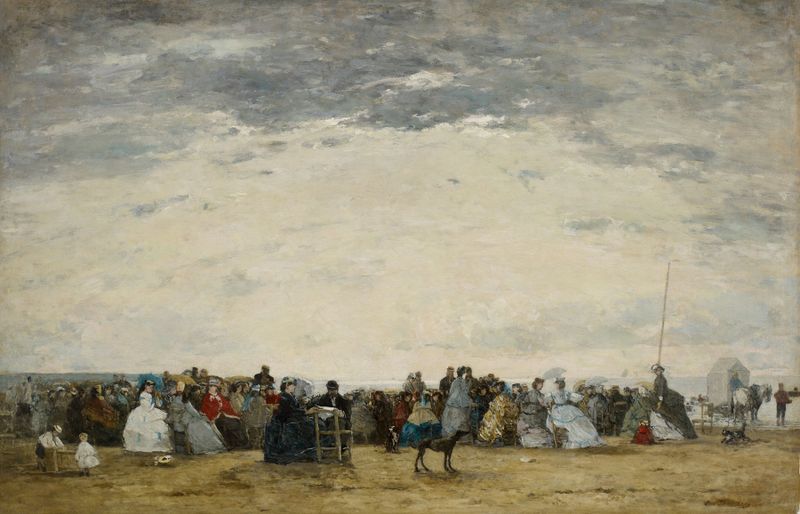
Vacationers on the Beach at Trouville
Eugène Boudin

Washerwoman near Trouville
Eugène Boudin
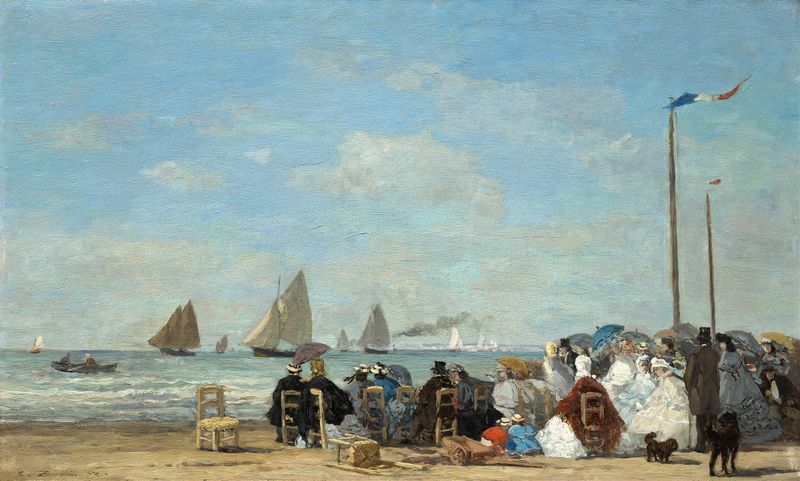
Beach Scene at Trouville
Eugène Boudin

Port aux environs d’Honfleur
Eugène Boudin

Le Faou, un coin du village
Eugène Boudin
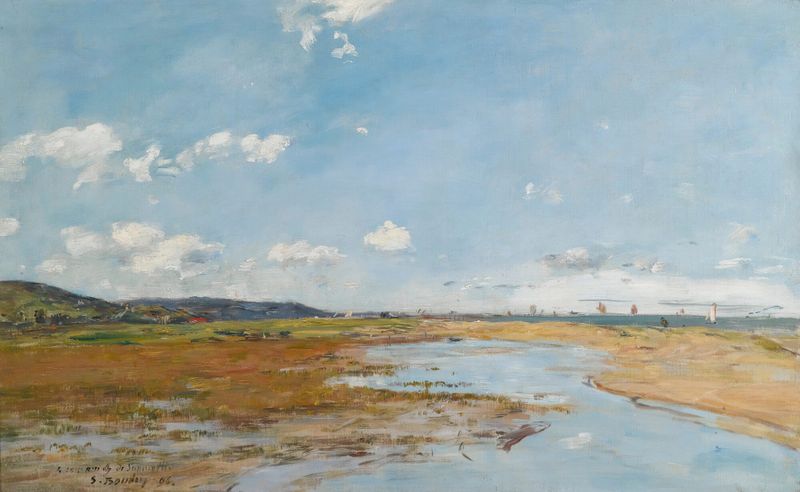
Deauville. Le Rivage
Eugène Boudin
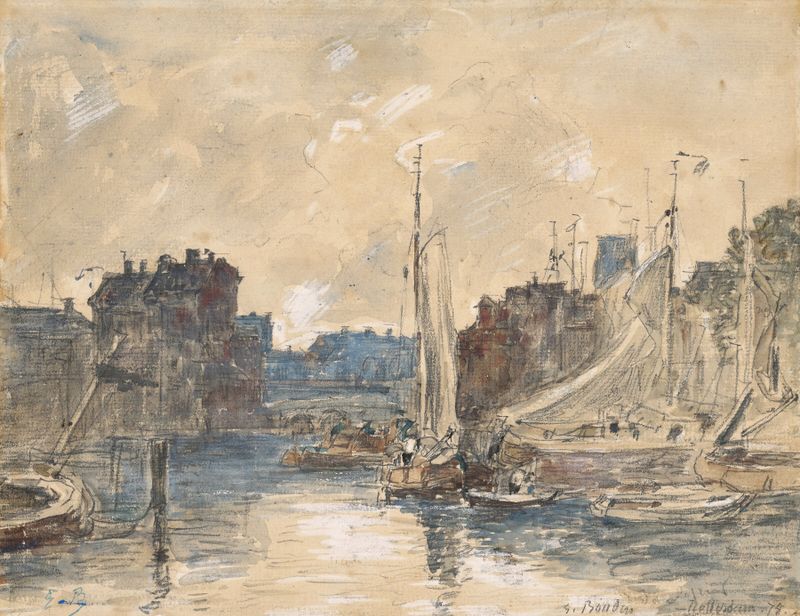
Port de Rotterdam
Eugène Boudin

View of Bordeaux, from the Quai des Chartrons
Eugène Boudin

Trouville, Scène De Plage
Eugène Boudin

Trouville, Le Port
Eugène Boudin





