
Anton von Werner Ars — History & Facts
A crimson-robed figure leans forward, eyes narrowed in scrutiny, as if weighing the worth of the treasures arrayed before him. The drama of Anton von Werner Ars unfolds not in battle or myth, but in the silent theater of connoisseurship and craft. Every gesture is charged with purpose: the older man’s poised hand suggests both authority and doubt, while the younger assistant’s careful grip on a bronze Perseus hints at the reverence demanded by art.
Between them, a third figure hovers, bridging the world of the creator and the judge, his hand gently steadying a marble bust as if to mediate between past glory and present appraisal. The golden background casts the scene in a timeless glow, isolating these men and their objects from the everyday world. The eye is drawn first to the gleaming vessels and the mythic statuette, then to the marble reliefs and busts that anchor the composition in the language of antiquity. This is a gathering of eras: Renaissance opulence meets classical ideal, and the painting’s careful arrangement of objects—each rendered with loving precision—makes the viewer a silent participant in the act of selection and judgment.
The palette, dominated by warm reds and golds, sets a mood of both luxury and contemplation, inviting us to linger over each detail and consider what, in this room, truly counts as “art.” Painted in 1872 as a color study for a mosaic frieze at the Palais Pringsheim in Berlin, this work belongs to a moment when artists like Anton von Werner were fascinated by the dialogue between past and present. Such scenes, rich in historical reference, were favored by patrons eager to link their own collections and ambitions to the grandeur of antiquity. The painting survives as a testament to the era’s reverence for both craftsmanship and the rituals of taste, preserved today in the digital archive of Zeno.org.
The story it tells—of judgment, admiration, and the search for meaning in art—remains as immediate as the glint of gold on the table.
More Artworks by Anton von Werner

In the Troops' Quarters before Paris
Anton von Werner
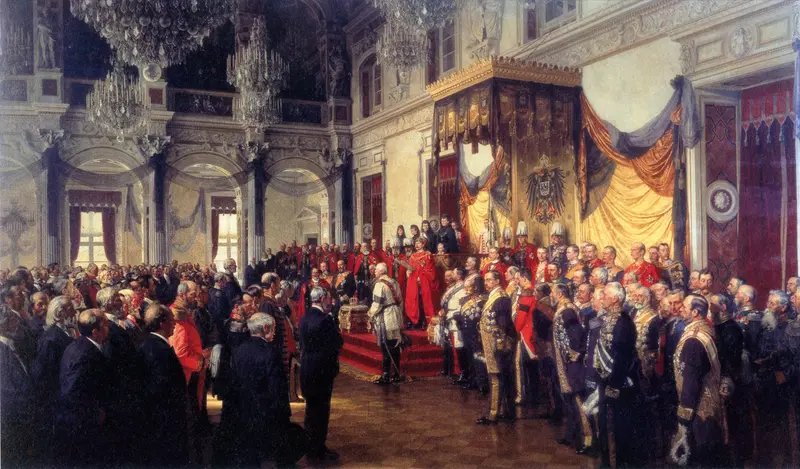
Opening of the Reichstag
Anton von Werner
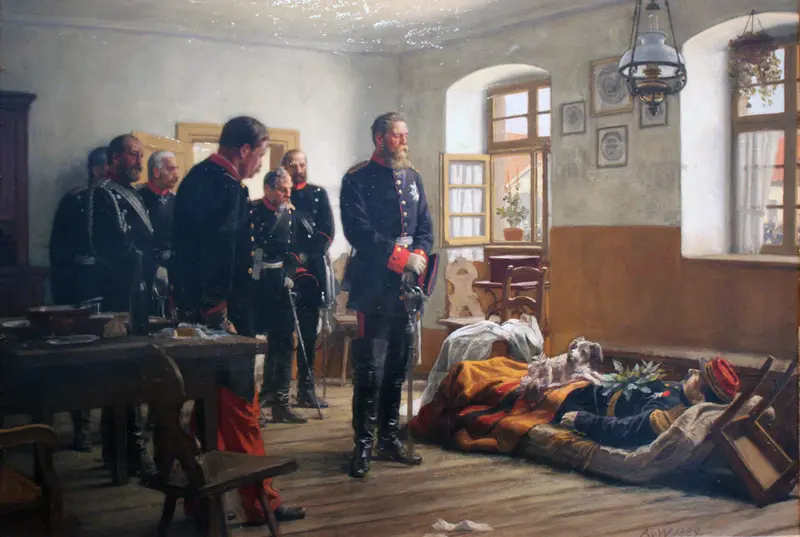
Crown Prince Friedrich Wilhelm on the body of General Abel Douay, Weissenburg on the 4th August
Anton von Werner
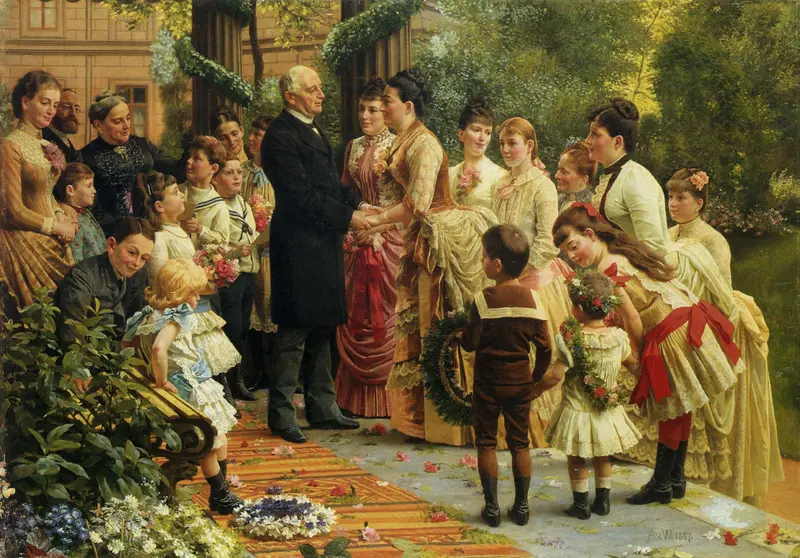
The 70th Birthday of Commercial Councilor Valentin Manheimer
Anton von Werner
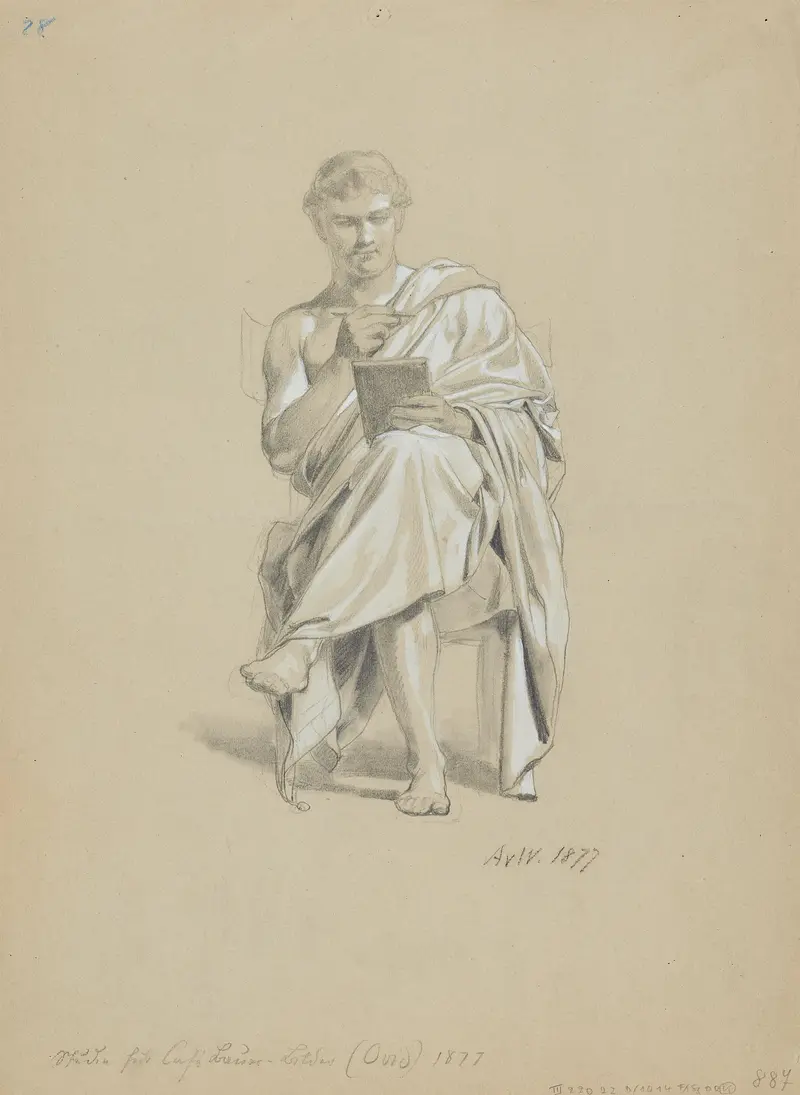
Ovid
Anton von Werner
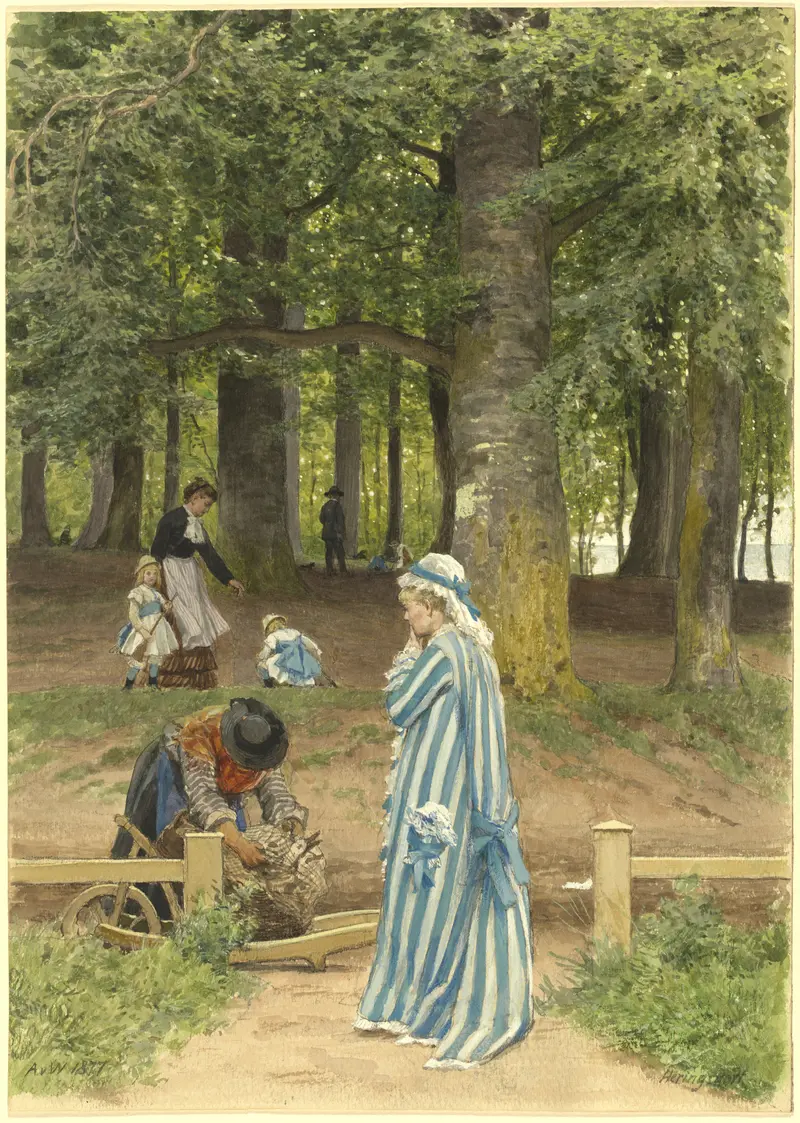
The Artist's Wife and Daughters in a Park at Heringsdorf
Anton von Werner
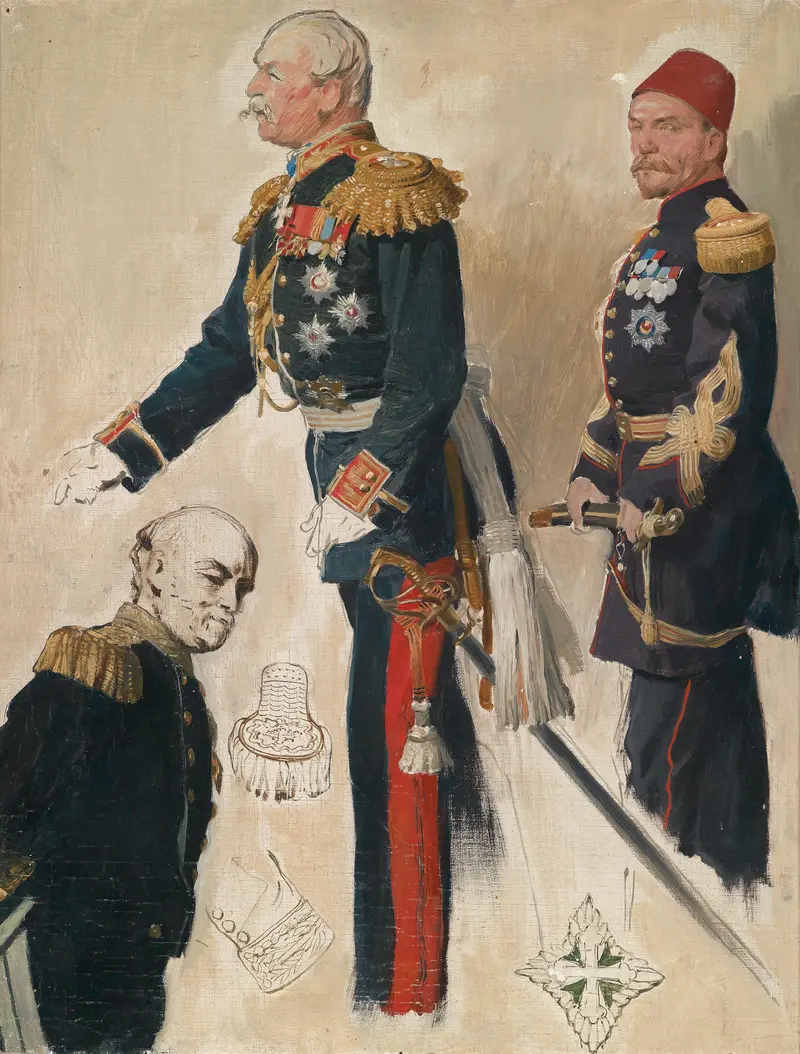
Berliner Kongress Ölskizze
Anton von Werner

LeopoldWerner
Anton von Werner
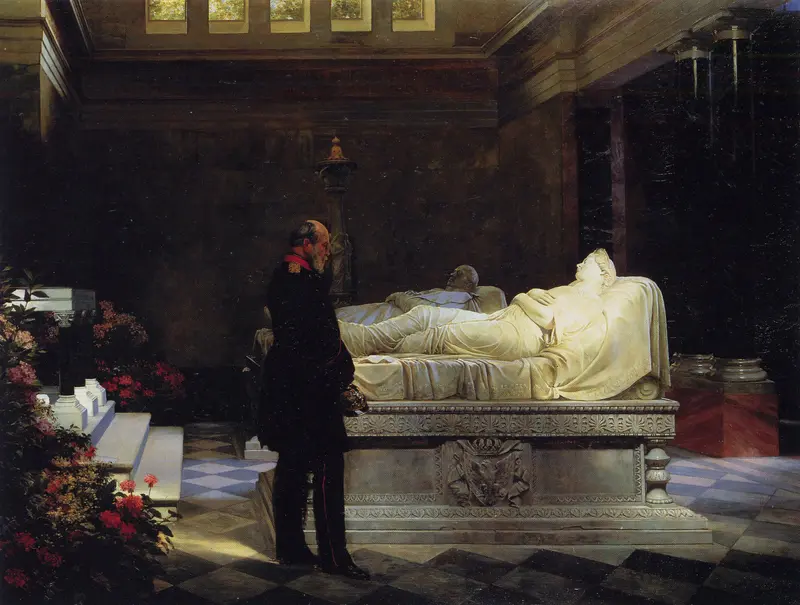
Anton von Werner: Am 19. Juli 1870 (König Wilhelm am Sakrophag seiner Mutter, der Königin Luise, im Mausoleum zu Charlottenburg)
Anton von Werner
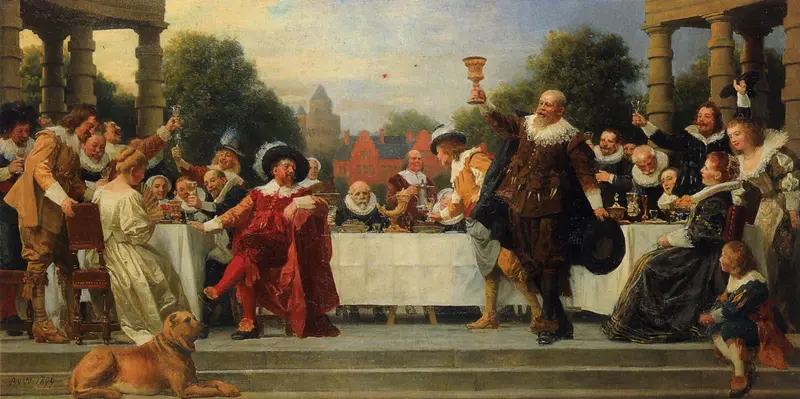
The banquet of the Mosse family
Anton von Werner
More Genre Scene Art

Banquet of the Officers of the St George Civic Guard
Frans Hals

Rembrandt and Saskia in the Scene of the Prodigal Son
Rembrandt van Rijn

Bal du moulin de la Galette
Pierre-Auguste Renoir

Quadrille at the Moulin Rouge
Henri de Toulouse-Lautrec

A Burial at Ornans
Gustave Courbet

When Will You Marry?
Paul Gauguin