
Anvers, bateaux sur l’escaut — History & Facts
Could a single brushstroke hold eternity? In Anvers, bateaux sur l’escaut, the essence of beauty is distilled into a moment suspended between land and water, where nature and humanity intertwine. Look to the left at the gentle contours of the boats, their sails softly billowing against a muted sky. The tonal variations of blue and grey create an atmospheric depth, inviting the viewer to breathe in the cool, brisk air of the seaport. The delicate brushwork captures both the fluidity of water and the solidity of the vessels, blurring the lines between motion and stillness, drawing the eye to the harmonious dance of life along the riverside. Boudin employs a rich palette to convey the interplay of light and shadow, evoking emotions of tranquility and nostalgia.
Notice how the warm hues of the buildings contrast with the cool tones of the water, suggesting a moment of unity amidst the bustling activity of the port. Each detail, from the ripples in the river to the soft reflections of the boats, speaks to the fleeting nature of beauty — a reminder of the transitory moments that define our existence. In 1871, while living in Honfleur and deeply entrenched in the Impressionist movement, the artist painted this scene amid a growing fascination with capturing light and atmosphere. Boudin was inspired by the dynamic coastal landscapes of Normandy, establishing his reputation as a pioneer of plein air painting.
This period marked a turning point as artists began to break away from traditional forms, embracing the ephemeral beauty of everyday life.
More Artworks by Eugène Boudin
Browse all →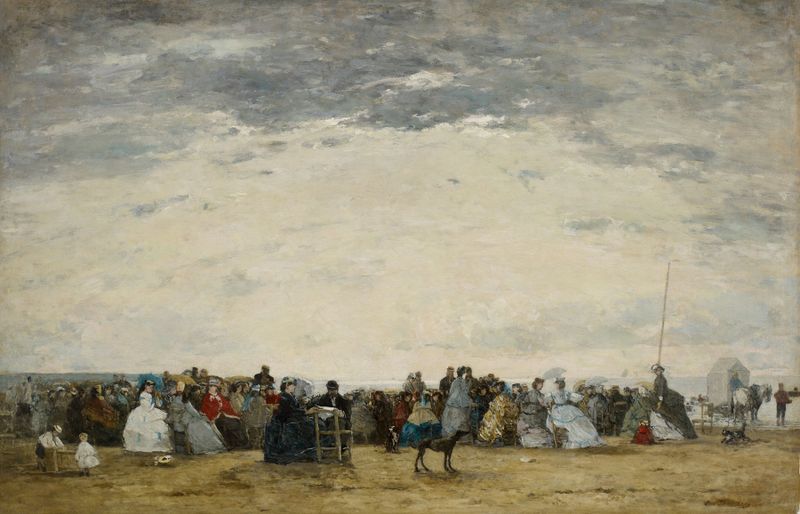
Vacationers on the Beach at Trouville
Eugène Boudin

Washerwoman near Trouville
Eugène Boudin
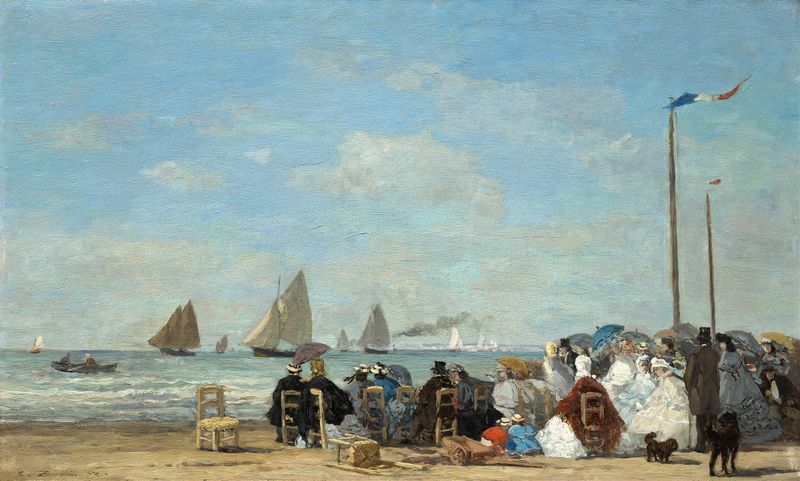
Beach Scene at Trouville
Eugène Boudin

Port aux environs d’Honfleur
Eugène Boudin

Le Faou, un coin du village
Eugène Boudin
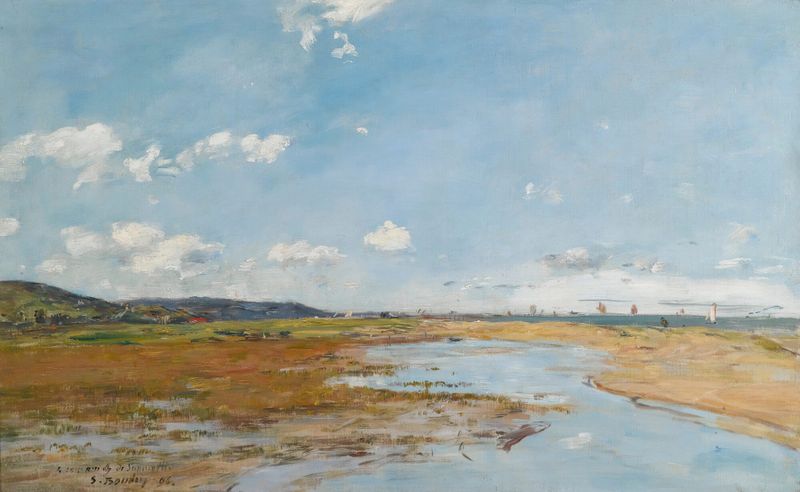
Deauville. Le Rivage
Eugène Boudin
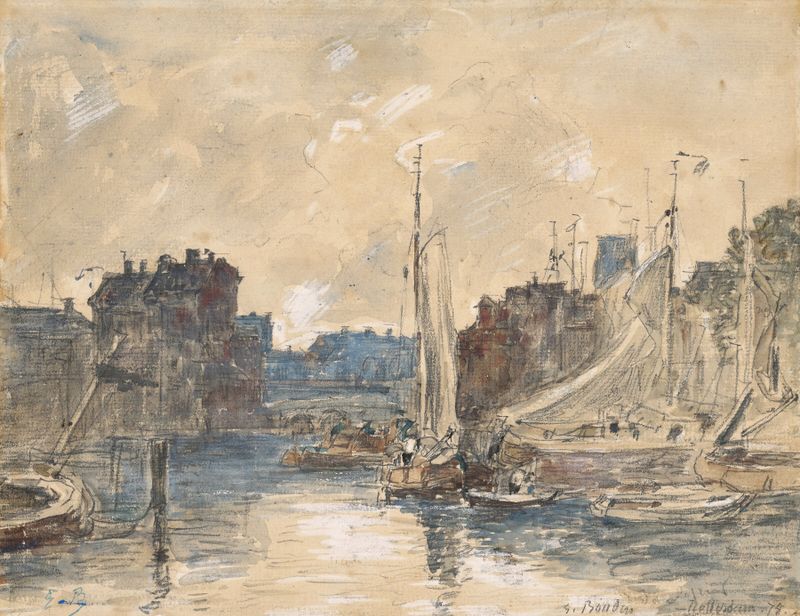
Port de Rotterdam
Eugène Boudin

View of Bordeaux, from the Quai des Chartrons
Eugène Boudin

Trouville, Scène De Plage
Eugène Boudin

Trouville, Le Port
Eugène Boudin





