
Anvers. Trois-mats à quai — History & Facts
Could a single brushstroke hold eternity? In Anvers. Trois-mats à quai, the fleeting moment of decay and beauty is captured with masterful precision, inviting us to ponder the transience of life and art. Focus on the vibrant sailboats moored at the dock, their masts reaching toward the sky like elongated fingers. Notice how the sun's warm glow bathes the scene, casting soft shadows that dance across the water's surface.
The lush greens and blues create a harmonious balance, while the delicate strokes of white and gray in the clouds hint at an impending change, evoking a sense of melancholy intertwined with the vibrancy of the moment. In the interplay between light and shadow, we find a deeper narrative: the calm before a storm, the fleeting nature of time, and the gradual decay of the boats that represent human endeavor against nature's perpetual rhythm. The distant figures, perhaps sailors or passersby, add a layer of solitude, suggesting the loneliness that often accompanies transitional phases in life. Each element resonates with the fragility of existence, as if urging us to cherish each moment before it drifts away. Eugène Boudin painted this work in 1871 while living in France, a period when he was deeply influenced by the Impressionist movement.
As one of the pioneers of plein air painting, he sought to capture the essence of landscapes and maritime scenes directly from nature, reflecting both the beauty and the decay inherent in the world around him. At this time, Boudin was establishing his own style, setting the stage for future artists and movements that would follow.
More Artworks by Eugène Boudin
Browse all →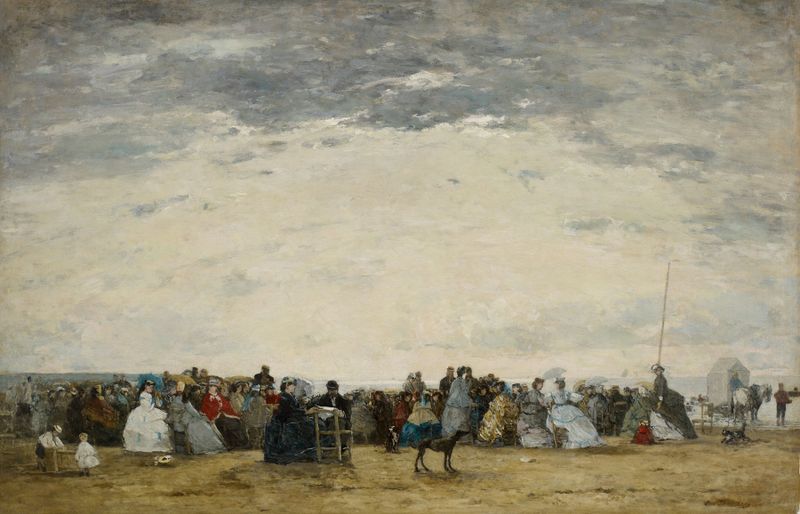
Vacationers on the Beach at Trouville
Eugène Boudin

Washerwoman near Trouville
Eugène Boudin
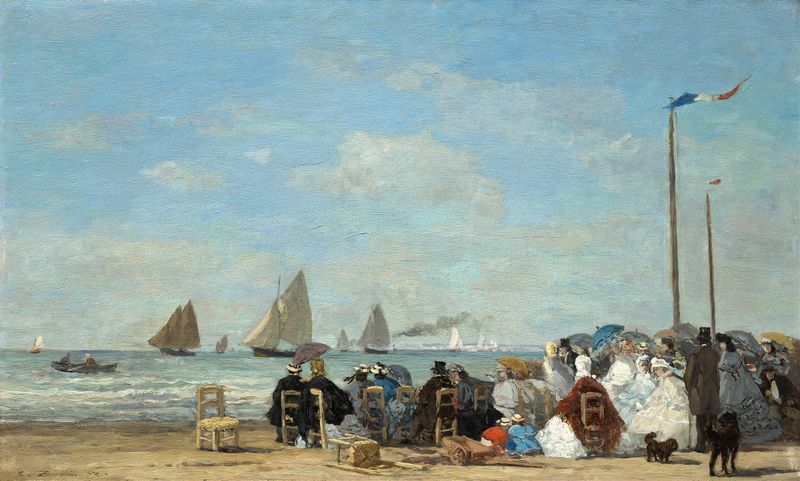
Beach Scene at Trouville
Eugène Boudin

Port aux environs d’Honfleur
Eugène Boudin

Le Faou, un coin du village
Eugène Boudin
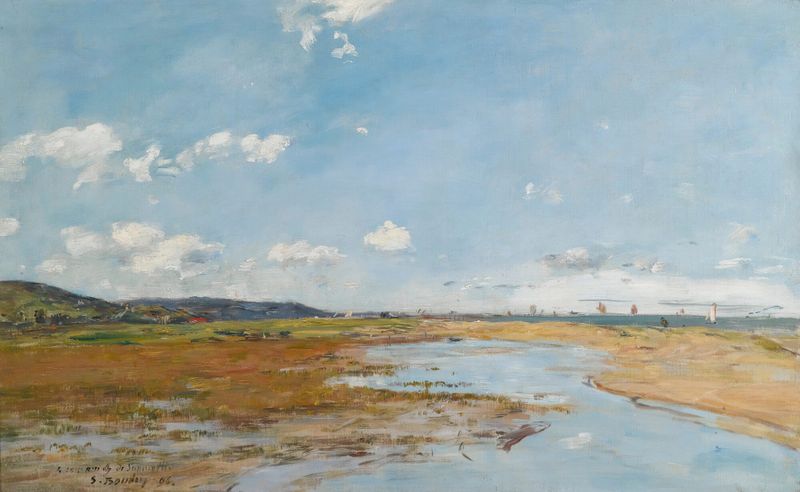
Deauville. Le Rivage
Eugène Boudin
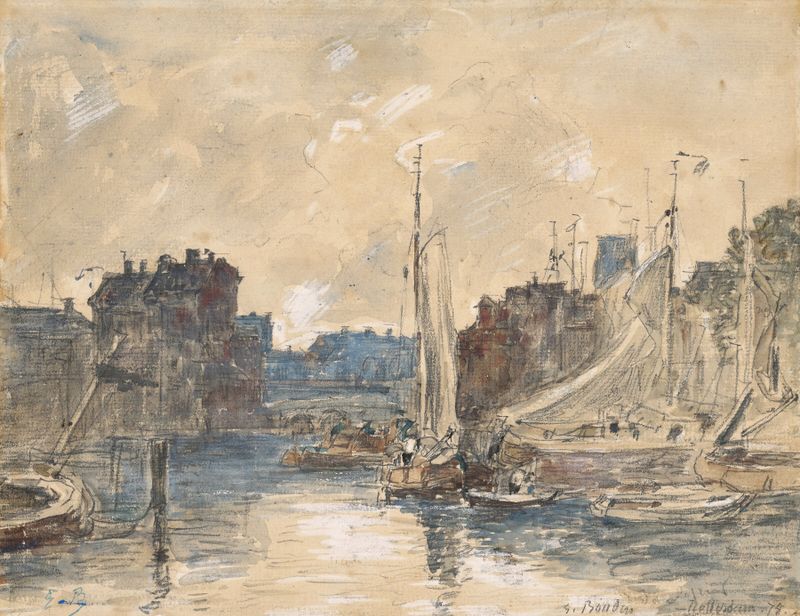
Port de Rotterdam
Eugène Boudin

View of Bordeaux, from the Quai des Chartrons
Eugène Boudin

Trouville, Scène De Plage
Eugène Boudin

Trouville, Le Port
Eugène Boudin





