
Arcadian landscape with resting herdsmen and cattle — History & Facts
What first draws the eye in Arcadian landscape with resting herdsmen and cattle is the sense of calm that radiates from its sunlit clearing—a world where time seems to slow to the rhythm of grazing animals and quiet human rest. A shepherd leans on his staff beside a weathered monument, his gaze soft and unhurried, while a woman, seated at its base, nurses her child. The monument itself, adorned with sculpted forms, hints at a past civilization, now watched over by the living.
In the foreground, cows and sheep recline in the dappled light, their bodies echoing the gentle contours of the hills beyond, while a white horse stands quietly apart, its luminous coat catching the afternoon sun. The palette—warm earths, soft greens, and a sky brushed with gold—invites the viewer to linger, to follow the movement of clouds and the play of shadow across fur and stone. Painted in 1664, this work by Adriaen van de Velde belongs to a tradition cherished in the Dutch Golden Age: the Arcadian landscape, where rural life is idealized as a harmony between people, animals, and the land. Such scenes were prized by collectors who longed for a vision of peace and abundance, far from the bustle of city and trade.
The inclusion of ancient ruins and classical motifs was not merely decorative; it signaled a learned nostalgia for lost golden ages, a theme that resonated across Europe as artists and patrons alike sought meaning in the cycles of history. Though little is recorded about the journey of this particular painting, its presence in the Rijksmuseum today speaks to the enduring appeal of these quiet, sunlit worlds—inviting us, centuries later, to step into their gentle afternoon.
More Artworks by Adriaen van de Velde

Staande stier
Adriaen van de Velde
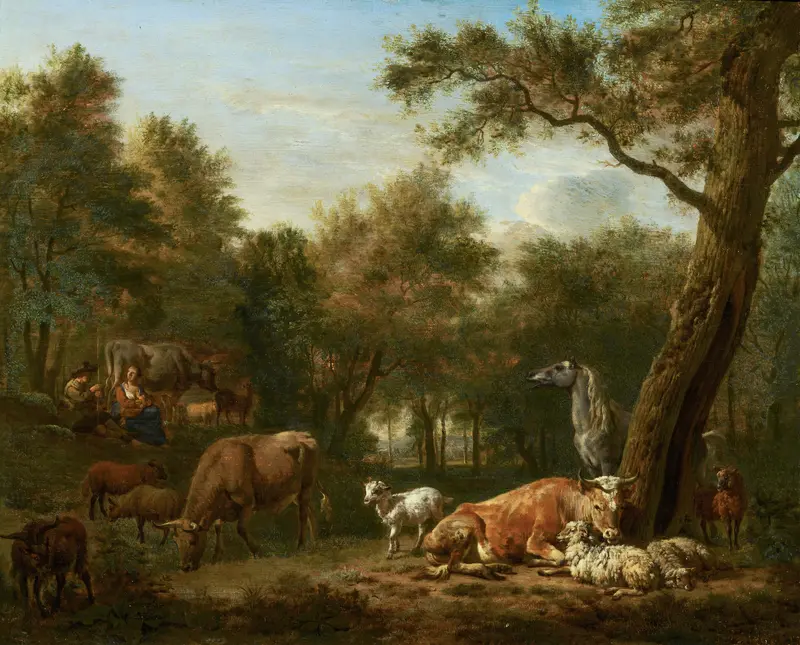
Wooded Landscape with Cattle
Adriaen van de Velde
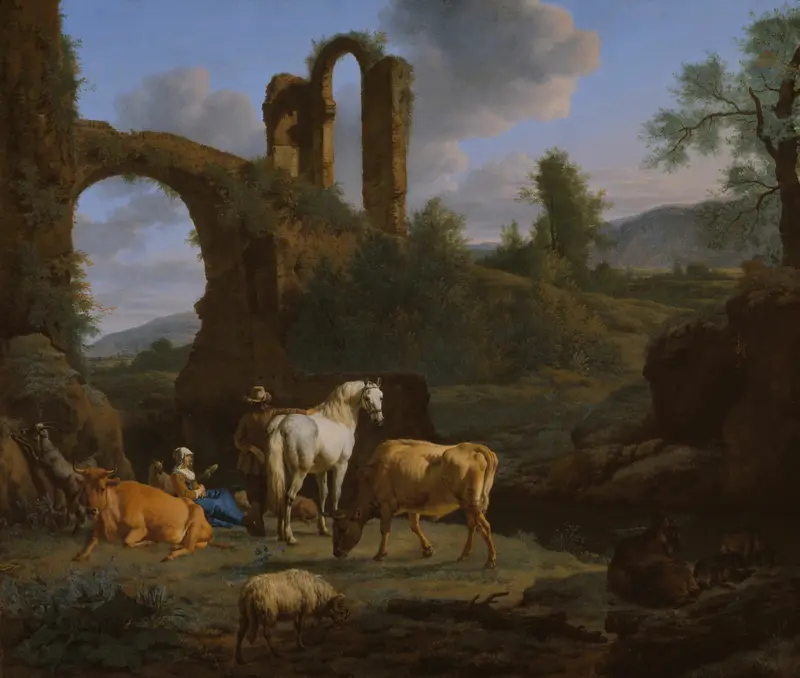
Pastoral Landscape with Ruins
Adriaen van de Velde
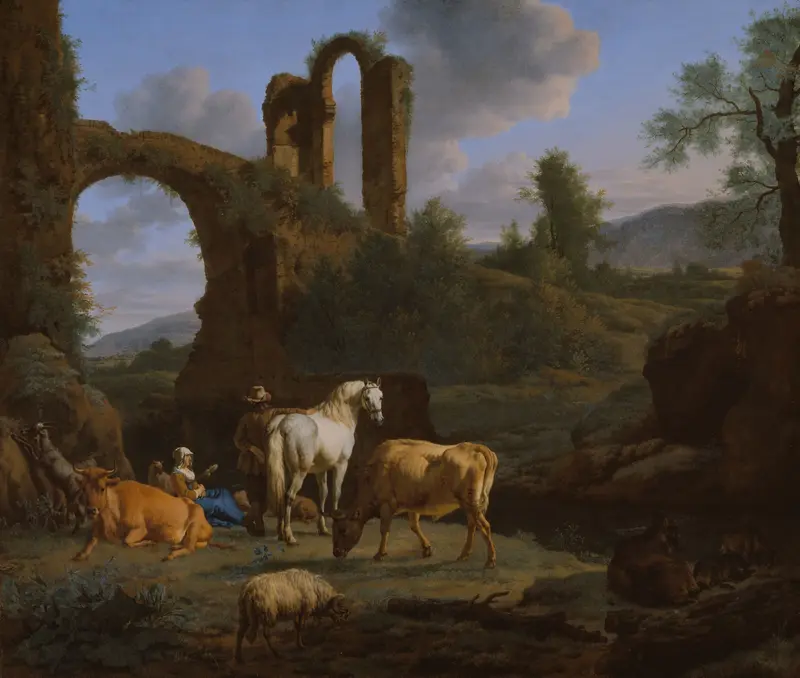
Pastoral Landscape with Ruins
Adriaen van de Velde
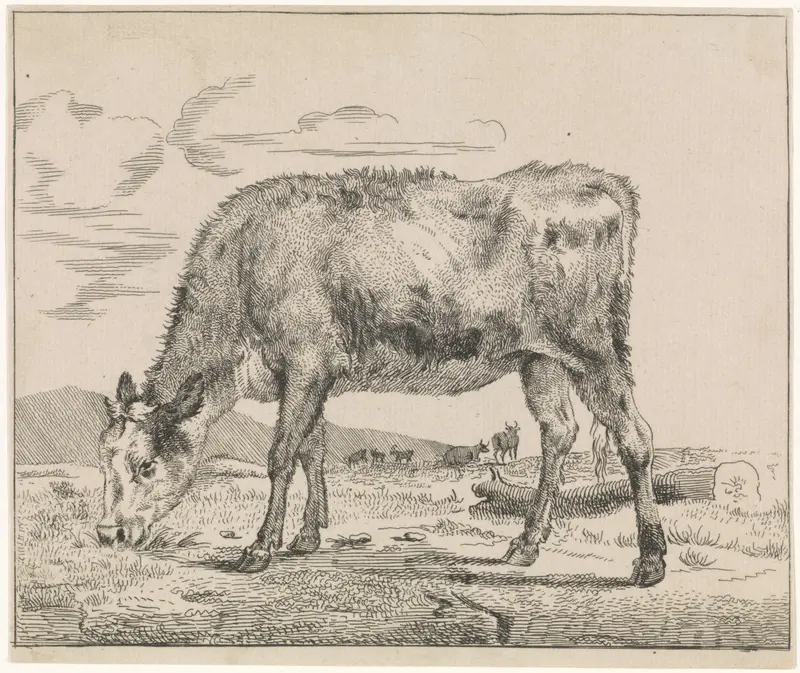
Grazend kalf
Adriaen van de Velde
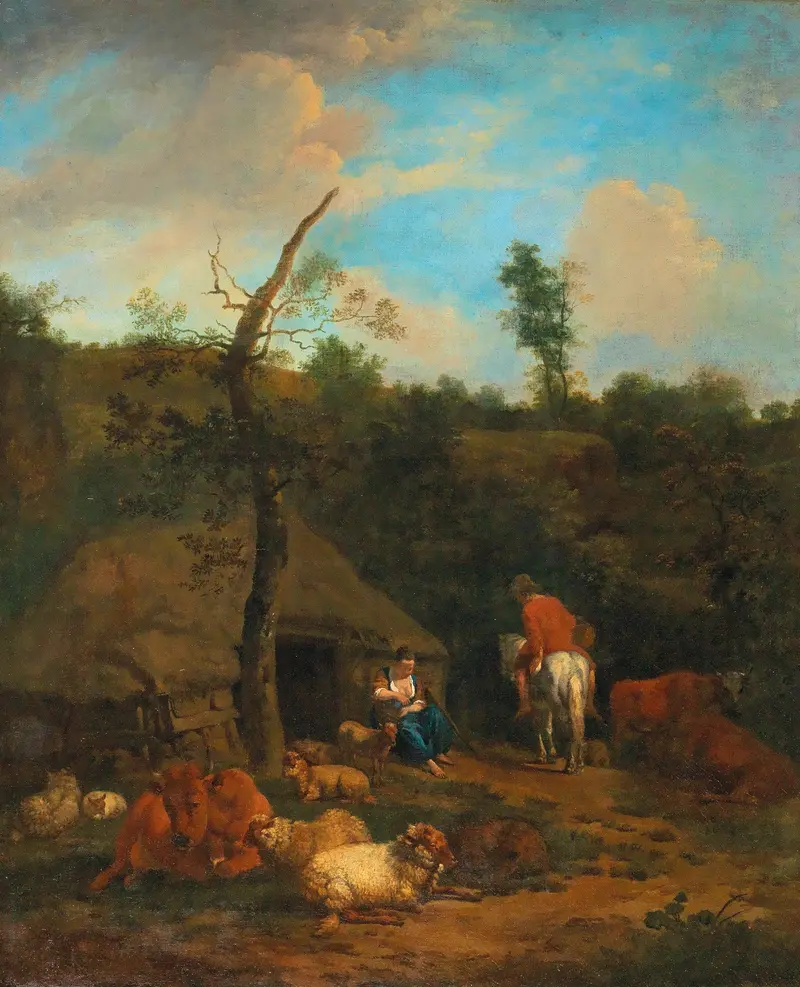
A herdsman and a shepherdess in front of a wooden farmhouse
Adriaen van de Velde
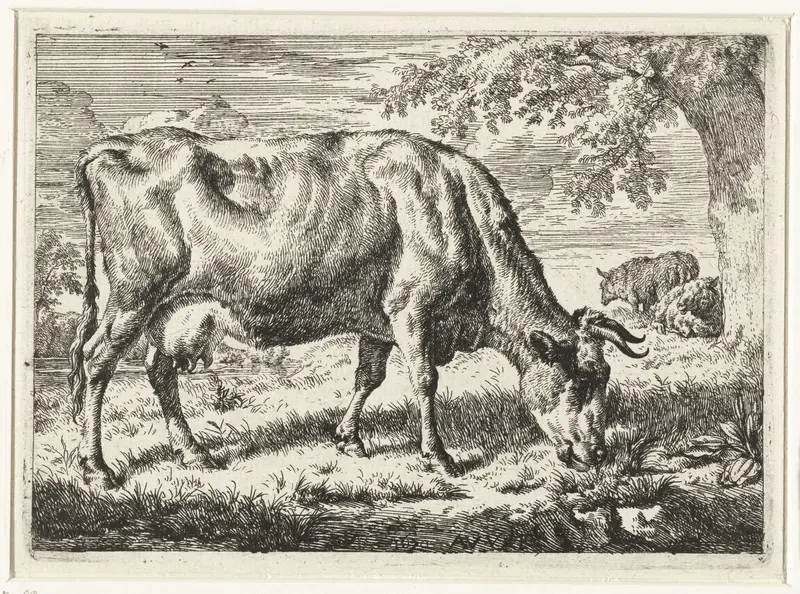
Grazende koe en twee schapen
Adriaen van de Velde
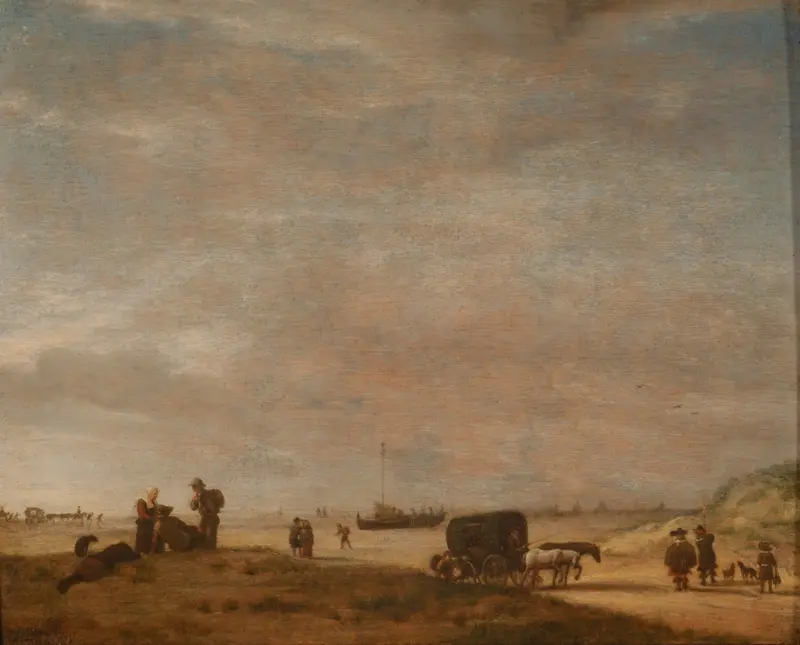
Scheveningen Beach
Adriaen van de Velde
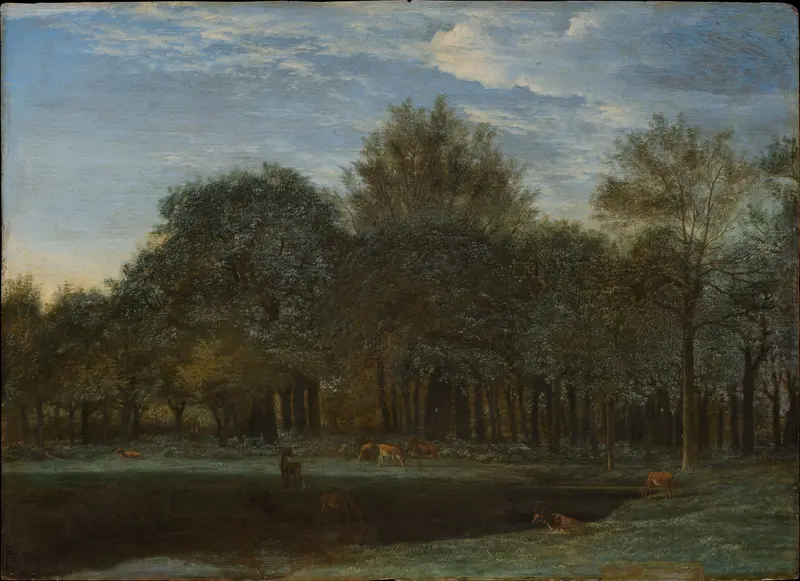
Forest Clearing with Grazing Deer
Adriaen van de Velde
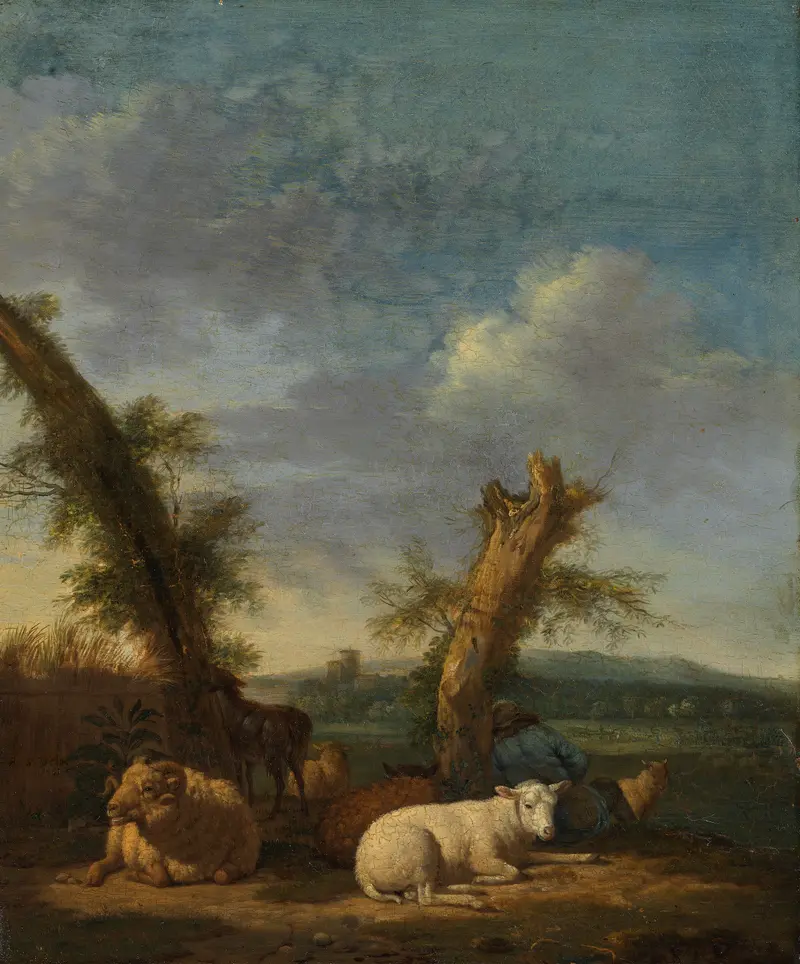
Landscape with Sheep and a Sleeping Shepherd
Adriaen van de Velde
More Landscape Art

The Starry Night
Vincent van Gogh

View of Delft
Johannes Vermeer

Water Lilies
Claude Monet

The Grand Canal, Venice, looking north-west from the Ca' Corner to the Ca' Contarini degli Scrigni, with the campanile of Santa Maria della Carità
Canaletto

Windsor Castle
Canaletto

The Grand Canal looking North-East from the Palazzo Dolfin-Manin to the Rialto Bridge
Canaletto