
Ariadne — History & Facts
What first catches the eye in Ariadne is the sweep of sunlight across sand, broken only by the delicate shadows of trees and the solitary figure turned toward the sea. The composition draws the viewer in with its sense of quiet expectancy: a woman in pale drapery stands at the edge of the beach, her back to us, her gaze lost in the blue horizon where a lone sailboat glides past a distant, rose-colored headland. The brushwork is brisk yet sensitive, capturing the crispness of light and the restless movement of branches, while the cool palette of blues and violets is warmed by the ochres of the tree trunks and the blush of the far shore.
Every element here seems to pause, as if the world itself is holding its breath. Painted in 1895, this small oil on wood panel by Arthur Streeton belongs to a moment when Australian artists were turning their eyes to the unique light and landscapes of their own country, often working outdoors to catch the fleeting effects of sun and air. The title, Ariadne, hints at myth and abandonment, but the scene itself is rooted in the everyday—a modern echo of ancient stories played out on a familiar shore. Works like this were rarely grand commissions; they were often painted for exhibitions or private collectors eager for fresh visions of the land.
Now held in the NGA collection, Ariadne invites us to linger in its stillness, to feel the sun on our shoulders and wonder what the figure on the sand is waiting for.
More Artworks by Arthur Streeton

From my camp (Sirius Cove)
Arthur Streeton
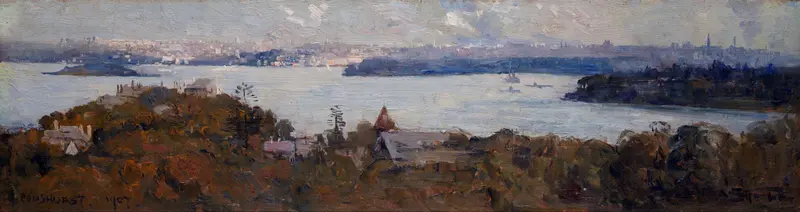
Sydney Harbour from Penshurst (Cremorne)
Arthur Streeton
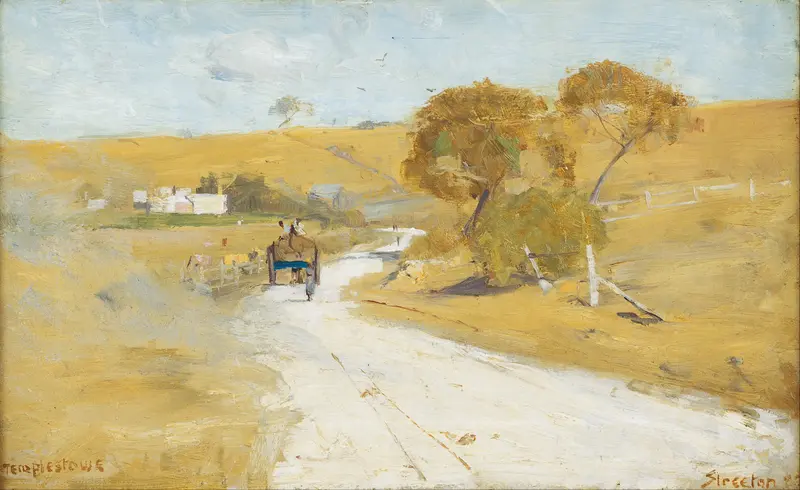
At Templestowe
Arthur Streeton
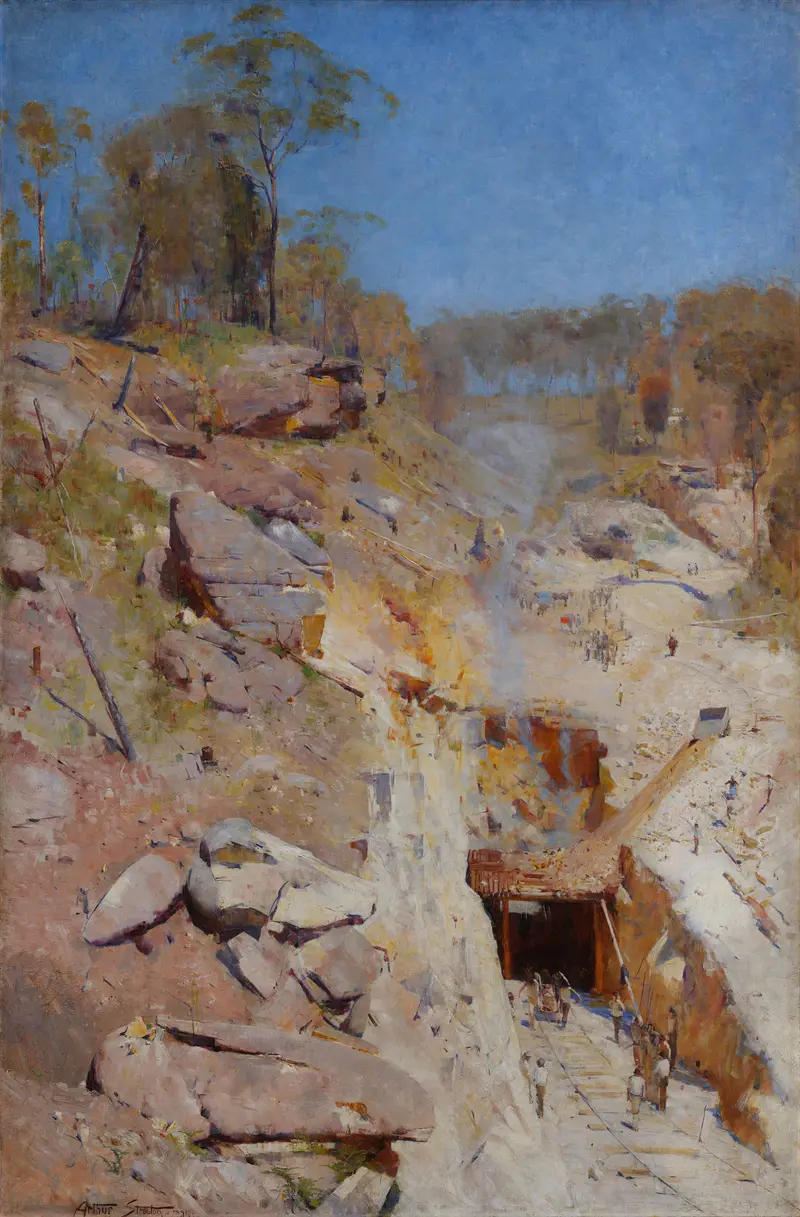
Fire’s on
Arthur Streeton
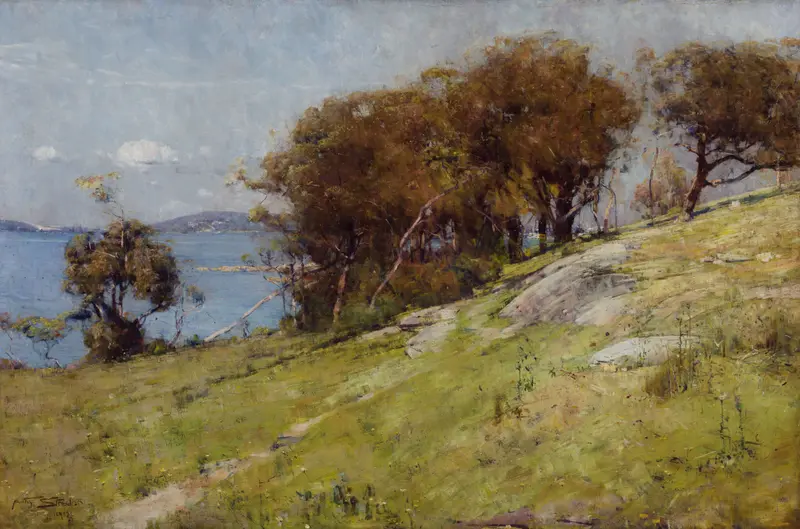
Cremorne pastoral
Arthur Streeton
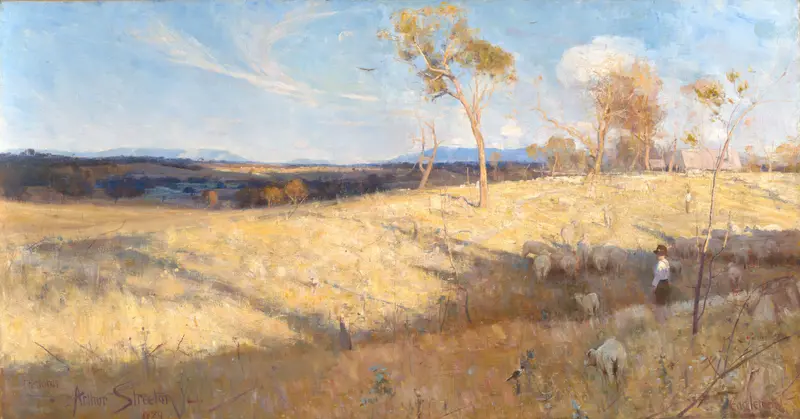
Golden summer, Eaglemont
Arthur Streeton
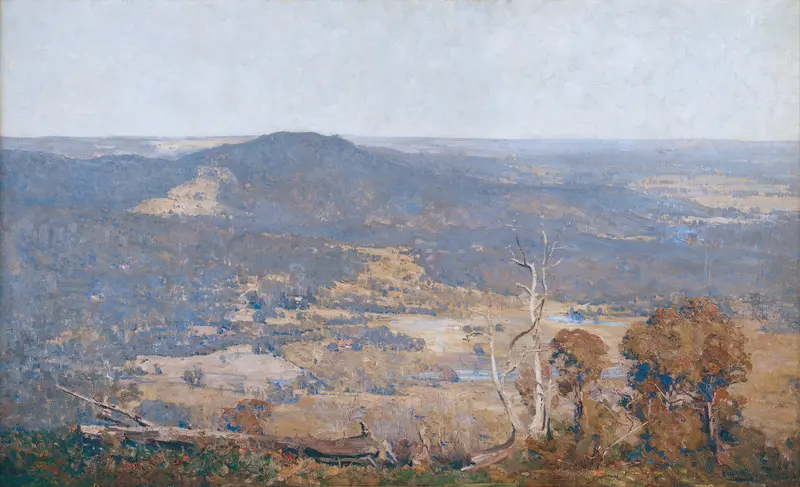
Australia Felix
Arthur Streeton
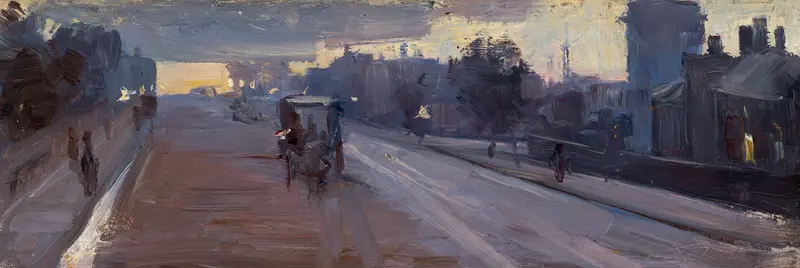
Hoddle St., 10 p.m.
Arthur Streeton
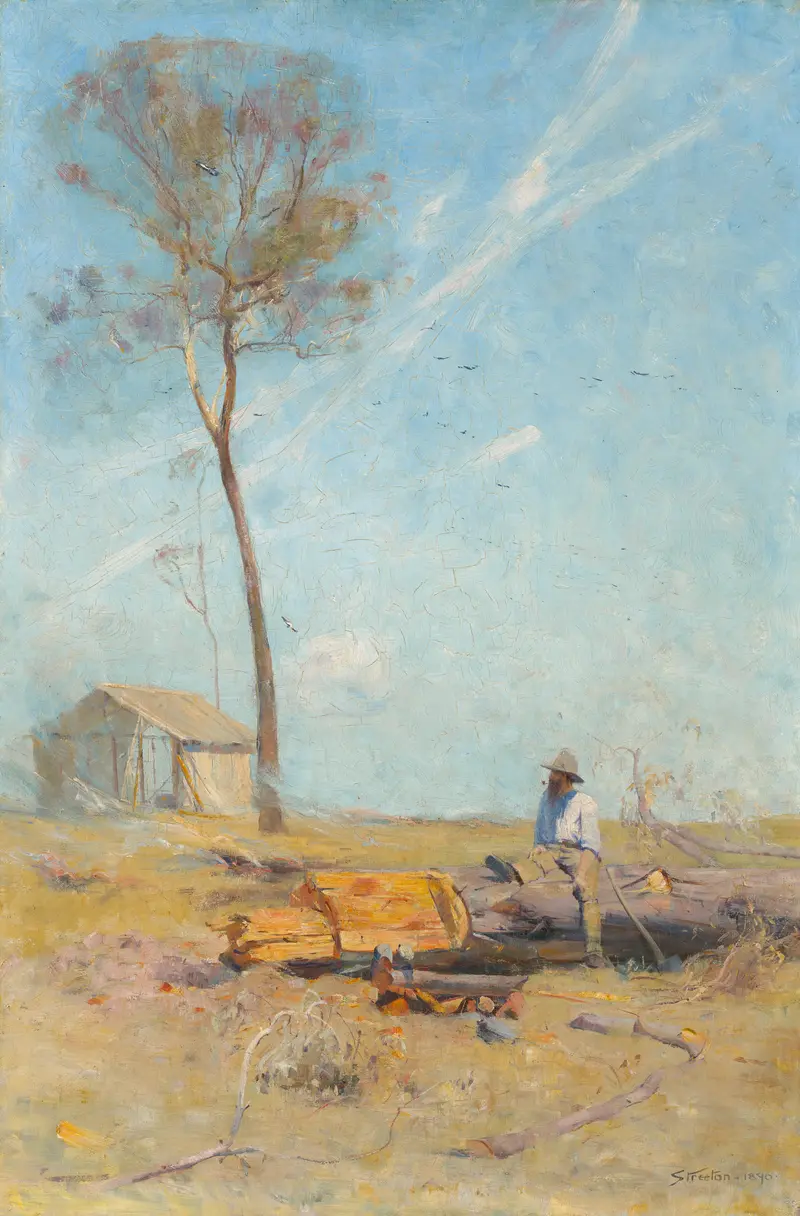
The selector’s hut
Arthur Streeton
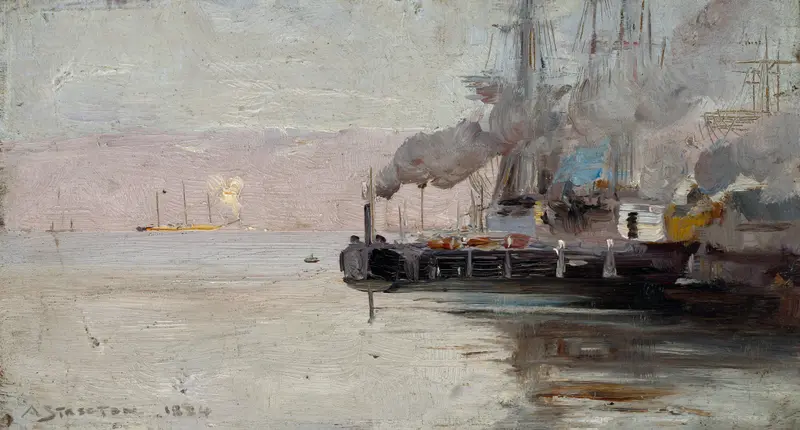
Sandridge
Arthur Streeton
More Landscape Art

The Starry Night
Vincent van Gogh

View of Delft
Johannes Vermeer

Water Lilies
Claude Monet

The Grand Canal, Venice, looking north-west from the Ca' Corner to the Ca' Contarini degli Scrigni, with the campanile of Santa Maria della Carità
Canaletto

Windsor Castle
Canaletto

The Grand Canal looking North-East from the Palazzo Dolfin-Manin to the Rialto Bridge
Canaletto