
Arthur Holdsworth Conversing with Thomas Taylor and Captain Stancombe by the River Dart — History & Facts
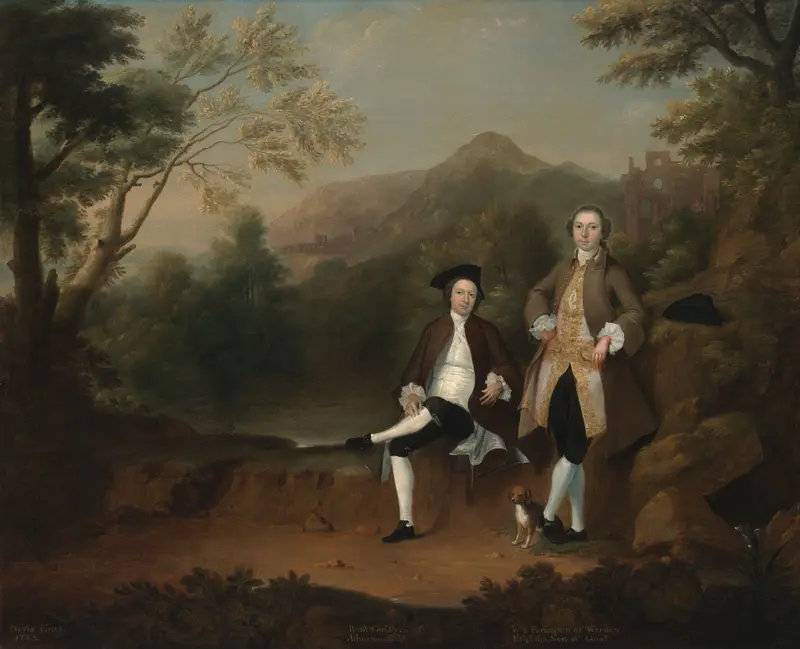
What first catches the eye in Arthur Holdsworth Conversing with Thomas Taylor and Captain Stancombe by the River Dart is the way the landscape itself becomes a stage for a quiet drama of status and conversation. The three men are arranged with the deliberate formality of a tableau, yet their poses and gestures suggest a moment of real exchange—one standing with a cane, another seated and central, the third gesturing outward as if guiding the viewer’s gaze toward the distant ships and the river. The dog, attentive at the seated man’s knee, anchors the group in the world of landed leisure, while the great tree overhead frames the scene like a proscenium arch, drawing the eye down to the human story unfolding beneath. Painted in 1757, this work sits firmly within the tradition of mid-eighteenth-century English portraiture, when gentlemen of means often commissioned such scenes to celebrate their estates, connections, and ambitions.
The river, dotted with ships, hints at mercantile interests and the reach of British trade, while the crisp, almost theatrical costumes signal prosperity and taste. Works like this were both records and aspirations—visual testaments to a family’s place in a changing world, when the rise of commerce and the gentry was reshaping the English countryside. Today, Arthur Holdsworth Conversing with Thomas Taylor and Captain Stancombe by the River Dart resides in the collection of the National Gallery of Art, a window into a vanished world where conversation, landscape, and ambition were painted with equal care.
Look again at the hands, the dog, the distant sails: each detail is a clue to the lives and hopes of those who once stood here.
More Artworks by Arthur Devis
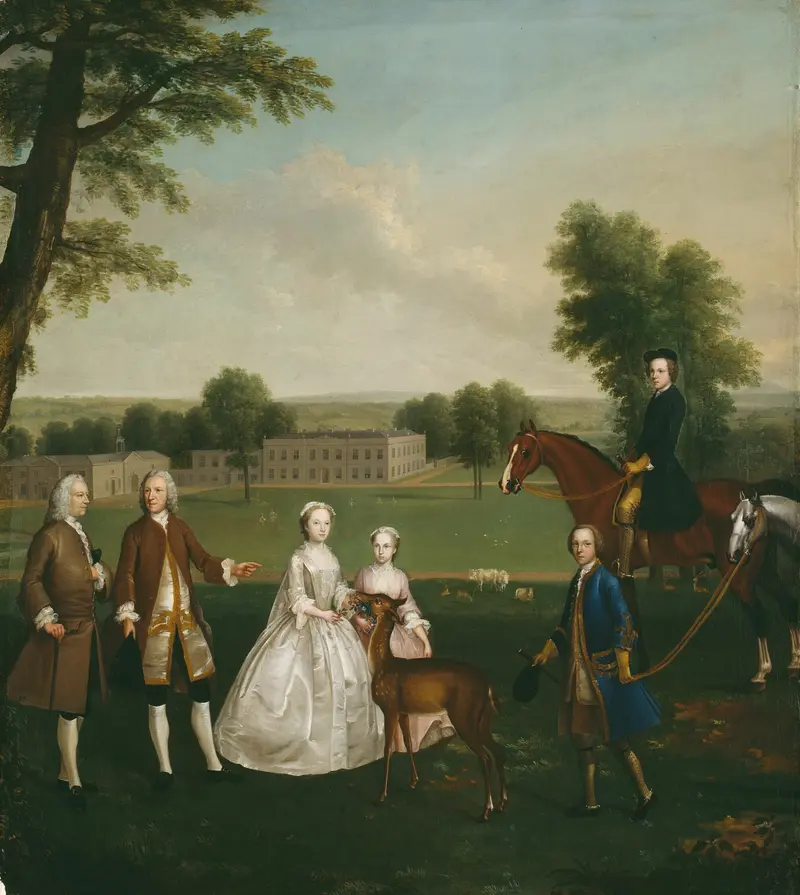
Thomas Lister and Family at Gisburne Park
Arthur Devis

Sir John Shaw and his Family in the Park at Eltham Lodge, Kent
Arthur Devis
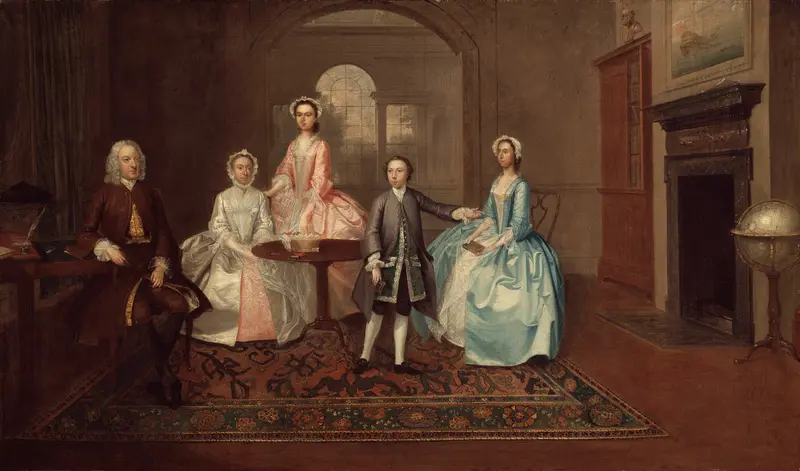
John Thomlinson and His Family
Arthur Devis
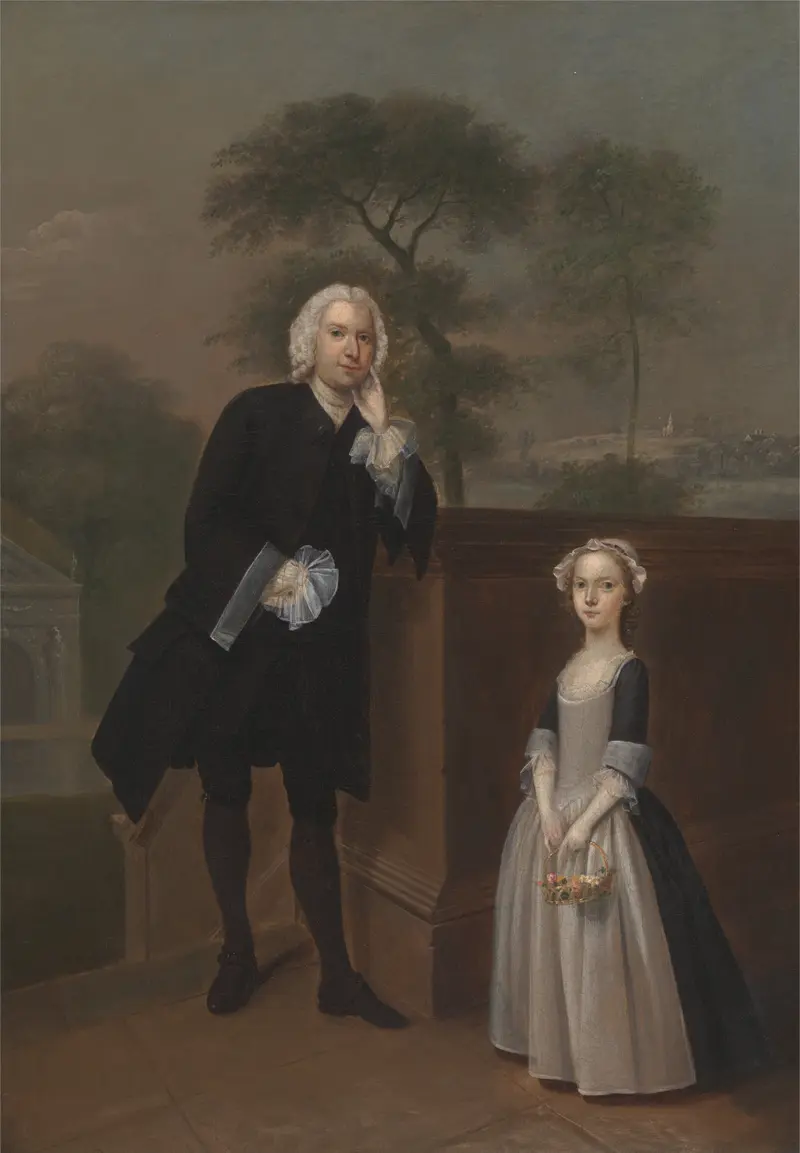
An Unknown Man with His Daughter
Arthur Devis
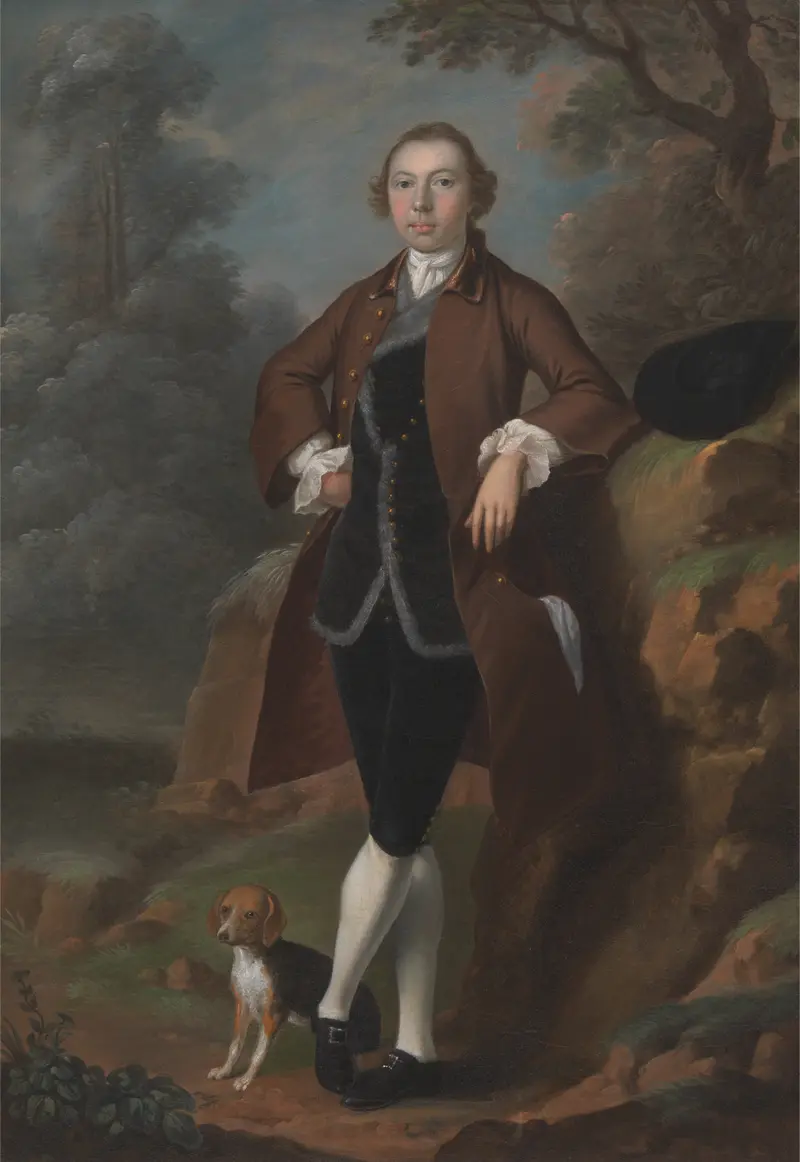
William Farington of Shawe Hall, Lancashire
Arthur Devis
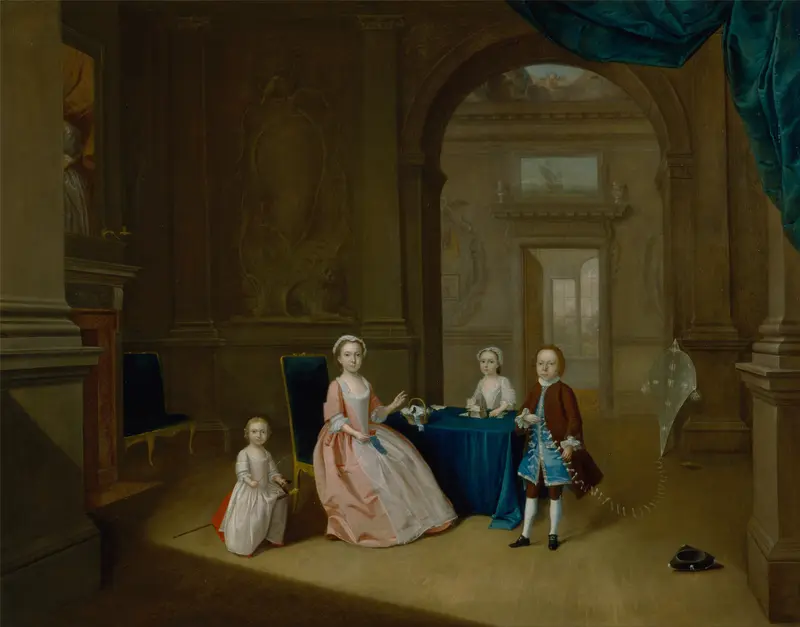
Children in an Interior
Arthur Devis
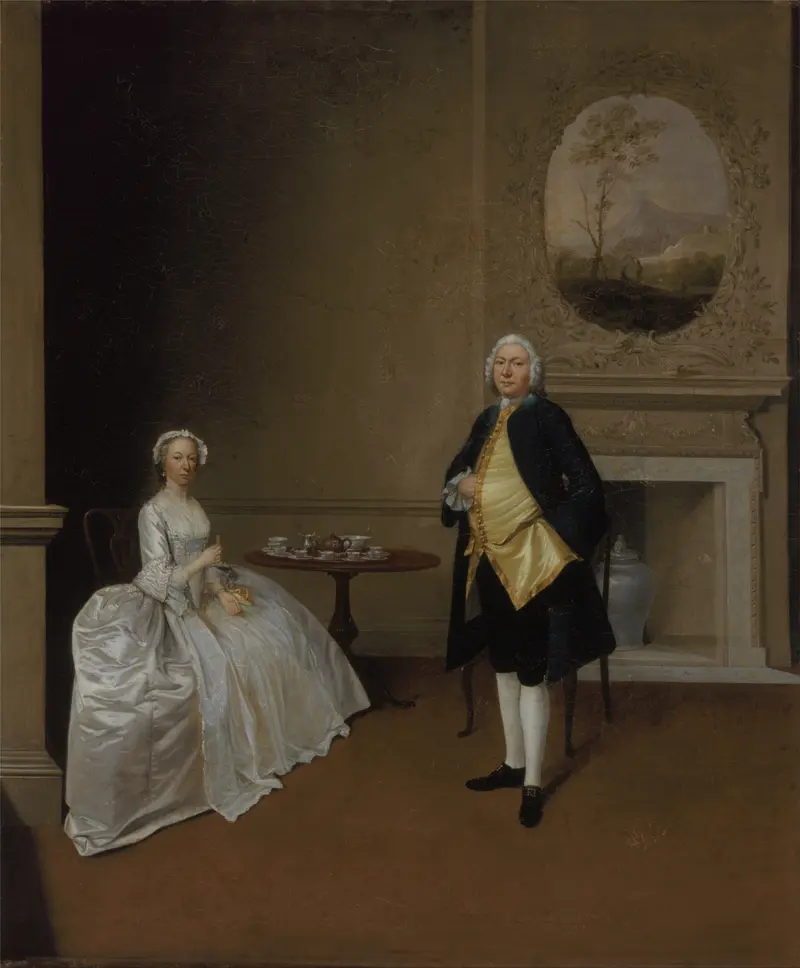
A Couple, Traditionally Identified as Mr. and Mrs. Hill
Arthur Devis
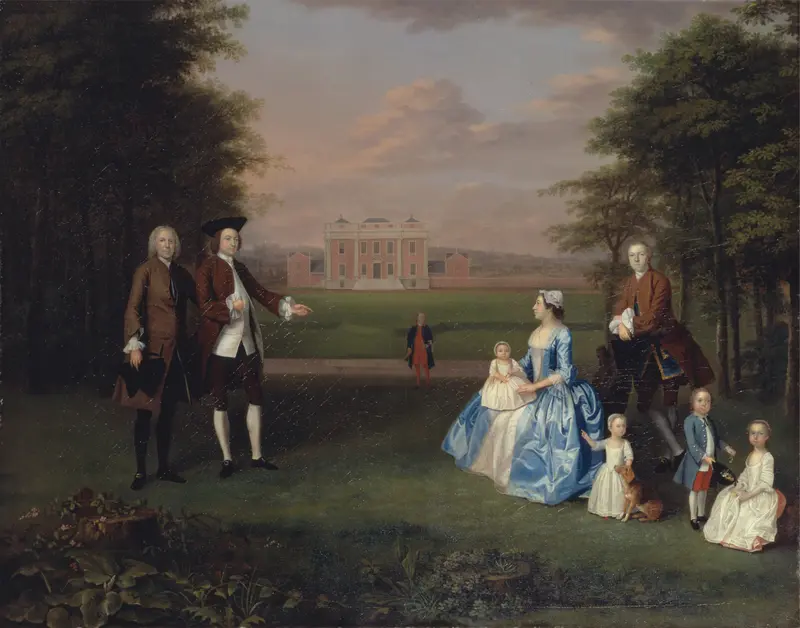
Robert Gwillym, Elizabeth Gwillym (née Atherton), and Their Family
Arthur Devis
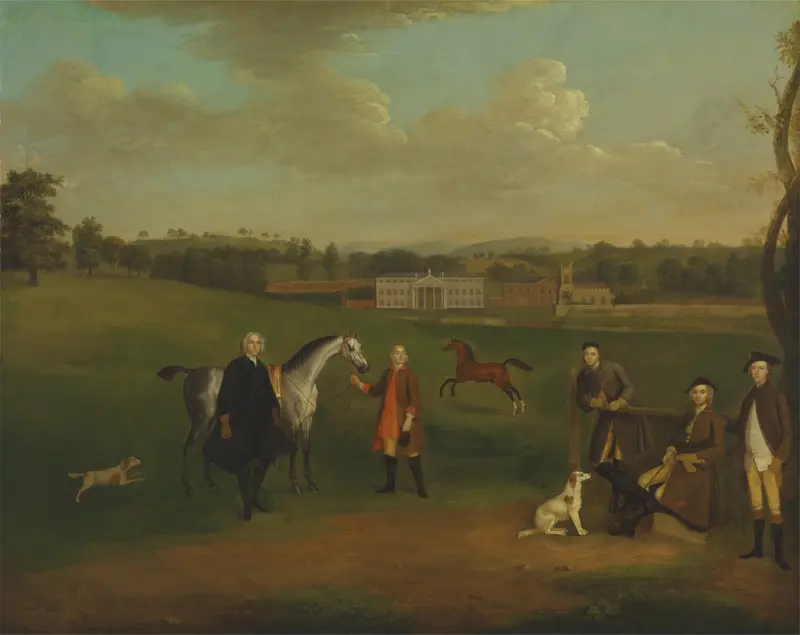
Leak Okeover, Rev. John Allen and Captain Chester at Okeover Hall, Staffordshire
Arthur Devis
Robert Gwillym of Atherton and William Farington of Werden
Arthur Devis
More Genre Scene Art

Banquet of the Officers of the St George Civic Guard
Frans Hals

Rembrandt and Saskia in the Scene of the Prodigal Son
Rembrandt van Rijn

Bal du moulin de la Galette
Pierre-Auguste Renoir

Quadrille at the Moulin Rouge
Henri de Toulouse-Lautrec

A Burial at Ornans
Gustave Courbet

When Will You Marry?
Paul Gauguin