
Łazienki Park — History & Facts
The essence of desire flows through Feliks Jabłczyński's Łazienki Park, evoking a longing intertwined with beauty. It invites us to explore a tranquil world where lush greenery meets the tranquility of a serene lake, suggesting that the heart's yearnings can find peace in nature's embrace. Look to the left at the deep greens of the foliage, vibrant and alive, each stroke pulsating with energy. The light filters through the leaves, casting a warm glow on the gentle ripples of the water, drawing your eye toward the center where figures engage in leisurely activities.
Notice how the composition balances these human forms against the lush scenery, creating a symphony of movement and stillness, encapsulated in soft pastels and delicate brushwork that convey a sense of idyllic serenity. Beneath the surface, the painting captures a tension between the vibrancy of life and the quietude of contemplation. The figures, though engaged in leisure, reflect an unfulfilled desire—perhaps for connection or escape—while the expansive park envelops them in beauty, emphasizing the contrast between the internal and external worlds. The reflections in the water hint at a deeper longing, a desire to bridge the gap between the self and nature, as if the park itself yearns for companionship. Painted in 1918, Łazienki Park emerged during a transformative time in Poland's history, just after the country regained independence.
Jabłczyński was among the emerging artists who sought to capture the essence of their homeland, infusing his work with national pride. This painting reflects a period of optimism and hope, embodying the artistic exploration of identity and belonging as Poland stepped into a new era.
More Artworks by Feliks Jabłczyński
Browse all →
Villa Borgia in Rome
Feliks Jabłczyński

Mariensztat Street in Warsaw
Feliks Jabłczyński
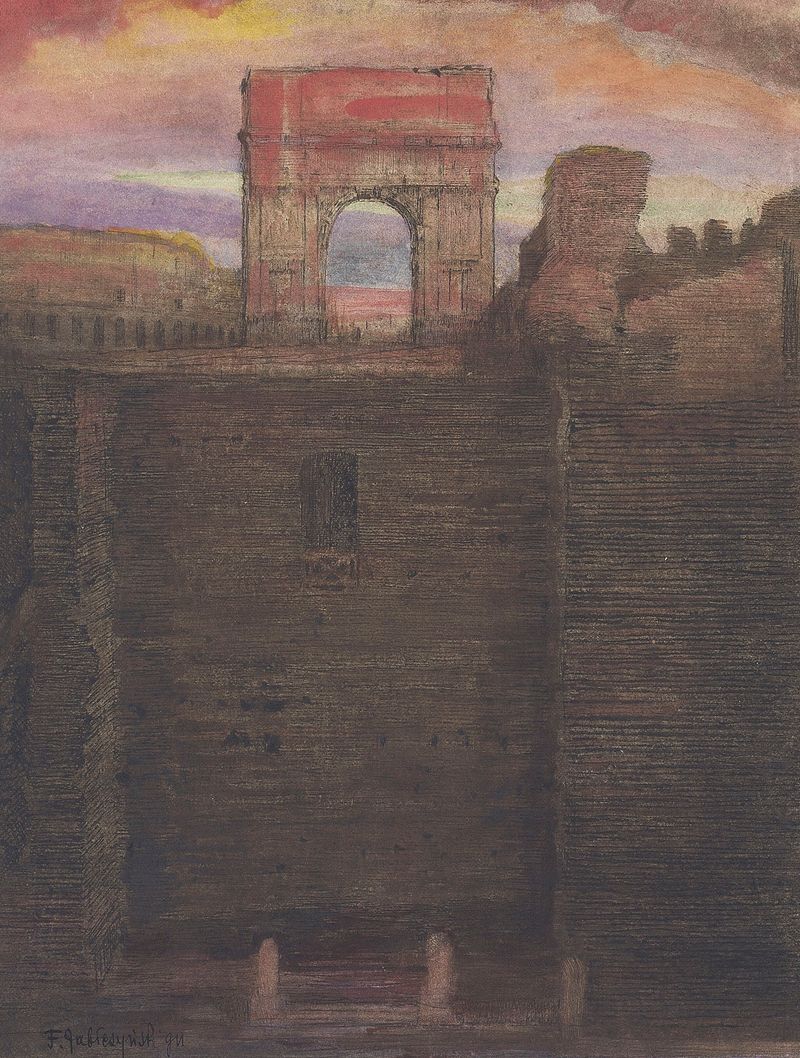
The House of Vestals and the Arch of Titus in the background
Feliks Jabłczyński
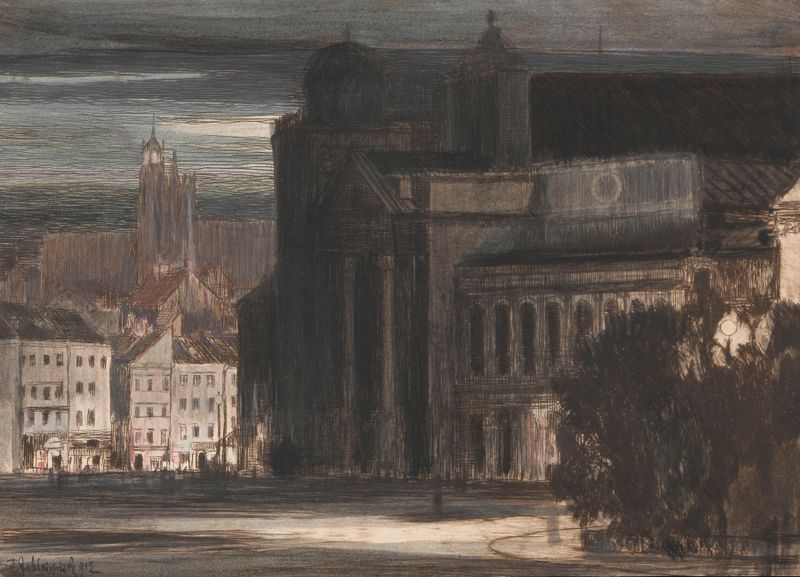
View of the Church of St. Anna and the Castle Square in Warsaw
Feliks Jabłczyński

Kaplica Boimów we Lwowie
Feliks Jabłczyński
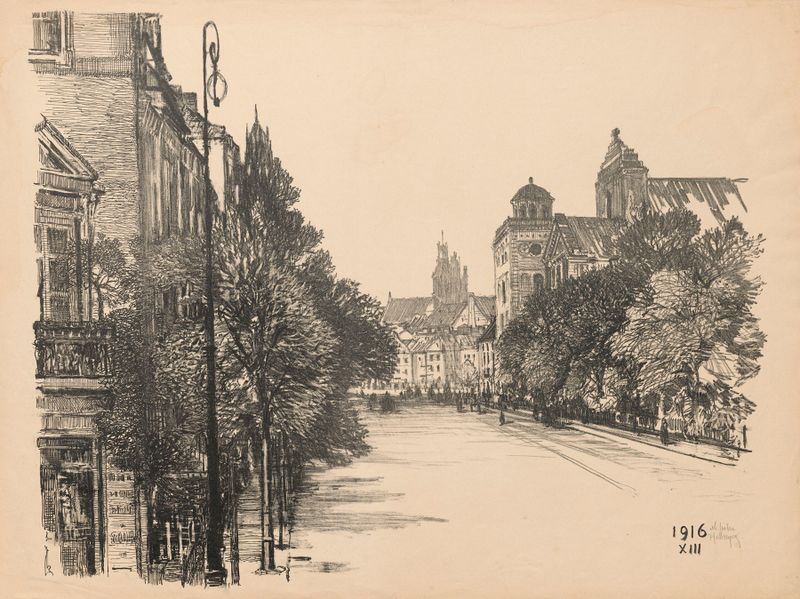
Krakowskie Przedmieście Street
Feliks Jabłczyński
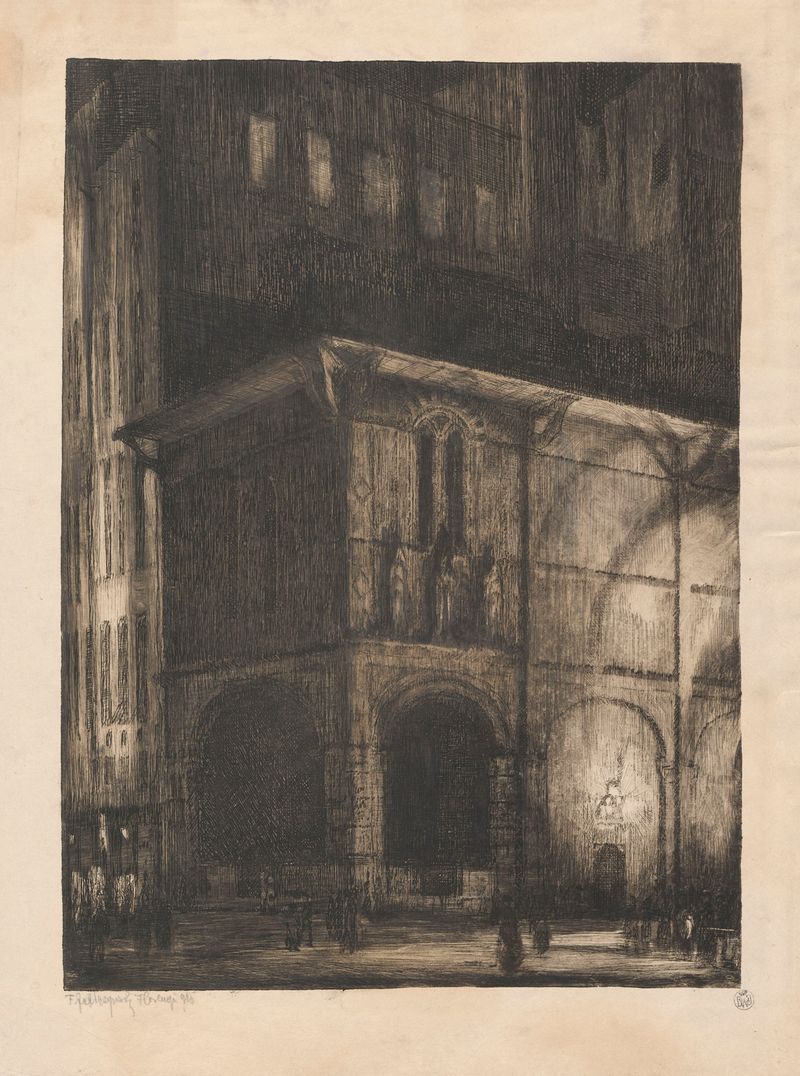
Florence
Feliks Jabłczyński
Carmelite Church.
Feliks Jabłczyński

The Visitation Sisters Church
Feliks Jabłczyński
Forum Nervae
Feliks Jabłczyński





