
Baptism of Lithuania, from the series “History of Civilization in Poland” — History & Facts
In 1387, the Grand Duchy of Lithuania became the last pagan state in Europe to officially adopt Christianity, an event that rippled across the continent and marked the end of centuries of religious conflict in the region. Jan Matejko’s Baptism of Lithuania, from the series History of Civilization in Poland captures this pivotal moment, when Grand Duke Jogaila, newly crowned as King Władysław II Jagiełło of Poland, oversaw the mass baptism that would forever change the fate of his people. The painting was created in 1888, at a time when Poland itself was partitioned and under foreign rule, lending Matejko’s historical vision a powerful contemporary resonance. Matejko chooses the moment when Lithuanian nobles and commoners, dressed in traditional garments, kneel at the river’s edge as priests raise the cross and pour water over their heads.
The artist’s eye lingers on the contrast between the solemn clergy in white vestments and the hesitant, wide-eyed converts, some clutching pagan amulets or glancing back at the receding forest gods. The light falls dramatically on the faces of the newly baptized, symbolizing the dawning of a new era, while the darkened background hints at the fading world of old beliefs. Unlike the serene, almost idyllic scenes of conversion painted by Fra Angelico in the Baptism of Christ, Matejko’s vision is crowded, tense, and layered with the anxieties of cultural upheaval. The exact medium of this work is not clearly documented, but it forms part of Matejko’s ambitious series on Polish history, created during the final decades of his life.
While the painting’s early journey is not well recorded, it stands today as a testament to Matejko’s mission: to forge a sense of national identity through art at a time when Poland’s statehood was erased from the map. The History of Civilization in Poland series was never formally commissioned by a royal patron but was instead a personal project, intended for public edification and national pride. Today, the painting remains in Poland, a fixture in the country’s cultural memory, and a vivid reminder of both Lithuania’s conversion and Matejko’s enduring legacy as a painter of history.
More Artworks by Jan Matejko
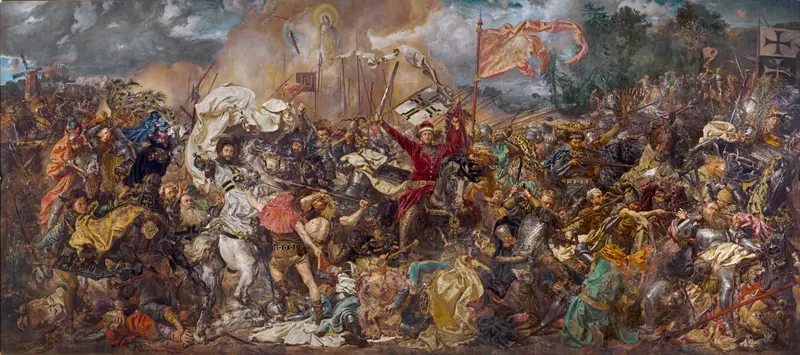
Battle of Grunwald
Jan Matejko

Stańczyk
Jan Matejko

Battle of Raclawice
Jan Matejko
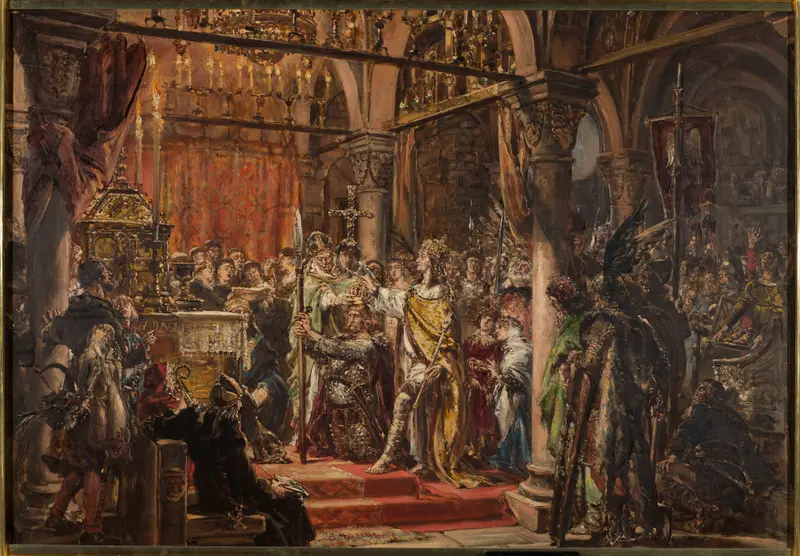
Coronation of the First King, 1001 AD, from the series “History of Civilization in Poland”
Jan Matejko
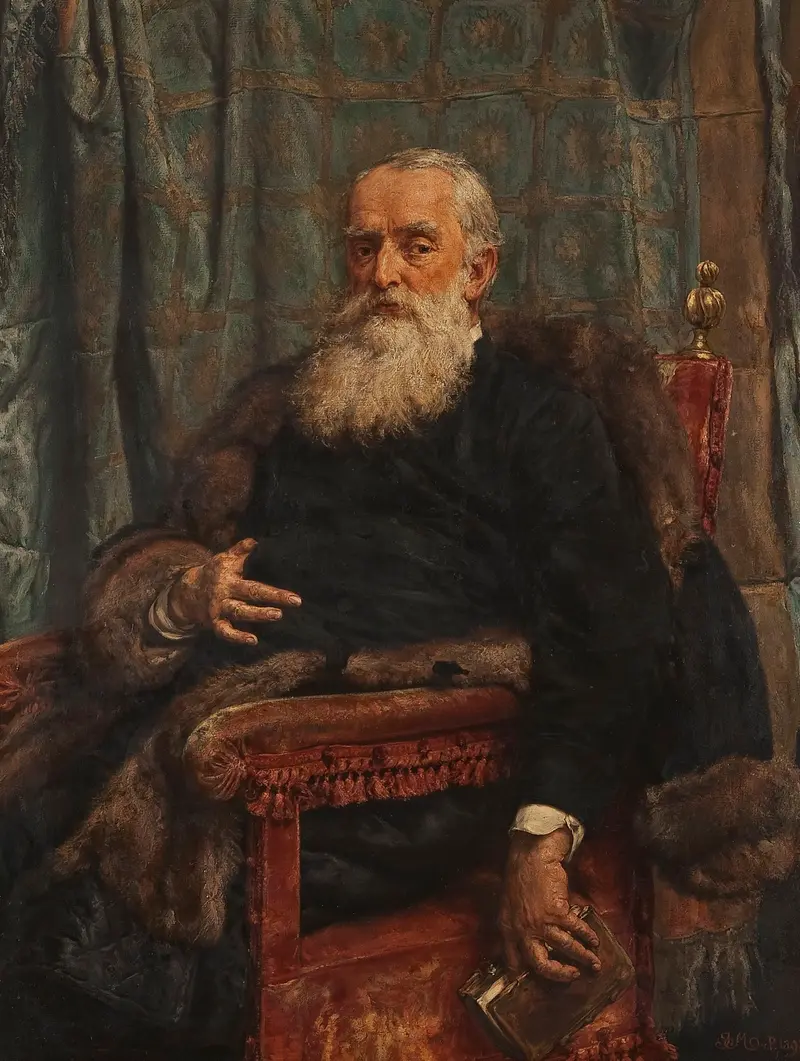
Portrait of Henryk Krajewski
Jan Matejko
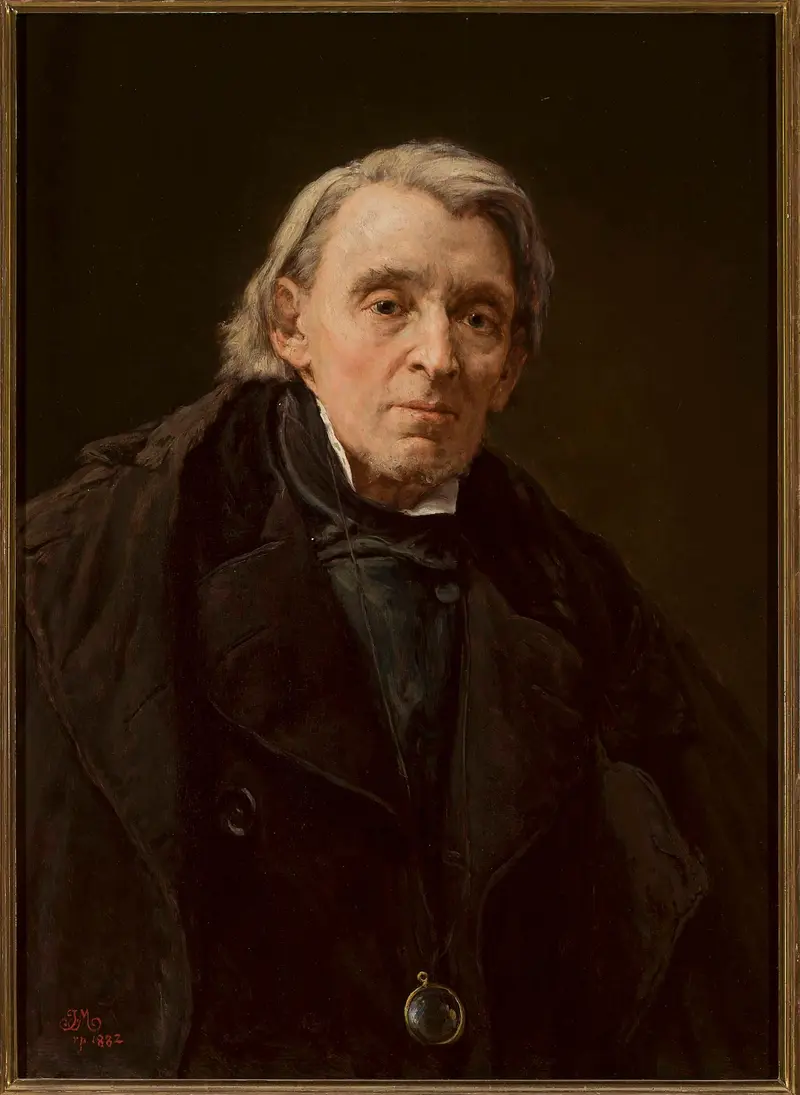
Portrait of Karol Podlewski
Jan Matejko
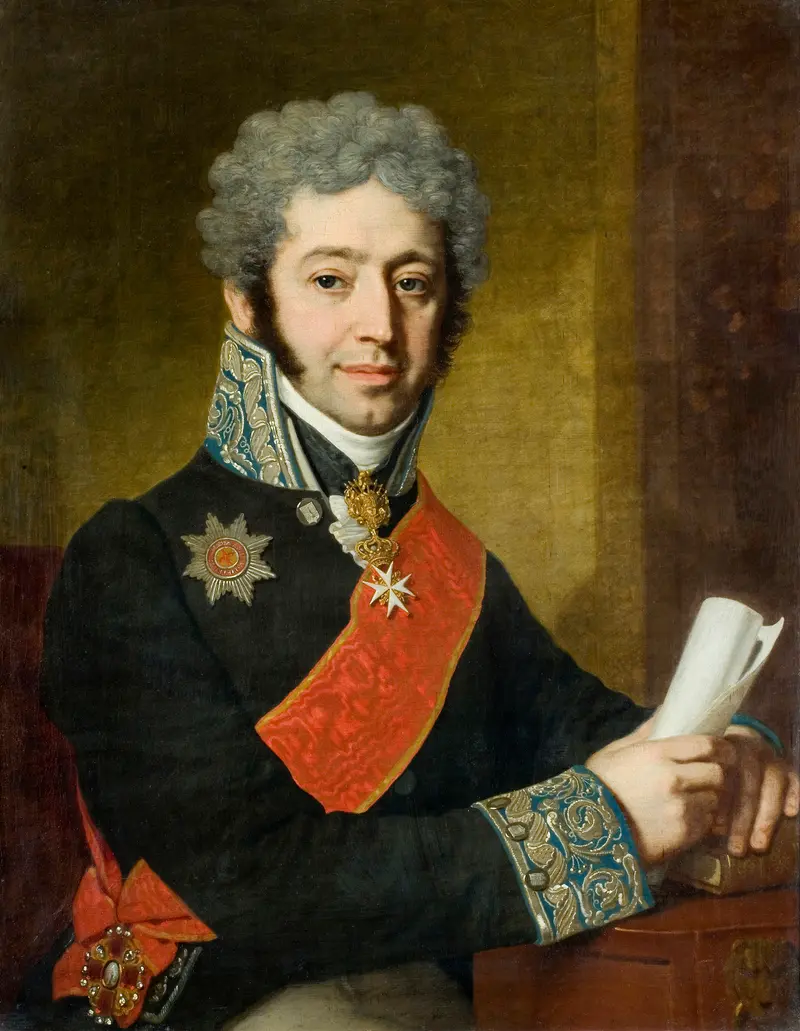
Portrait of Potocki and Poninski
Jan Matejko
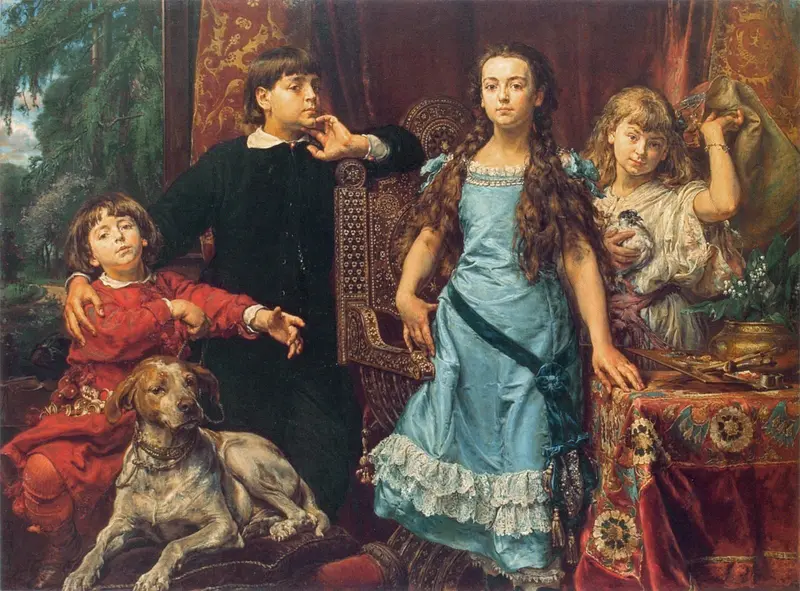
Portrait of the artist's four children
Jan Matejko
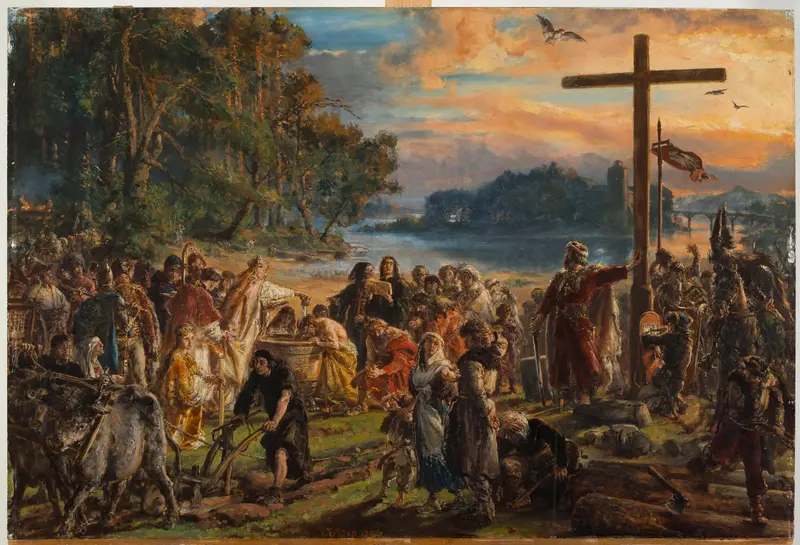
Introduction of Christianity in Poland
Jan Matejko
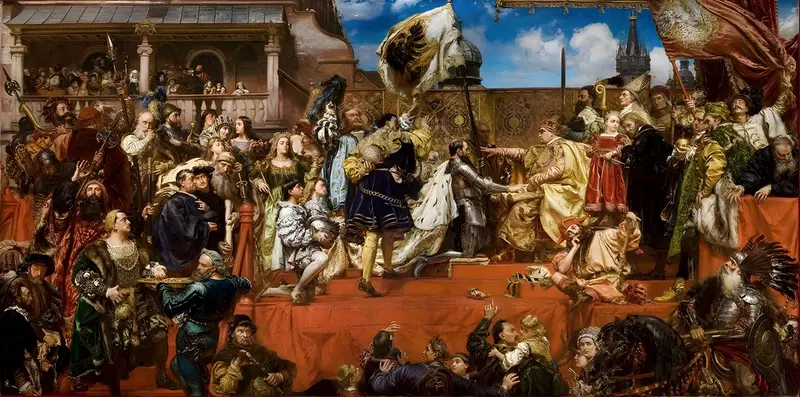
Prussian Homage
Jan Matejko





