
Bauern in der Schenke 1466 Führermuseum — History & Facts
The first thing to catch the eye in Bauern in der Schenke 1466 Führermuseum is the infectious sense of camaraderie that radiates from the crowded tavern interior. The painter, Adriaen van Ostade, has chosen a moment thick with laughter and music, the air almost vibrating with the hum of rural life. Light falls from the left, drawing attention to the flushed, grinning face of the man at the table’s edge, his tankard raised in a gesture of boisterous cheer.
Around him, companions lean in, their postures loose and easy, while a fiddler in the shadows sets the rhythm for the gathering. Each detail—the cards scattered on the floor, the open cupboard, the slouch of the drinkers—signals a world where daily cares are set aside for the pleasures of the moment. This kind of scene was a specialty of the Dutch Golden Age, when artists like van Ostade found endless inspiration in the everyday rituals of peasants and townsfolk. Painted in 1656, this work belongs to a tradition that prized genre painting for its lively storytelling and moral undertones, often commissioned by prosperous burghers who saw both humor and warning in such images.
The Deutsches Historisches Museum now holds this painting, but history has kept few traces of its early journey—what survives is the vivid slice of seventeenth-century life, inviting us to linger among the laughter, the music, and the flicker of tavern light.
More Artworks by Adriaen van Ostade

Dans in de herberg
Adriaen van Ostade
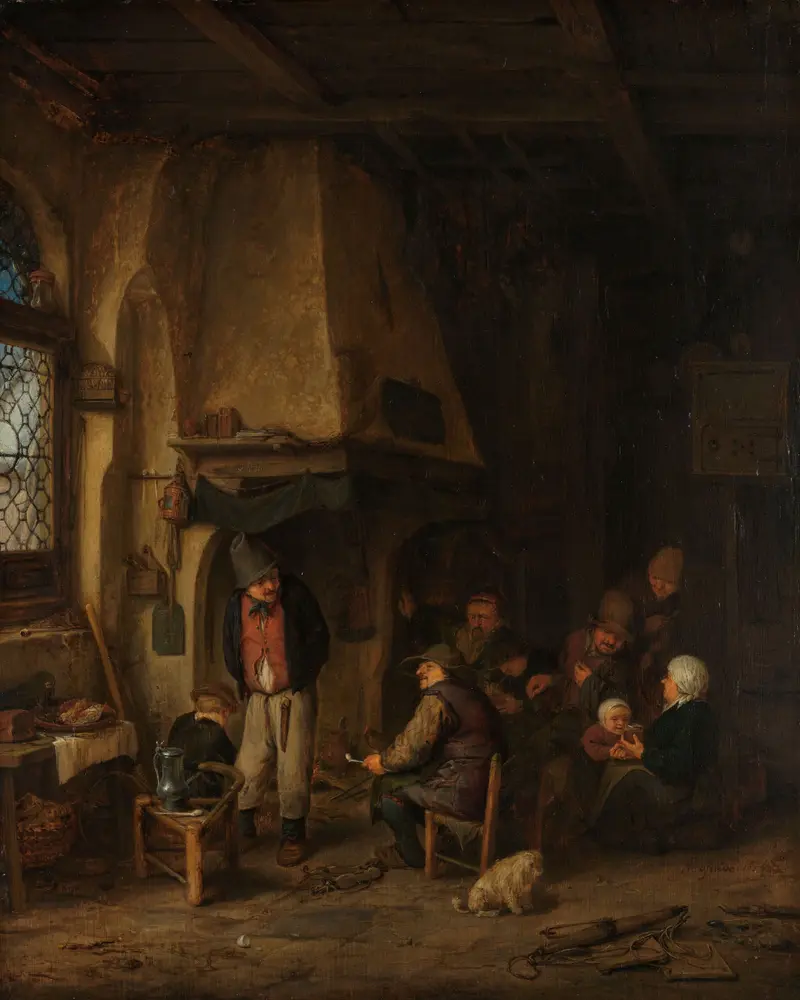
‘The Skaters’: Peasants in an Interior
Adriaen van Ostade
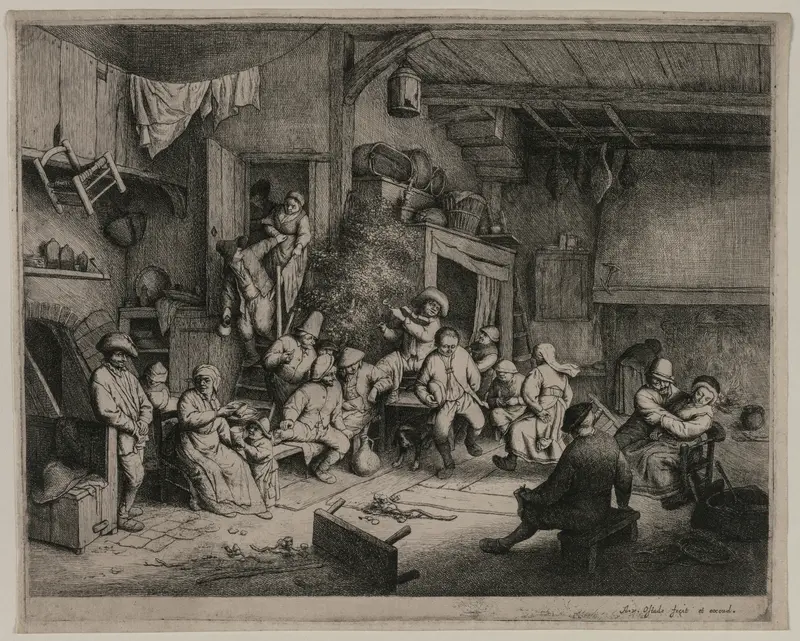
Dance at the Inn
Adriaen van Ostade
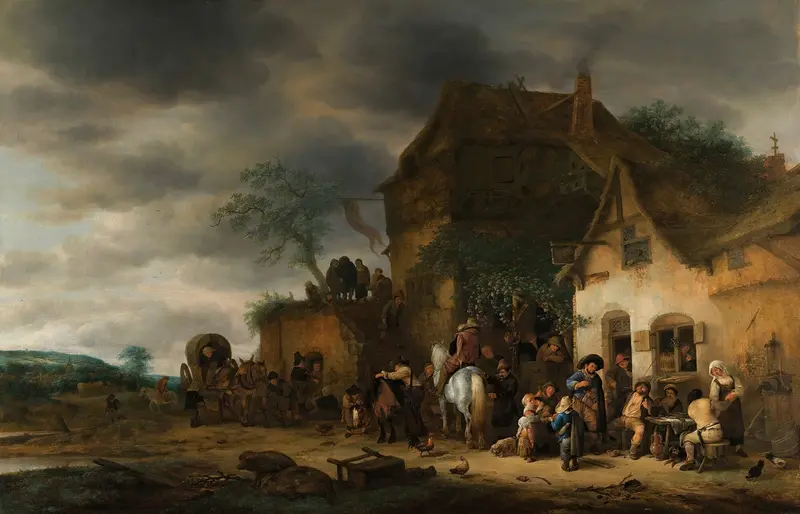
Travellers Halted At A Country Inn
Adriaen van Ostade
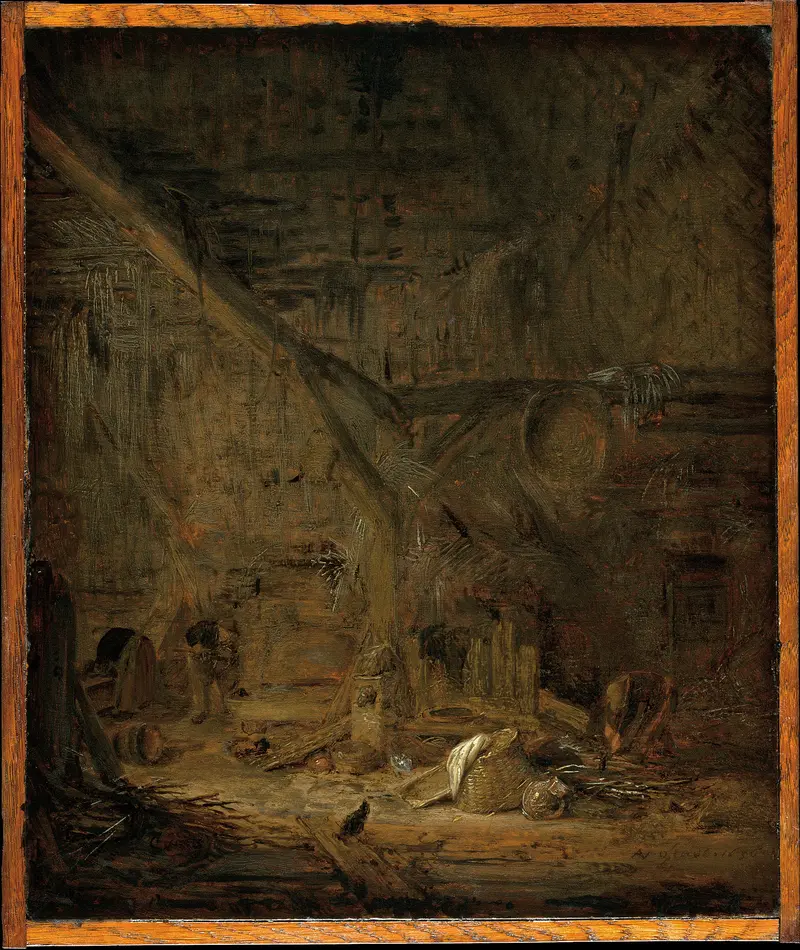
Interior of a Barn
Adriaen van Ostade
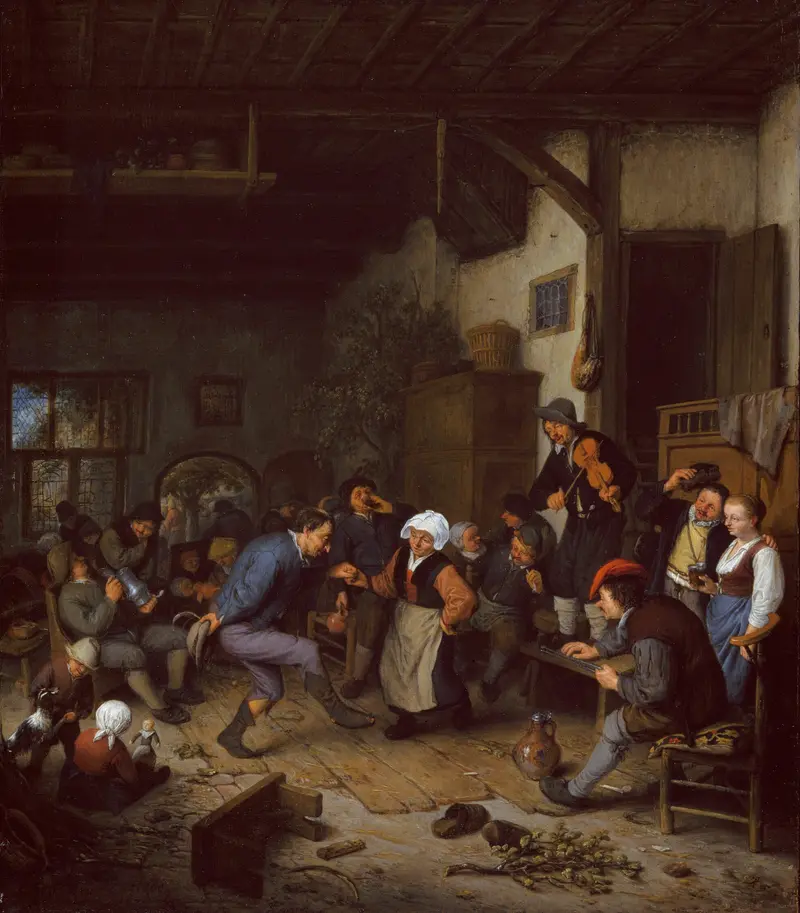
Merrymakers in an Inn
Adriaen van Ostade
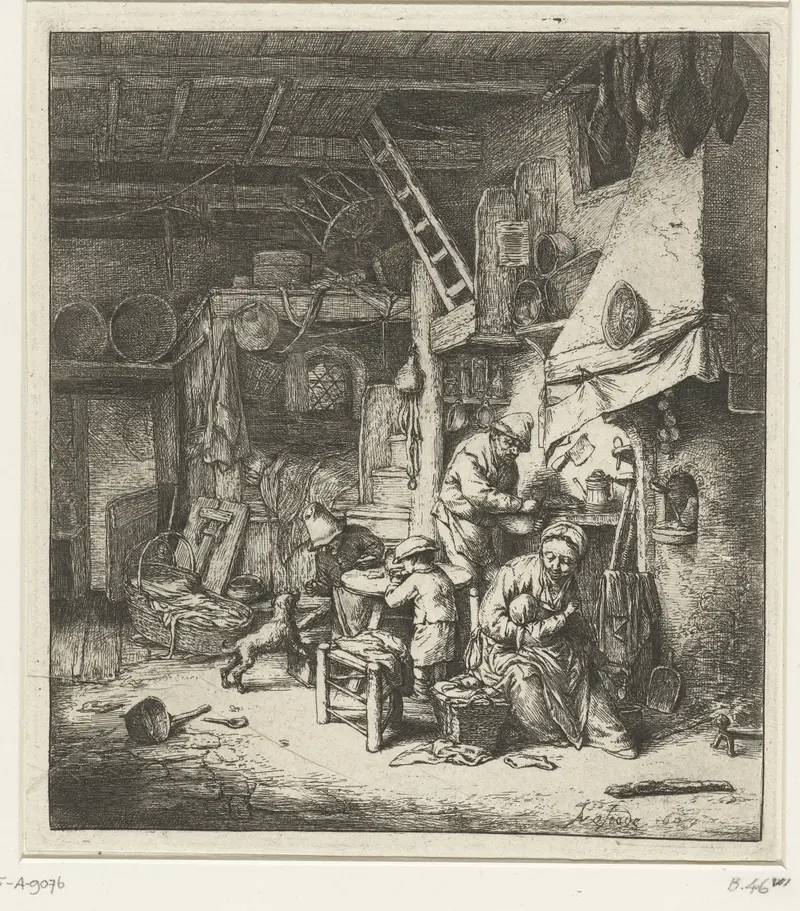
Boerengezin in interieur
Adriaen van Ostade
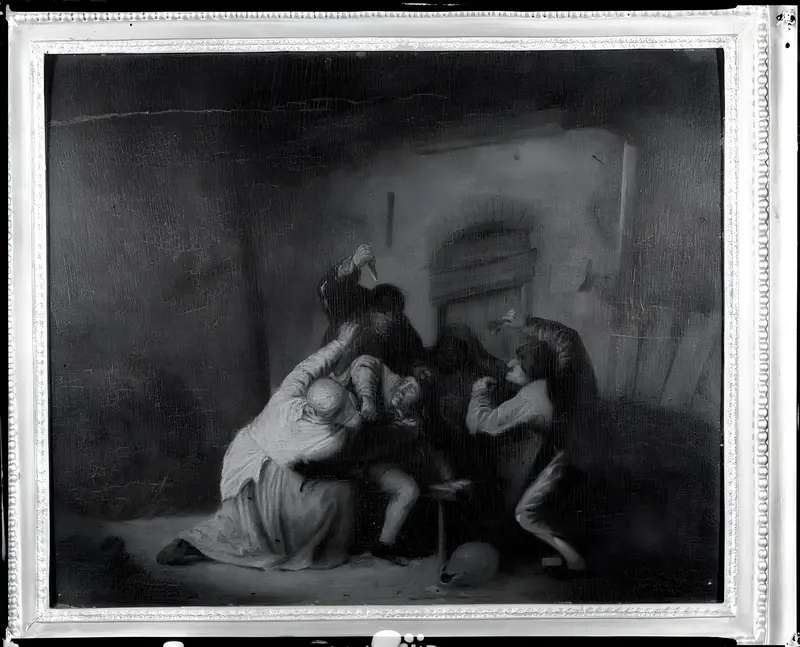
Peasants Brawling in a Tavern
Adriaen van Ostade
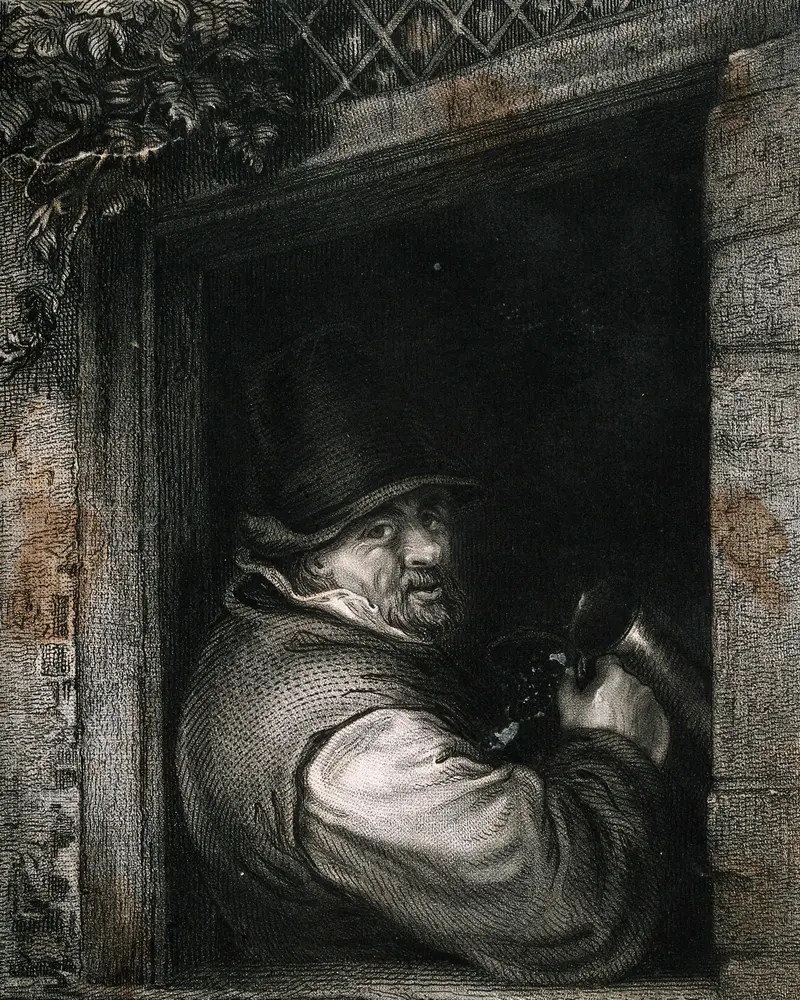
Man with a Tankard at a Window
Adriaen van Ostade
Dans in de herberg
Adriaen van Ostade
More Genre Scene Art

Banquet of the Officers of the St George Civic Guard
Frans Hals

Rembrandt and Saskia in the Scene of the Prodigal Son
Rembrandt van Rijn

Bal du moulin de la Galette
Pierre-Auguste Renoir

Quadrille at the Moulin Rouge
Henri de Toulouse-Lautrec

A Burial at Ornans
Gustave Courbet

When Will You Marry?
Paul Gauguin