
Bay at Nevin, Wales — History & Facts
Did the painter know this moment would outlive them? As time flows relentlessly onward, art has the power to capture a fleeting beauty that echoes through generations, inviting us to pause and reflect. In the serene embrace of Bay at Nevin, Wales, a tranquil seascape unfolds, urging us to explore the intricacies of nature and the human experience intertwined within. Look to the horizon, where soft hues of cerulean and teal merge seamlessly with wisps of white clouds. The gentle brushstrokes depict the lapping waves, inviting your gaze to dance across the undulating surface.
Focus on the distant cliffs, their rugged edges softened by a veil of mist, hinting at both majesty and isolation. The warm sunlight filters through the clouds, casting a golden glow on the water’s surface, evoking a sense of calm and contemplation that resonates with the viewer. In this idyllic scene lies an undercurrent of contrast; the delicate interplay between the ethereal sky and the steadfast cliffs speaks to the transient nature of existence. Each brushstroke captures a moment of stillness, yet we can sense the eternal rhythm of the tides, reminding us of life's ebb and flow.
The painting encapsulates both beauty and melancholy, suggesting that even in stillness, there is an unending cycle of change, evoking a powerful emotional response. In 1899, during a period when Impressionism was gaining traction, George Elbert Burr found inspiration in the rugged coastline of Wales. Living in an era marked by experimentation, Burr sought to infuse his landscape works with a sense of light and atmosphere. His reflections of nature reveal a dedication to capturing not just the visual, but the transcendence of the moment, as he embraced the beauty that surrounds us—everlasting and profoundly moving.
More Artworks by George Elbert Burr
Browse all →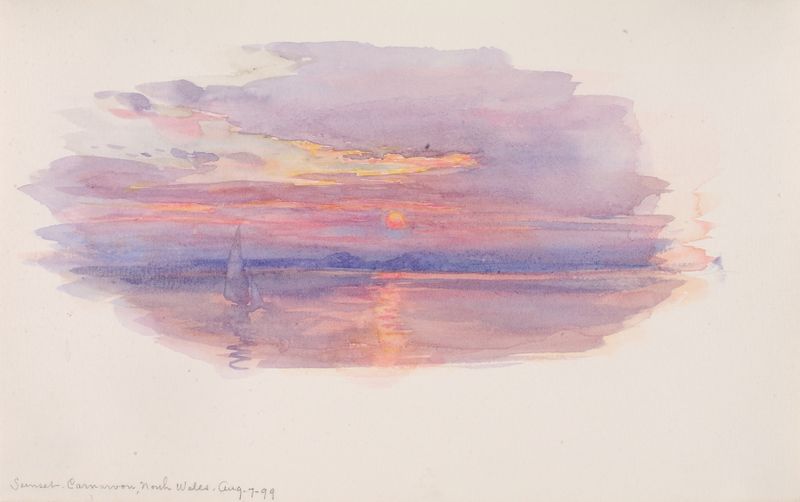
Sunset, Caernarvon, North Wales
George Elbert Burr
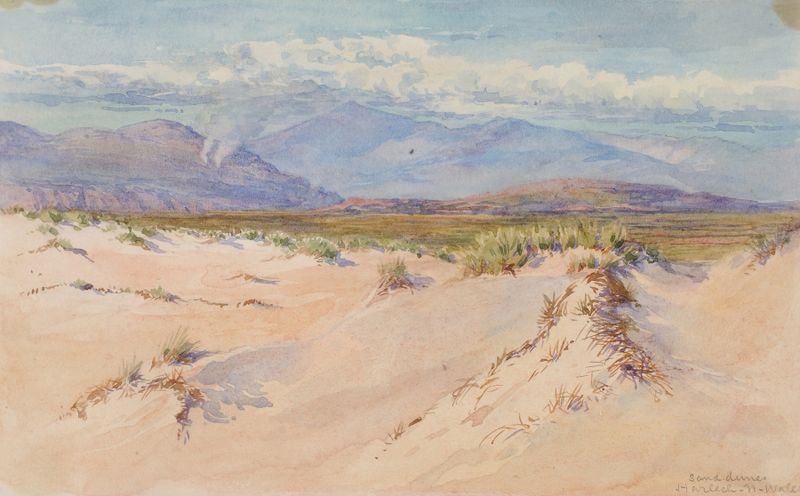
Sand Dunes, Harlech, North Wales
George Elbert Burr

From Pincio, Rome
George Elbert Burr

The Wye near Ross
George Elbert Burr

Venice
George Elbert Burr
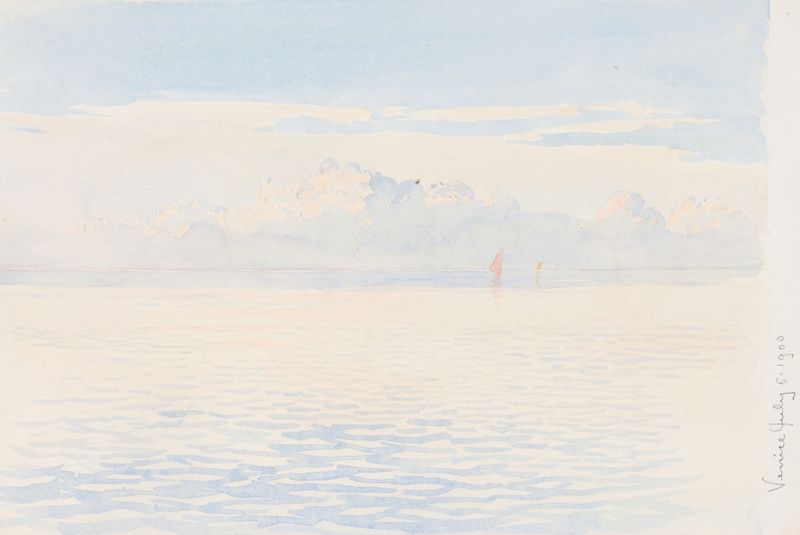
Venice II
George Elbert Burr

Shore at Pwllheli, N. Wales
George Elbert Burr

The Wye at Wilton Castle (Wales)
George Elbert Burr

Venice
George Elbert Burr

Criccieth, N. Wales II
George Elbert Burr





