
Beach at Trouville — History & Facts
Could beauty survive in a century of chaos? In Beach at Trouville, the delicate interplay of longing and serenity suggests that it can, even amidst the turbulence of the era. Focus on the vibrant strokes of yellow and blue that create the shimmering waves on the shore. It's as if the artist invites you to breathe in the salty air and feel the cool breeze. Notice how the figures dotting the beach are infused with a sense of leisure, yet their postures hint at an underlying yearning, perhaps for a fleeting moment of contentment in a rapidly changing world.
Each brushstroke dances with life, brilliantly capturing both the vibrancy of the scenery and the quiet desires of those who inhabit it. The contrast between the bright, sunlit foreground and the somber, muted tones of the distant sky evokes a tension between joy and melancholy. The soft blending of colors serves to emphasize the fleeting nature of beauty; the painted scene might be idealized, yet it whispers of an unfulfilled longing. The couples walking along the shore, absorbed in their own worlds, hint at personal narratives filled with dreams that might never come to fruition. Eugène Boudin created this piece during the mid-1860s, a period marked by significant change in France, both socially and artistically.
While the country was navigating the aftermath of the 1848 revolution, the artist was pioneering en plein air techniques, capturing the ephemeral quality of light and atmosphere. This work stands as a testament to Boudin’s ability to encapsulate his surroundings, reflecting his deep appreciation for nature and the human experience within it.
More Artworks by Eugène Boudin
Browse all →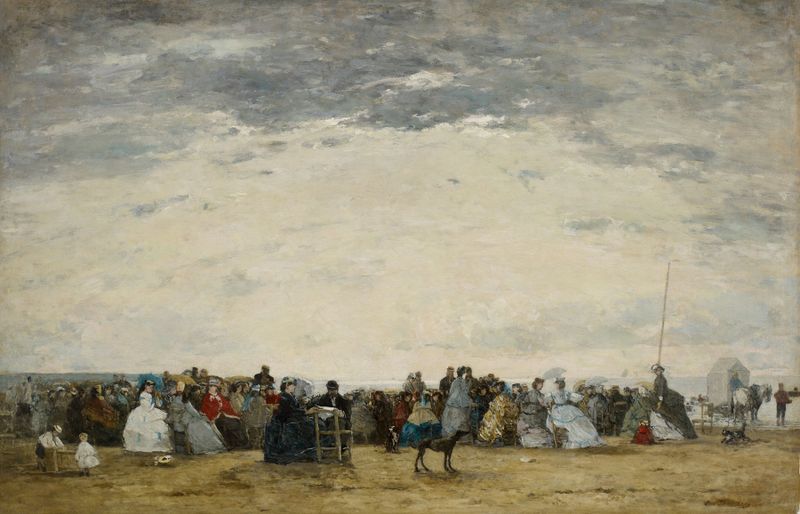
Vacationers on the Beach at Trouville
Eugène Boudin

Washerwoman near Trouville
Eugène Boudin
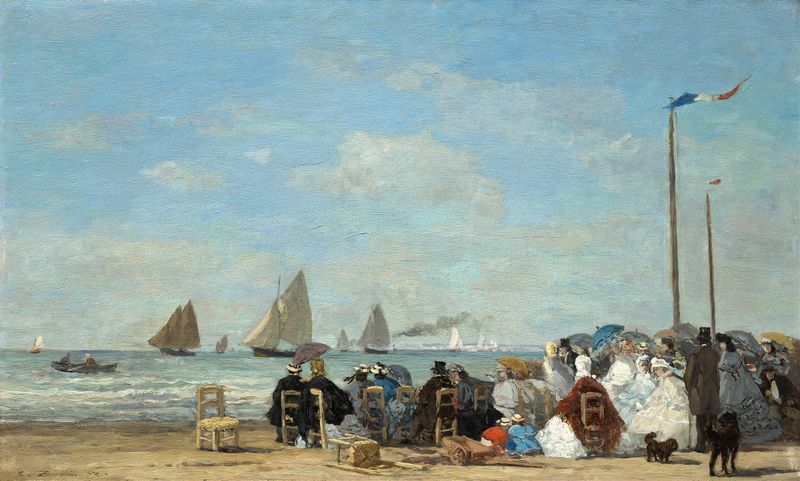
Beach Scene at Trouville
Eugène Boudin

Port aux environs d’Honfleur
Eugène Boudin

Le Faou, un coin du village
Eugène Boudin
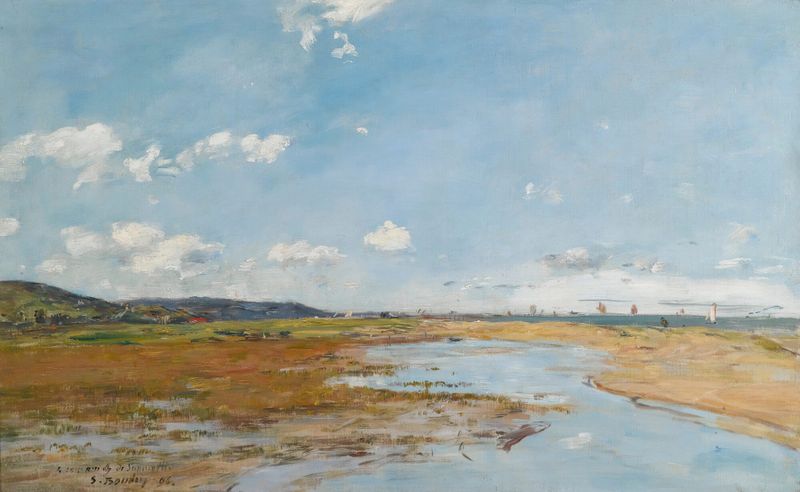
Deauville. Le Rivage
Eugène Boudin
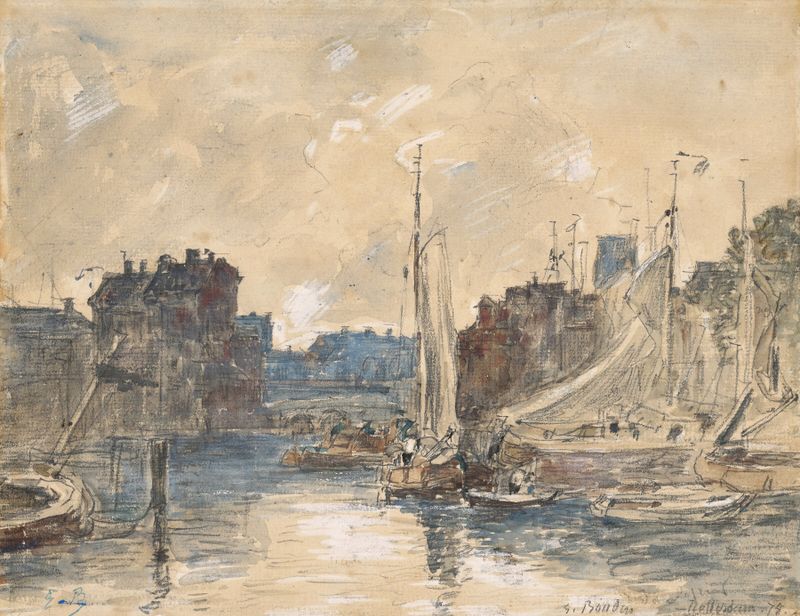
Port de Rotterdam
Eugène Boudin

View of Bordeaux, from the Quai des Chartrons
Eugène Boudin

Trouville, Scène De Plage
Eugène Boudin

Trouville, Le Port
Eugène Boudin





