
Beach in Normandy — History & Facts
Did the painter know this moment would outlive them? In Beach in Normandy, the crashing waves tell a story of resilience, while the beach remains eerily still, as if holding its breath in anticipation of the violence inherent in nature. Look to the left at the tumultuous sea, where dark, brooding clouds loom overhead, their weight palpable. The tumult of the waves, rendered with thick, expressive brushstrokes, conveys movement and urgency, contrasting with the serene coastline bathed in muted sunlight. Notice how the ochres and deep blues intertwine, their tumultuous dance encapsulating both beauty and foreboding.
The horizontal lines of the horizon draw your gaze outward, suggesting an endless conflict between land and sea. Beneath the surface, the painting reflects a deeper tension between tranquility and chaos. The serene beachgoers, small figures dotting the shore, seem dwarfed by the violent forces of nature, evoking feelings of vulnerability amidst the grandeur of the world. The juxtaposition of calm and tumult suggests a fragile balance, one that could tip at any moment, illuminating the raw power of both the elements and existence itself. Gustave Courbet painted this work in the mid-19th century, during a time when the art world was shifting towards realism.
Living in France, he sought to break free from traditional conventions, focusing on raw, unembellished subjects. While the specific year of creation remains uncertain, the underlying themes of natural beauty intertwined with violence were reflective of both his personal philosophy and the broader currents of his time.
More Artworks by Gustave Courbet
Browse all →
Marine
Gustave Courbet
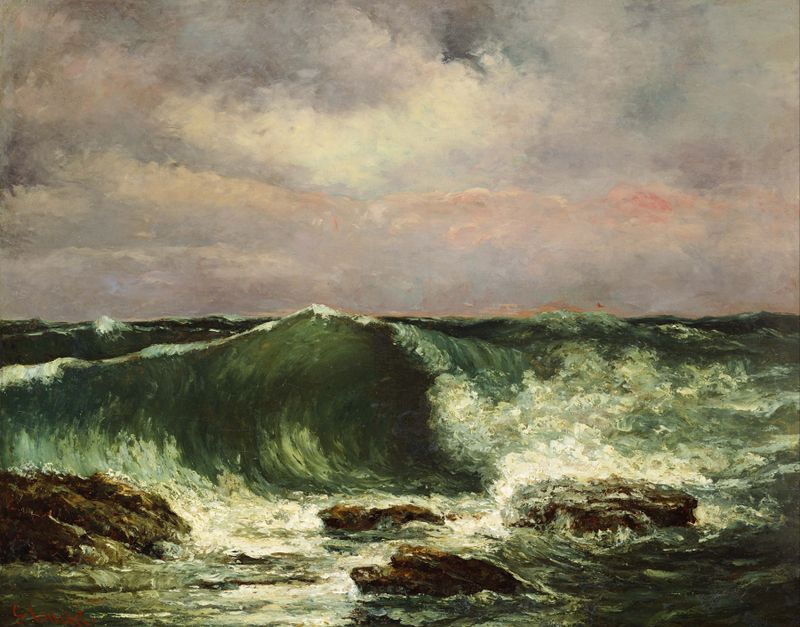
Waves
Gustave Courbet

Étretat; Les Falaises
Gustave Courbet
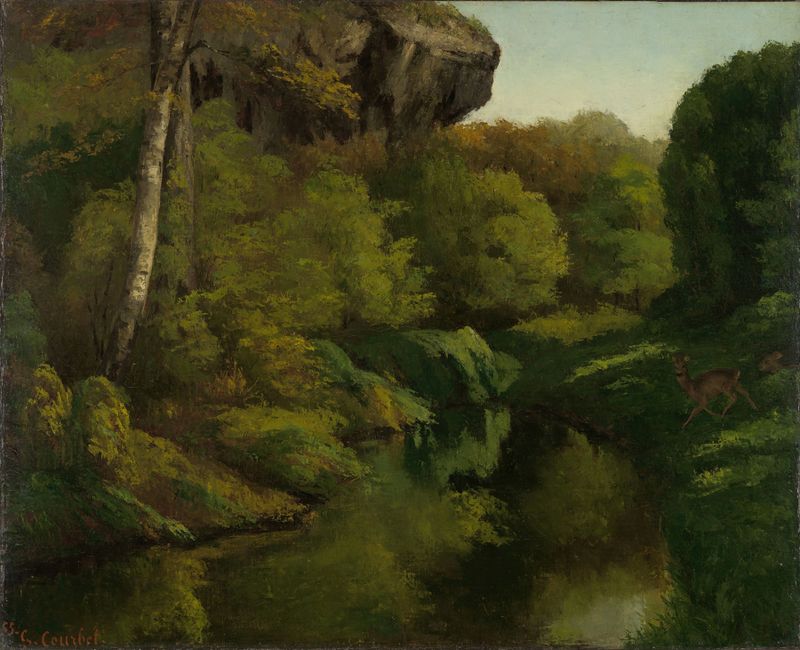
View in the Forest of Fontainebleau
Gustave Courbet
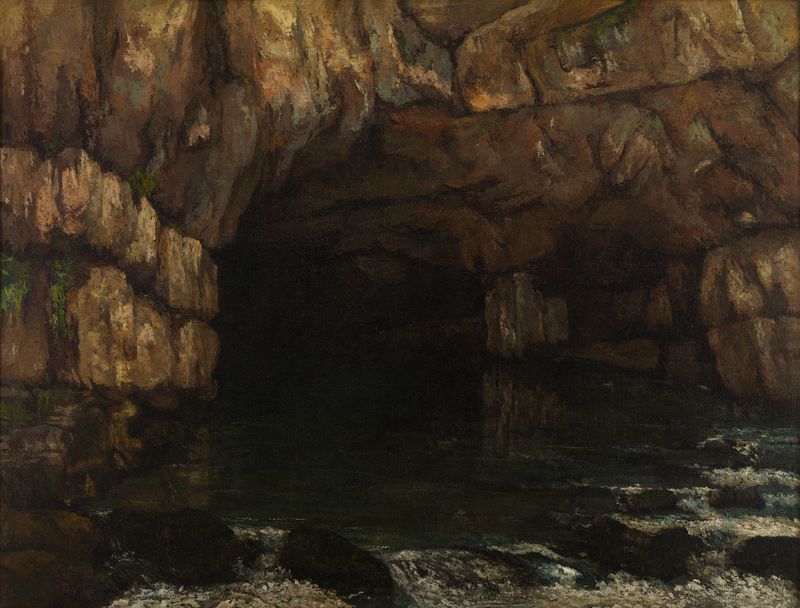
La source de la Loue (The Source of the Loue)
Gustave Courbet

Low Tide at Trouville
Gustave Courbet
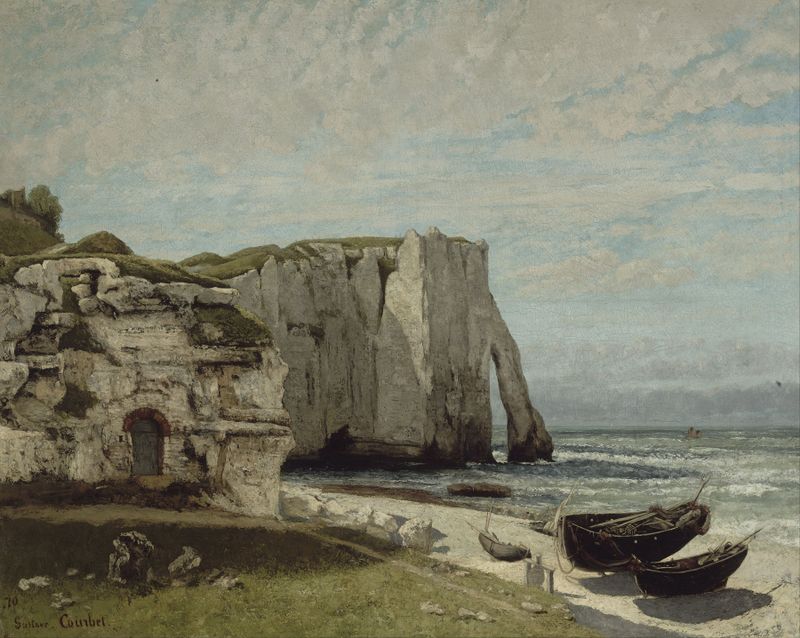
The Etretat Cliffs after the Storm
Gustave Courbet
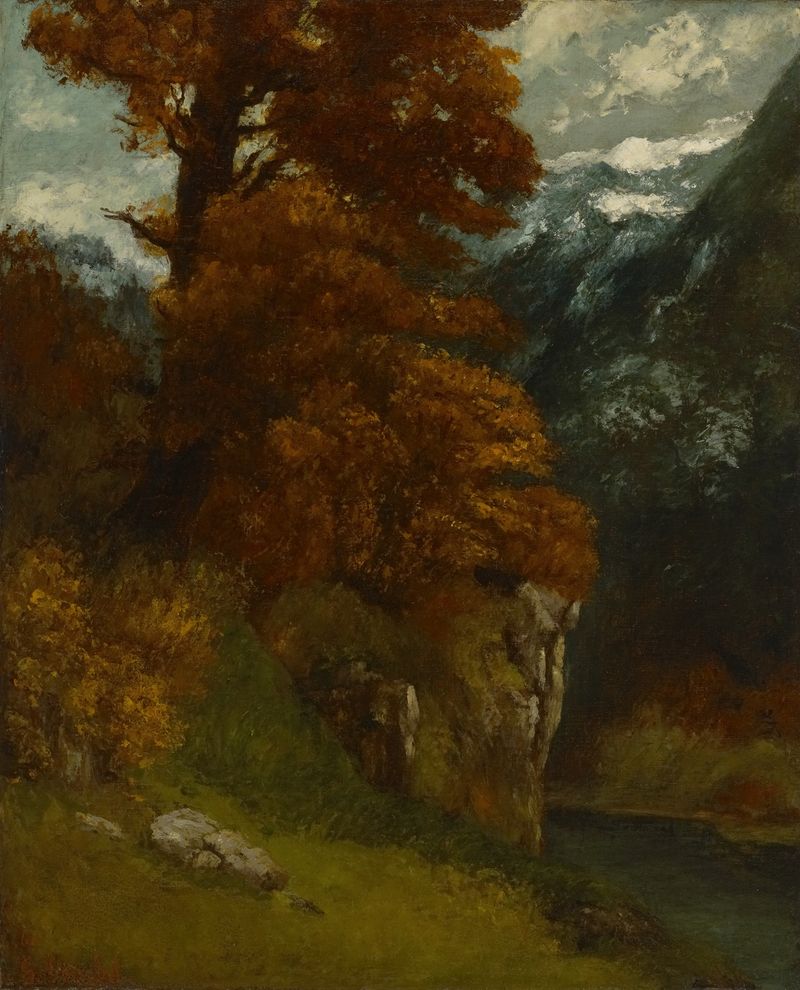
The Glen at Ornans (Bords du Doubs; Effet d’Automne)
Gustave Courbet
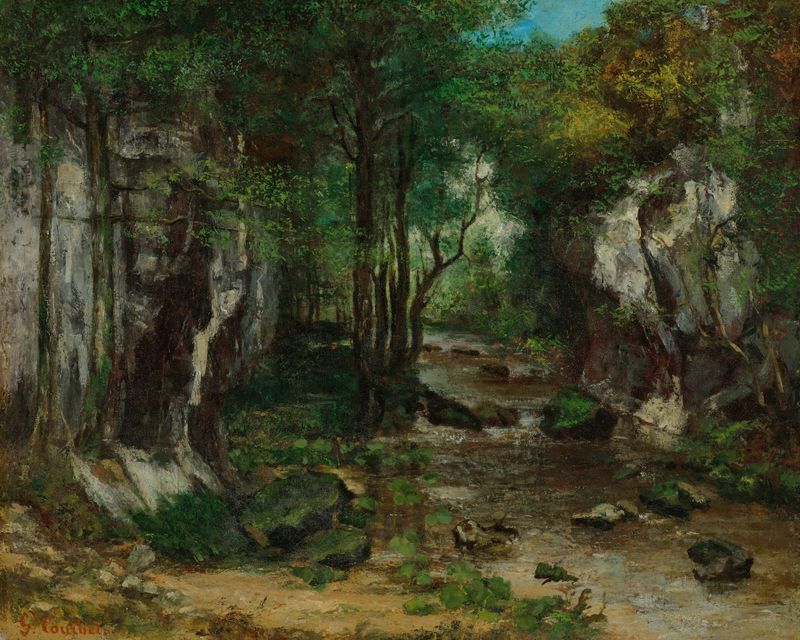
Le Ruisseau de Puits Noir
Gustave Courbet
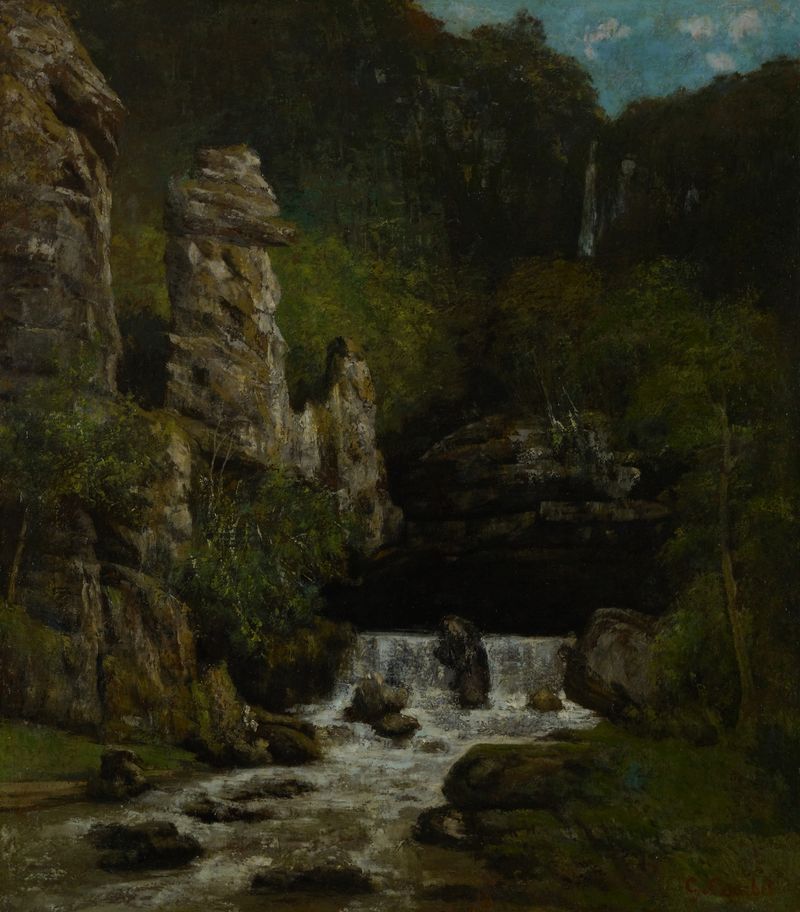
Landscape with a Waterfall
Gustave Courbet





