
Beach Scene — History & Facts
In the quiet embrace of the shoreline, the vast expanse of sand and sea creates an intimate solitude that whispers of longing. Each wave, a soft sigh, laps the shore, echoing a deep sense of loneliness that transcends the painted canvas. The absence of figures draws the viewer into a reflective reverie, leaving an emotional imprint that resonates long after the eye has wandered. Look to the left at the delicate play of light as it dances across the water's surface, illuminating the gentle contours of the waves.
The subtle gradations of color — from soft blues to warm sands — invite you deeper into this serene yet melancholic landscape. Focus on the horizon line where sky meets sea, a masterful use of perspective that emphasizes the vastness of the scene and the isolation it conveys. The brushwork, fluid and expressive, captures the gentle movement of the tide, while hints of muted hues suggest a fleeting moment suspended in time. The contrast between the tranquil beauty of the beach and the stark absence of human presence evokes a poignant tension.
This emptiness speaks not only to the solitude of the setting but also to a broader commentary on the human condition. Each aspect of the composition, from the expansive sky to the untouched sand, reflects an inner yearning for connection amidst the vastness of nature, inviting viewers to confront their own feelings of isolation. Richard Parkes Bonington created this evocative work during the early 19th century, a time when Romanticism was flourishing in Europe. Living in France, Bonington was inspired by the coastal scenes of his surroundings, often capturing the essence of landscapes infused with emotion.
His innovative techniques and fresh perspectives helped shape the future of landscape painting, intertwining personal expression with the beauty of nature.
More Artworks by Richard Parkes Bonington
Browse all →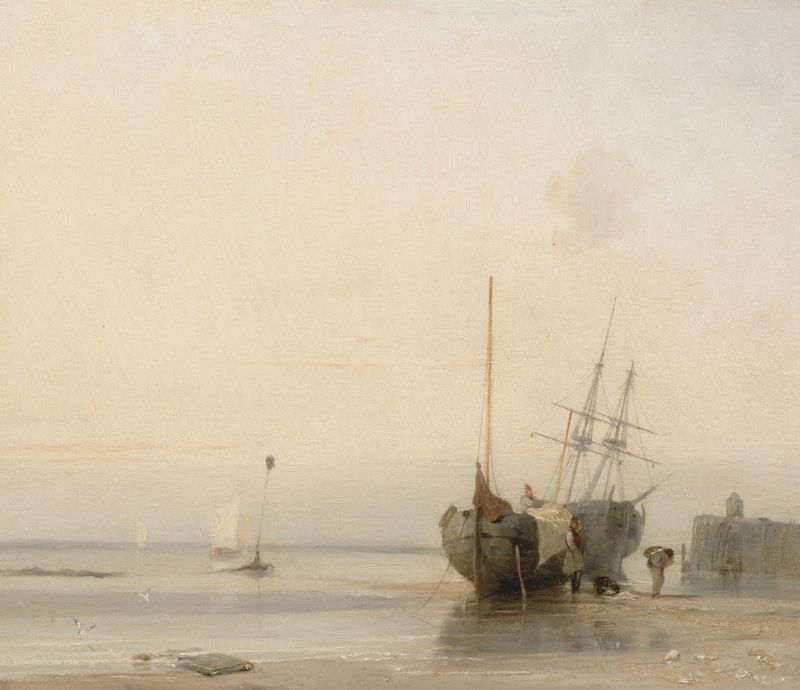
Calais Jetty, France
Richard Parkes Bonington
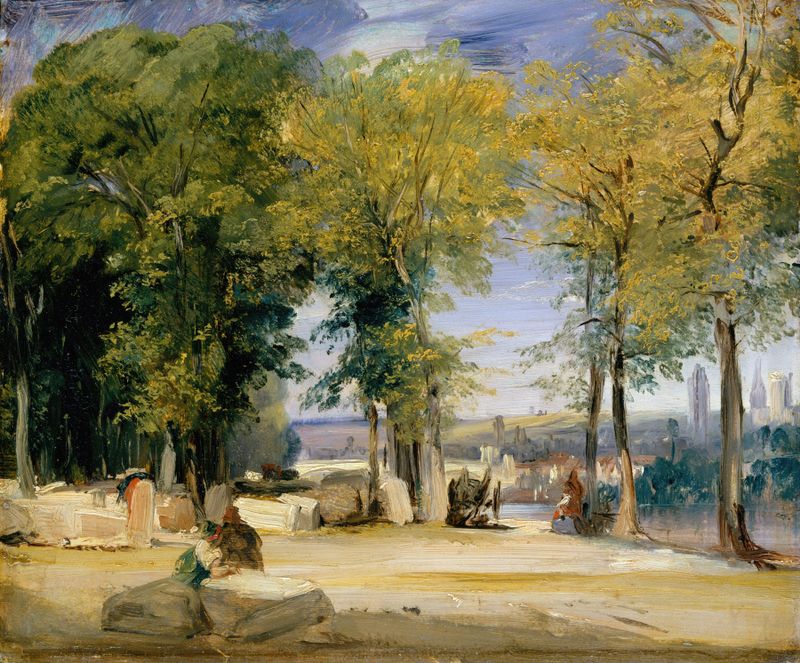
View near Rouen
Richard Parkes Bonington
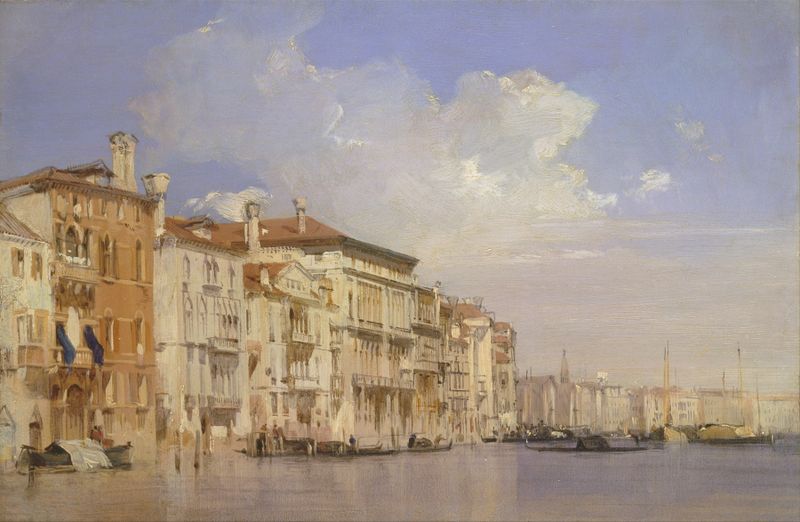
Grand Canal, Venice
Richard Parkes Bonington
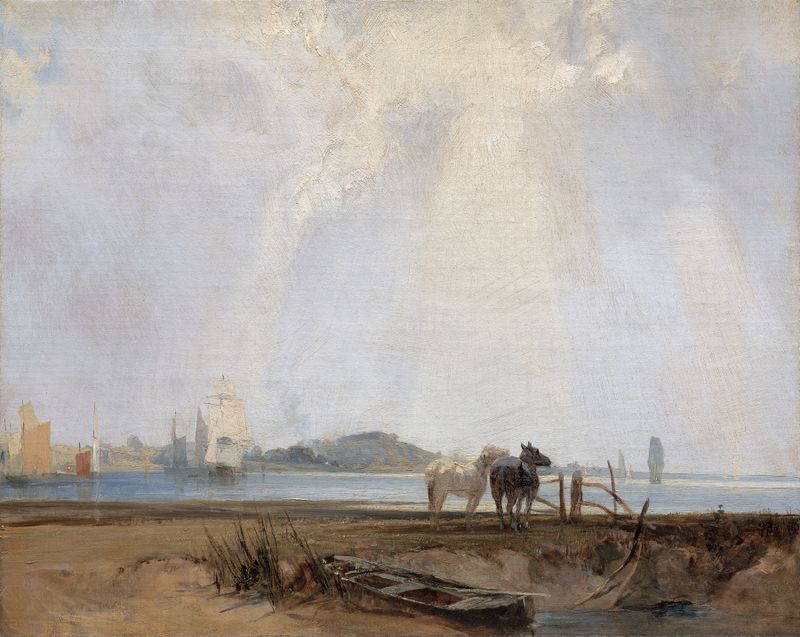
Near Quillebeuf
Richard Parkes Bonington
Evening in Venice
Richard Parkes Bonington
Normandy Coast
Richard Parkes Bonington
The Grand Canal, Venice, Looking Toward the Rialto
Richard Parkes Bonington
View of Lerici with Baron Charles Rivet sketching in the foreground
Richard Parkes Bonington
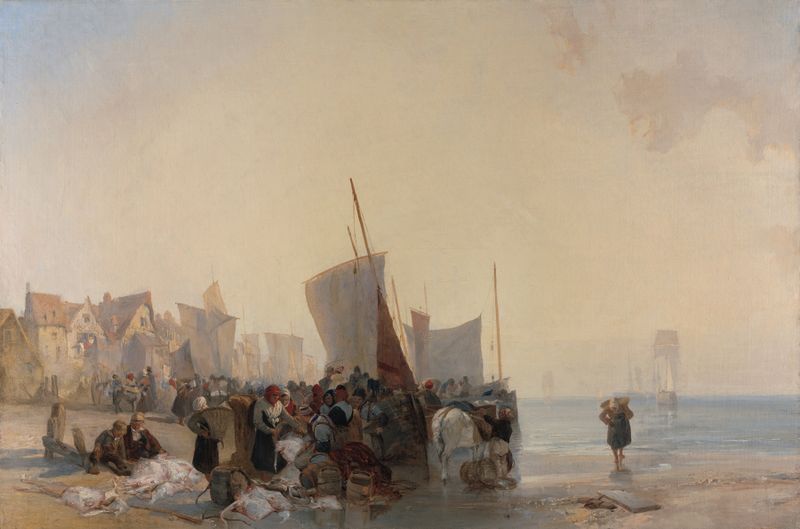
A Fish-market near Boulogne
Richard Parkes Bonington
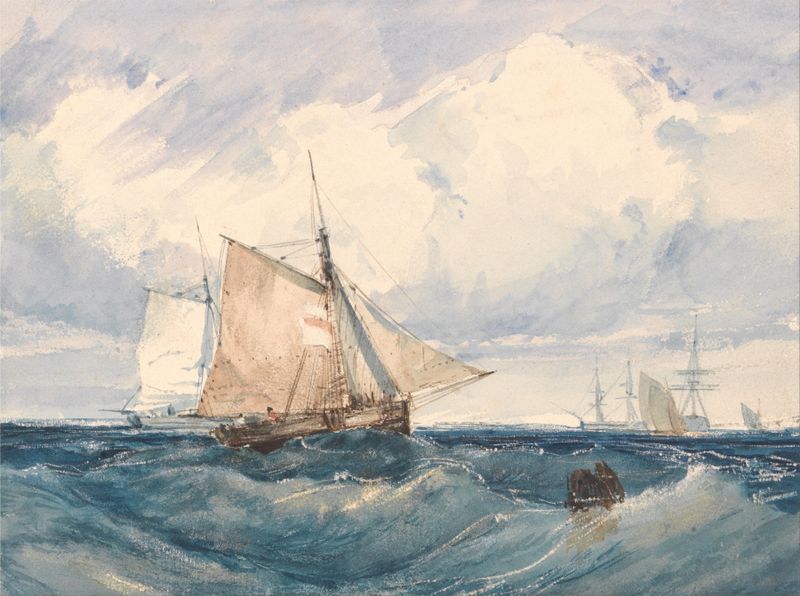
A Cutter and other shipping in a Breeze
Richard Parkes Bonington





