
Beach Scene — History & Facts
In a fleeting moment, a canvas captures the delicate interplay between reality and illusion, inviting the viewer to linger in a world suspended in time. Look to the right at the gentle waves lapping at the shore, each stroke of paint mirroring the soft rhythm of the sea. The hazy figures of bathers, rendered with loose brushwork, create an atmosphere of carefree leisure that contrasts sharply with the precise detailing of the sky. Notice how the light falls upon the sand, a warm palette of ochres and creams, drawing focus to the tender play of sunlight reflecting off the water, imbuing the scene with warmth and life. Yet beneath this idyllic beach scene lies a tension between nature’s beauty and the fleeting nature of time.
The distant horizon appears both inviting and elusive, suggesting a longing for escape while reminding us of the transience of the moment. The figures, caught in their joy, hint at the unspoken stories and intimate connections that unfold in the sands of leisure, each brushstroke alive with emotion and nostalgia. During the years around 1865 to 1867, Eugène Boudin was exploring the effects of light and atmosphere on landscapes, often painting en plein air along the Normandy coast. This period marked his deepening association with the Impressionist movement, as he influenced and mentored younger artists like Claude Monet.
Boudin’s dedication to capturing the everyday moments of life on the beach spoke to a broader cultural shift in art, moving toward a celebration of modernity and the beauty found in simplicity.
More Artworks by Eugène Boudin
Browse all →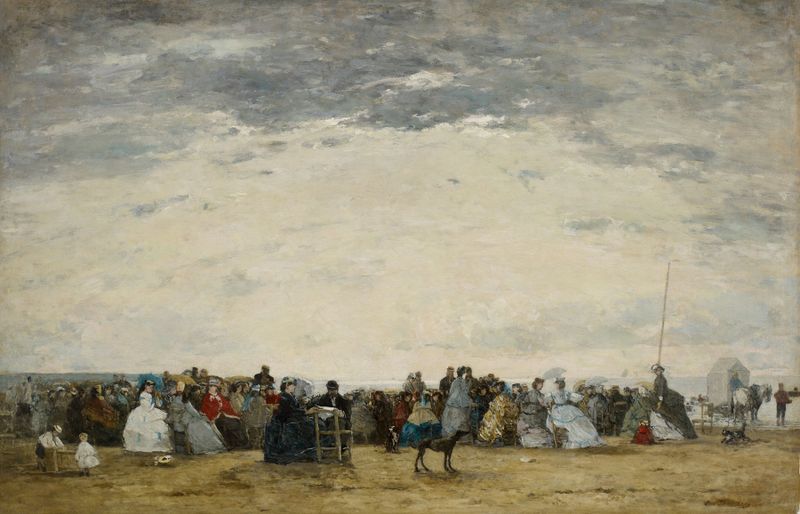
Vacationers on the Beach at Trouville
Eugène Boudin

Washerwoman near Trouville
Eugène Boudin
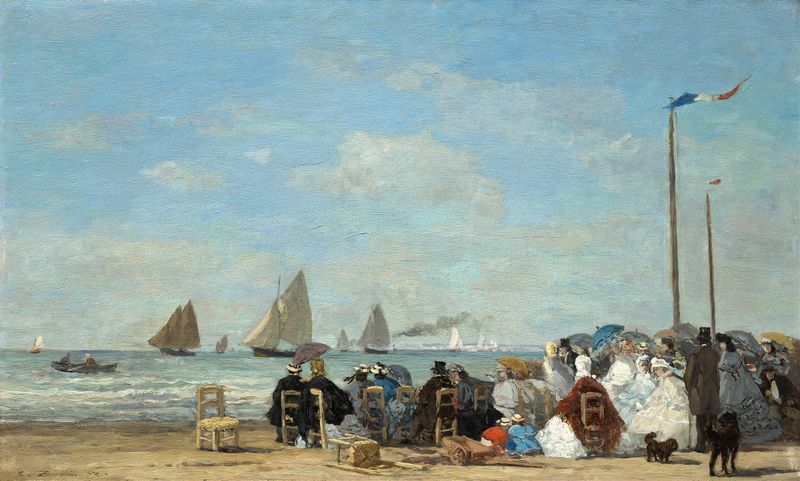
Beach Scene at Trouville
Eugène Boudin

Port aux environs d’Honfleur
Eugène Boudin

Le Faou, un coin du village
Eugène Boudin
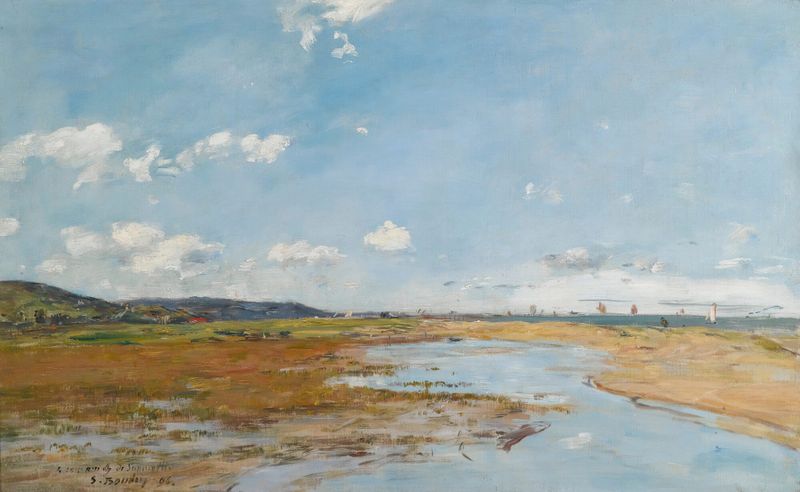
Deauville. Le Rivage
Eugène Boudin
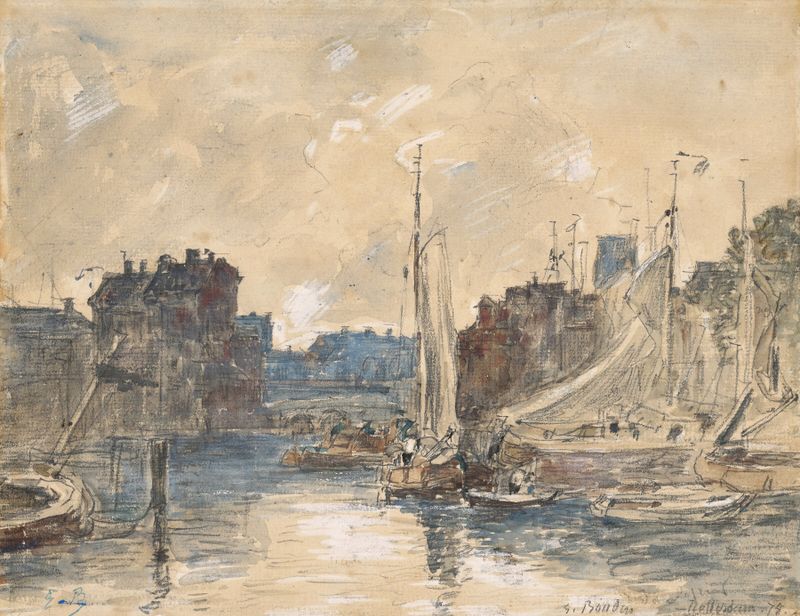
Port de Rotterdam
Eugène Boudin

View of Bordeaux, from the Quai des Chartrons
Eugène Boudin

Trouville, Scène De Plage
Eugène Boudin

Trouville, Le Port
Eugène Boudin





