
Beach scene — History & Facts
What first draws the eye in Beach scene is not the figures gathered on the sand, but the vast, luminous sky that dominates the canvas. The clouds billow upward, dwarfing the people below and lending the landscape a sense of openness and calm. The painter, Adriaen van de Velde, arranges the scene so that the eye travels from the shadowed group at left—huddled beneath a makeshift shelter—across the bright expanse to the distant ships and carts near the horizon.
Each figure is caught in a moment of quiet activity: a man gestures to a dog, a child leans forward in play, and the rest converse or simply watch. The low horizon grants the sky a starring role, suggesting the endlessness of the Dutch coast and the daily life that unfolds beneath it. Painted in 1663 or 1665, this work belongs to a period when Dutch artists were captivated by the landscape and the rhythms of everyday life. Scenes like this were often collected by prosperous merchants and burghers who sought reminders of the countryside and coast, even as cities grew busier.
Adriaen van de Velde was known for his delicate touch and ability to blend figures seamlessly into their settings, a hallmark of Dutch Golden Age painting. Today, the painting resides in the Mauritshuis collection, a fitting home for a work that quietly celebrates the ordinary moments and vast horizons of seventeenth-century Holland. The next time you look, let your eye wander from the figures to the distant sails—each detail rewards a second glance.
More Artworks by Adriaen van de Velde

Staande stier
Adriaen van de Velde
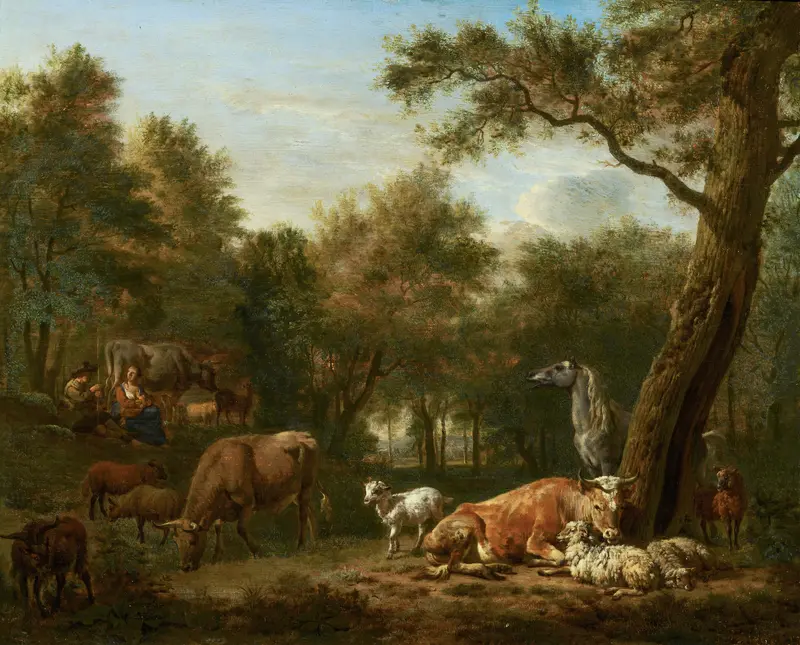
Wooded Landscape with Cattle
Adriaen van de Velde
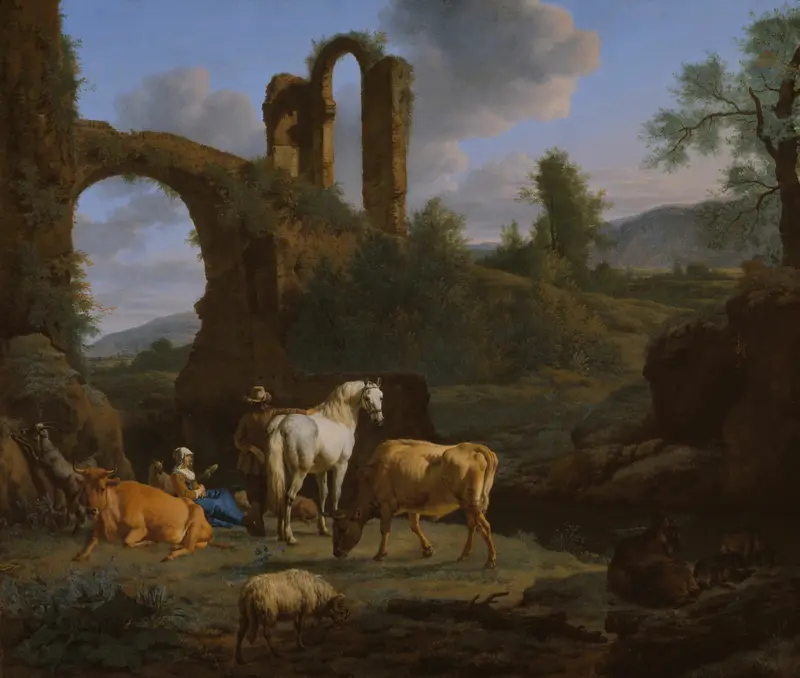
Pastoral Landscape with Ruins
Adriaen van de Velde
Pastoral Landscape with Ruins
Adriaen van de Velde
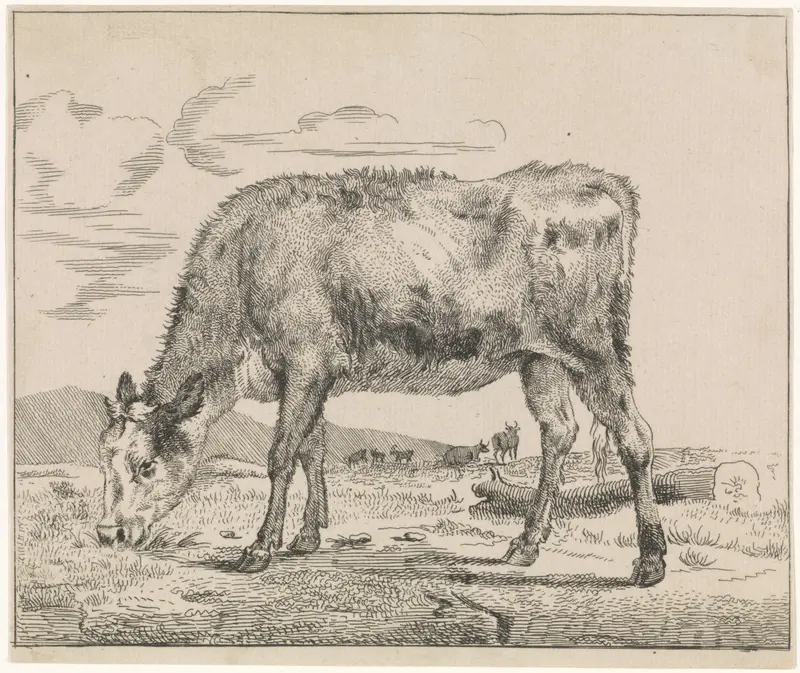
Grazend kalf
Adriaen van de Velde
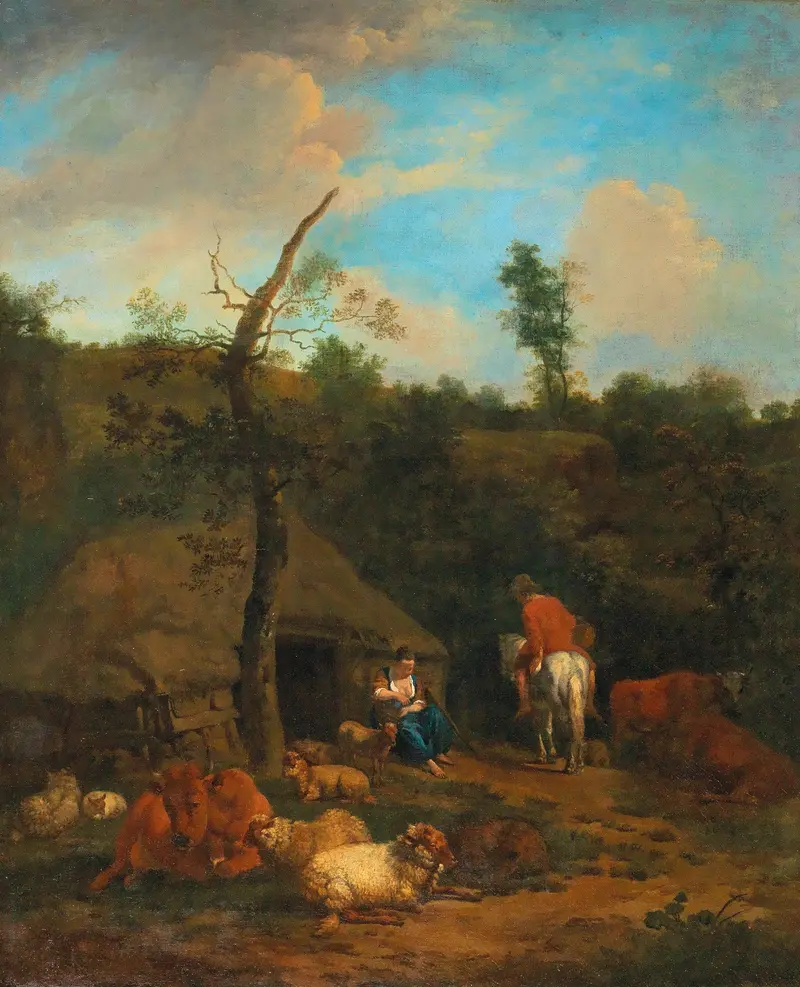
A herdsman and a shepherdess in front of a wooden farmhouse
Adriaen van de Velde
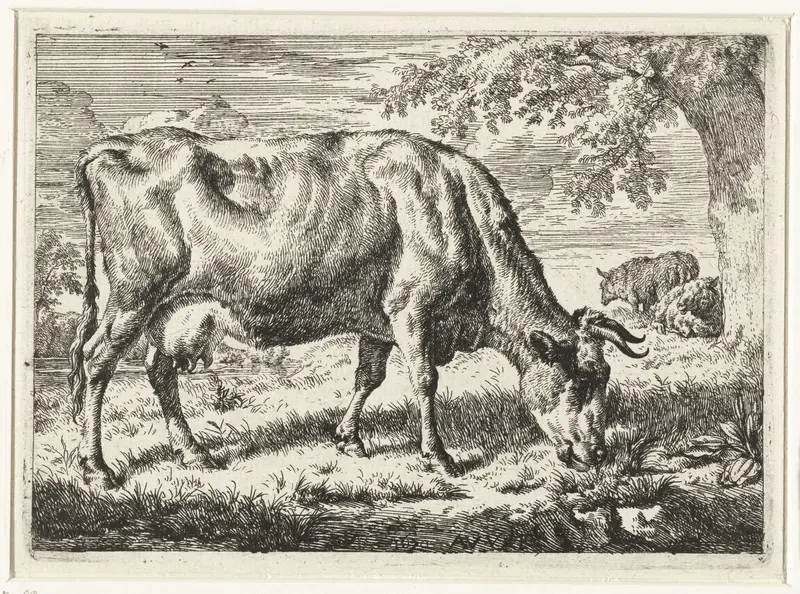
Grazende koe en twee schapen
Adriaen van de Velde
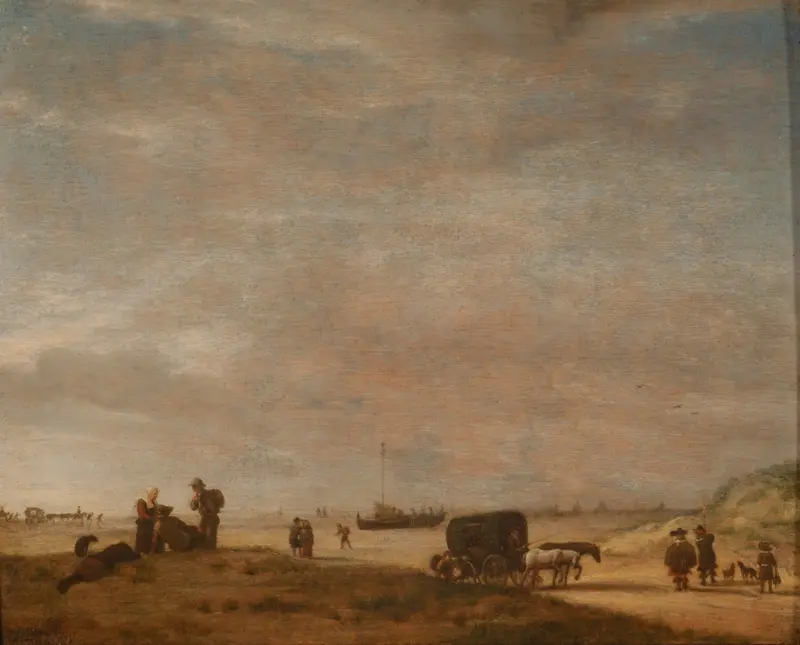
Scheveningen Beach
Adriaen van de Velde
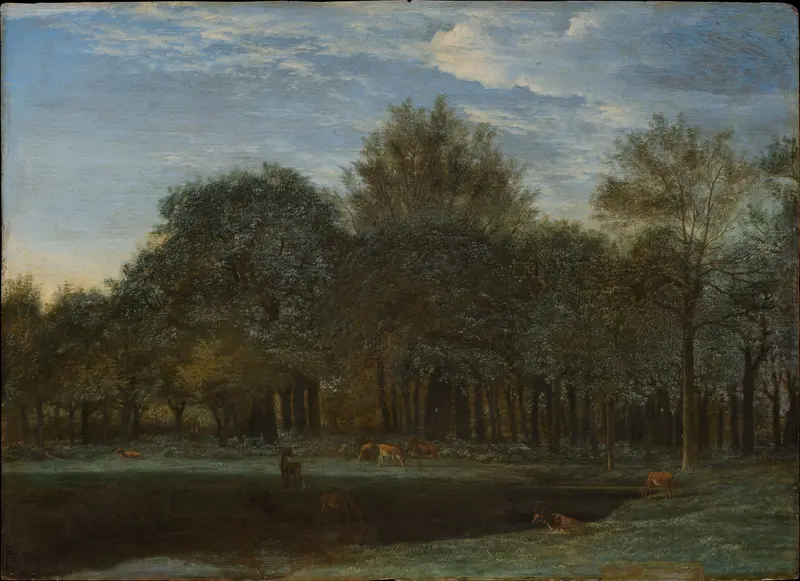
Forest Clearing with Grazing Deer
Adriaen van de Velde
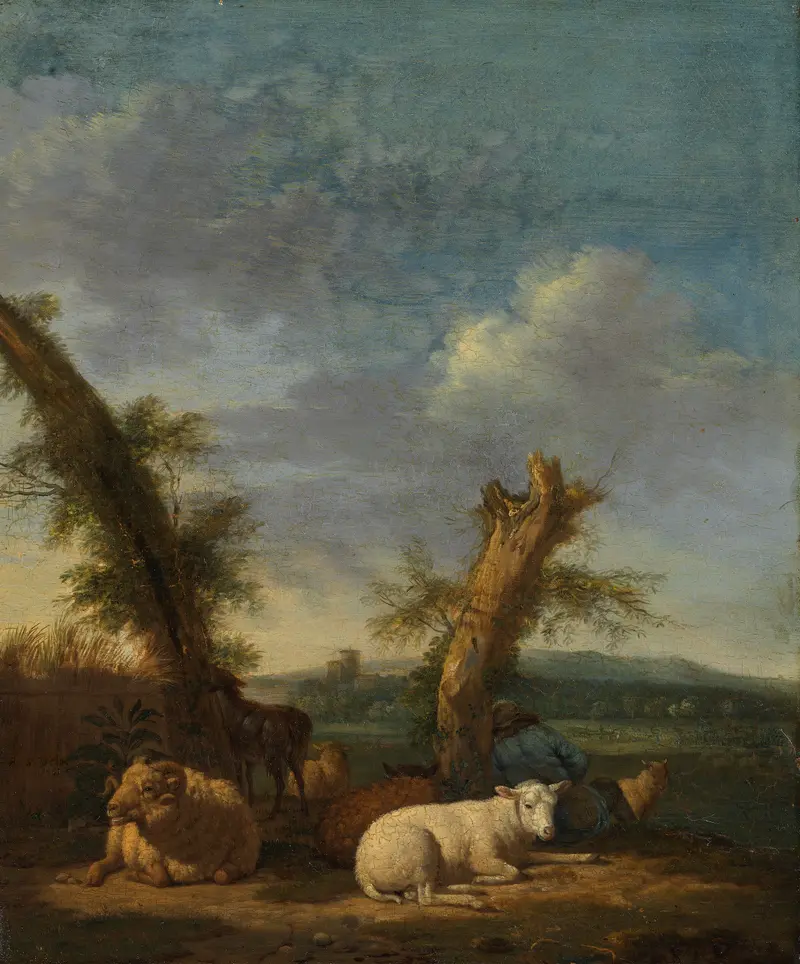
Landscape with Sheep and a Sleeping Shepherd
Adriaen van de Velde
More Landscape Art

The Starry Night
Vincent van Gogh

View of Delft
Johannes Vermeer

Water Lilies
Claude Monet

The Grand Canal, Venice, looking north-west from the Ca' Corner to the Ca' Contarini degli Scrigni, with the campanile of Santa Maria della Carità
Canaletto

Windsor Castle
Canaletto

The Grand Canal looking North-East from the Palazzo Dolfin-Manin to the Rialto Bridge
Canaletto