
Beaulieu; The Bay of Fourmis — History & Facts
What if beauty was never meant to be finished? In Beaulieu; The Bay of Fourmis, that notion hangs in the air, like the mist lingering over a tranquil shoreline. Begin by looking toward the horizon, where delicate brushstrokes capture a serene bay framed by soft, rolling hills. Notice how the warm light of the sun kisses the water, creating a shimmering reflection that dances across the canvas. To your left, the gentle, pastel colors of the sky blend seamlessly with the sea, inviting the viewer to linger in this moment of peace.
Each stroke reveals Boudin’s masterful technique, grounding the viewer in a scene that feels both vivid and ephemeral. This artwork captures the tension between transience and permanence; the void of the empty spaces in the composition invites contemplation on what lies beyond the frame. The fleeting clouds echo the inevitable passage of time, suggesting that beauty is a moment to be experienced rather than captured completely. Elements like the distant sailing boats evoke a sense of adventure, yet they seem almost ghostly in their distance, hinting at the layers of life that exist just out of sight. In 1892, while living in France, Eugène Boudin painted this piece during a period of growing recognition in the Impressionist movement.
He was known for his plein air techniques, and this painting reflects his fascination with light and atmosphere. At that time, he was both a mentor and a friend to young artists, urging them to embrace the natural world in their work, shaping the trajectory of modern art as it began to flourish.
More Artworks by Eugène Boudin
Browse all →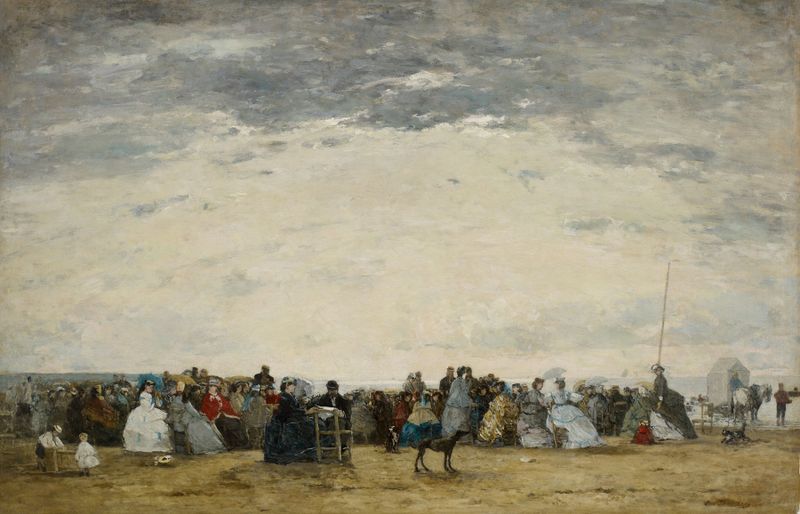
Vacationers on the Beach at Trouville
Eugène Boudin

Washerwoman near Trouville
Eugène Boudin
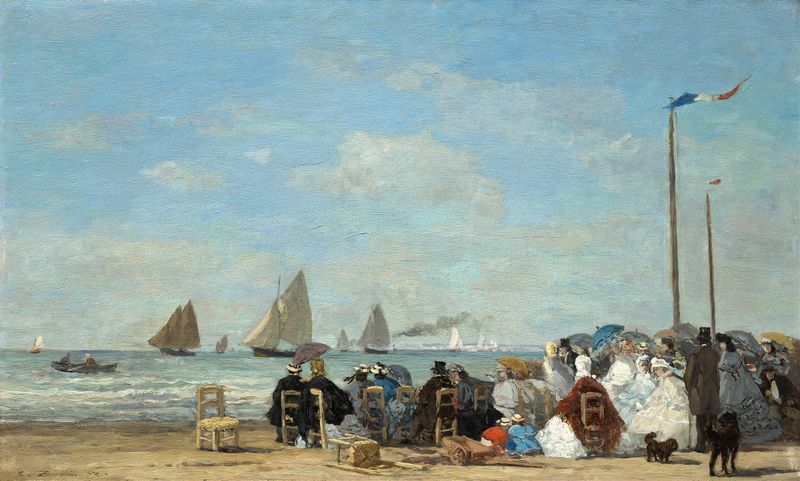
Beach Scene at Trouville
Eugène Boudin

Port aux environs d’Honfleur
Eugène Boudin

Le Faou, un coin du village
Eugène Boudin
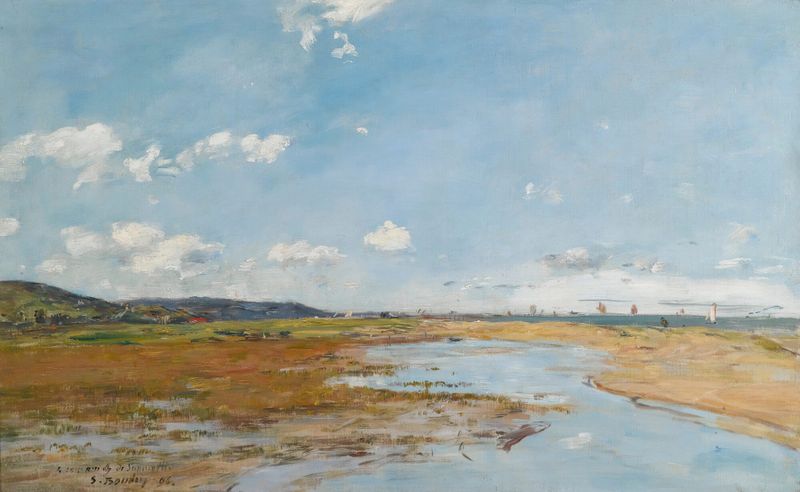
Deauville. Le Rivage
Eugène Boudin
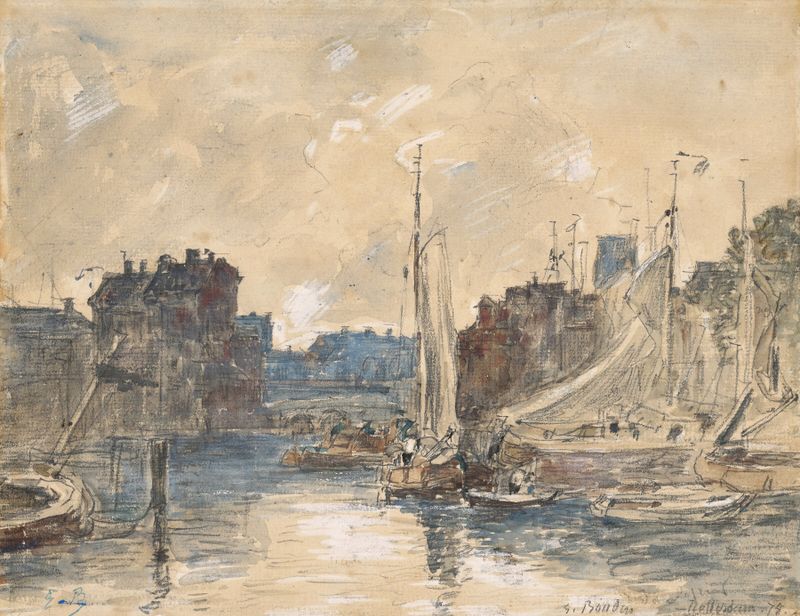
Port de Rotterdam
Eugène Boudin

View of Bordeaux, from the Quai des Chartrons
Eugène Boudin

Trouville, Scène De Plage
Eugène Boudin

Trouville, Le Port
Eugène Boudin





