
Belted Kingfisher — History & Facts
What first catches the eye in Belted Kingfisher is the drama of movement and intent: three birds, each frozen in a different moment of their restless lives, animate the quiet riverbank. The topmost kingfisher dives headlong, wings swept back, a living arrow aimed at unseen prey beneath the water’s surface. Below, another perches alertly on a stub of driftwood, its crest raised in anticipation, while the third has just claimed its prize—a wriggling fish, clamped in its beak, the victory of the hunt still fresh.
The composition draws the viewer’s gaze in a looping arc, from the poised energy of the perched bird to the plunging dynamism above, then down to the glint of the river and the distant, misty hills. Every feather is rendered with a precision that feels both scientific and alive, the blue and white plumage set off by the muted earth tones of the landscape. This image belongs to a world where art and science walked hand in hand. Created between 1827 and 1838, Belted Kingfisher is Plate 77 from Birds of America, a monumental project by John James Audubon that sought to capture the avian life of a continent in unprecedented detail.
In Audubon’s time, such works were prized by collectors, naturalists, and wealthy patrons eager to possess both knowledge and beauty. The University of Pittsburgh now holds this plate, a testament to the era’s hunger for exploration and documentation. Though the specific journey of this sheet is little recorded, its presence in the collection invites us to linger over the artistry that once brought the wild into drawing rooms and libraries, and to notice anew the restless, vivid life of the kingfisher.
More Artworks by John James Audubon
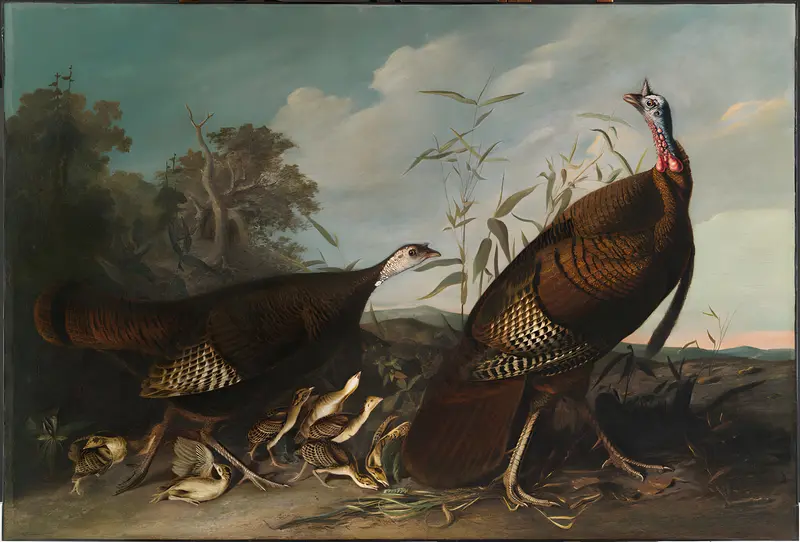
Wild Turkey Cock, Hen, and Chicks
John James Audubon
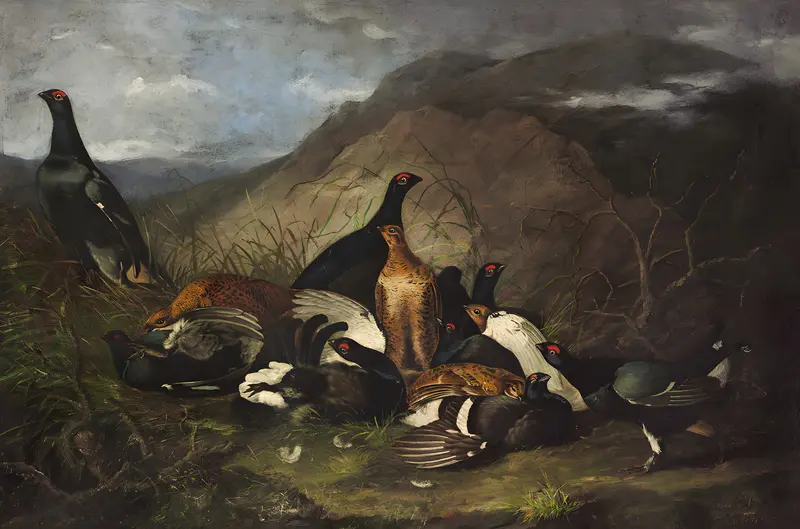
Scottish Black Grouse, Cocks and Hens
John James Audubon
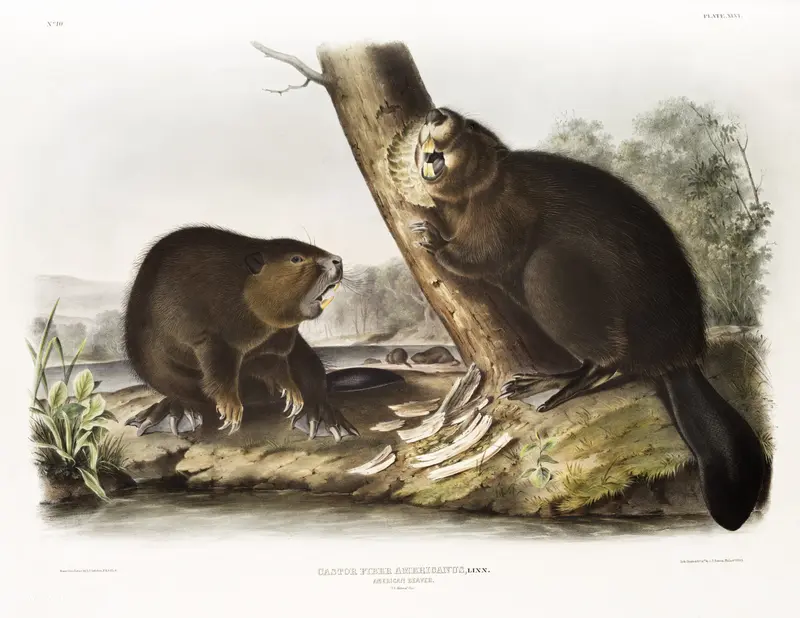
American Beaver
John James Audubon
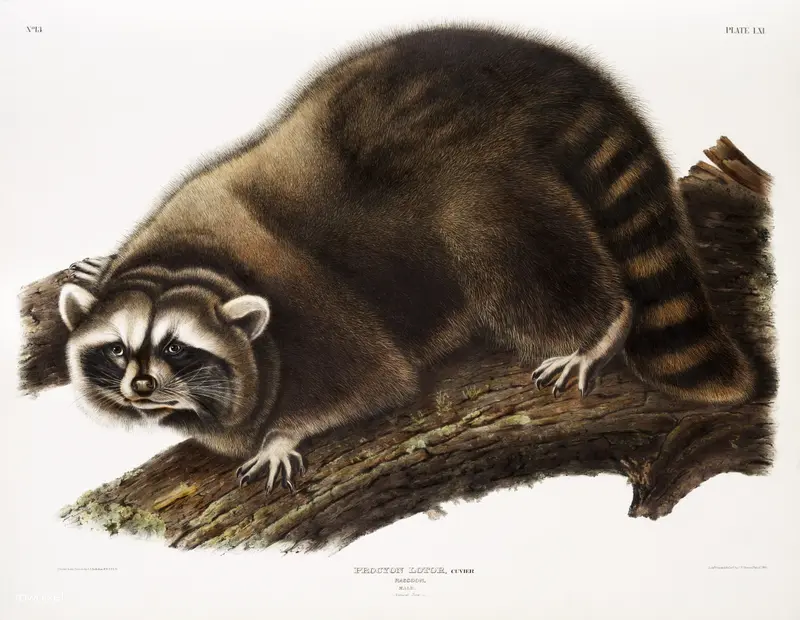
Raccoon
John James Audubon

Magnificent Frigatebird
John James Audubon
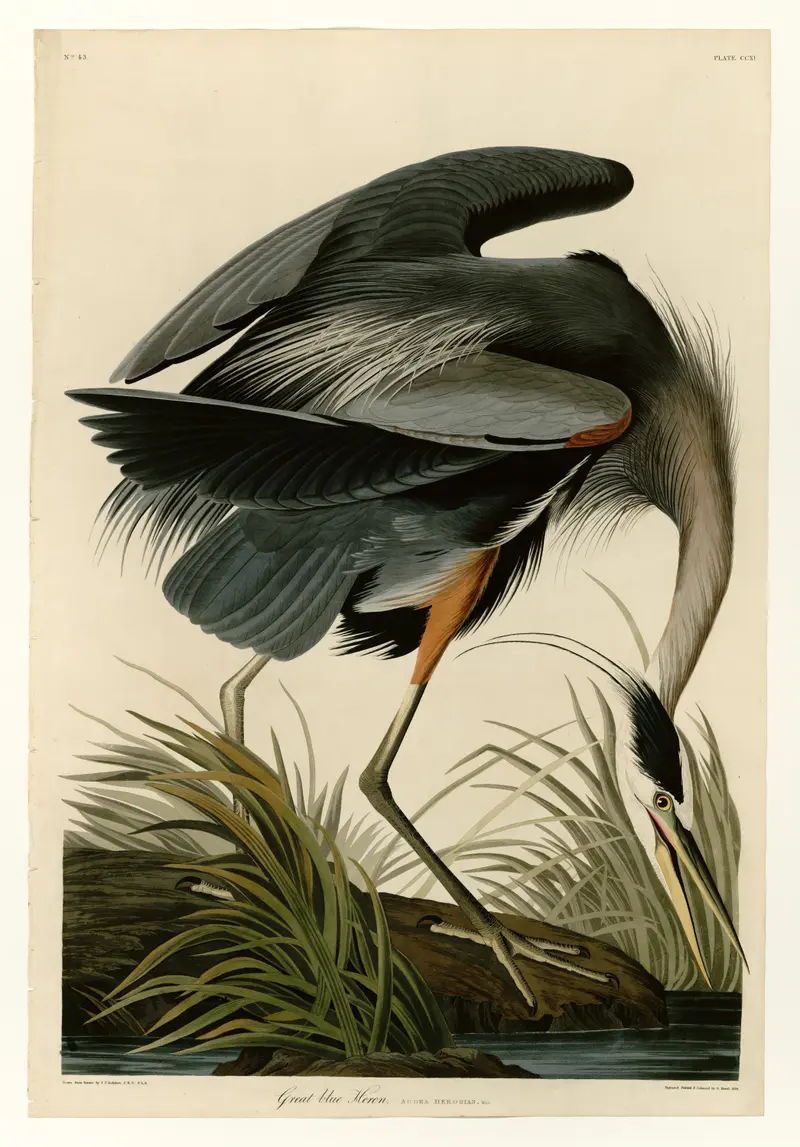
Great Blue Heron
John James Audubon
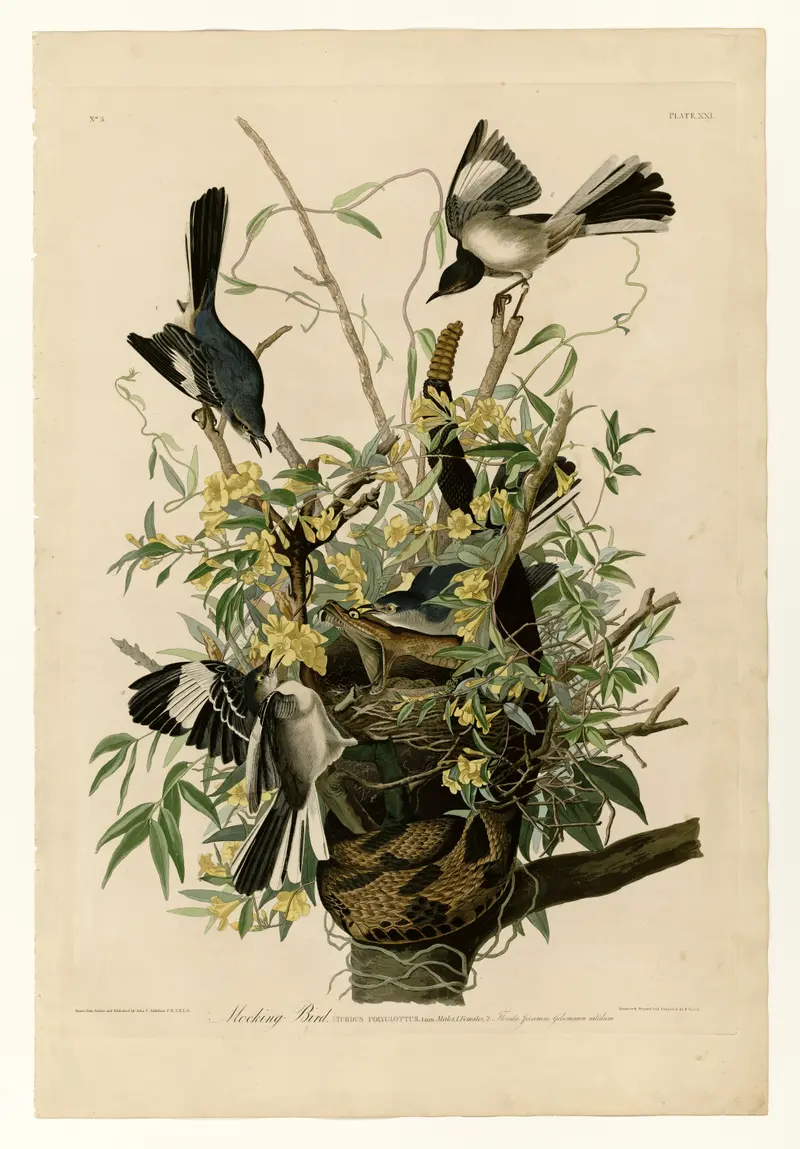
Northern Mockingbird
John James Audubon
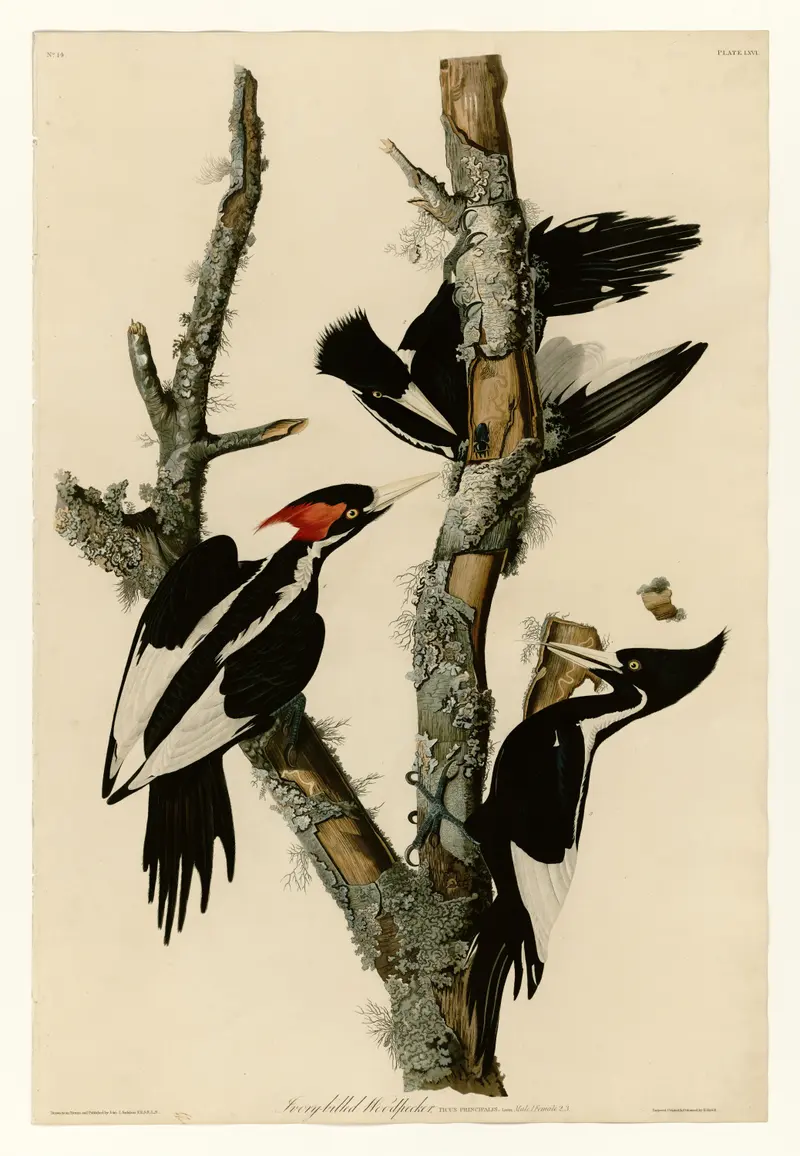
Ivory-billed Woodpecker
John James Audubon
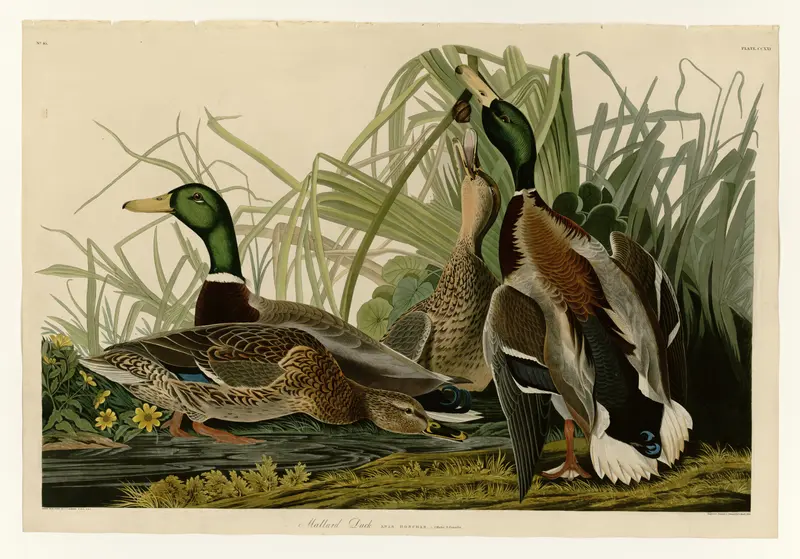
Mallard
John James Audubon
Ruby-throated Hummingbird
John James Audubon





