
Berck. La Plage — History & Facts
In Berck. La Plage, the canvas whispers of transformation, capturing a moment where land meets sea, and the human experience is palpably alive. Look to the left at the soft, undulating dunes, their warm ochres contrasting sharply with the cool blues of the sky overhead. The artist's brushwork delights in the play of light, as radiant sunbeams dance upon the water’s surface, creating a shimmering effect that draws the eye outward.
Notice how figures dot the beach, their silhouettes merging with nature, conveying a sense of leisure and tranquility, inviting you to linger in their world. Yet, beneath this serene exterior lies a profound tension. The gentle waves lap rhythmically against the shore, while the distant horizon speaks of the unknown, an invitation to transformation. The juxtaposition of the carefree beachgoers and the monumental presence of the sea evokes a duality of human joy against nature's vastness, hinting at the transitory nature of life itself.
Each brushstroke, vibrant yet delicate, gestures towards the inevitability of change—perhaps a reflection of life’s fleeting moments. Eugène Boudin painted Berck. La Plage between 1875 and 1878, during a period when he was increasingly recognized for his pioneering approaches to plein air painting. Living in France amidst the rise of Impressionism, he was drawn to the coastlines and the play of light, embodying the evolving landscape of modern art.
This work stands as a testament to both his personal evolution and the broader shifts that defined 19th-century artistic expression.
More Artworks by Eugène Boudin
Browse all →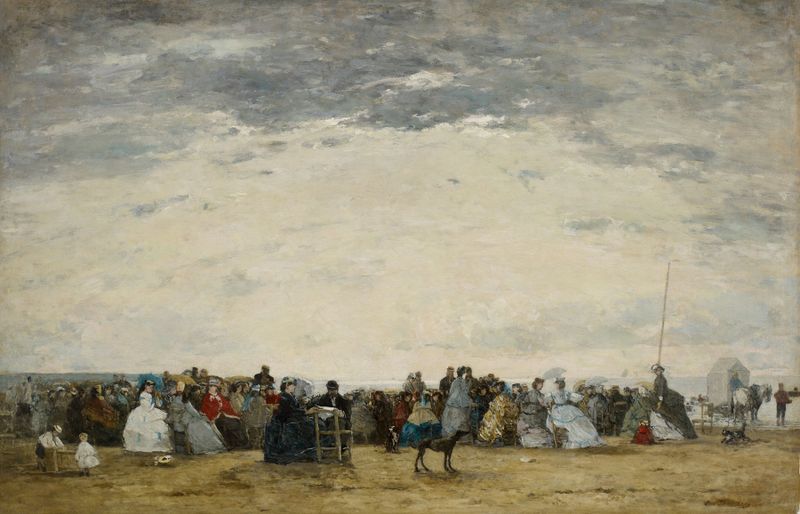
Vacationers on the Beach at Trouville
Eugène Boudin

Washerwoman near Trouville
Eugène Boudin
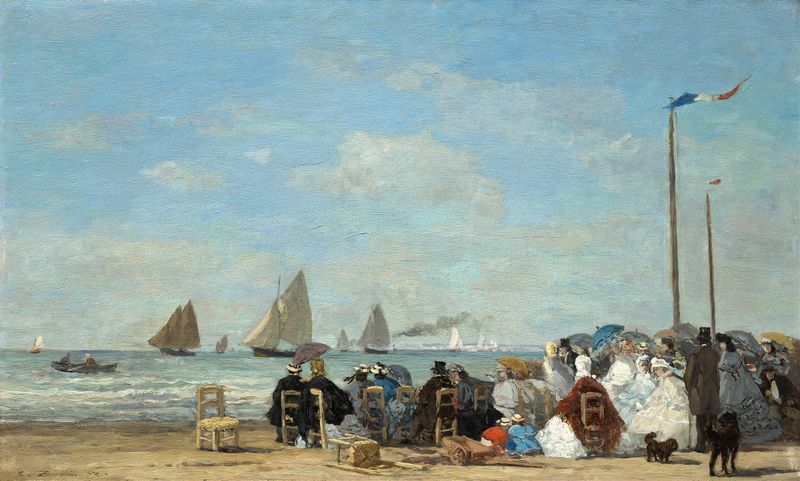
Beach Scene at Trouville
Eugène Boudin

Port aux environs d’Honfleur
Eugène Boudin

Le Faou, un coin du village
Eugène Boudin
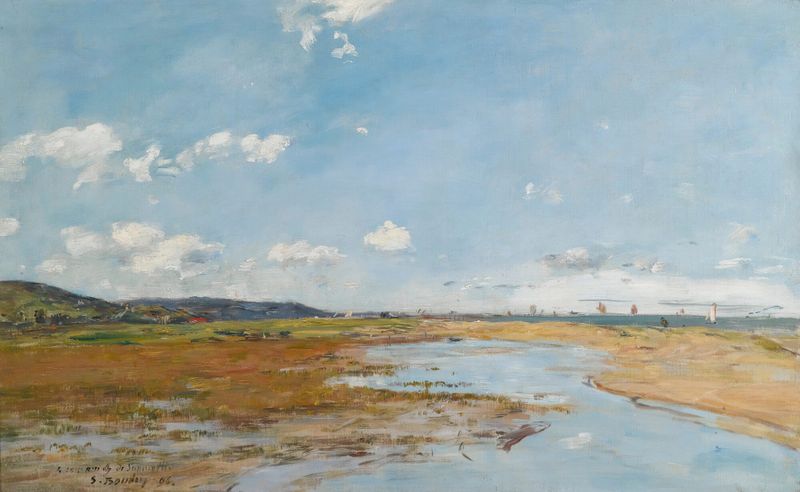
Deauville. Le Rivage
Eugène Boudin
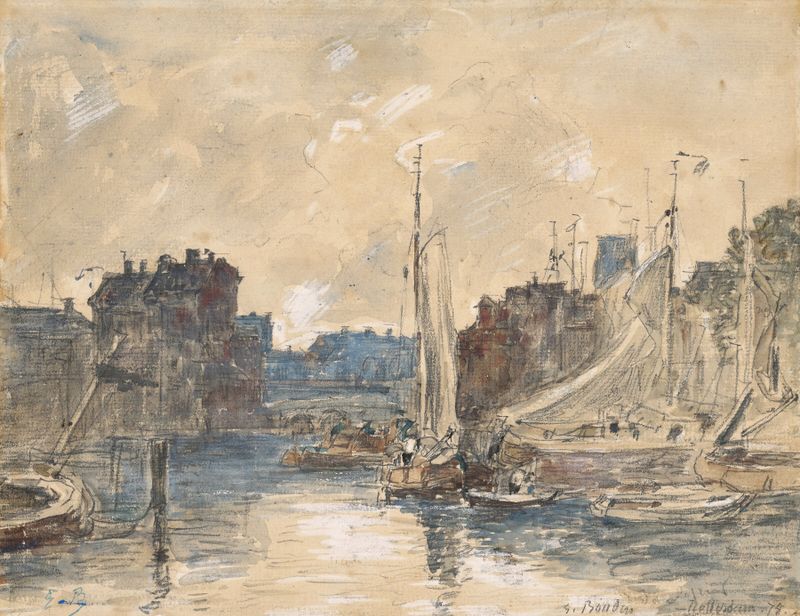
Port de Rotterdam
Eugène Boudin

View of Bordeaux, from the Quai des Chartrons
Eugène Boudin

Trouville, Scène De Plage
Eugène Boudin

Trouville, Le Port
Eugène Boudin





