
Berck, L’appareillage des barques — History & Facts
In the delicate interplay of light and shadow, the essence of divinity emerges from the sea’s embrace. Focus on the gentle rise and fall of the waves, where Boudin captures the moment just before the boats set sail. Notice how the vibrant blues of the sky reflect upon the water’s surface, creating a seamless blend of heavens and earth. The soft white strokes of the clouds echo the sails, inviting the viewer to lose themselves in the serene rhythm of the coastal life.
Each brushstroke, a deliberate choice, conveys both movement and tranquility, framing a world where nature and human endeavor coalesce. As you delve deeper, consider the interplay of human presence against the vastness of the sea. The boats stand as symbols of aspiration, their readiness to embark on journeys that echo life's uncertainty. The figures, though diminutive, embody the spirit of humanity, poised between the comforts of the shore and the call of adventure.
This contrast between the boundless horizon and the anchored vessels reflects a deep emotional tension, hinting at life’s fleeting moments of courage and the divine whisper that calls us to explore the unknown. Eugène Boudin completed this work in 1890 while living in France, a period marked by his increasing recognition as a precursor to Impressionism. His earlier life spent painting seascapes in Normandy shaped his exploration of light and atmosphere, which was revolutionary at the time. The late 19th century saw a shift in artistic focus, moving towards capturing fleeting moments in natural settings, a movement that Boudin significantly contributed to, inspiring the next generation of artists who would embrace the divine interplay of light and life.
More Artworks by Eugène Boudin
Browse all →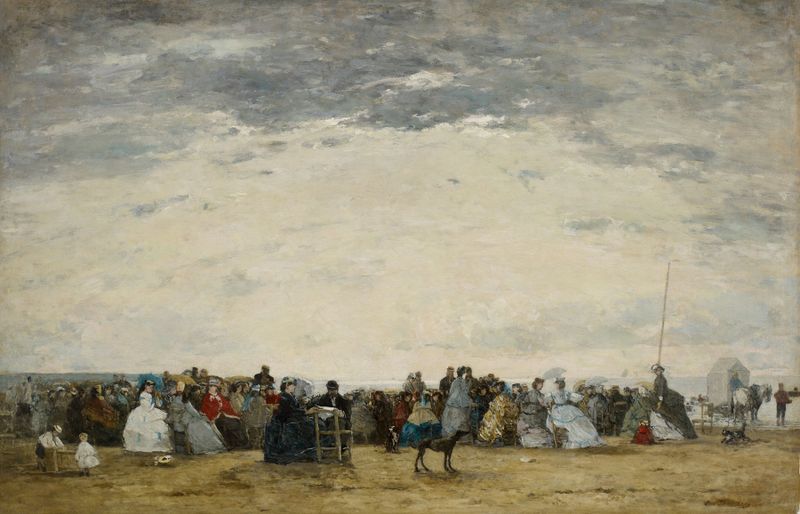
Vacationers on the Beach at Trouville
Eugène Boudin

Washerwoman near Trouville
Eugène Boudin
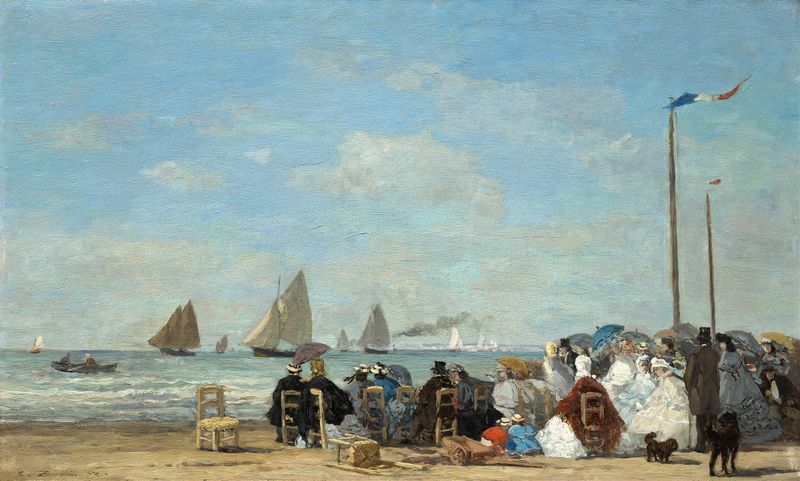
Beach Scene at Trouville
Eugène Boudin

Port aux environs d’Honfleur
Eugène Boudin

Le Faou, un coin du village
Eugène Boudin
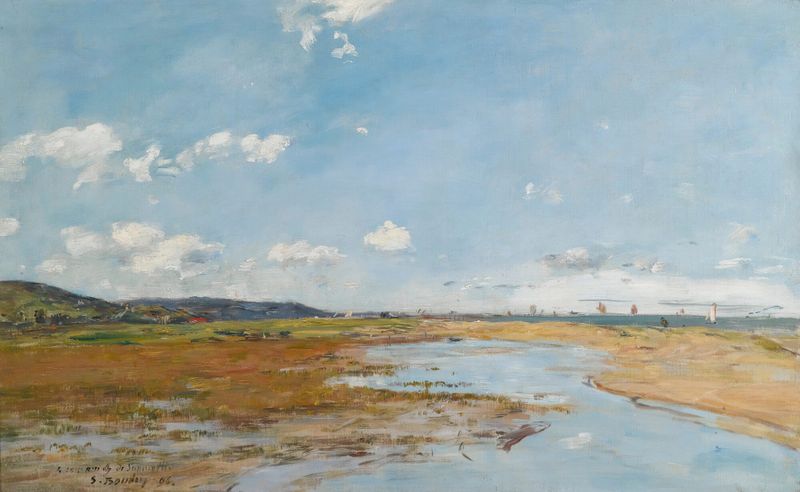
Deauville. Le Rivage
Eugène Boudin
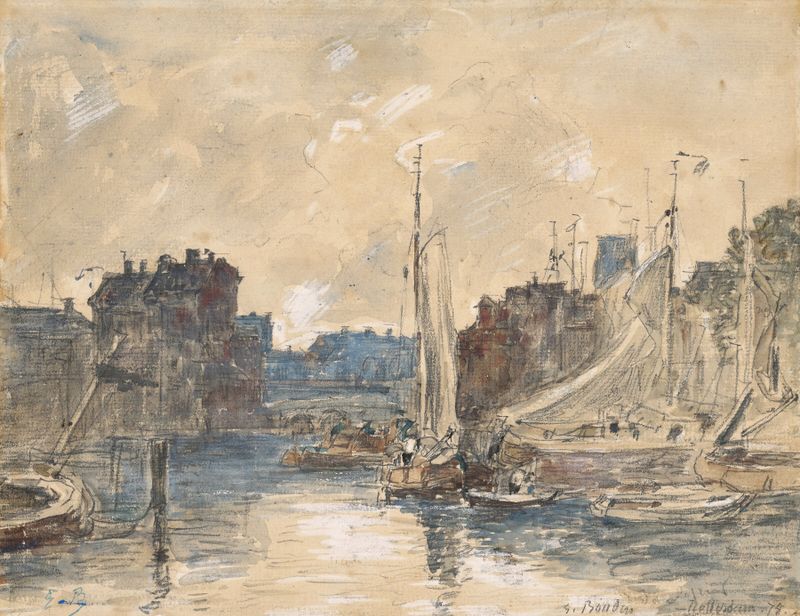
Port de Rotterdam
Eugène Boudin

View of Bordeaux, from the Quai des Chartrons
Eugène Boudin

Trouville, Scène De Plage
Eugène Boudin

Trouville, Le Port
Eugène Boudin





