
Berck. Les Dunes Par Gros Temps — History & Facts
Did the painter know this moment would outlive them? The tempestuous energy of the sea, the strength of the wind, and the resilience of the dunes are captured in a fleeting glance, echoing through time. Look to the left at the dark, roiling clouds that loom ominously over the horizon, swirling in shades of grey and blue. Your eye is drawn to the contrasting bright, sandy beach, where figures are dwarfed by the mighty landscape. Notice how the light breaks through the stormy atmosphere, illuminating patches of the ground, revealing Boudin's masterful brushwork that captures the transient dance of nature and humanity's place within it. The emotional tension lies in the juxtaposition of the tranquil beachgoers against the chaotic backdrop of the storm.
Their small silhouettes represent humanity's vulnerability in the face of nature's raw power, evoking a sense of both awe and humility. The contrast of color—warm tones of the sand and cooler shades of the sea—further emphasizes the ephemeral nature of existence, suggesting that life is a delicate balance between calm and chaos. Eugène Boudin painted Berck. Les Dunes Par Gros Temps in 1890, during a pivotal period of experimentation in the world of art.
Working in Berck-sur-Mer, France, he was immersed in the Impressionist movement, influencing and being influenced by contemporaries such as Monet. At this time, Boudin was focused on capturing the effects of light and atmosphere, marking a shift in how artists approached landscape and seascape painting, forever altering the course of art history.
More Artworks by Eugène Boudin
Browse all →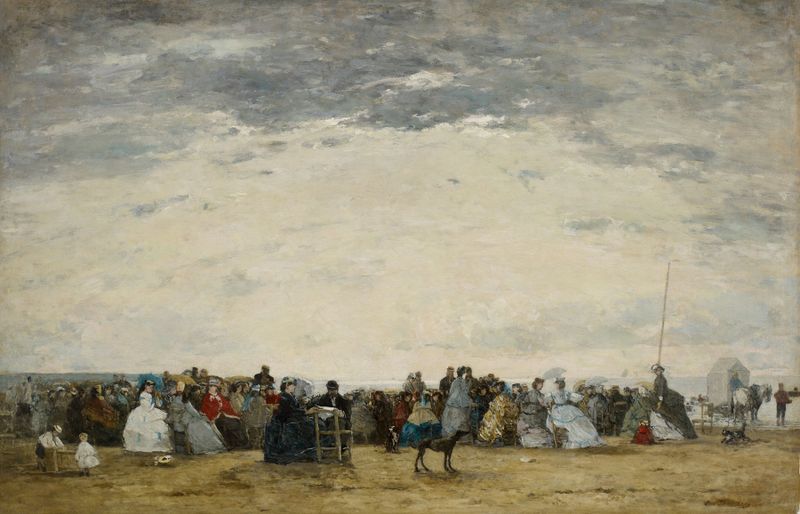
Vacationers on the Beach at Trouville
Eugène Boudin

Washerwoman near Trouville
Eugène Boudin
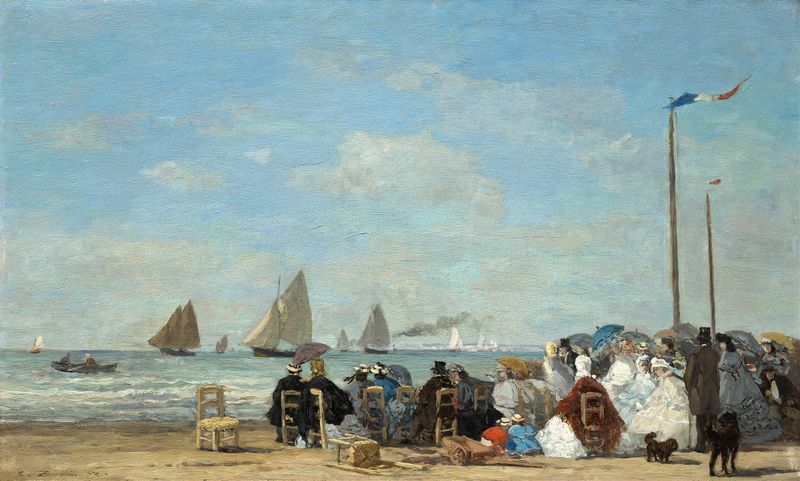
Beach Scene at Trouville
Eugène Boudin

Port aux environs d’Honfleur
Eugène Boudin

Le Faou, un coin du village
Eugène Boudin
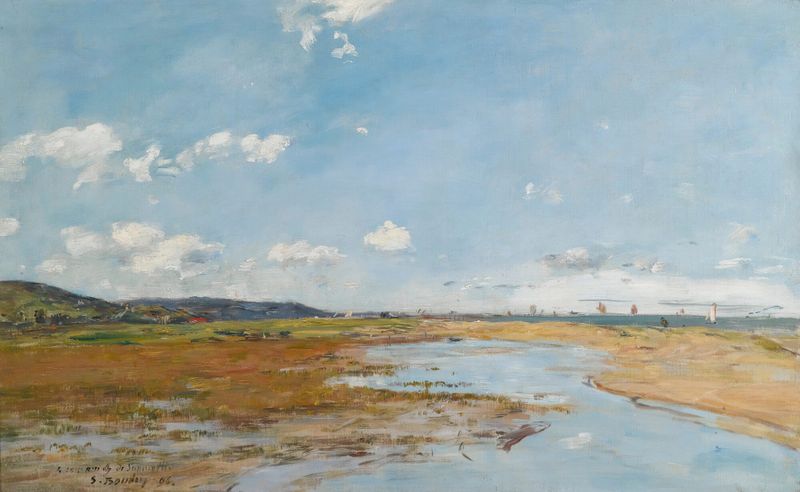
Deauville. Le Rivage
Eugène Boudin
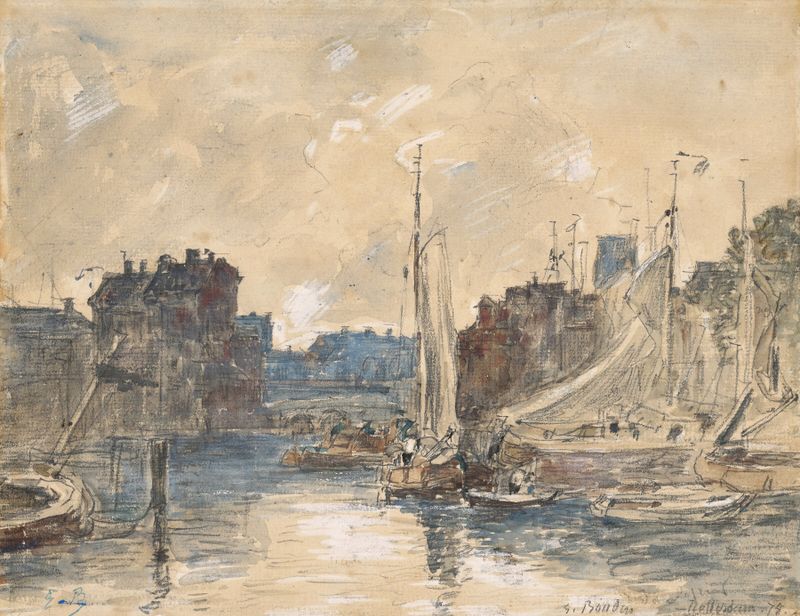
Port de Rotterdam
Eugène Boudin

View of Bordeaux, from the Quai des Chartrons
Eugène Boudin

Trouville, Scène De Plage
Eugène Boudin

Trouville, Le Port
Eugène Boudin





