
Berck, les dunes par gros temps — History & Facts
Did the painter know this moment would outlive them? The crashing waves, the turbulent sky, and the relentless wind coalesce into a cacophony of nature's raw power, capturing the essence of violence in this fleeting scene. Focus on the depth of the horizon where the tumultuous sea meets the slate-gray sky. Notice how Boudin's brushstrokes create a rhythm, mimicking the undulating waves and the gusting winds that seem to breathe life into the canvas. The palette, dominated by somber blues and grays, enhances the sense of impending storm, drawing your gaze toward the dramatic contrasts that define the shoreline. In this work, the violence of nature contrasts starkly with the stillness of any human presence, suggesting our fragility against such grandeur.
The distant figures, dwarfed by the vastness of the scene, evoke a sense of isolation and vulnerability, while the sea’s ferocity hints at both destruction and beauty. It’s a reminder of the awe-inspiring, untamed forces that shape our existence, as the clouds swirl ominously overhead. In 1890, while painting Berck, les dunes par gros temps, Boudin was at the zenith of his artistic career, living in France amidst a growing fascination with plein air painting. Influenced by the Impressionist movement, he sought to capture the fleeting effects of light and atmosphere.
This period marked a significant shift in how artists engaged with their environments, as they sought to immortalize the transient beauty of nature in the face of life’s inevitable turbulence.
More Artworks by Eugène Boudin
Browse all →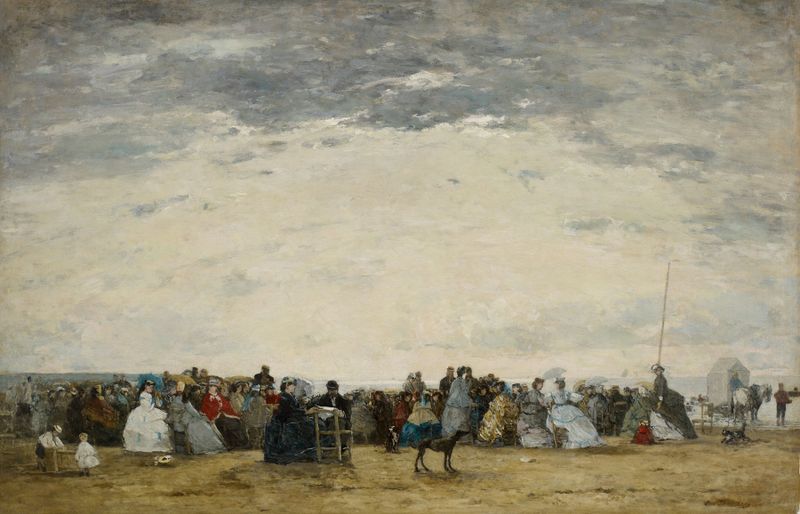
Vacationers on the Beach at Trouville
Eugène Boudin

Washerwoman near Trouville
Eugène Boudin
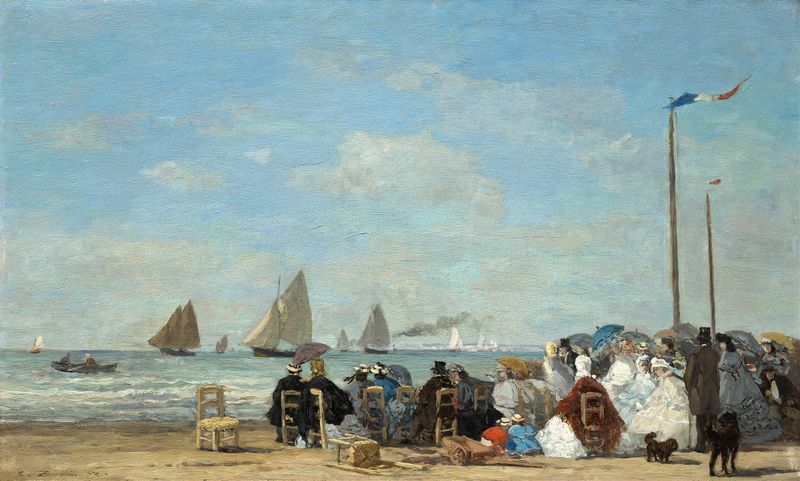
Beach Scene at Trouville
Eugène Boudin

Port aux environs d’Honfleur
Eugène Boudin

Le Faou, un coin du village
Eugène Boudin
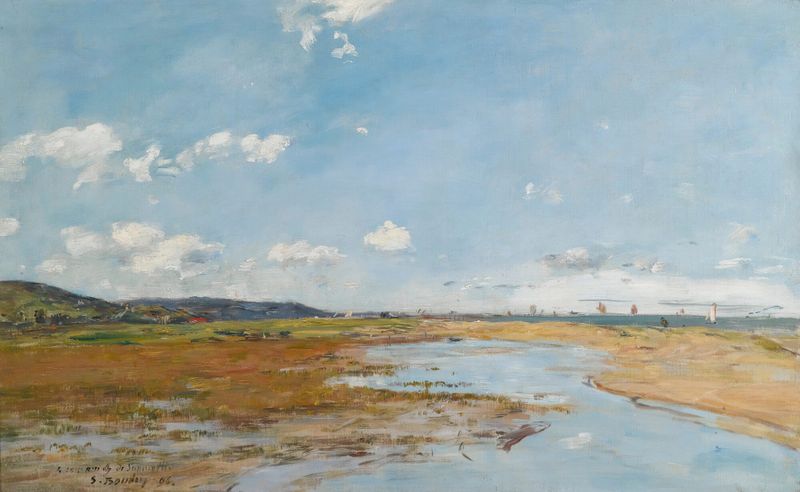
Deauville. Le Rivage
Eugène Boudin
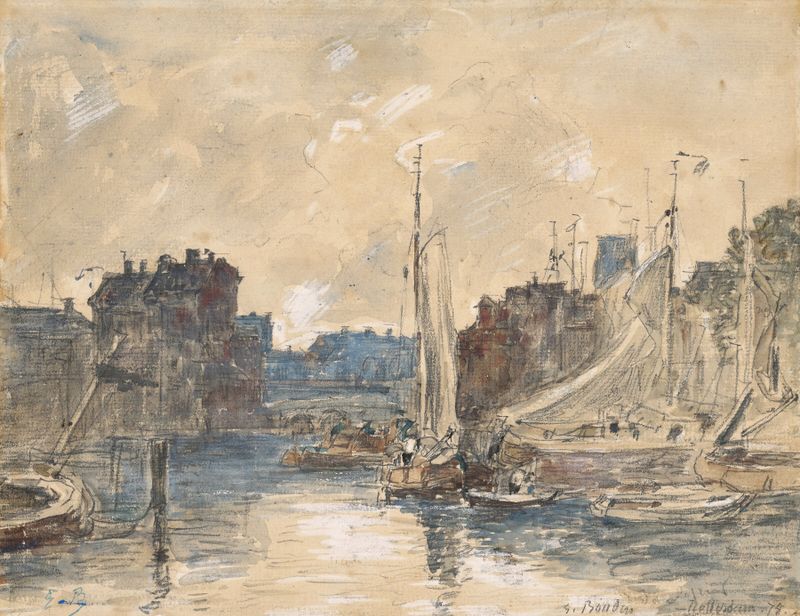
Port de Rotterdam
Eugène Boudin

View of Bordeaux, from the Quai des Chartrons
Eugène Boudin

Trouville, Scène De Plage
Eugène Boudin

Trouville, Le Port
Eugène Boudin





