
Bergrücken (wohl) in Graubünden — History & Facts
What if beauty was never meant to be finished? In Bergrücken (wohl) in Graubünden, the landscape teeters on the edge of permanence and transience, whispering the fragility of nature itself. Look to the left at the bold, sweeping lines of the mountains, their craggy forms cascading into the soft, undulating hills below. The deep greens and muted browns contrast with a delicate sky streaked in soft pastels, capturing the moment just before twilight. Notice how the brushstrokes convey a sense of movement—each stroke pulsating with the rhythm of the wind, inviting you to explore further into the depths of the scene.
The composition draws the eye towards the horizon, where the sun’s fading light delicately kisses the mountain peaks, creating an ethereal glow that dances upon the surface of the earth. Within this serene yet vibrant landscape lies an emotional tension. The interplay of light and shadow suggests both hope and melancholy, as nature's beauty can be both breathtaking and fleeting. The gentle undulations of the hills suggest a sense of softness, while the starkness of the mountain ridges evokes the harshness of existence.
This duality reflects the artist’s intent: to capture not just a moment in time, but the very essence of nature’s sublime, transient beauty. In 1853, Schirmer painted this work during a period when Romanticism was flourishing, and artists were increasingly drawn to the natural world as a source of inspiration and introspection. Based in Germany but influenced by his travels in Switzerland, he sought to convey the emotional weight of the landscape, seeking to articulate the sublime experience of nature against a backdrop of societal change and industrialization.
More Artworks by Johann Wilhelm Schirmer
Browse all →
Waldlandschaft mit Blick auf Olevano und den Monte Cavo
Johann Wilhelm Schirmer
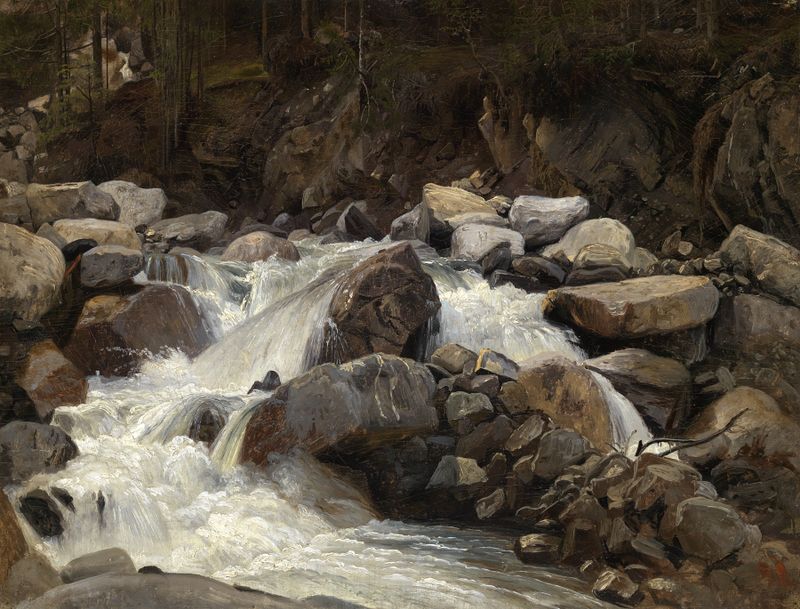
Schweizer Gebirgsbach
Johann Wilhelm Schirmer
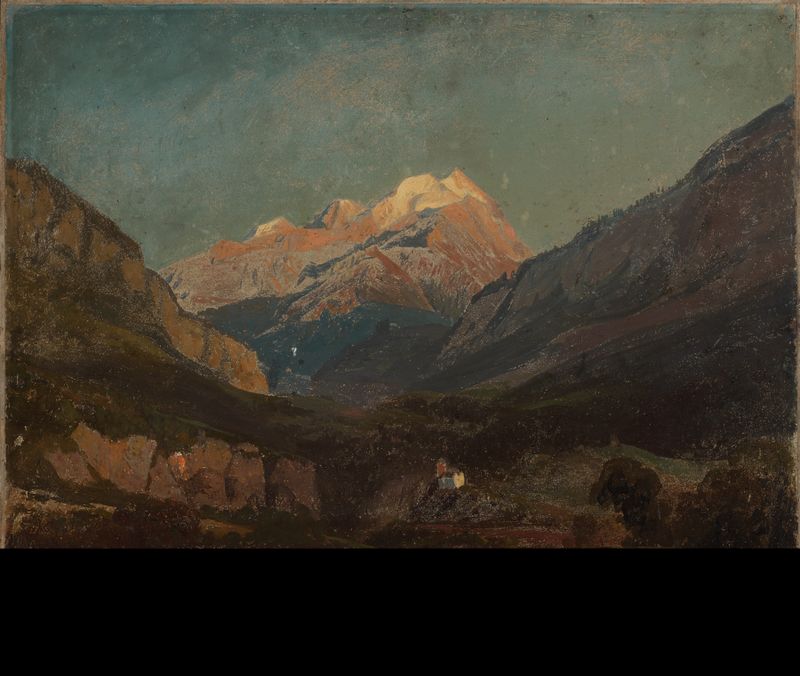
Schweizer Gebirgslandschaft mit Kapelle und fernem Schneegipfel
Johann Wilhelm Schirmer

Schweizer Gebirgslandschaft mit dem Piz Beverin im Hintergrund
Johann Wilhelm Schirmer

Waldinneres mit Hirschen am Wasser
Johann Wilhelm Schirmer

The Wetterhorn
Johann Wilhelm Schirmer

Partie aus der Römischen Campagna
Johann Wilhelm Schirmer

Felsabhang in der Schweiz
Johann Wilhelm Schirmer
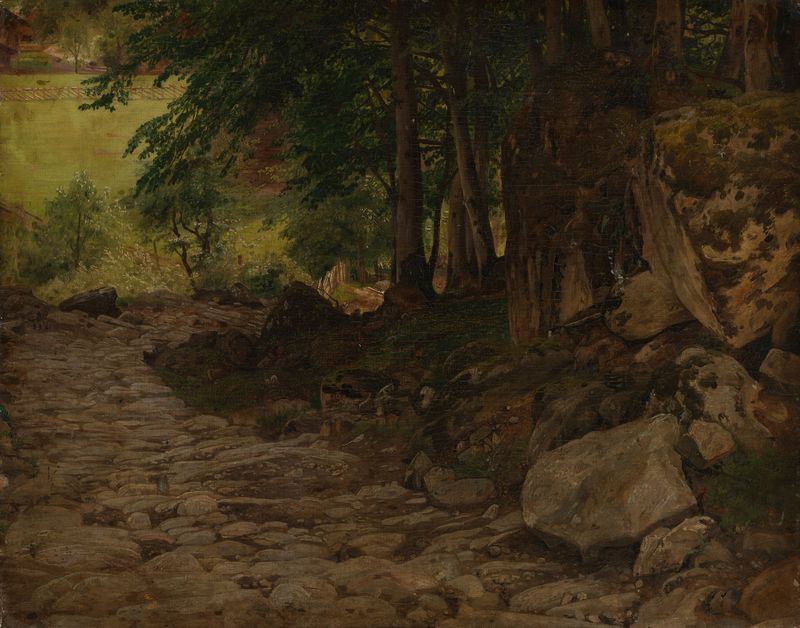
Felsweg in der Schweiz
Johann Wilhelm Schirmer
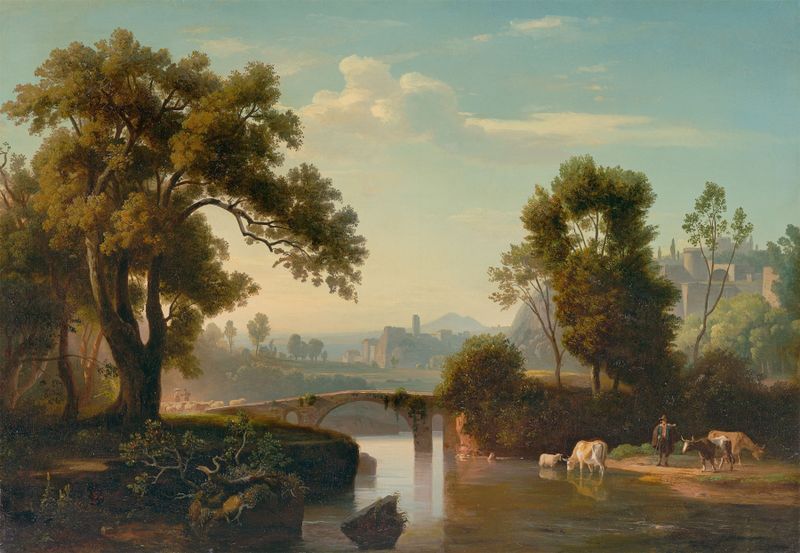
Italienische Landschaft mit Hirten
Johann Wilhelm Schirmer





