
Blackcocks at the Lek. — History & Facts
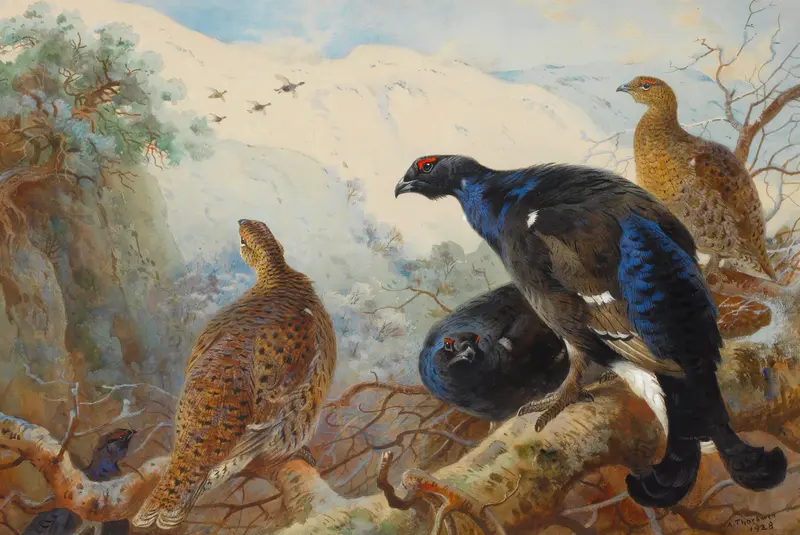
The first thing that seizes the eye in Blackcocks at the Lek is the electric tension between the two birds, each poised in a display of rivalry and bravado. Their wings are splayed and tails fanned, catching the low, cool light that glances across their iridescent feathers, while their vivid red wattles burn against the muted moorland. The artist draws us into the drama of the lek, that ancient spring ritual where male black grouse compete for dominance, their bodies angled and their beaks parted in silent challenge.
The landscape is sparse, the grasses rendered in brisk, precise strokes, guiding the gaze toward the birds’ confrontation and then letting it drift back to the quiet, watchful hills beyond. Every detail—the tension in the claws, the glint on a feather—serves to heighten the sense of a fleeting, vital moment in the wild. Painted in 1901, this work belongs to a period when British natural history artists like Archibald Thorburn were celebrated for their ability to combine scientific accuracy with a sense of living immediacy. Such paintings were often commissioned by sportsmen, naturalists, or collectors eager to capture the spirit of the countryside at a time when rural traditions and landscapes were coming under pressure from industrial change.
Blackcocks at the Lek was once part of the Bonhams collection, a reminder of how these images moved between private hands, prized as both art and record. Today, the painting invites us to linger over the details, to imagine the chill of the morning air and the pulse of rivalry in the heather, and to see not just birds, but a world in motion.
More Artworks by Archibald Thorburn

The Watchful Hinds
Archibald Thorburn
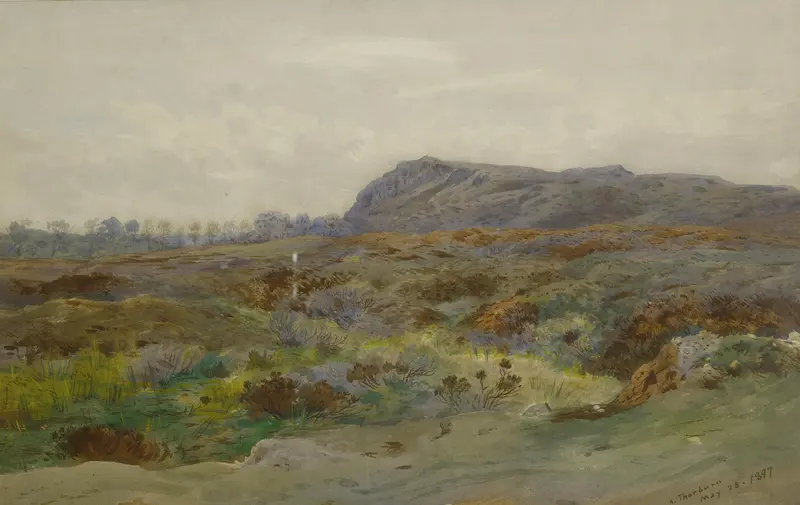
Moorland Landscape
Archibald Thorburn
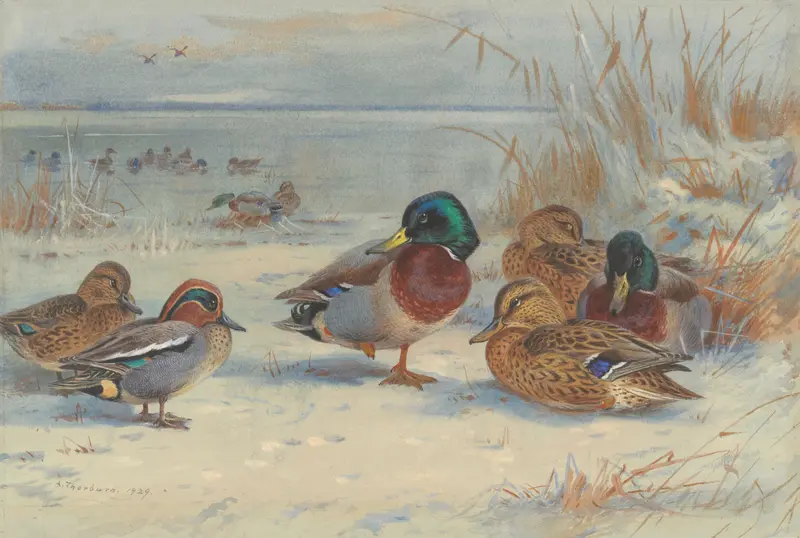
Mallard and teal in the snow
Archibald Thorburn
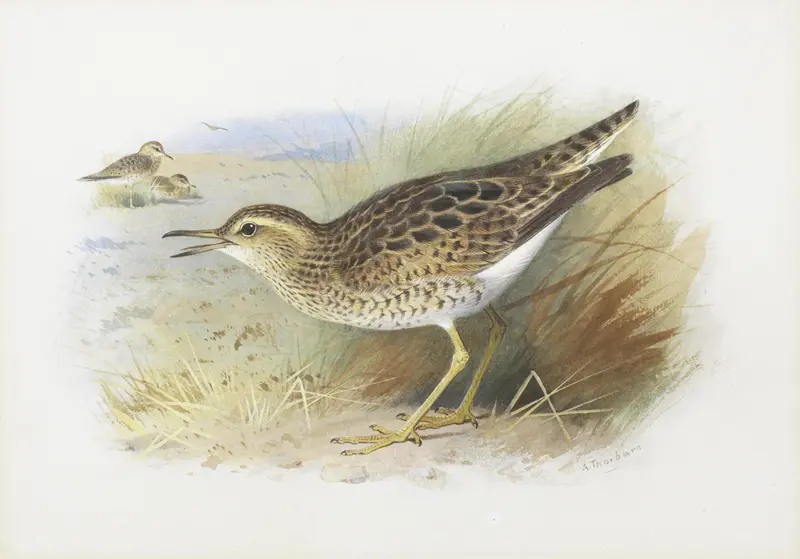
Bartram's Plover
Archibald Thorburn
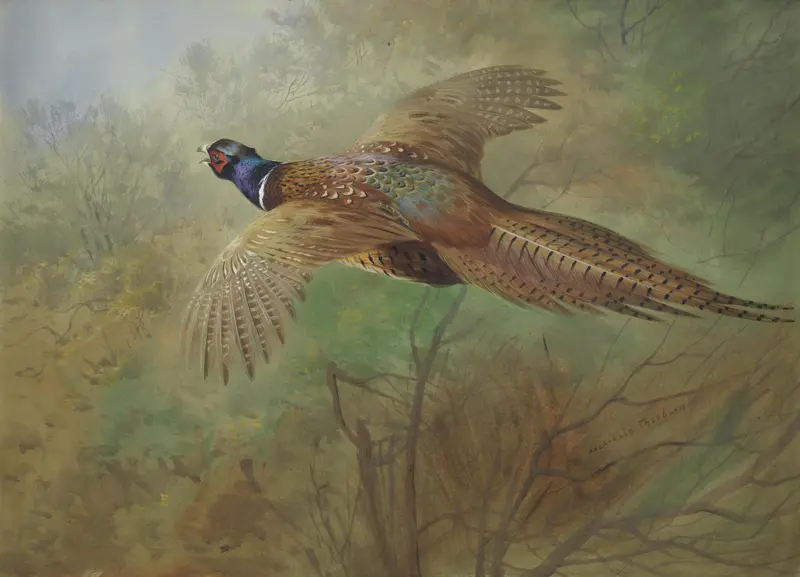
Pheasant in flight
Archibald Thorburn
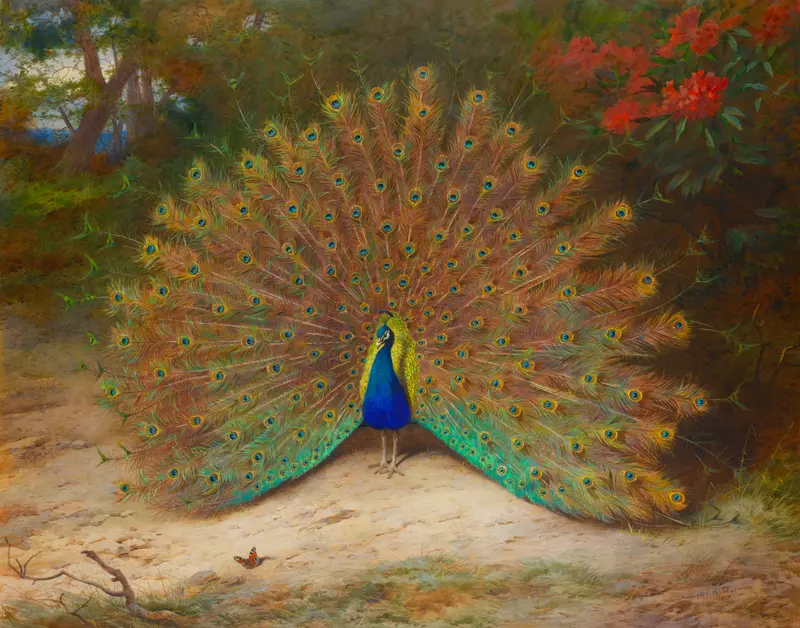
Peacock and Peacock Butterfly
Archibald Thorburn
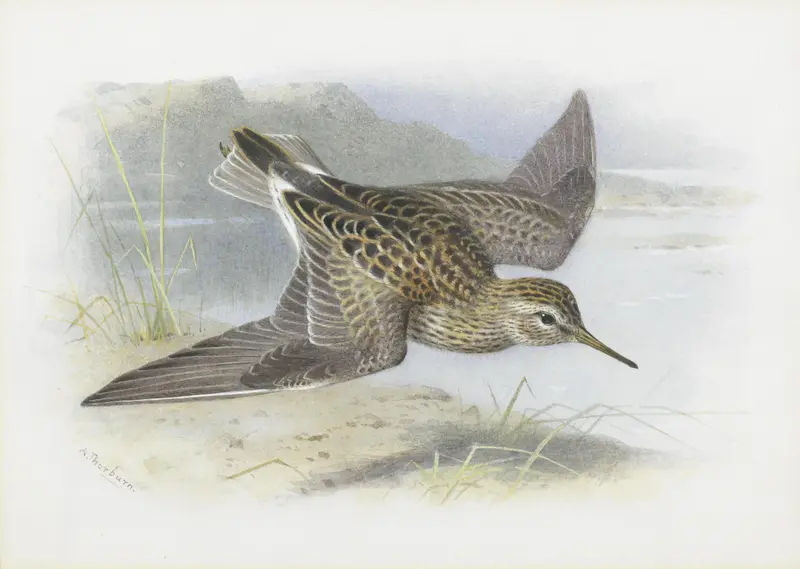
Pectoral Sandpiper
Archibald Thorburn
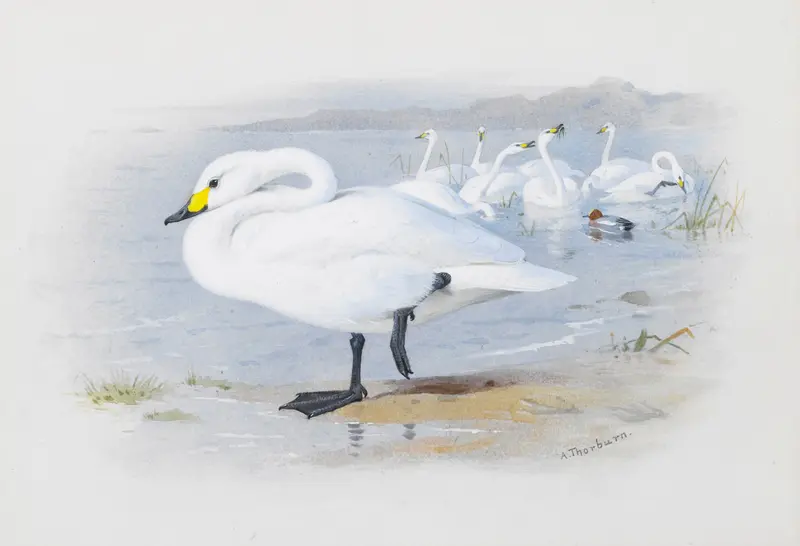
Bewick's swan.
Archibald Thorburn
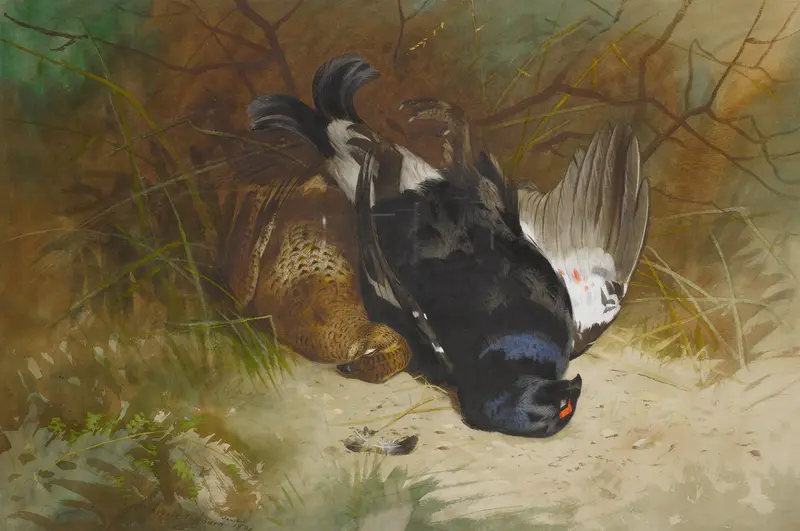
Still life of a pair of Blackgame.
Archibald Thorburn
Blackgame
Archibald Thorburn





