
Blick auf Chiavenna — History & Facts
In Blick auf Chiavenna, we are invited to witness the delicate dance between permanence and ephemerality, where each brushstroke serves as a testament to transformation. Look to the left, where the rugged mountains rise majestically, their peaks softened by a gentle haze. The interplay of twilight hues—rich blues and warm oranges—creates a harmonious transition, almost like the earth sighing as it shifts from day to night. The foreground, with its lush greenery, draws the eye into the tranquil valley below, where tiny human figures can be seen, dwarfed by the grandeur of nature.
Schirmer’s meticulous attention to detail, from the textured foliage to the shimmering water, captures the essence of a moment suspended in time. Upon closer inspection, contrasts emerge that deepen the viewer’s emotional experience. The vibrant life in the valley stands in stark contrast to the looming mountains, hinting at the struggle between man and nature—a theme prevalent throughout the Romantic period. The fleeting light suggests the impermanence of these moments, evoking a sense of nostalgia.
Yet, there is also a whisper of hope in the bright colors, symbolizing resilience amidst change. In 1853, Schirmer created this work while living in Germany, during a period when Romanticism was giving way to new artistic movements. This transitional era was marked by a yearning for the sublime, as artists sought to capture profound emotional experiences through nature. As he painted Chiavenna, Schirmer not only reflected his personal journey but also engaged with the broader shifts in the art world, where beauty and transformation competed for the viewer’s heart.
More Artworks by Johann Wilhelm Schirmer
Browse all →
Waldlandschaft mit Blick auf Olevano und den Monte Cavo
Johann Wilhelm Schirmer
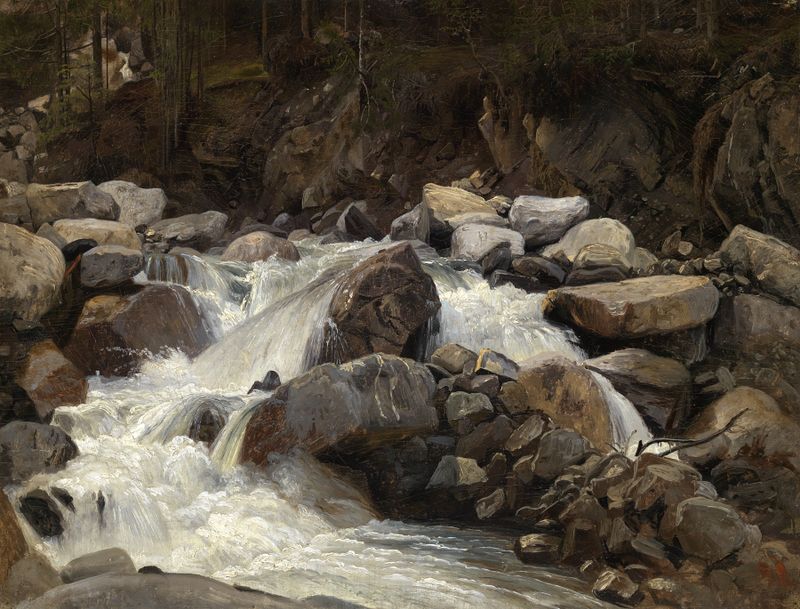
Schweizer Gebirgsbach
Johann Wilhelm Schirmer
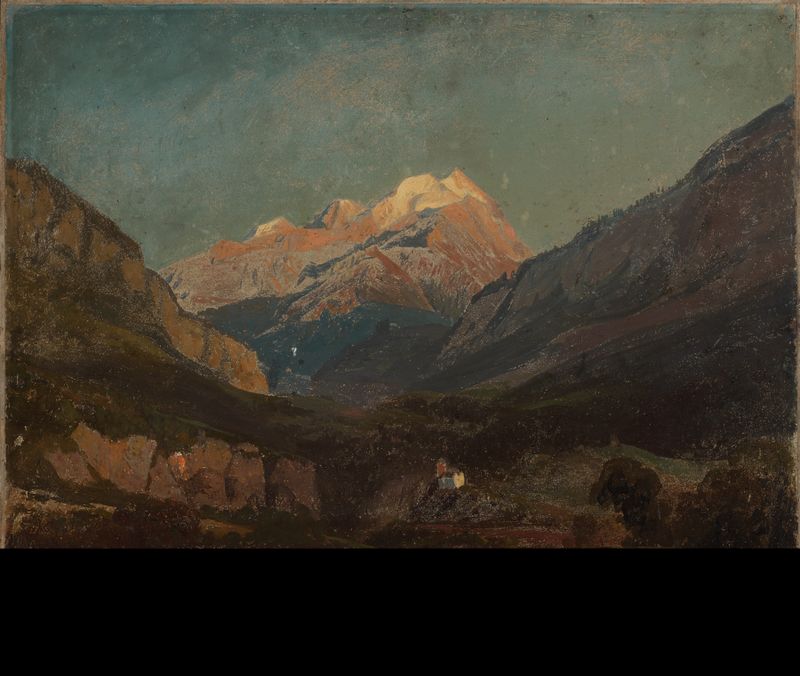
Schweizer Gebirgslandschaft mit Kapelle und fernem Schneegipfel
Johann Wilhelm Schirmer

Schweizer Gebirgslandschaft mit dem Piz Beverin im Hintergrund
Johann Wilhelm Schirmer

Waldinneres mit Hirschen am Wasser
Johann Wilhelm Schirmer

The Wetterhorn
Johann Wilhelm Schirmer

Partie aus der Römischen Campagna
Johann Wilhelm Schirmer

Felsabhang in der Schweiz
Johann Wilhelm Schirmer
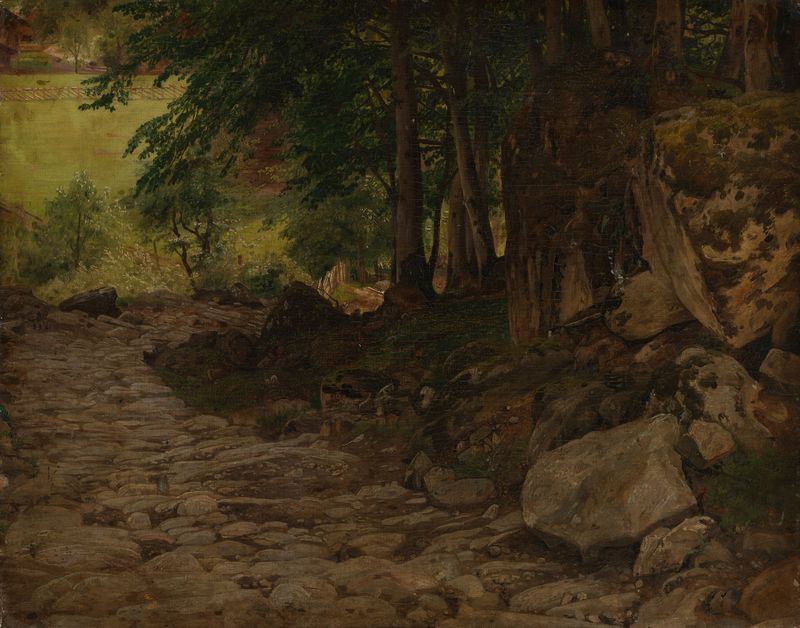
Felsweg in der Schweiz
Johann Wilhelm Schirmer
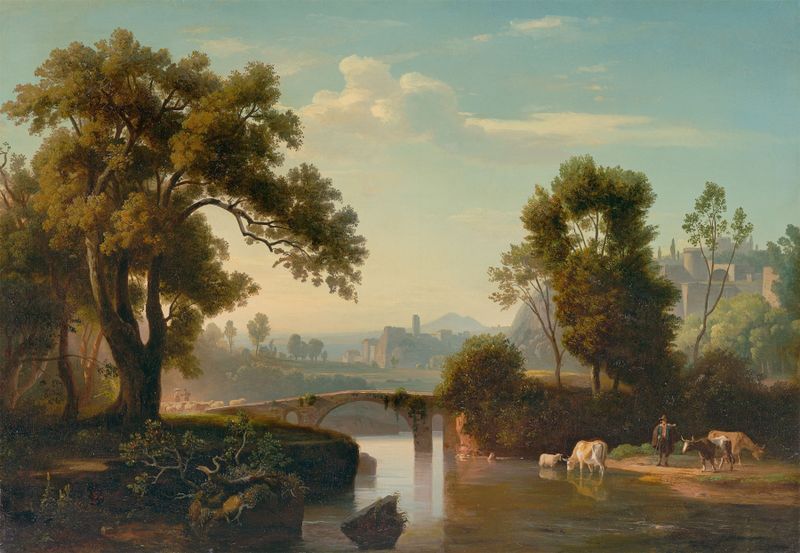
Italienische Landschaft mit Hirten
Johann Wilhelm Schirmer





