
Blick auf die Falkenmauer aus der Gegend von Kremsmünster — History & Facts
What first draws the eye in Blick auf die Falkenmauer aus der Gegend von Kremsmünster is the hush that settles over the wide, sunlit valley, punctuated by a solitary figure in the foreground. The painter places us just behind a man seated on a grassy rise, his hat pulled low as he bends over a sketchbook or journal—an observer within the landscape, and perhaps a stand-in for the artist himself. The lines of fences and winding roads pull the gaze into the distance, where clusters of houses nestle at the foot of gentle hills.
The palette is soft, almost muted, with golden fields and pale greens giving way to the blue-grey silhouettes of mountains beneath a sky brushed with faint clouds. Every detail, from the smoke rising in the middle distance to the careful rendering of pine needles, is an invitation to linger and look more closely. Painted by Adalbert Stifter around 1825, this work belongs to a period when landscape painting in Central Europe was shifting from grand, theatrical vistas to quieter, more intimate studies of nature and rural life. Such images were often made for personal enjoyment or for friends, capturing beloved regions or moments of reflection.
The world of early nineteenth-century Austria was one of change—old boundaries and rural rhythms meeting the stirrings of modernity—and artists like Stifter found meaning in recording the familiar countryside with gentle precision. Preserved today in the Zeno.org collection, this modest view stands as a record not only of a place, but of a way of seeing: attentive, unhurried, and quietly attentive to the world’s everyday beauty. Let your eye wander across the fields and hills, and notice how the landscape opens up, both for the figure within it and for us.
More Artworks by Adalbert Stifter
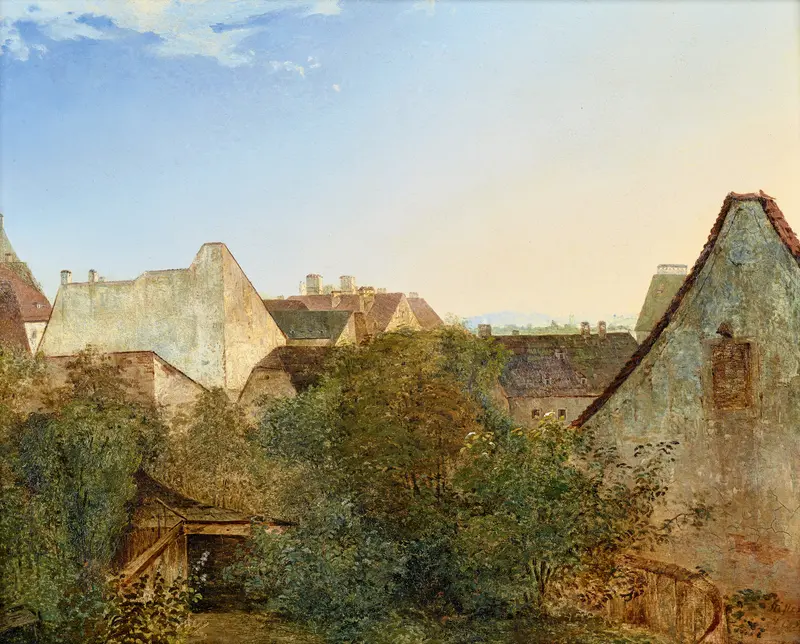
Blick über Wiener Vorstadthäuser (Beatrixgasse)
Adalbert Stifter
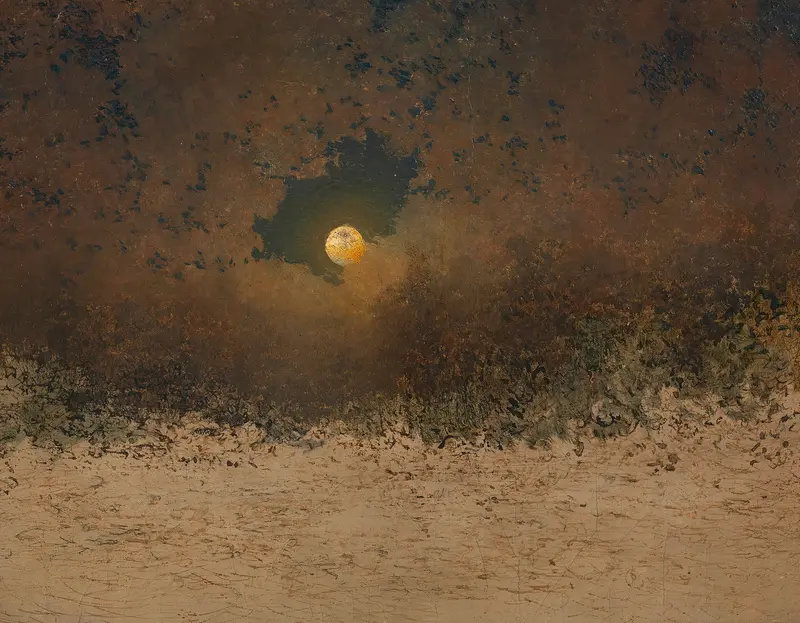
Mondlandschaft mit bewölktem Himmel
Adalbert Stifter
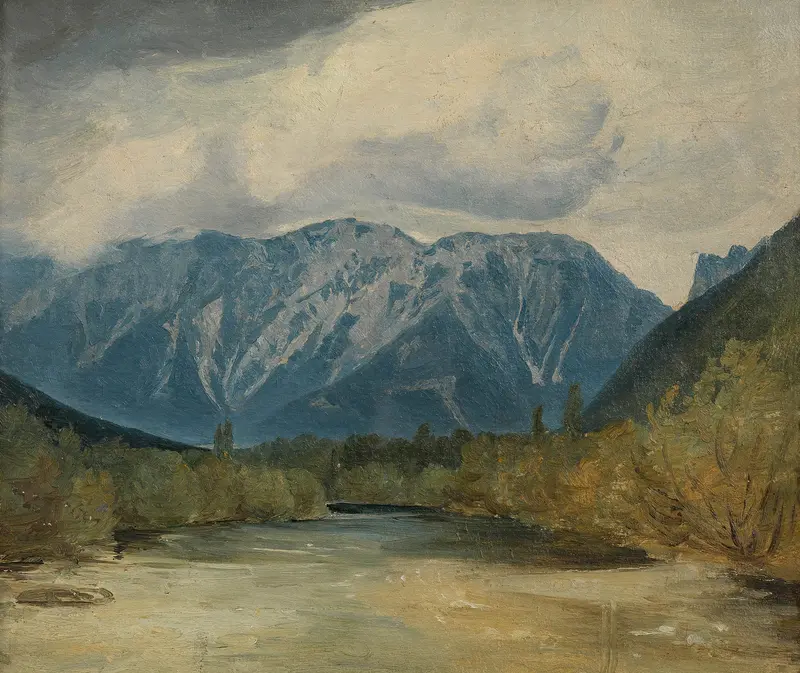
Die Rax in Niederösterreich
Adalbert Stifter
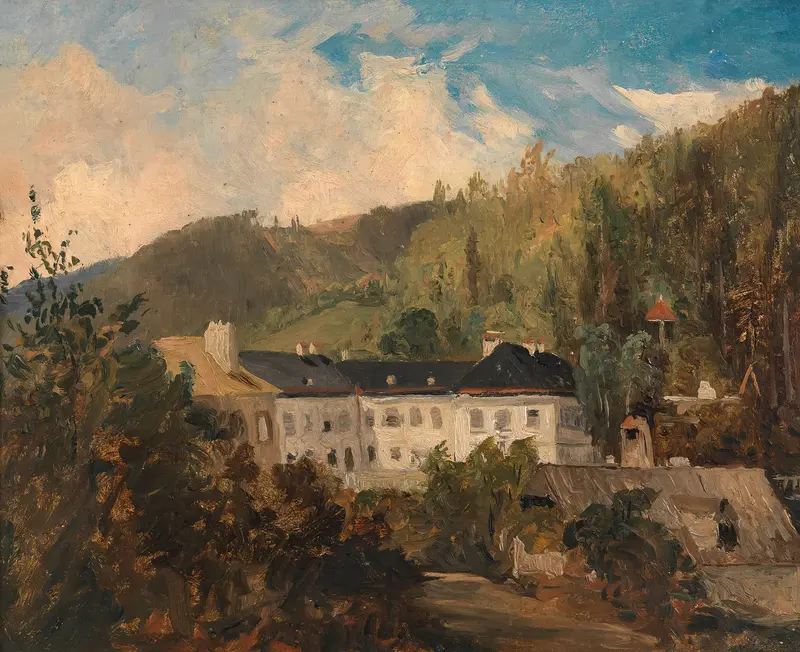
Motiv aus Neuwaldegg
Adalbert Stifter
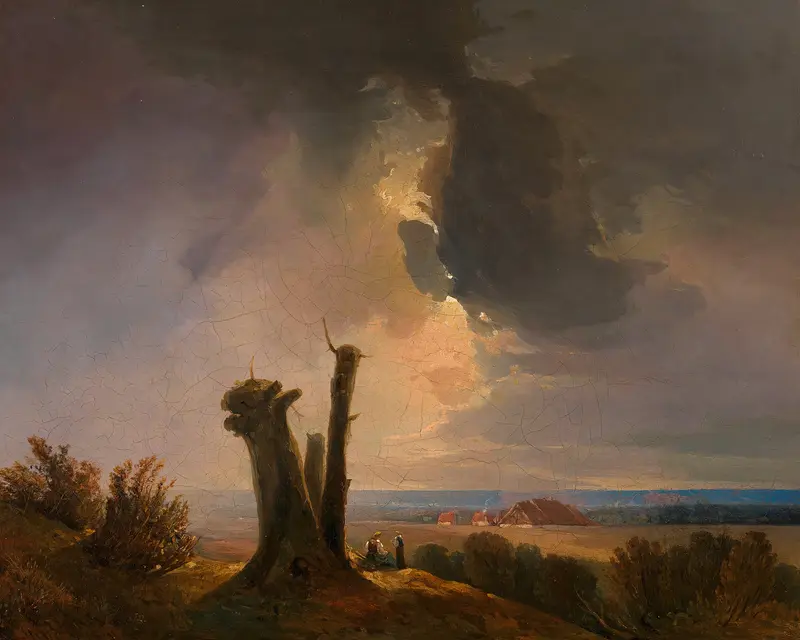
Westungarische Landschaft – Blick vom Leithagebirge
Adalbert Stifter
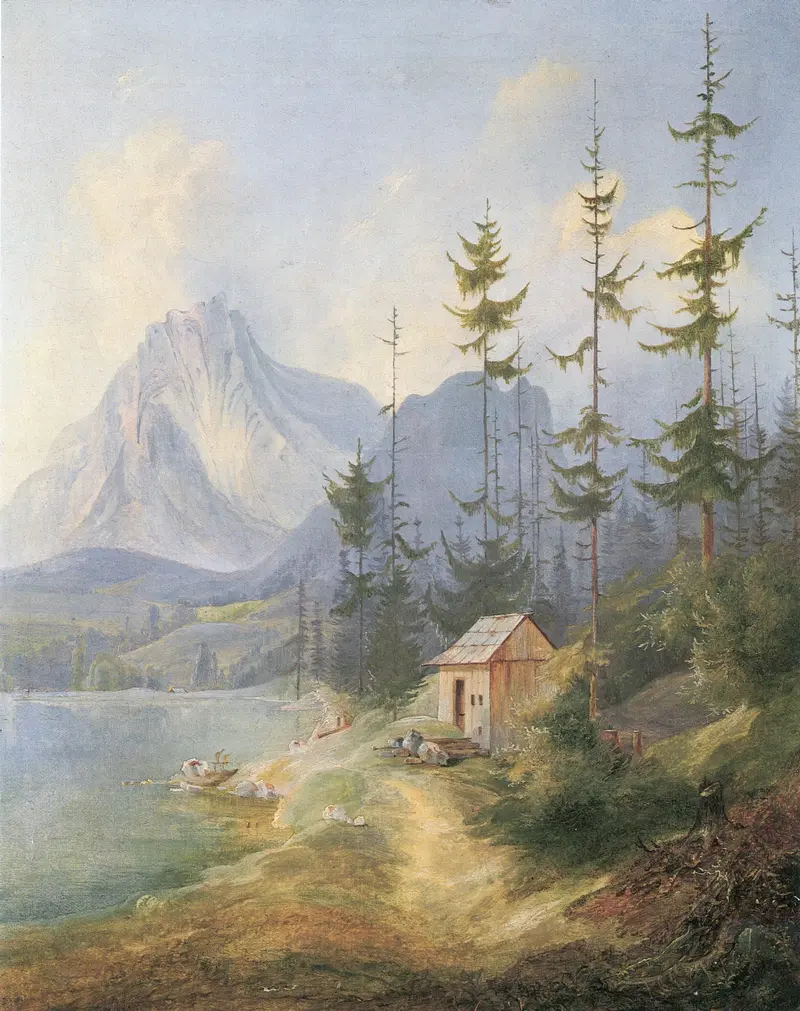
Der Sarstein bei Alt-Aussee (Fassung I)
Adalbert Stifter
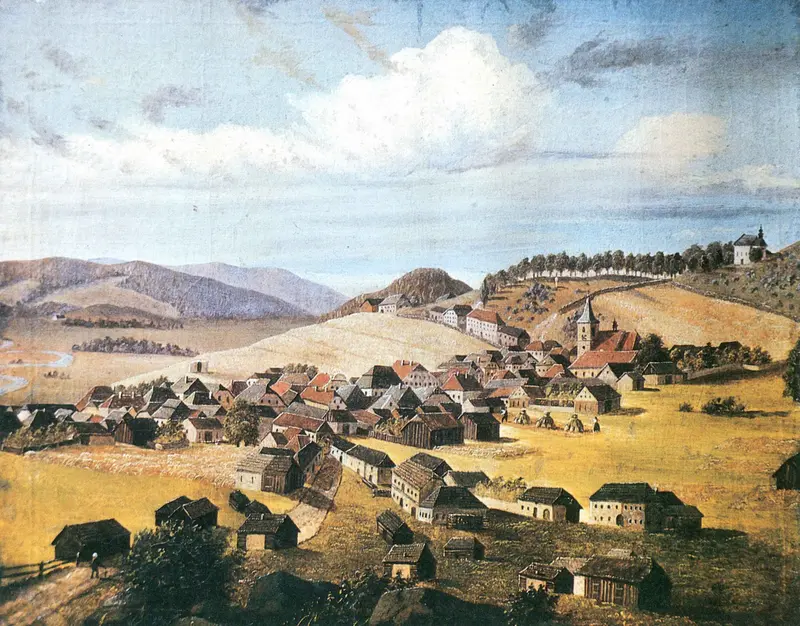
View of Oberplan
Adalbert Stifter
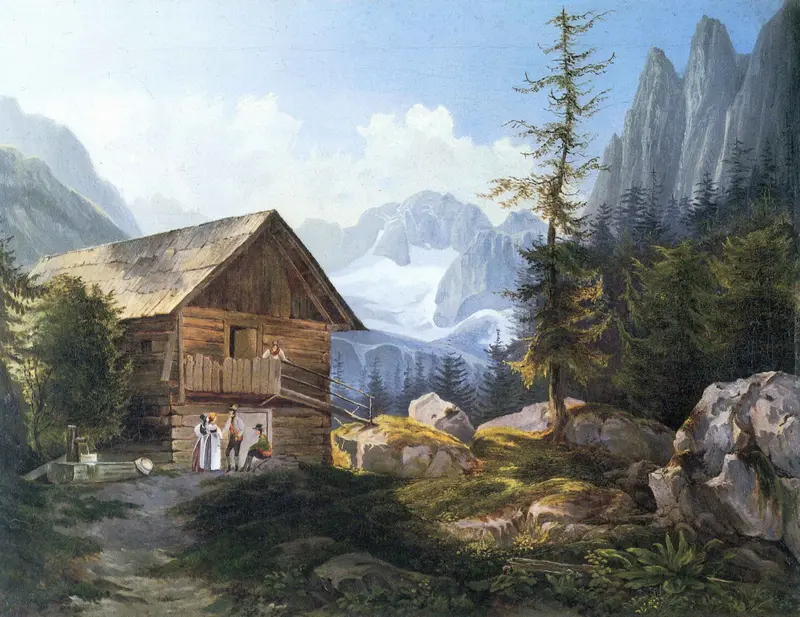
Im Gosautal
Adalbert Stifter
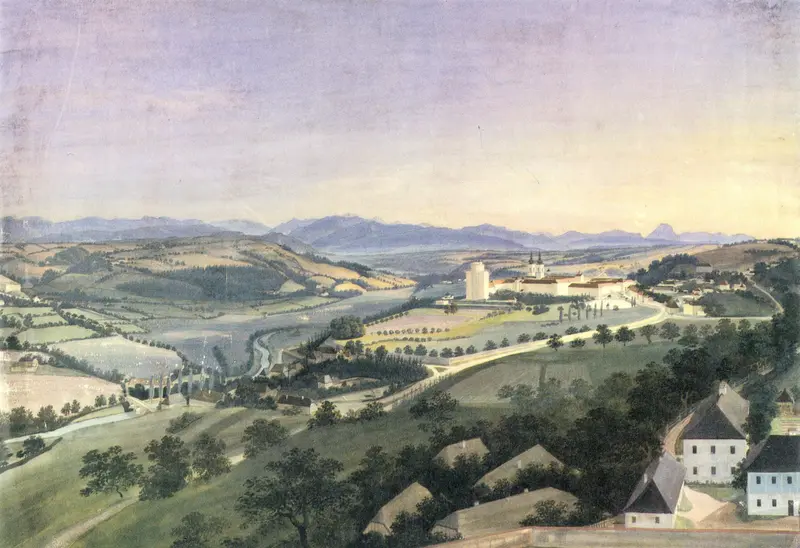
Blick auf Kremsmünster und Umgebung
Adalbert Stifter
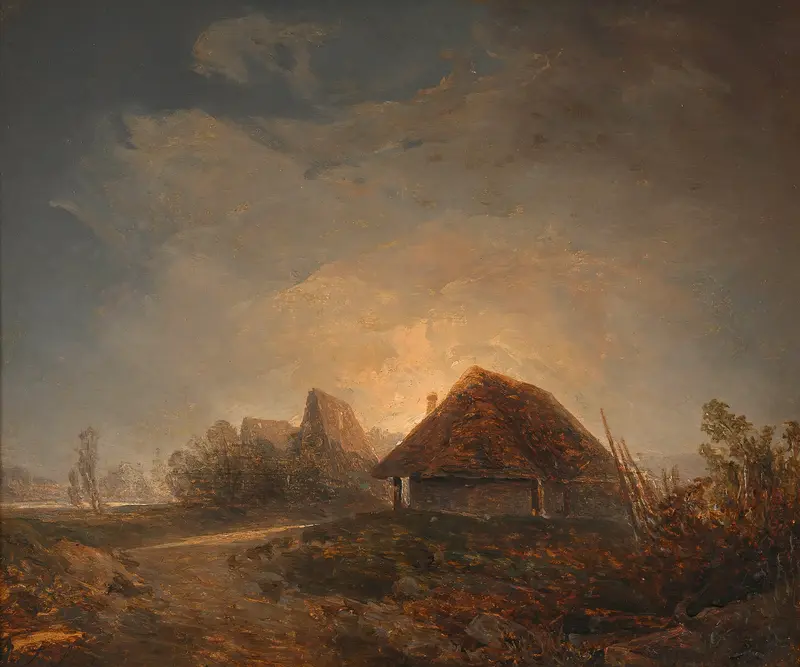
Westungarische Landschaft mit Hütten und aufgehendem Mond
Adalbert Stifter
More Landscape Art

The Starry Night
Vincent van Gogh

View of Delft
Johannes Vermeer

Water Lilies
Claude Monet

The Grand Canal, Venice, looking north-west from the Ca' Corner to the Ca' Contarini degli Scrigni, with the campanile of Santa Maria della Carità
Canaletto

Windsor Castle
Canaletto

The Grand Canal looking North-East from the Palazzo Dolfin-Manin to the Rialto Bridge
Canaletto