
View of Oberplan — History & Facts
What first catches the eye in View of Oberplan is the way the clustered rooftops seem to nestle into the folds of the land, as if the village itself were a natural outgrowth of the Bohemian hills. The painter, Adalbert Stifter, arranges the scene so that the viewer is gently led from the shaded foreground, where a lone figure moves along a path, into the sunlit heart of the town and up toward the distant, rolling hills. The church spire rises as a quiet anchor, its presence both central and modest, while the broad, open sky presses down with a calm, steady light.
Every structure, from the barns at the edge to the houses gathered around the church, is painted with a kind of careful affection, suggesting a world where human life and landscape are deeply entwined. Created around 1823, this work stands at the crossroads of changing tastes in European landscape painting. The early nineteenth century saw a growing fascination with the specificity of place, as artists and their patrons began to value scenes of their own towns and regions, not just grand historical or mythological vistas. Little is recorded about the journey of this particular painting—now preserved in the collection of Zeno.org—but its careful observation and sense of rootedness speak to a period when the everyday countryside was newly worthy of attention.
The viewer is left with the sense that this is not just any village, but one remembered and cherished, its details inviting us to linger and look again.
More Artworks by Adalbert Stifter
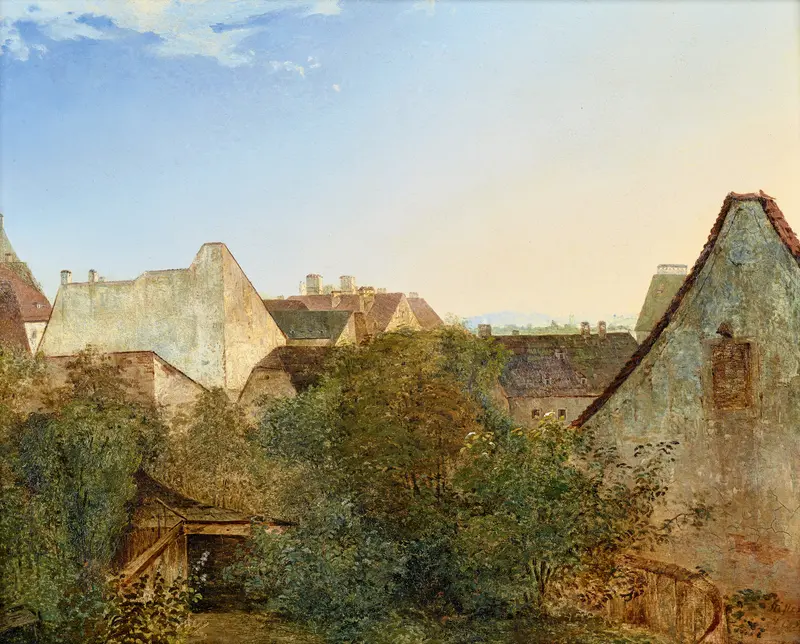
Blick über Wiener Vorstadthäuser (Beatrixgasse)
Adalbert Stifter
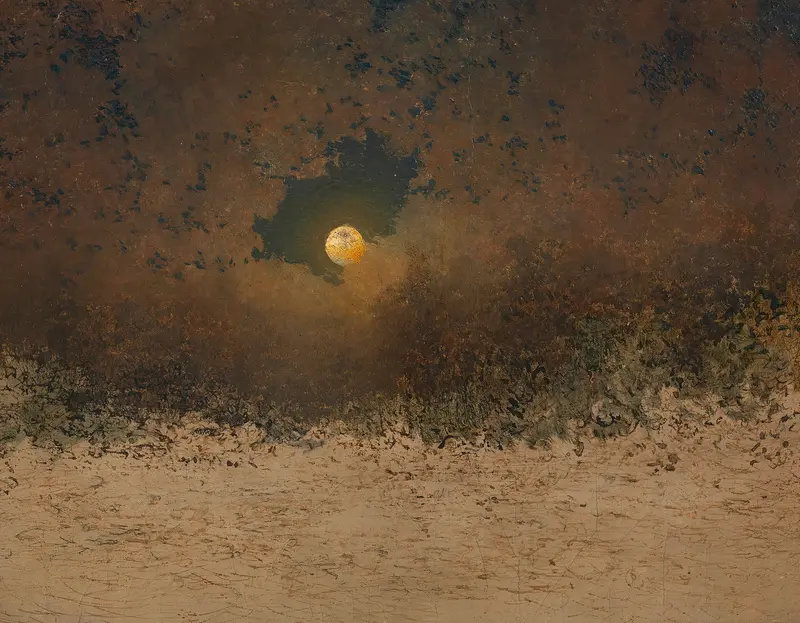
Mondlandschaft mit bewölktem Himmel
Adalbert Stifter
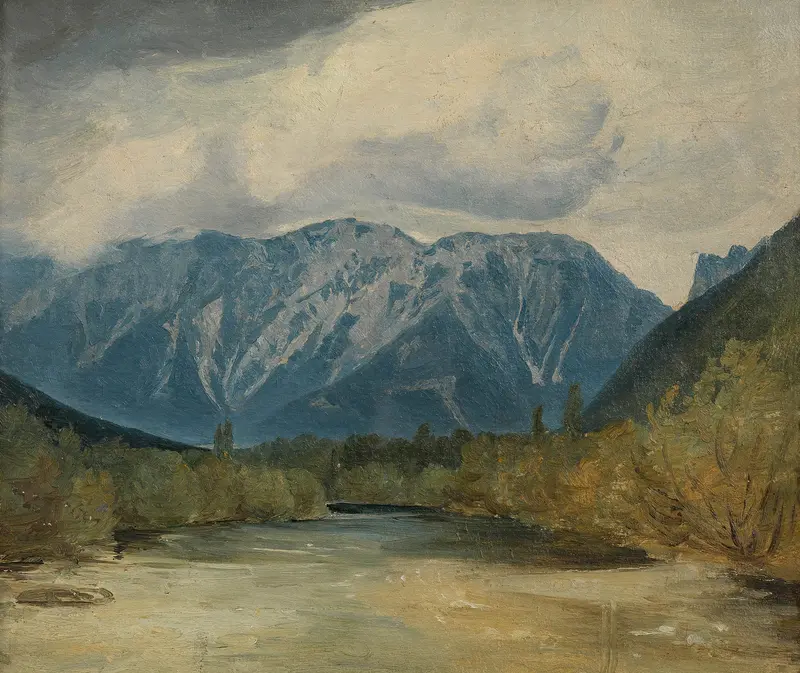
Die Rax in Niederösterreich
Adalbert Stifter
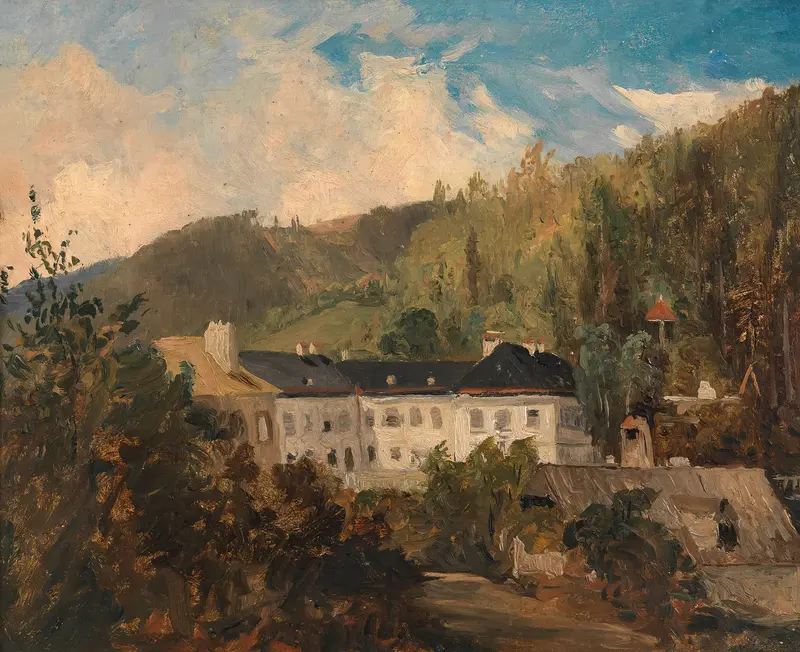
Motiv aus Neuwaldegg
Adalbert Stifter

Westungarische Landschaft – Blick vom Leithagebirge
Adalbert Stifter
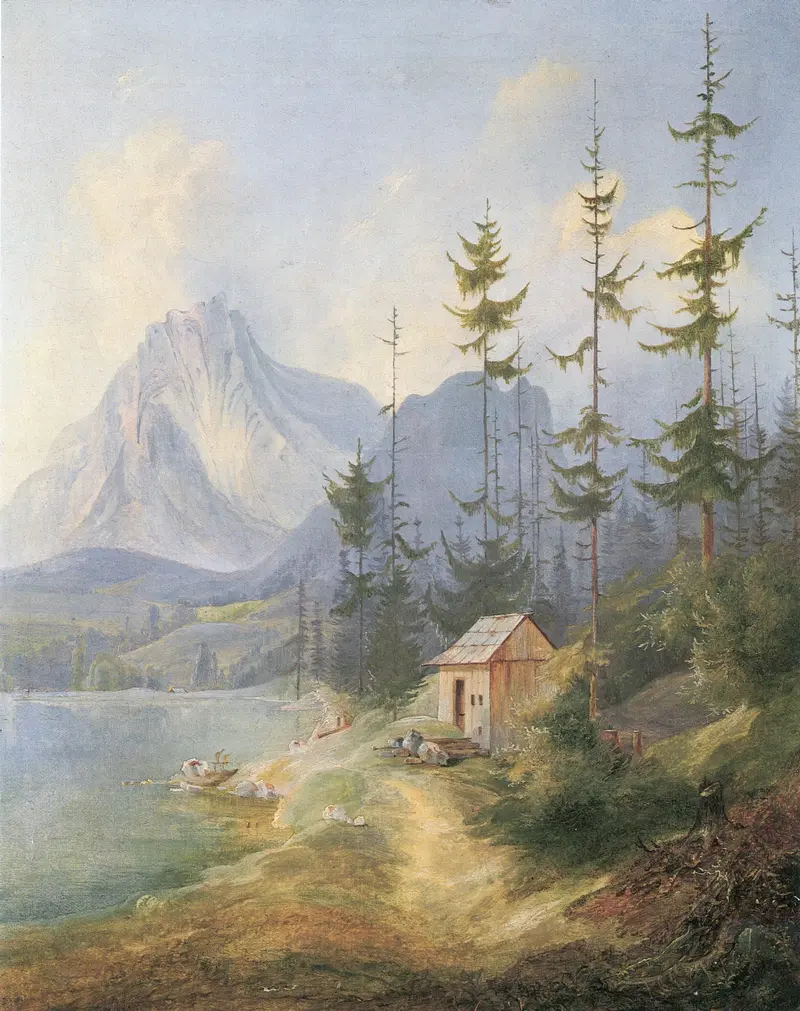
Der Sarstein bei Alt-Aussee (Fassung I)
Adalbert Stifter
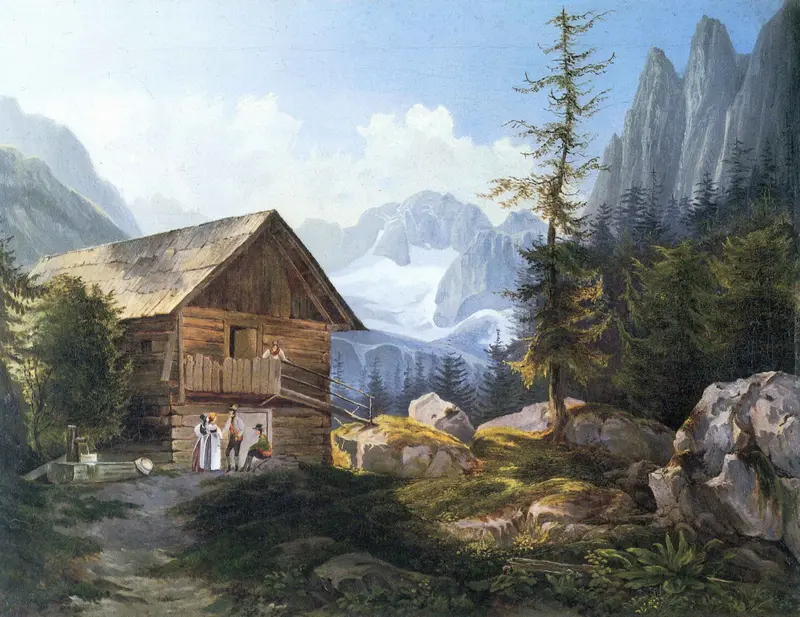
Im Gosautal
Adalbert Stifter
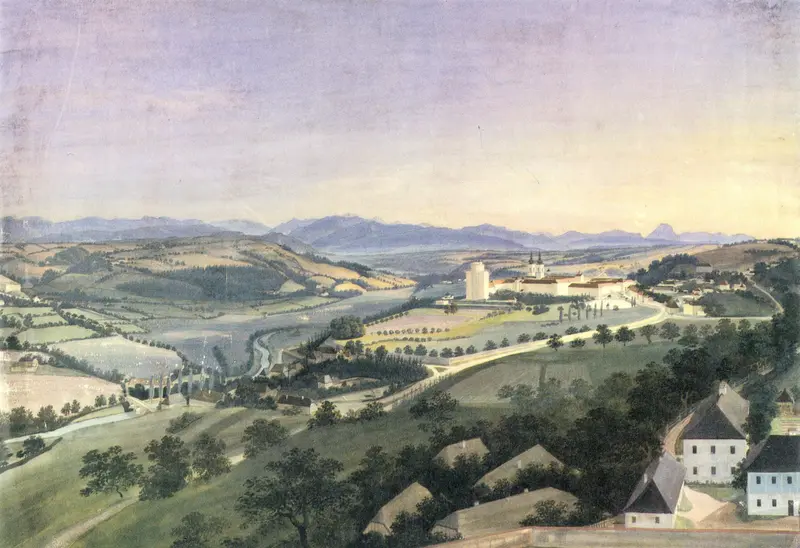
Blick auf Kremsmünster und Umgebung
Adalbert Stifter
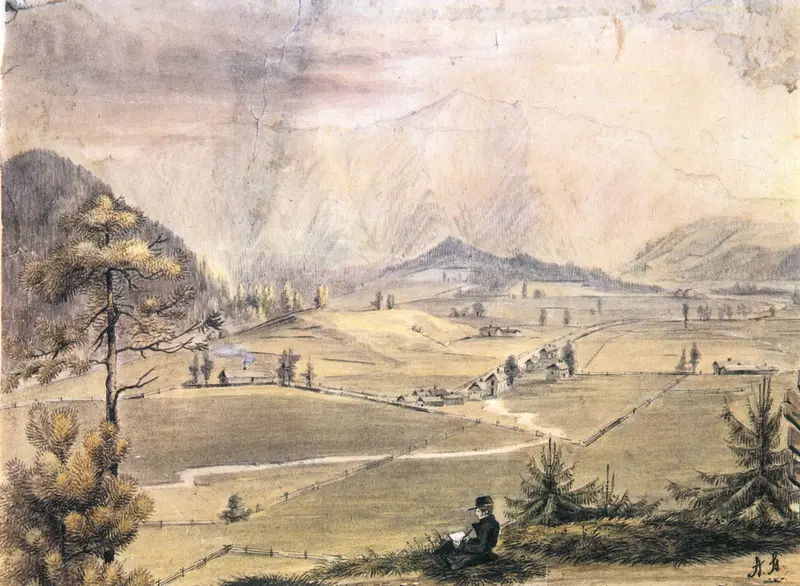
Blick auf die Falkenmauer aus der Gegend von Kremsmünster
Adalbert Stifter
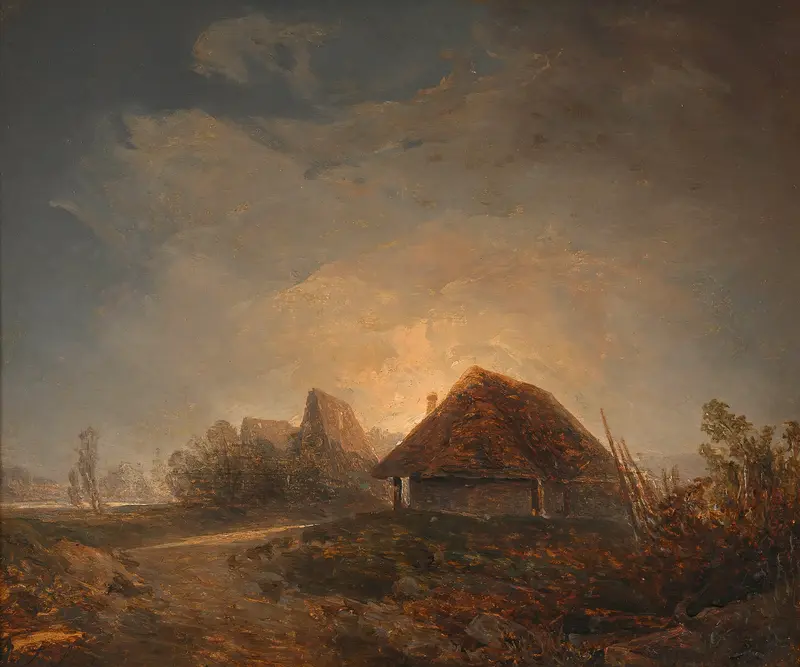
Westungarische Landschaft mit Hütten und aufgehendem Mond
Adalbert Stifter
More Landscape Art

The Starry Night
Vincent van Gogh

View of Delft
Johannes Vermeer

Water Lilies
Claude Monet

The Grand Canal, Venice, looking north-west from the Ca' Corner to the Ca' Contarini degli Scrigni, with the campanile of Santa Maria della Carità
Canaletto

Windsor Castle
Canaletto

The Grand Canal looking North-East from the Palazzo Dolfin-Manin to the Rialto Bridge
Canaletto