
Im Gosautal — History & Facts
The first thing to catch the eye is the way the mountains rise like guardians behind the wooden house, their pale blue forms half-lost in cloud and distance. Sunlight pours in from the left, catching the rough-hewn boards of the building and the faces of the small group gathered outside—a cluster of figures whose gestures suggest conversation, pause, perhaps a greeting or farewell. The painter leads us gently from the shadowed foreground, past the water trough and the figures, up to the solitary tree that stands sentinel before the sweep of forest and rock.
The house is not just shelter but a stage, its balcony and steps drawing out the social life of this remote valley, while the glacier beyond reminds us of nature’s vastness and indifference. Painted in 1834 by Adalbert Stifter, this scene belongs to a world where landscape painting was coming into its own as a celebration of both place and mood. In early nineteenth-century Austria and Germany, such works were often created for a growing bourgeois public, eager for images of the countryside that balanced human presence with the grandeur of nature. The precise date and the source—Zeno.org, where the work is catalogued—remind us that history has kept few traces of this particular painting’s journey.
Yet its careful observation and gentle human drama invite us to look again, to imagine the lives lived in the shadow of those peaks.
More Artworks by Adalbert Stifter
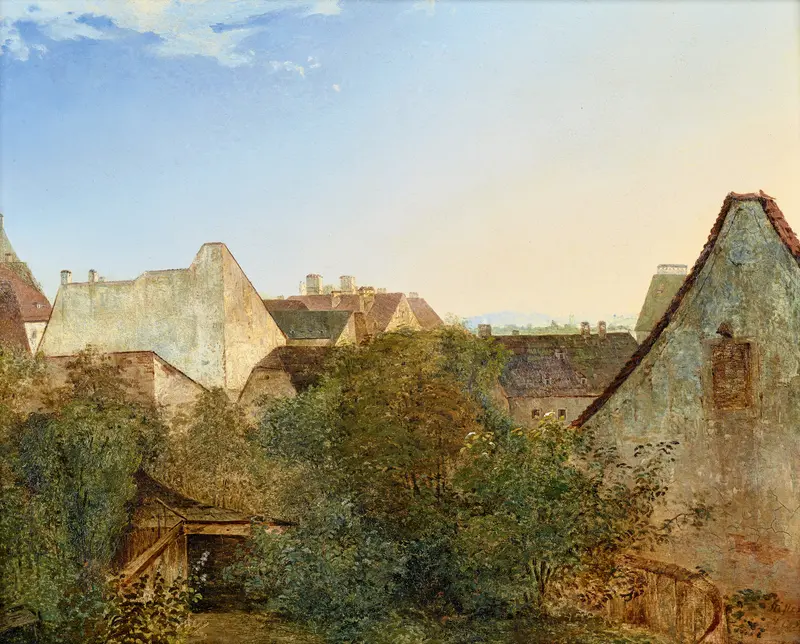
Blick über Wiener Vorstadthäuser (Beatrixgasse)
Adalbert Stifter
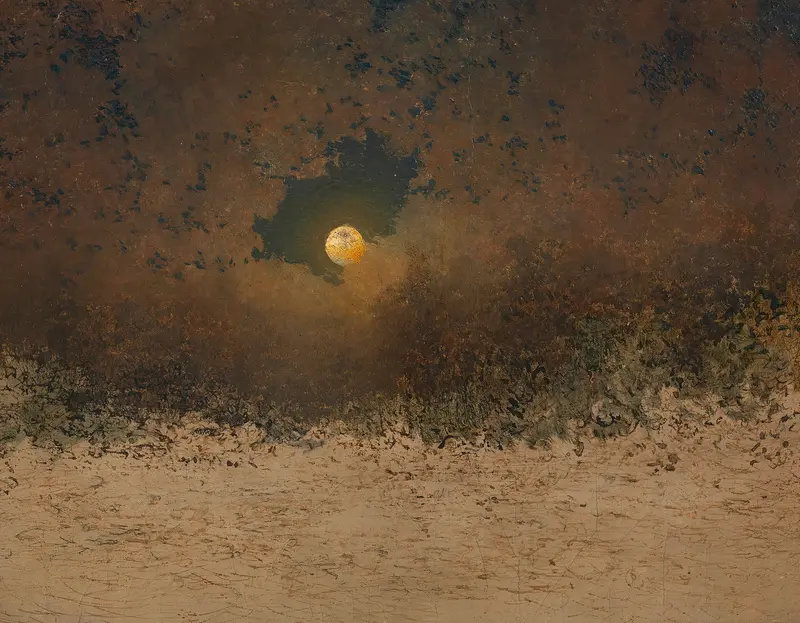
Mondlandschaft mit bewölktem Himmel
Adalbert Stifter
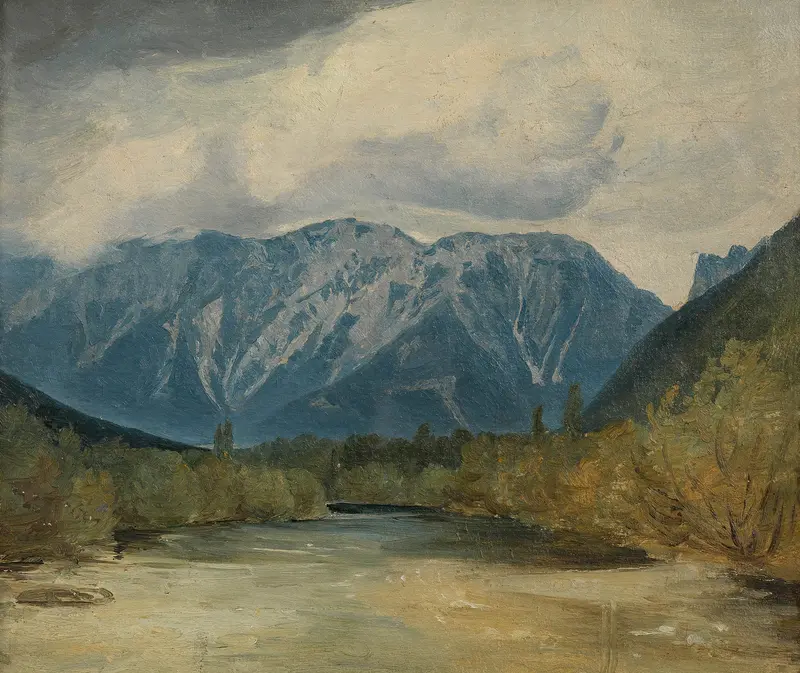
Die Rax in Niederösterreich
Adalbert Stifter
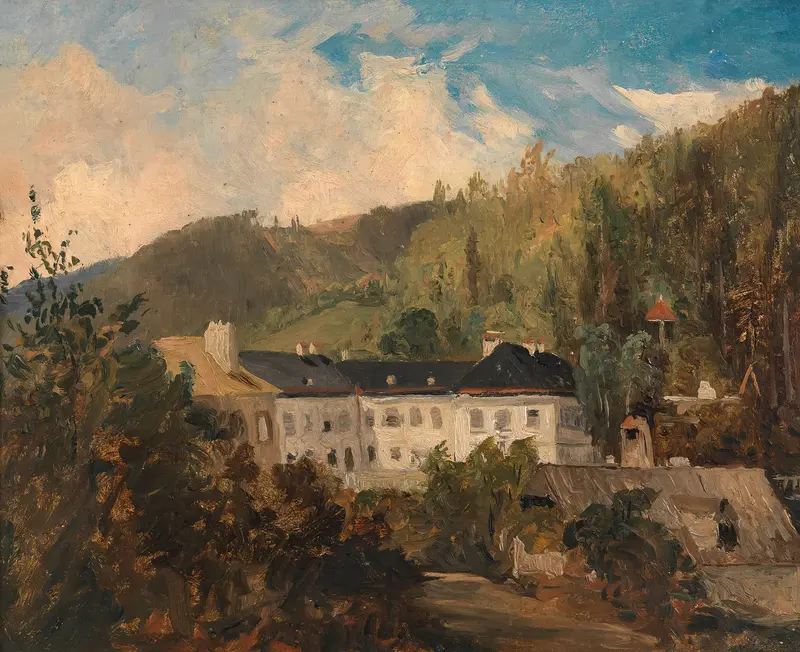
Motiv aus Neuwaldegg
Adalbert Stifter
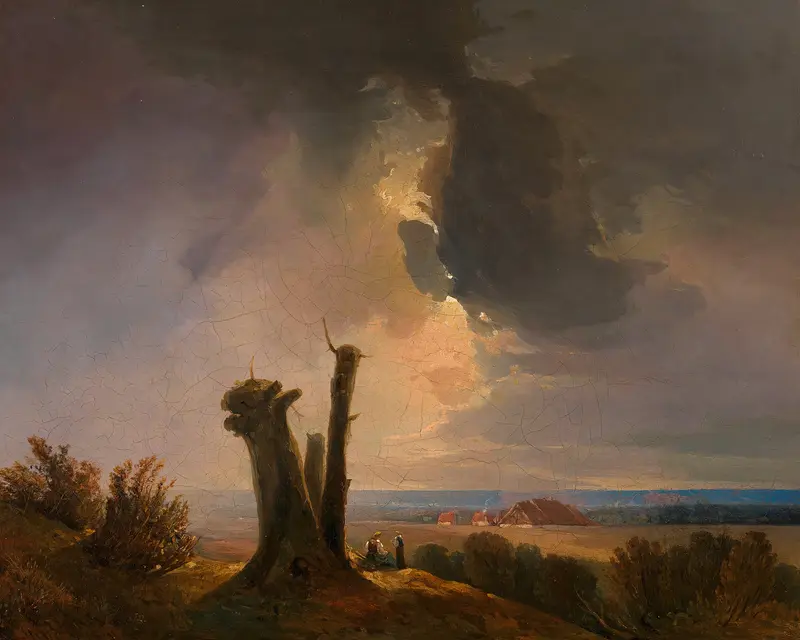
Westungarische Landschaft – Blick vom Leithagebirge
Adalbert Stifter
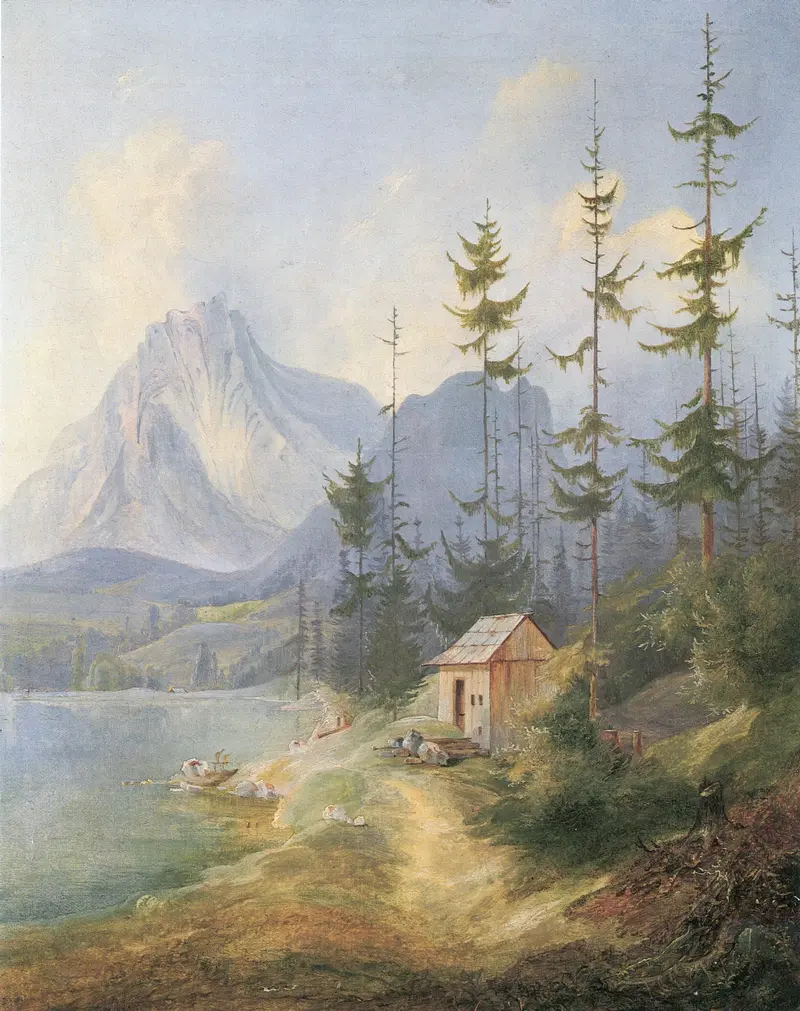
Der Sarstein bei Alt-Aussee (Fassung I)
Adalbert Stifter
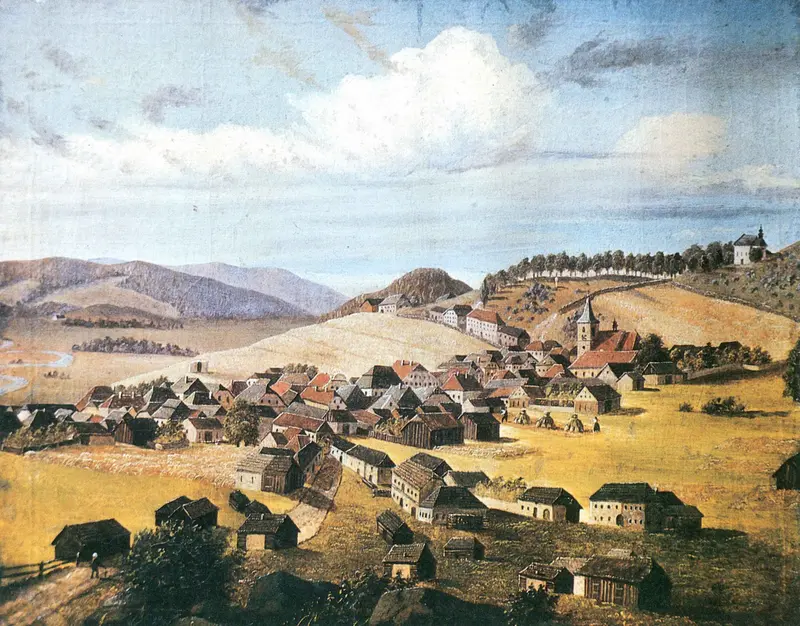
View of Oberplan
Adalbert Stifter
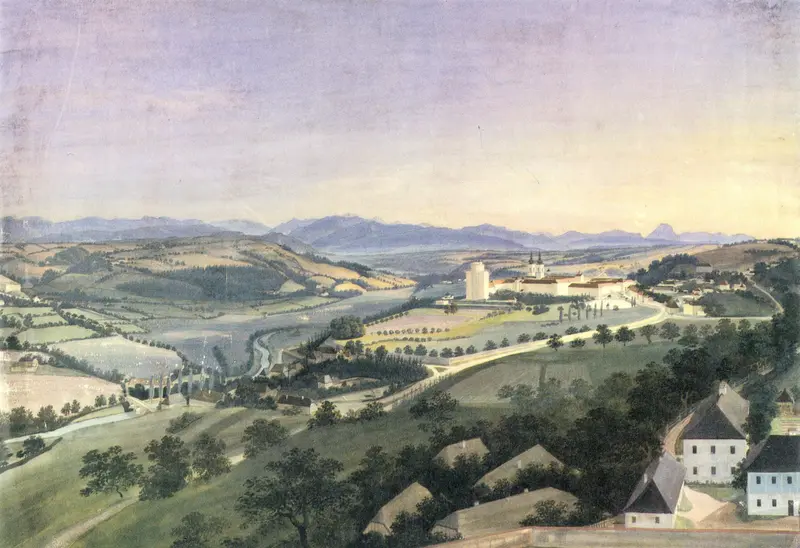
Blick auf Kremsmünster und Umgebung
Adalbert Stifter
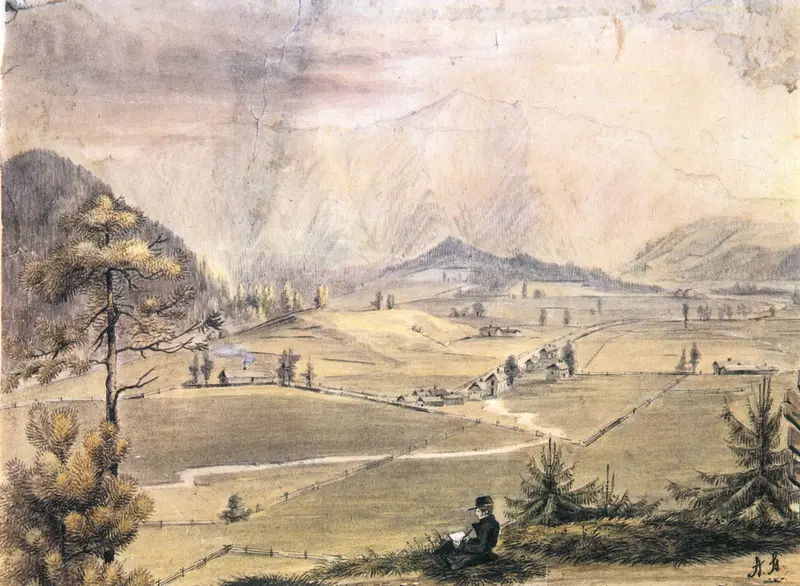
Blick auf die Falkenmauer aus der Gegend von Kremsmünster
Adalbert Stifter
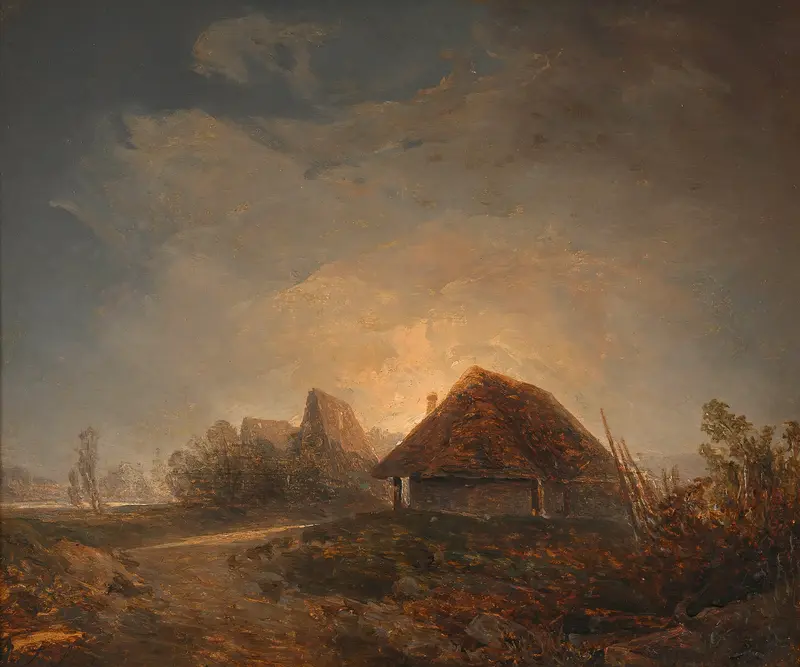
Westungarische Landschaft mit Hütten und aufgehendem Mond
Adalbert Stifter
More Landscape Art

The Starry Night
Vincent van Gogh

View of Delft
Johannes Vermeer

Water Lilies
Claude Monet

The Grand Canal, Venice, looking north-west from the Ca' Corner to the Ca' Contarini degli Scrigni, with the campanile of Santa Maria della Carità
Canaletto

Windsor Castle
Canaletto

The Grand Canal looking North-East from the Palazzo Dolfin-Manin to the Rialto Bridge
Canaletto