
Blick auf Kremsmünster und Umgebung — History & Facts
A pale, lucid sky stretches above a sweep of orderly fields and clustered rooftops, drawing the viewer’s gaze deep into the Austrian countryside. The eye travels from the shaded foreground, where whitewashed houses nestle among trees, to the sunlit heart of the composition: the imposing form of Kremsmünster Abbey, its towers and domes catching the morning light. Beyond, the river bends and glimmers, guiding the gaze further still, toward distant blue hills that dissolve into the horizon.
The painter’s hand lingers on the geometry of cultivated land and the gentle undulation of wooded slopes, suggesting a world shaped by both nature and careful human stewardship. Every element in Blick auf Kremsmünster und Umgebung seems chosen to evoke quiet order and the promise of a new day. Created around 1823–25, this landscape by Adalbert Stifter belongs to an era when the depiction of local vistas was gaining new importance in Central Europe. Such works were often commissioned by abbeys, landowners, or civic leaders eager to record their domains, celebrate prosperity, or simply delight in the familiar beauty of home.
Though little is known about the specific journey of this painting—now catalogued in the Zeno.org collection—its precise, almost topographical style reflects a broader fascination with place and memory in the Biedermeier period. In a time of political uncertainty, these measured landscapes offered viewers a sense of rootedness and calm. Let your gaze wander across the painting’s gentle valleys and distant peaks, and consider what it meant to see one’s world rendered with such clarity and care.
More Artworks by Adalbert Stifter
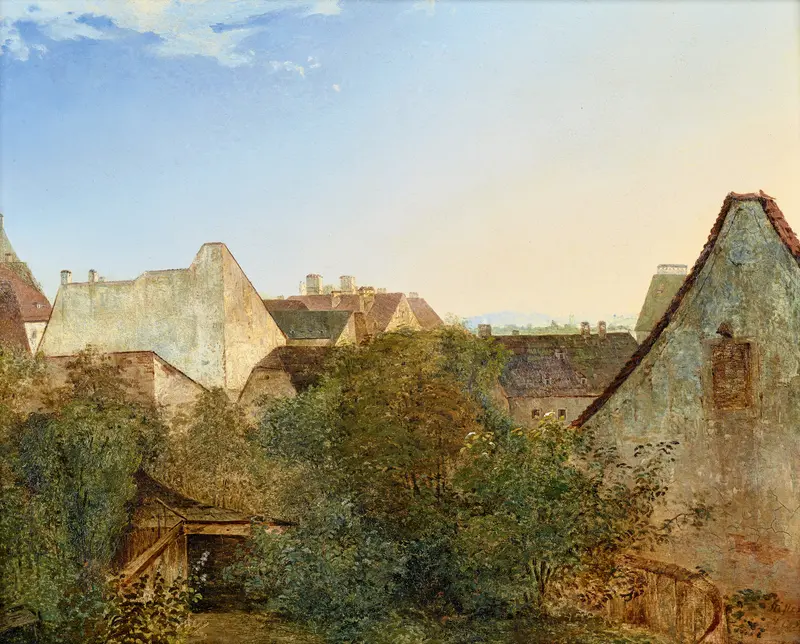
Blick über Wiener Vorstadthäuser (Beatrixgasse)
Adalbert Stifter
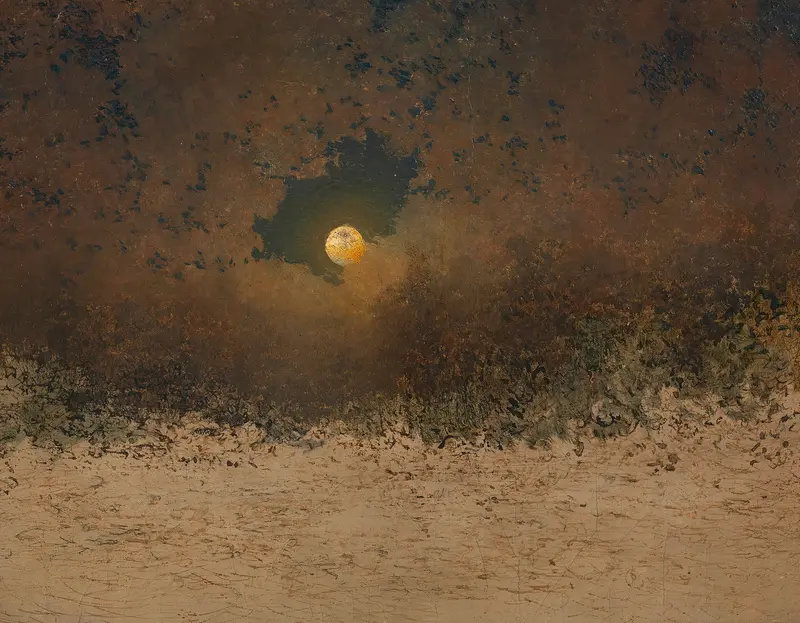
Mondlandschaft mit bewölktem Himmel
Adalbert Stifter
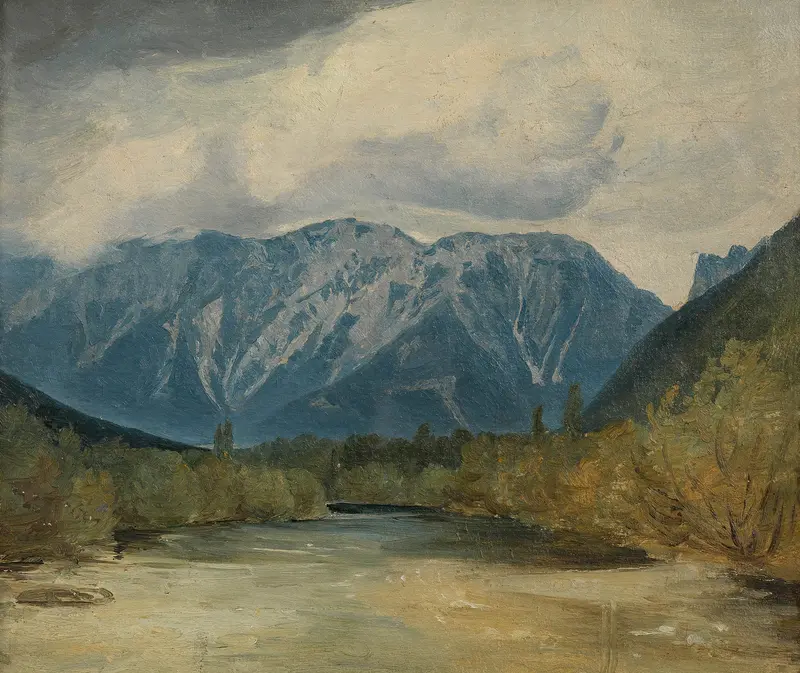
Die Rax in Niederösterreich
Adalbert Stifter
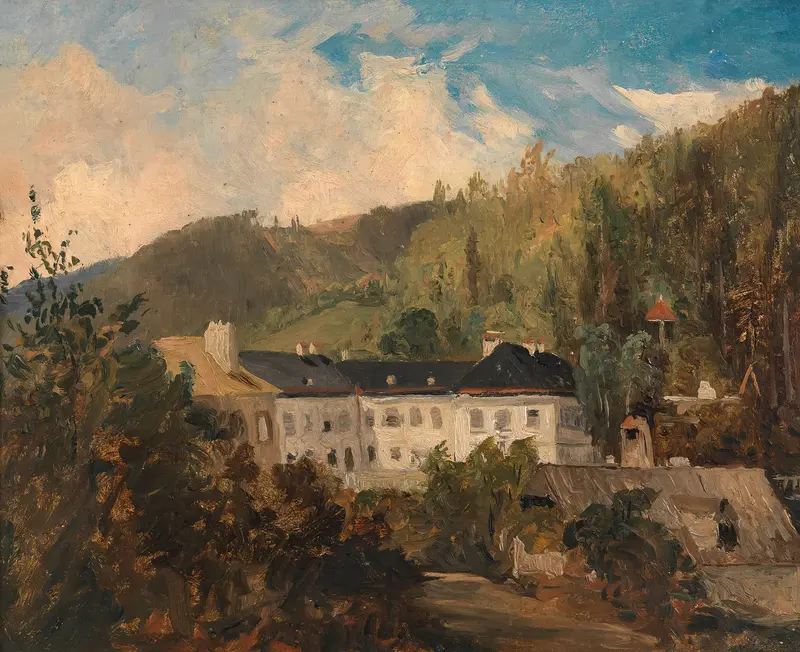
Motiv aus Neuwaldegg
Adalbert Stifter
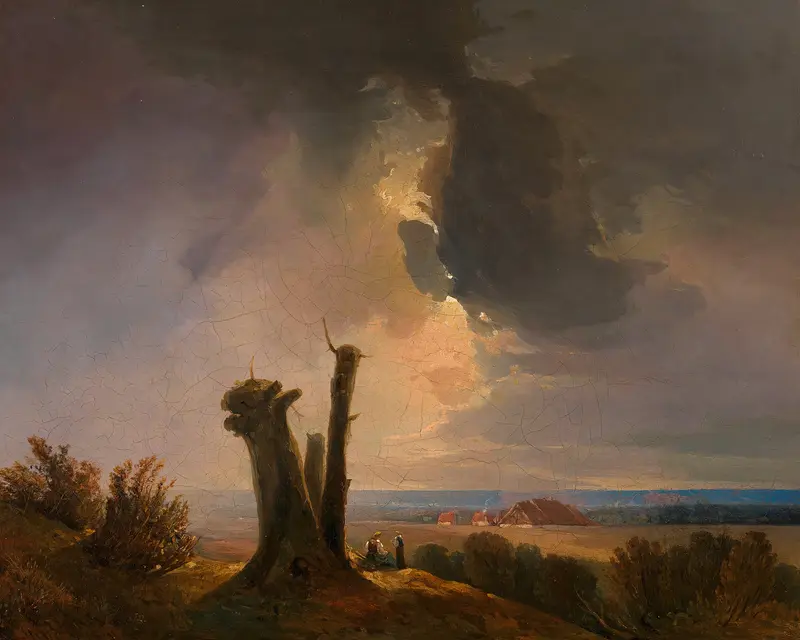
Westungarische Landschaft – Blick vom Leithagebirge
Adalbert Stifter
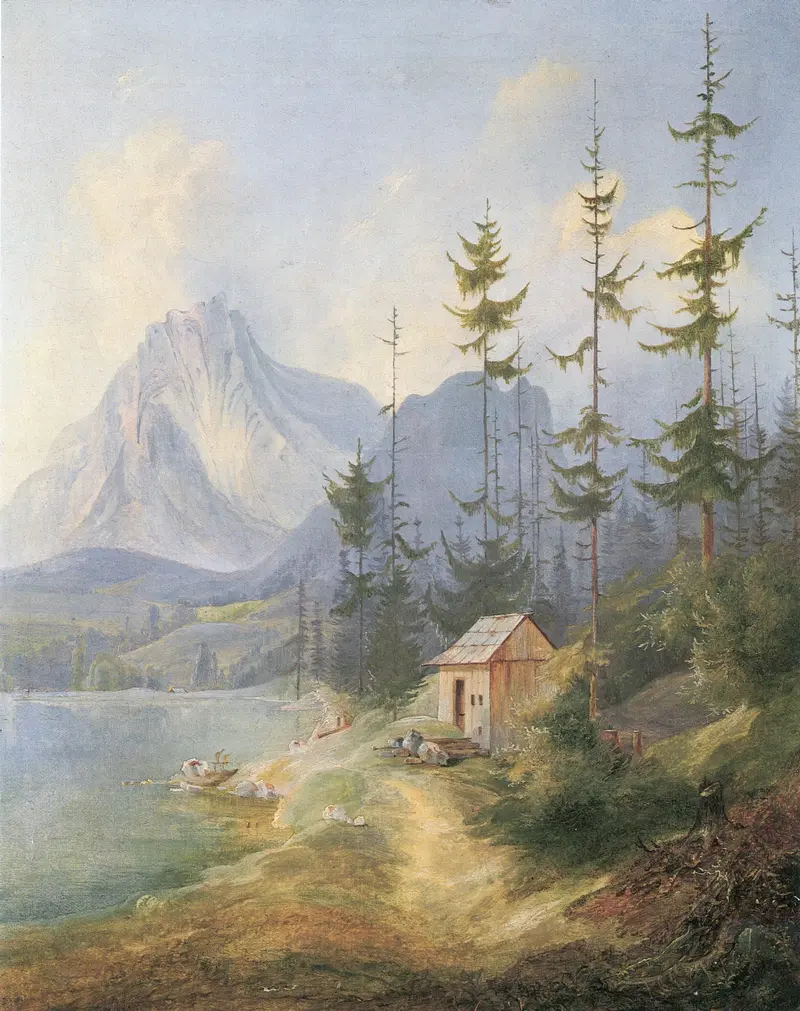
Der Sarstein bei Alt-Aussee (Fassung I)
Adalbert Stifter
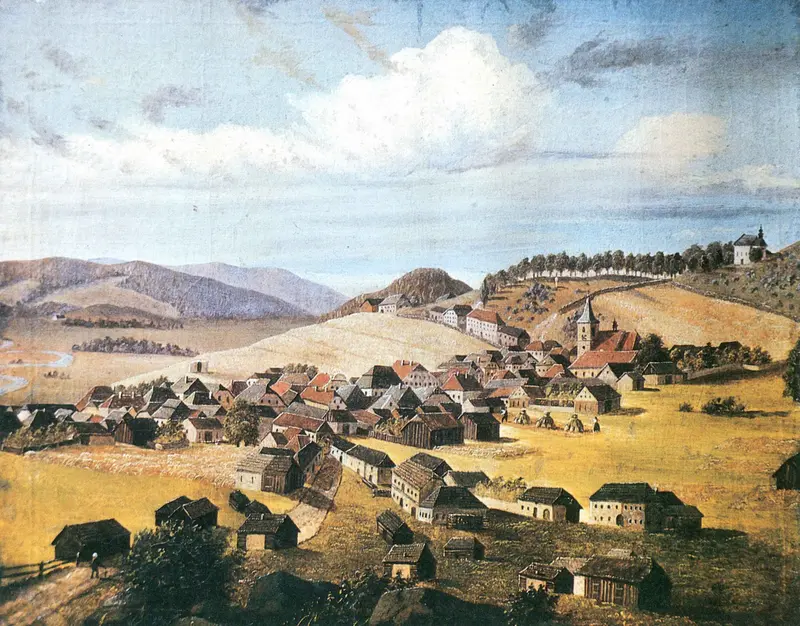
View of Oberplan
Adalbert Stifter
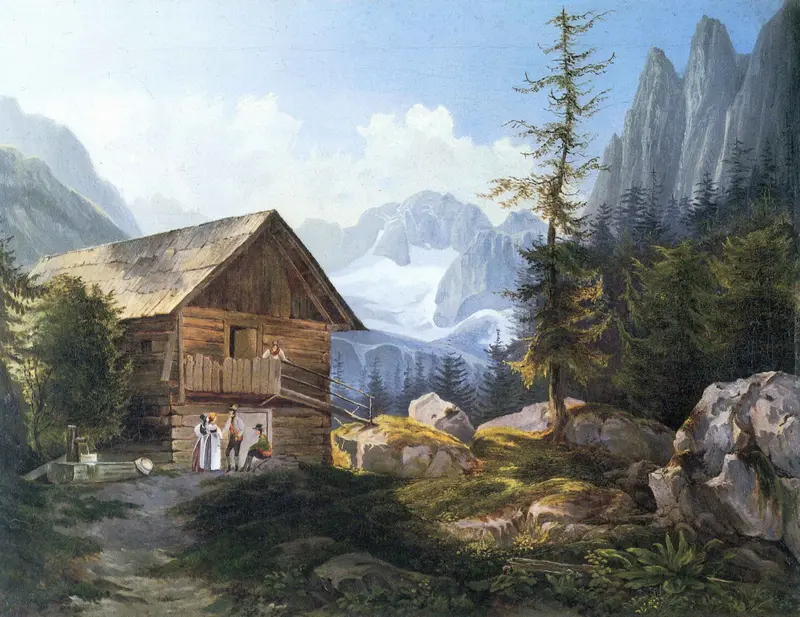
Im Gosautal
Adalbert Stifter
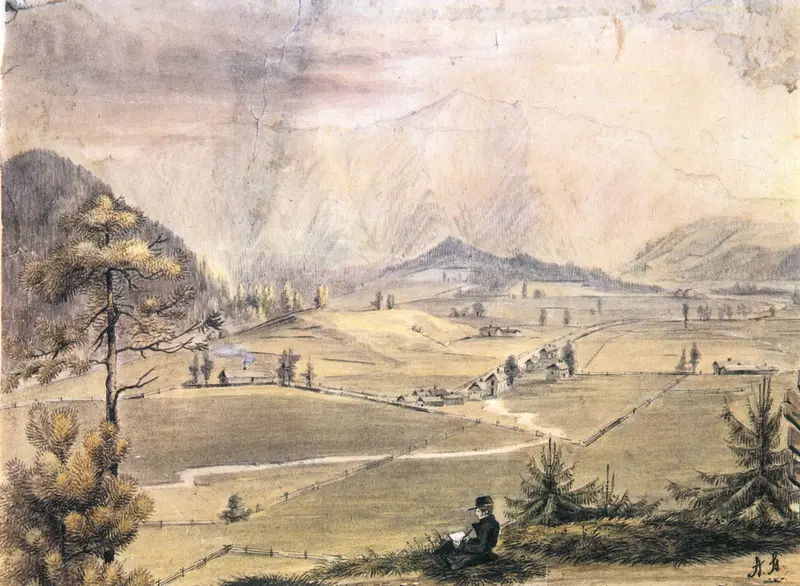
Blick auf die Falkenmauer aus der Gegend von Kremsmünster
Adalbert Stifter
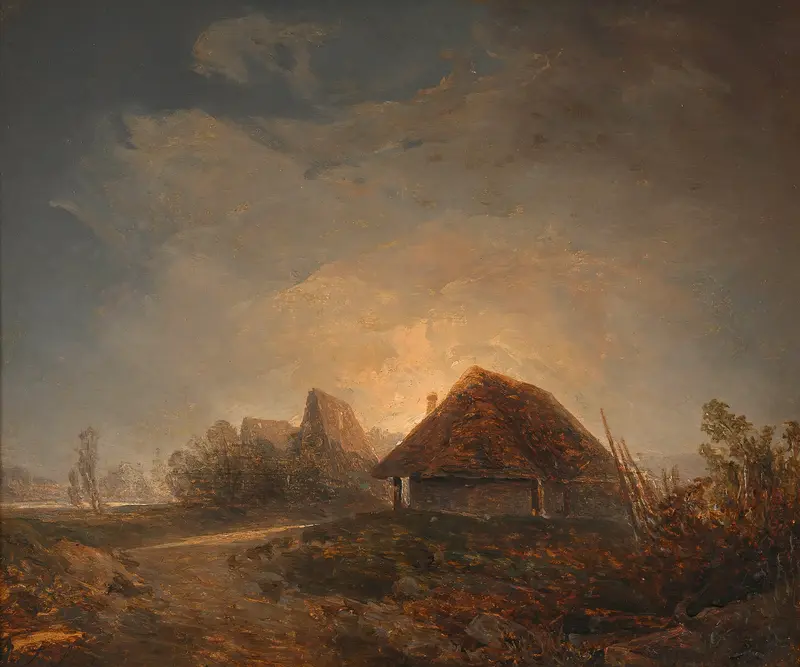
Westungarische Landschaft mit Hütten und aufgehendem Mond
Adalbert Stifter
More Landscape Art

The Starry Night
Vincent van Gogh

View of Delft
Johannes Vermeer

Water Lilies
Claude Monet

The Grand Canal, Venice, looking north-west from the Ca' Corner to the Ca' Contarini degli Scrigni, with the campanile of Santa Maria della Carità
Canaletto

Windsor Castle
Canaletto

The Grand Canal looking North-East from the Palazzo Dolfin-Manin to the Rialto Bridge
Canaletto