
Bouquet with cat and mousetrap — History & Facts
A riot of petals and fur, Bouquet with cat and mousetrap by Abraham Mignon draws the viewer in with a sense of imminent danger hidden among beauty. The eye is first caught by the lush, tumbling bouquet—tulips, roses, peonies, and irises in impossible bloom, their colors vivid against a shadowed background. But just beneath this explosion of life, a tabby cat hisses, back arched, eyes wild, startled by the presence of a wooden mousetrap.
The trap itself sits open, its threat as palpable as the cat’s tension. Every leaf and whisker is rendered with a precision that invites you to look closer, to see the drama that lies just below the surface of abundance. Such paintings flourished in the 17th-century Dutch world, where the still life became a stage for meditations on luxury, fragility, and fate. Collectors of this era, often wealthy merchants, prized these works as both displays of taste and reminders of life’s fleeting pleasures—flowers that wilt, animals that pounce or flee, traps that snap shut.
Abraham Mignon, active in the mid-1600s, was known for weaving moral lessons into his lavish arrangements, and this work—documented as dating to 1650—carries that tradition forward. Though the full journey of this particular painting is lost to history, its survival in a modern collection lets us glimpse the anxieties and delights of a world where beauty and peril were never far apart. Look again, and see how every detail sharpens the tension between the seen and the hidden.
More Artworks by Abraham Mignon

Still Life with Flowers and a Watch
Abraham Mignon
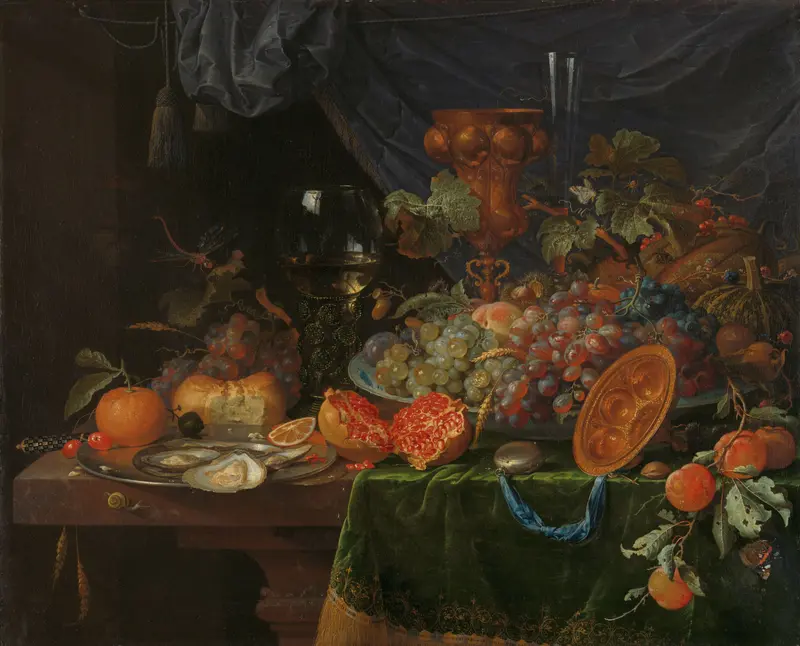
Still Life with Fruit and Oysters
Abraham Mignon
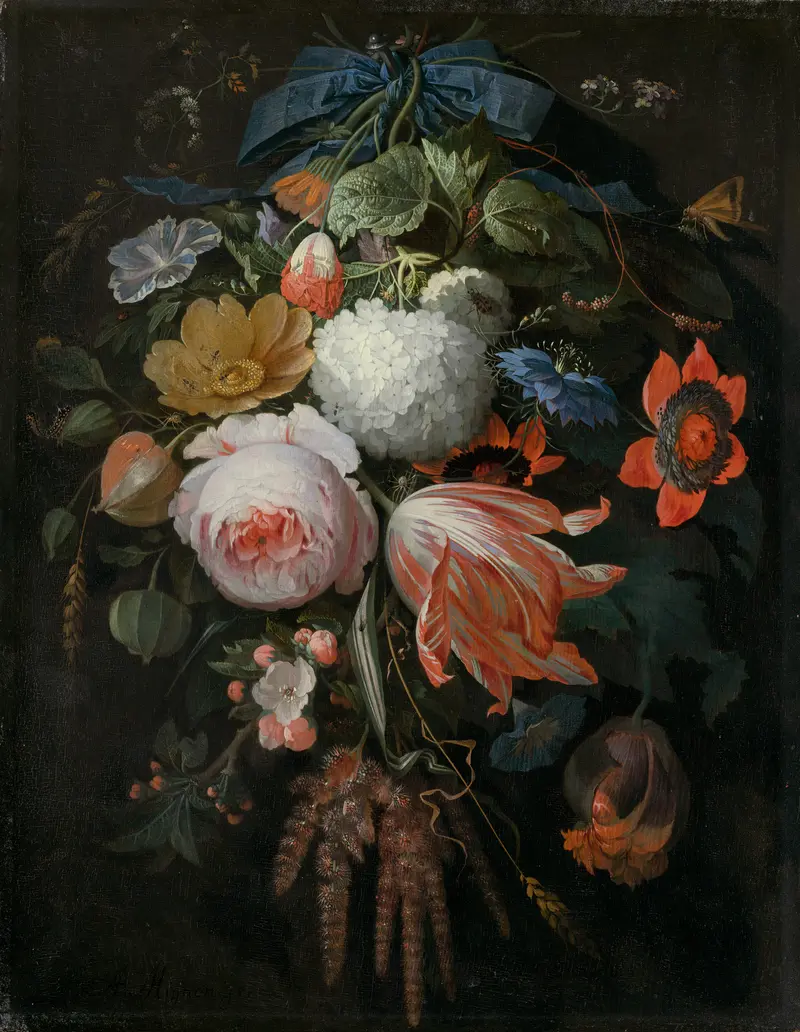
A Hanging Bouquet of Flowers
Abraham Mignon
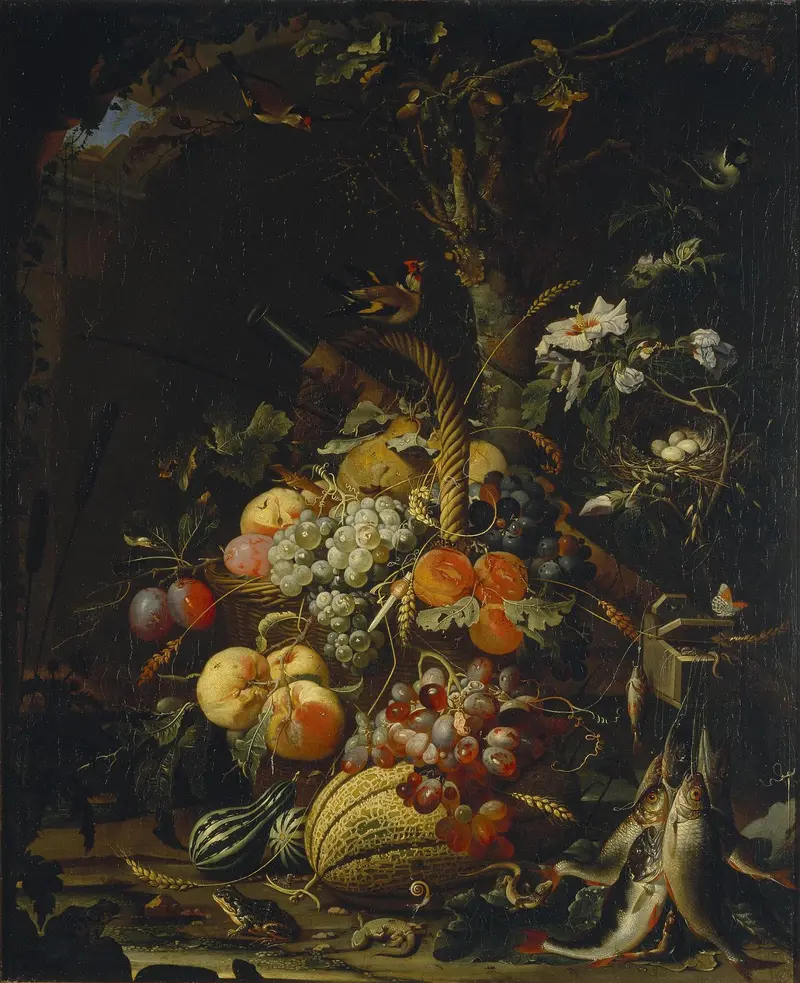
Forest floor still life with fruit, fish and a bird's nest
Abraham Mignon
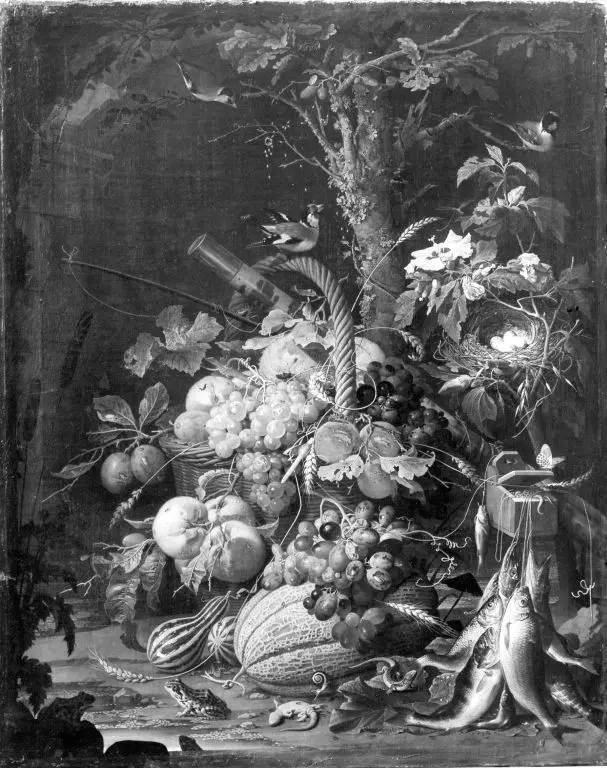
Still life with fruit, fish and a bird's nest
Abraham Mignon
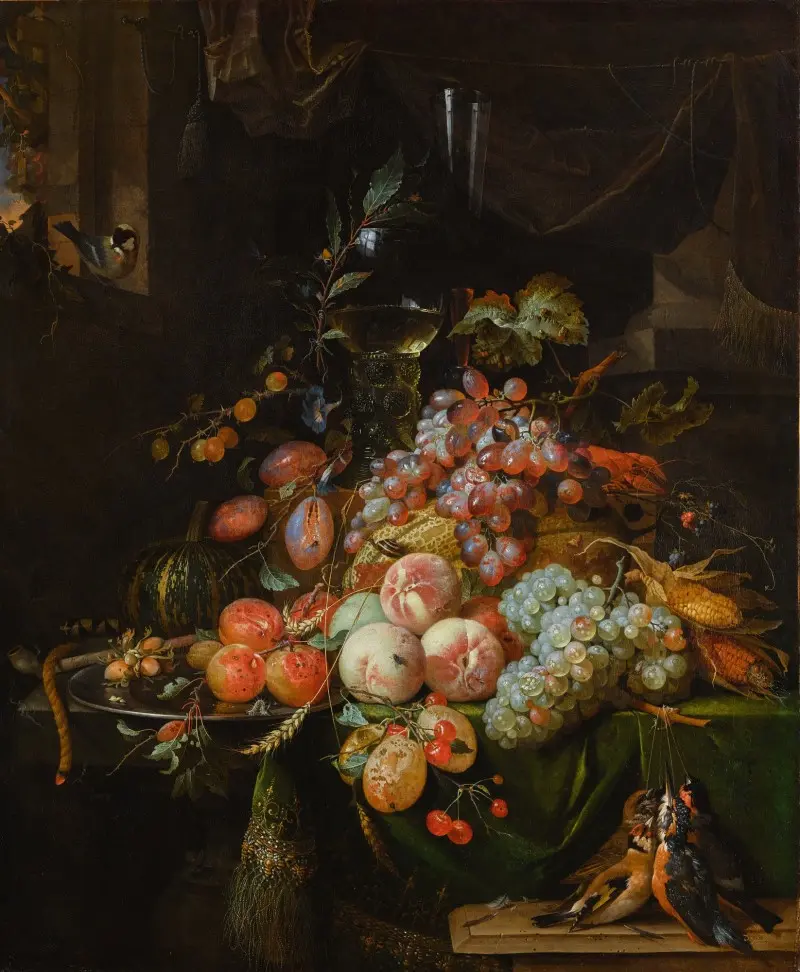
Still Life with Plums, Peaches, Apricots, Grapes and a Melon
Abraham Mignon
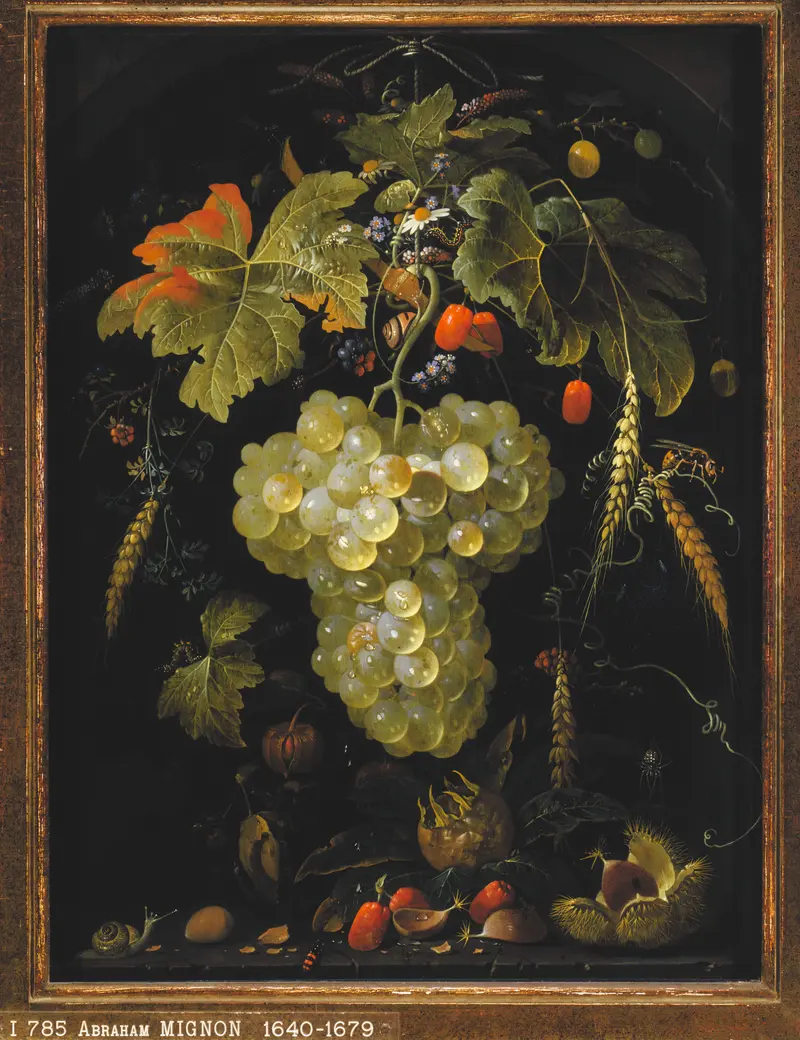
Festoon of fruit suspended from a rope, in a niche
Abraham Mignon
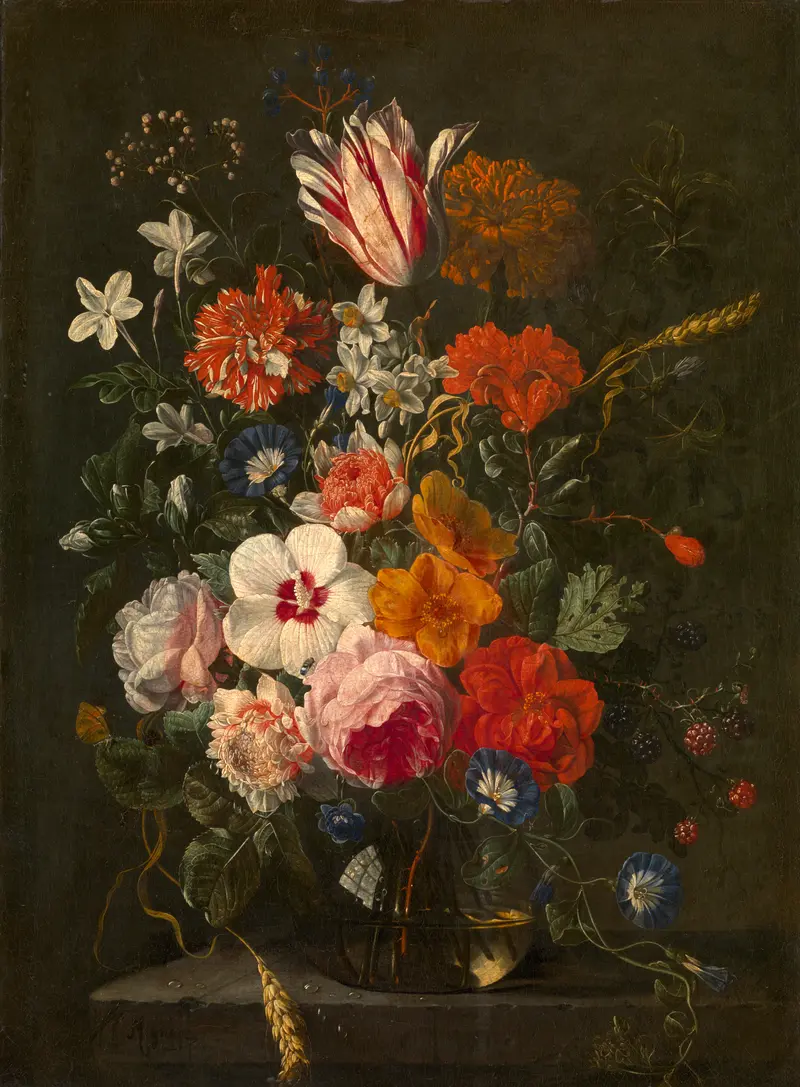
Flowers and a branch of berries in a glass vase on a stone ledge
Abraham Mignon
Flowers and fruit on a plinth
Abraham Mignon
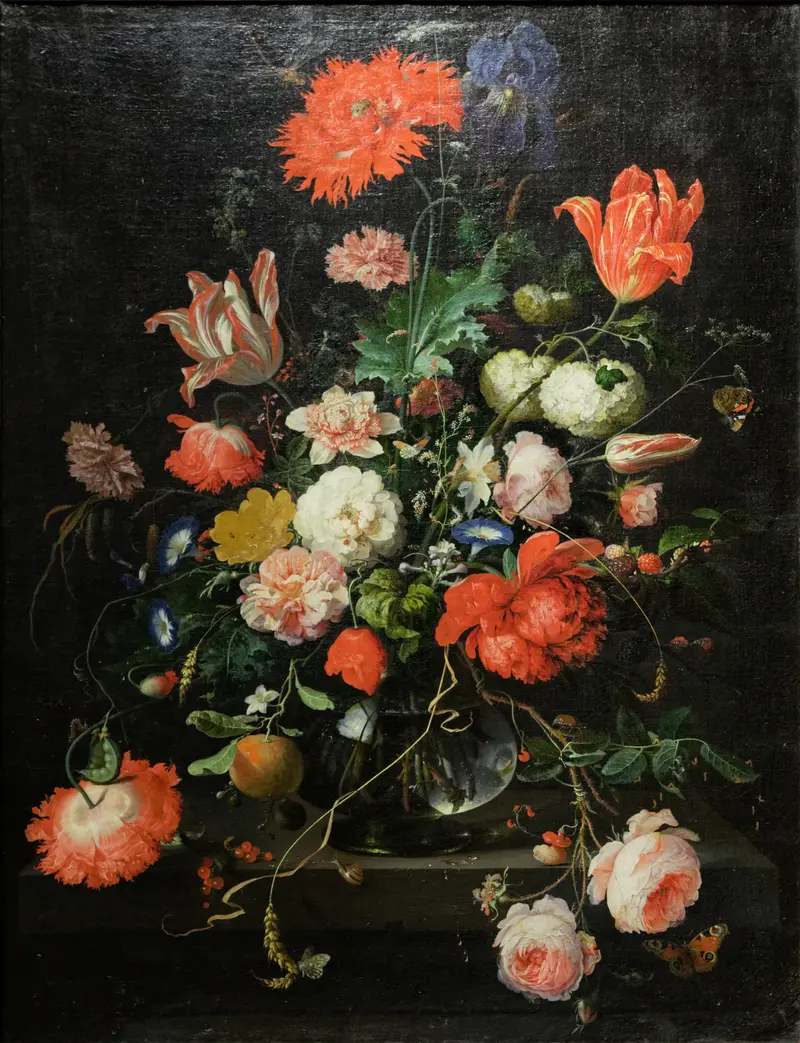
Flowers in a Crystal Vase Standing on a Stone Pedestal, with a Dragonfly
Abraham Mignon





