
Still life with fruit, fish and a bird's nest — History & Facts
What first catches the eye in Still life with fruit, fish and a bird's nest by Abraham Mignon is the sense of abundance verging on chaos—nature’s bounty tumbling toward the viewer in a carefully orchestrated display. The light, falling from the left, catches the bloom on grapes and the gloss of apples, then glints off the delicate eggs nestled in their woven home. A trio of fish dangles in the lower right, their silvery bodies a stark contrast to the lush fruit and curling leaves.
Every object seems poised between ripeness and decay, from the swelling melon to the curling tendrils of vine, while a frog and a butterfly linger at the threshold, hinting at the cycle of life and death. Mignon’s eye for detail invites the viewer to linger, discovering new relationships between the elements with each glance. Painted between 1640 and 1679, this work belongs to the golden age of Dutch and Flemish still life, a genre prized by collectors for its technical brilliance and symbolic richness. Such paintings were both a celebration of worldly wealth and a subtle meditation on its fleeting nature—commissioned by prosperous merchants eager to display their refinement, yet always shadowed by reminders of mortality.
The bird’s nest, the glistening fish, and the ripe fruit all echo themes familiar to viewers of the period, when the boundaries between natural science, art, and moral philosophy were porous. Today, housed in the collection of the Pinakothek, this painting stands as a vivid testament to an era when artists like Mignon transformed the everyday into a theater of observation and wonder. Let your gaze wander once more: what detail did you miss the first time?
More Artworks by Abraham Mignon

Still Life with Flowers and a Watch
Abraham Mignon
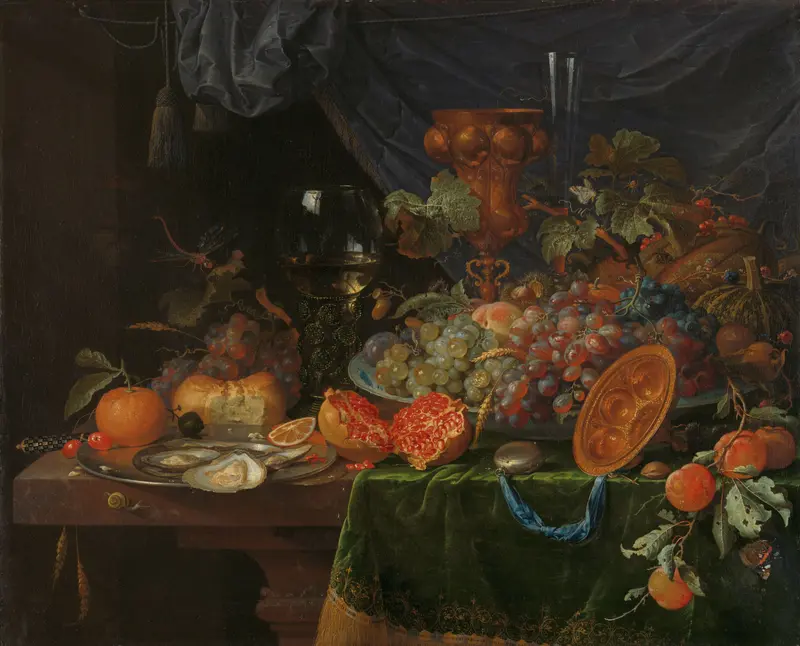
Still Life with Fruit and Oysters
Abraham Mignon
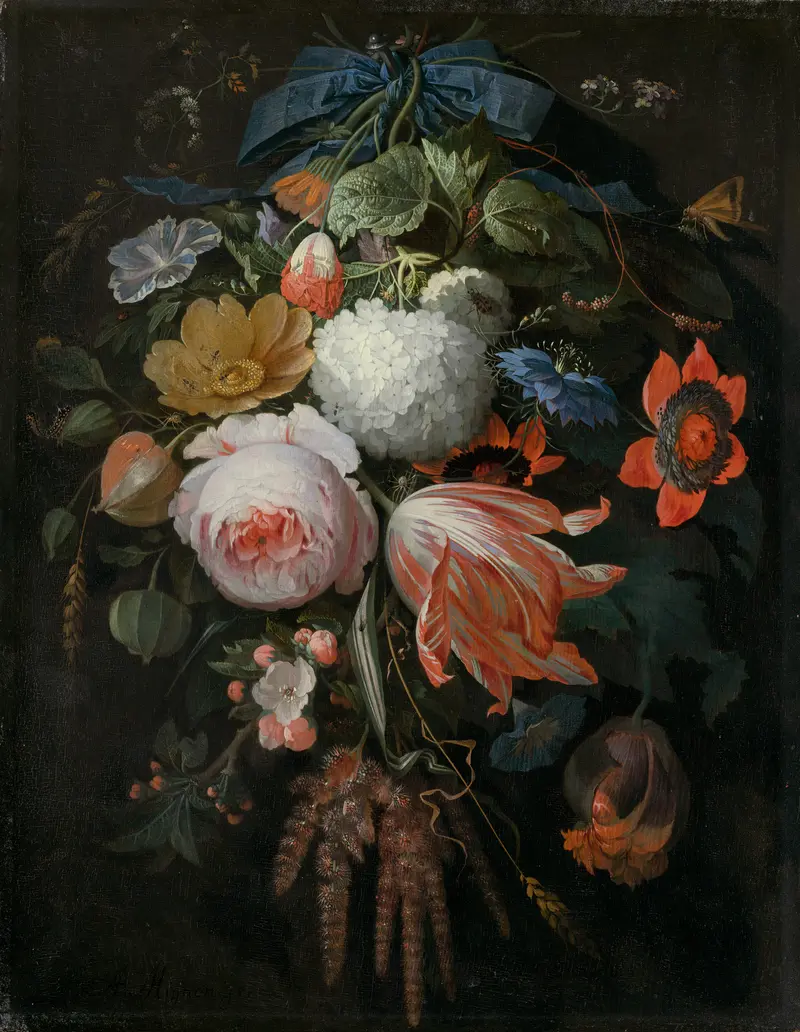
A Hanging Bouquet of Flowers
Abraham Mignon
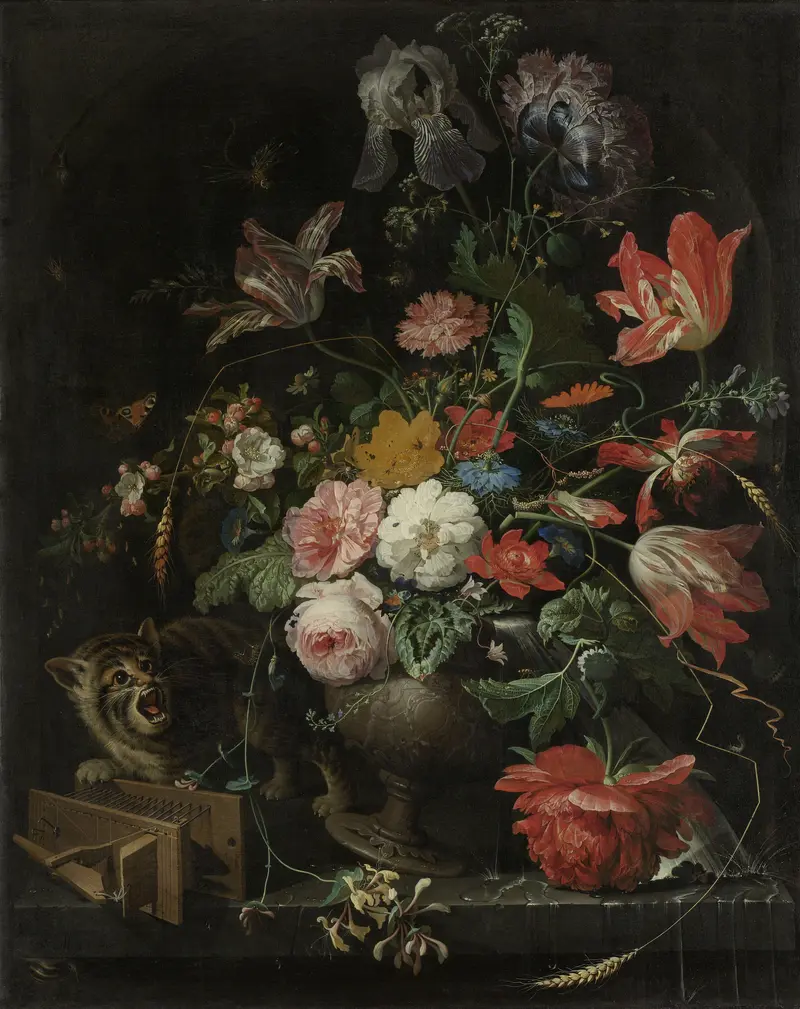
Bouquet with cat and mousetrap
Abraham Mignon
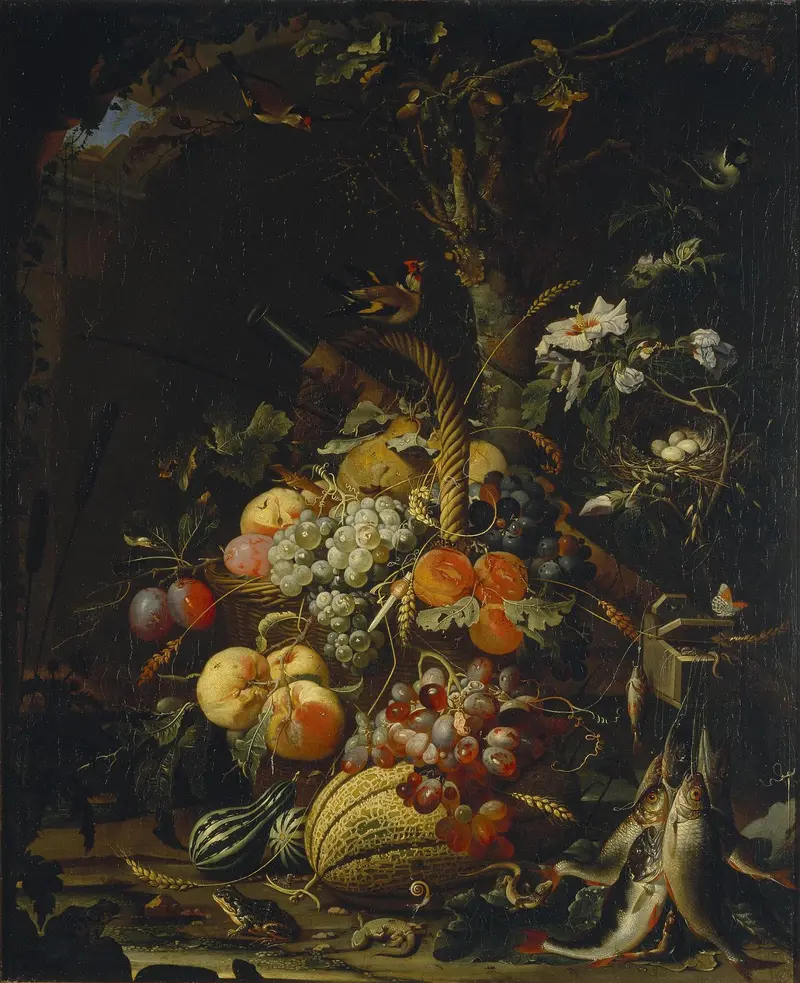
Forest floor still life with fruit, fish and a bird's nest
Abraham Mignon
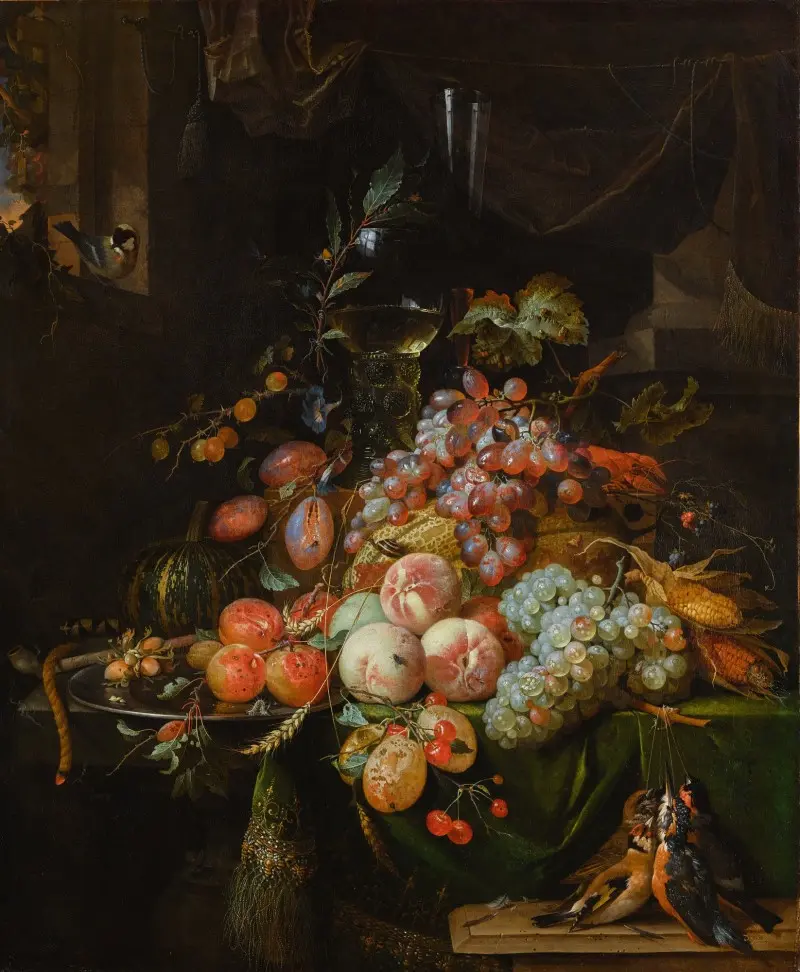
Still Life with Plums, Peaches, Apricots, Grapes and a Melon
Abraham Mignon
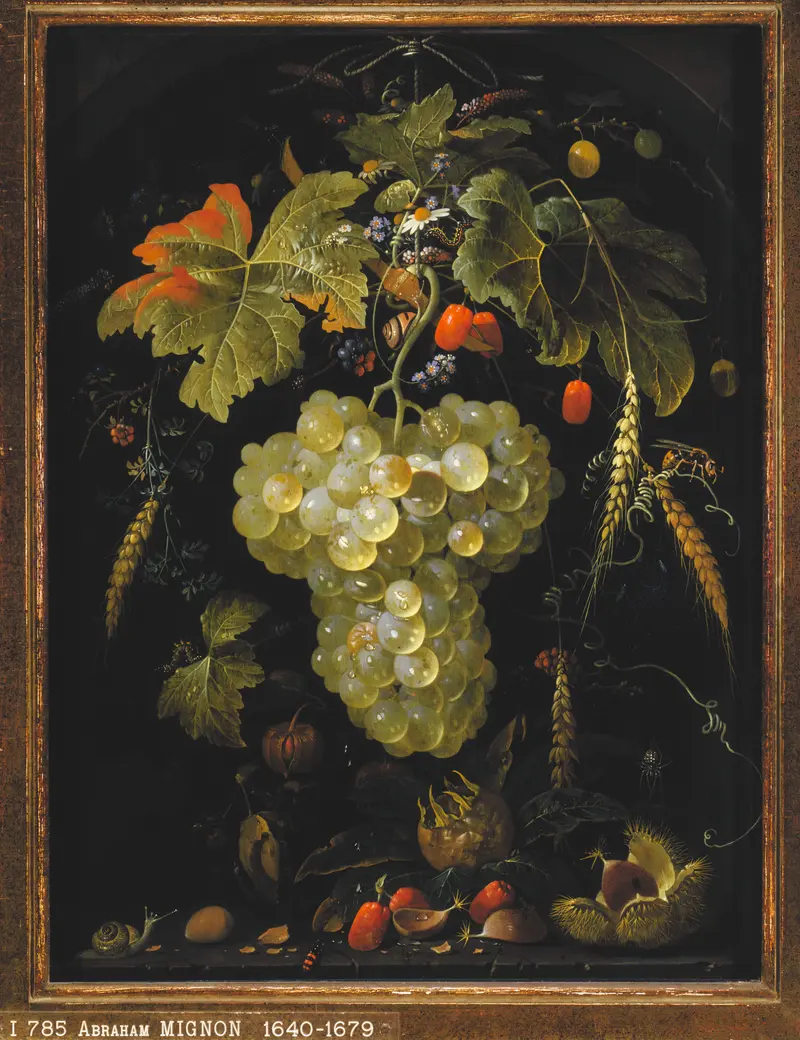
Festoon of fruit suspended from a rope, in a niche
Abraham Mignon
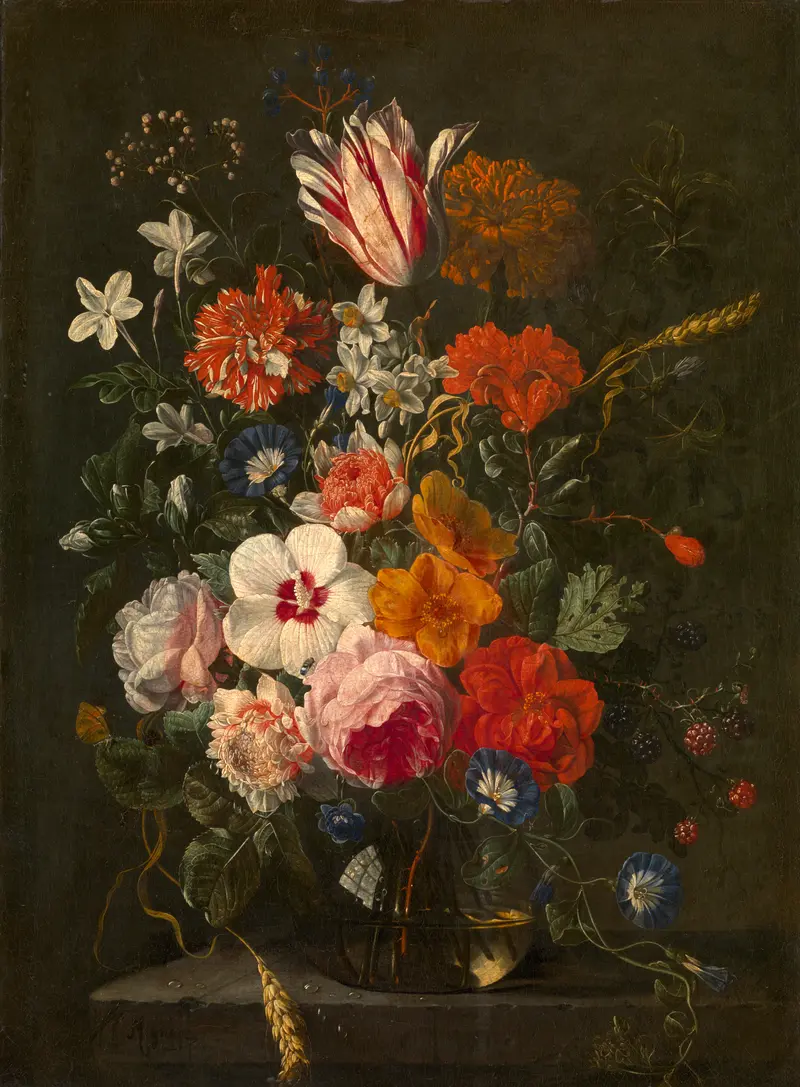
Flowers and a branch of berries in a glass vase on a stone ledge
Abraham Mignon
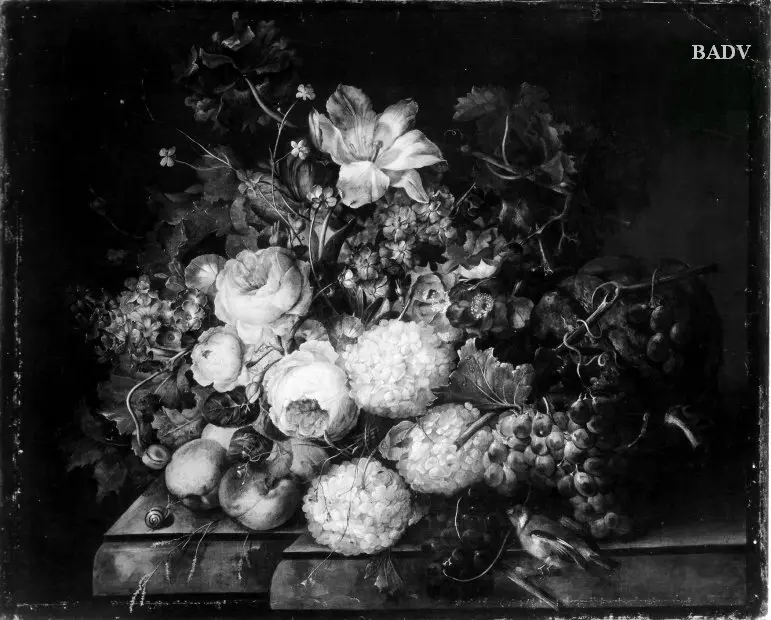
Flowers and fruit on a plinth
Abraham Mignon
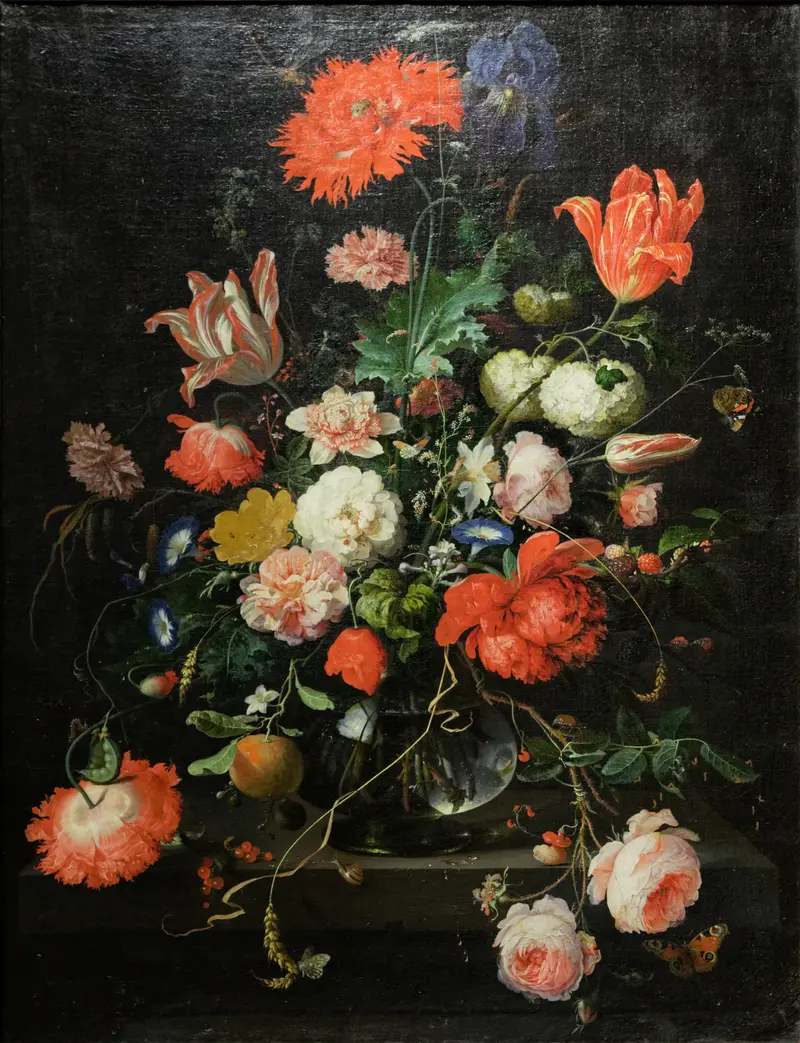
Flowers in a Crystal Vase Standing on a Stone Pedestal, with a Dragonfly
Abraham Mignon





