
Still Life with Plums, Peaches, Apricots, Grapes and a Melon — History & Facts
The first thing to catch the eye in Still Life with Plums, Peaches, Apricots, Grapes and a Melon by Abraham Mignon is the sheer abundance—fruit tumbling over itself in a riot of color, as if the table can barely contain the harvest. Light glances off the waxy grapes and velvet-skinned peaches, while the darkened background pushes the bounty forward, almost into the viewer’s lap. Each detail is a deliberate invitation: the curling vine, the glinting glass, the soft down on a peach.
Even the birds, hanging quietly at the edge, add a note of stillness that sharpens the sense of plenty. Mignon’s careful arrangement guides the eye in a spiral, from the lush fruit to the delicate wheat stalk, and finally to the subtle drama of the window, where a small bird perches in the shadows. Painted in 1665, this work belongs to the world of Dutch and Flemish still life—a genre that flourished in a society newly wealthy from trade and hungry for images of prosperity. Such paintings were collected by merchants and burghers, who saw in them not just beauty but a coded language of status, transience, and the pleasures of the senses.
Mignon was celebrated for his technical precision and for the almost theatrical staging of his compositions, and this painting, now documented in a modern collection, is a vivid example of his approach. History has kept few traces of this particular canvas’s journey, but its intricate surface and layered symbolism speak directly to the ambitions and anxieties of the seventeenth-century table. Look closely, and the painting rewards with endless discoveries—a testament to the world that made and cherished it.
More Artworks by Abraham Mignon

Still Life with Flowers and a Watch
Abraham Mignon
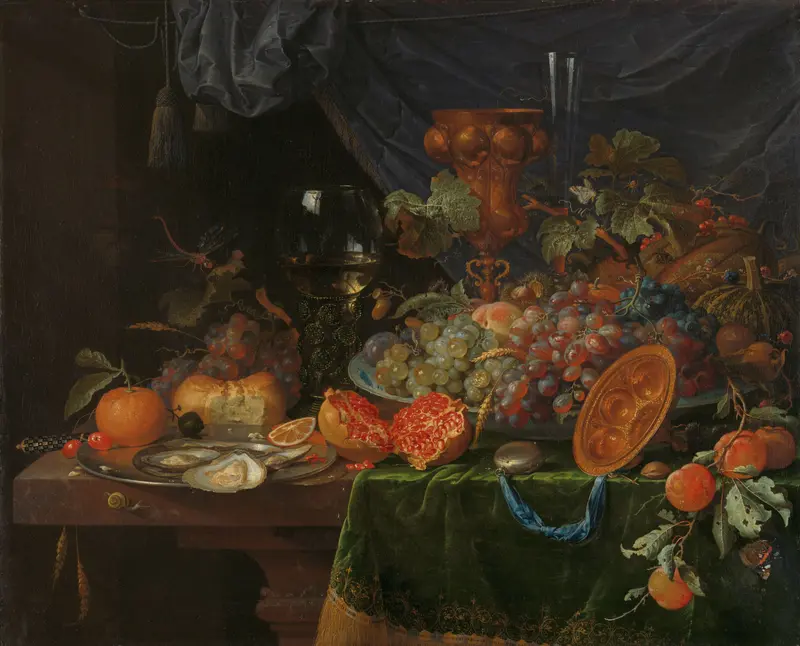
Still Life with Fruit and Oysters
Abraham Mignon
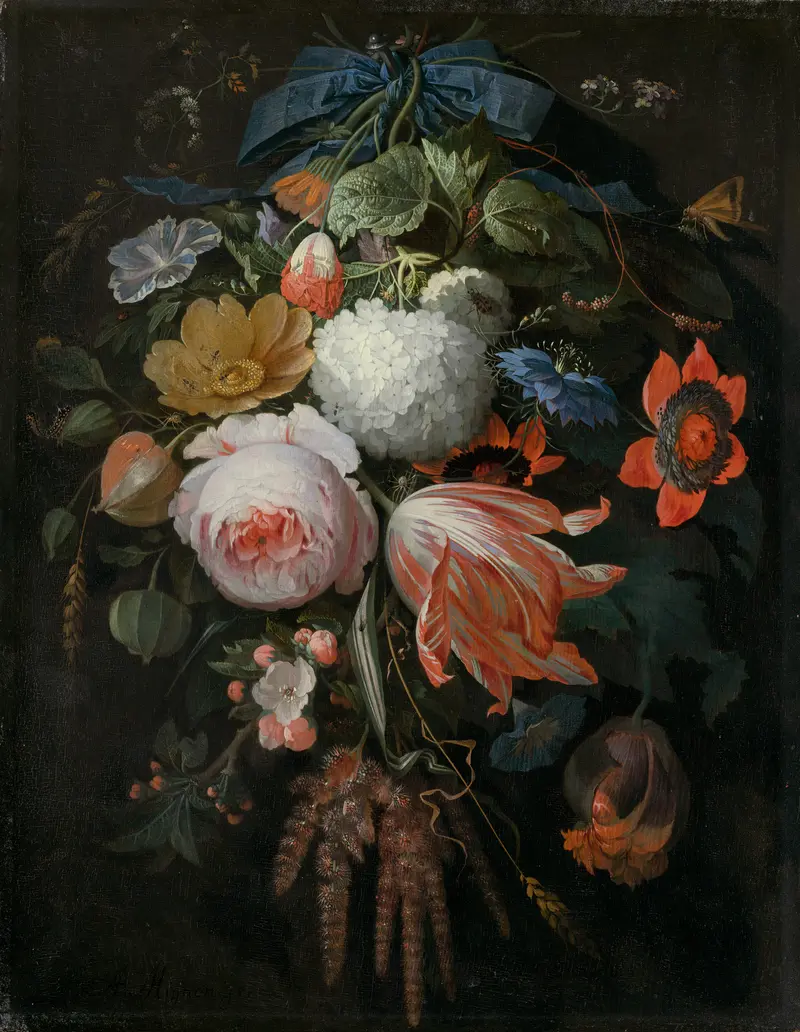
A Hanging Bouquet of Flowers
Abraham Mignon
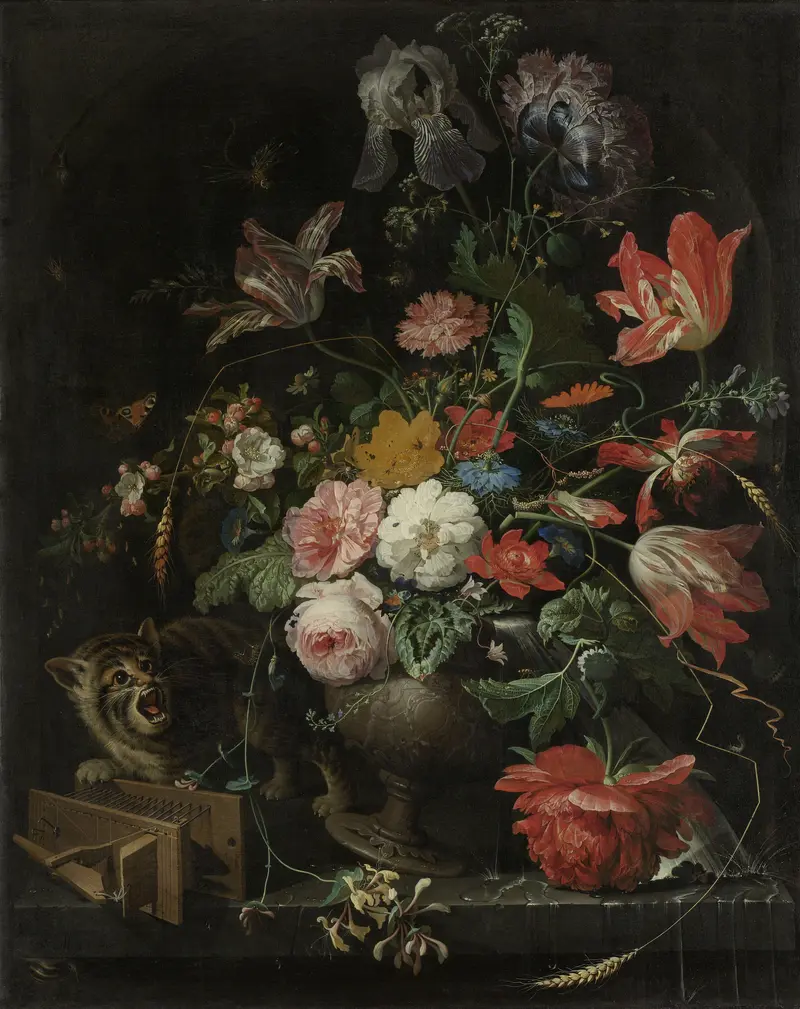
Bouquet with cat and mousetrap
Abraham Mignon
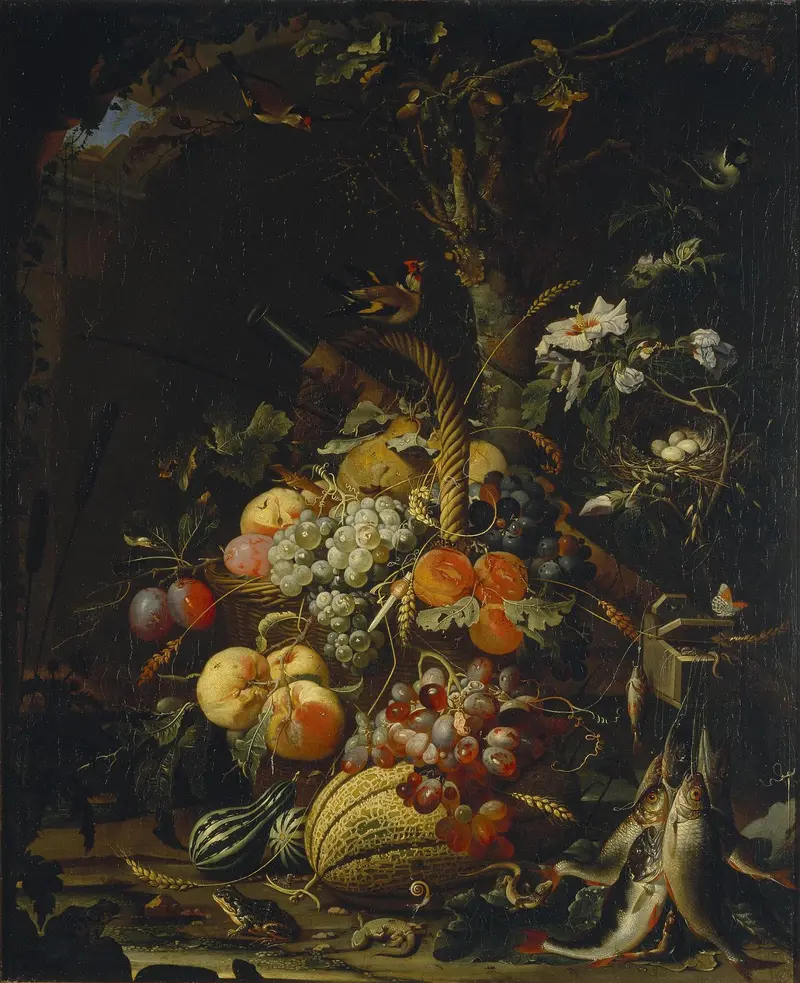
Forest floor still life with fruit, fish and a bird's nest
Abraham Mignon
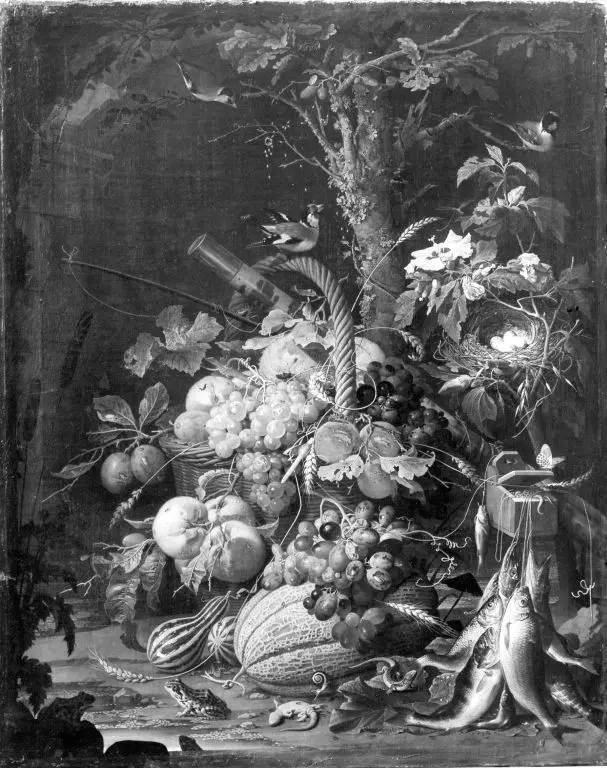
Still life with fruit, fish and a bird's nest
Abraham Mignon
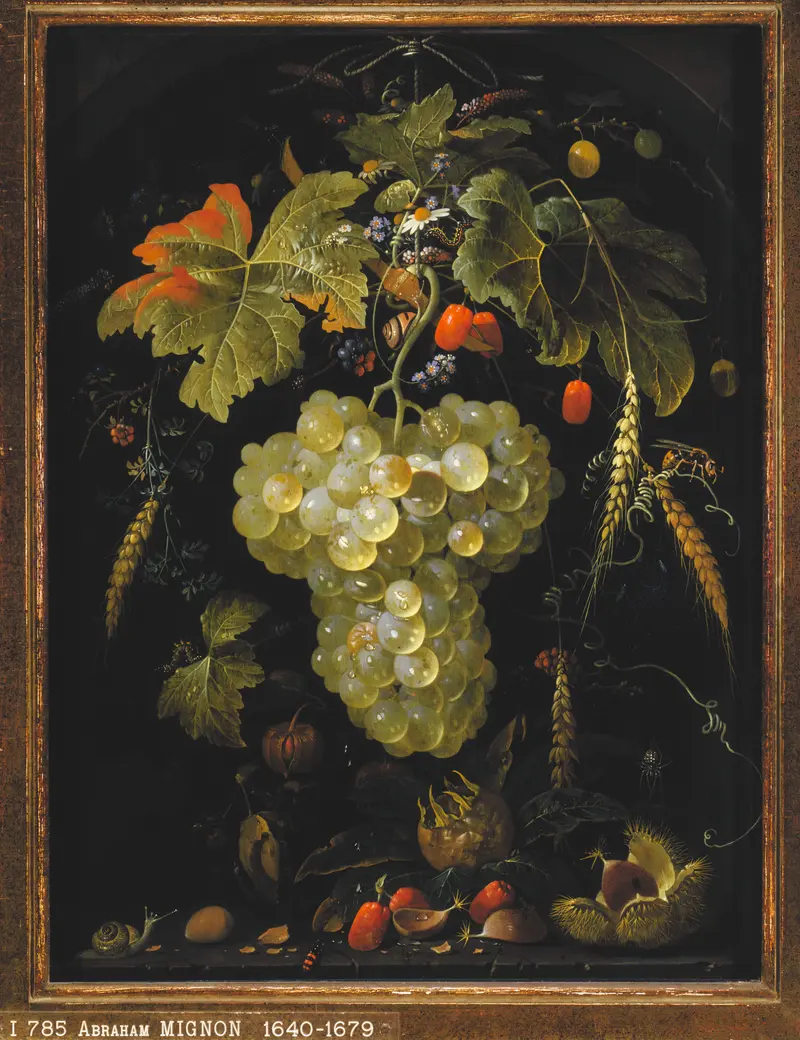
Festoon of fruit suspended from a rope, in a niche
Abraham Mignon
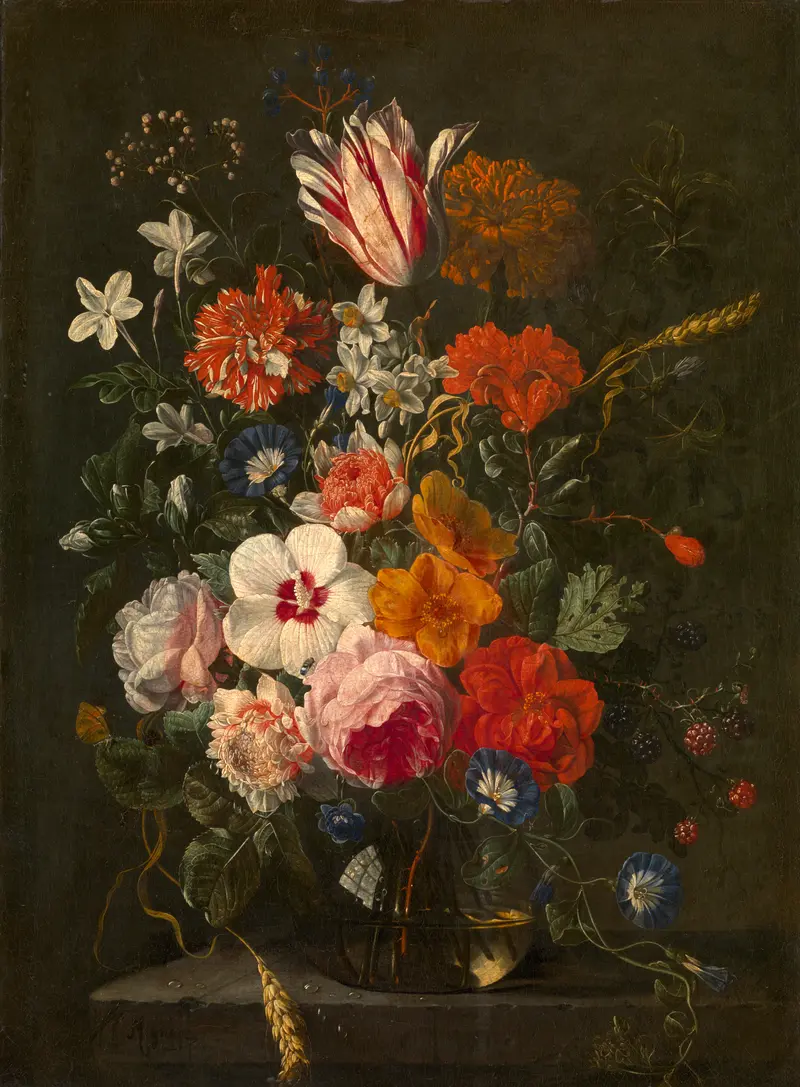
Flowers and a branch of berries in a glass vase on a stone ledge
Abraham Mignon
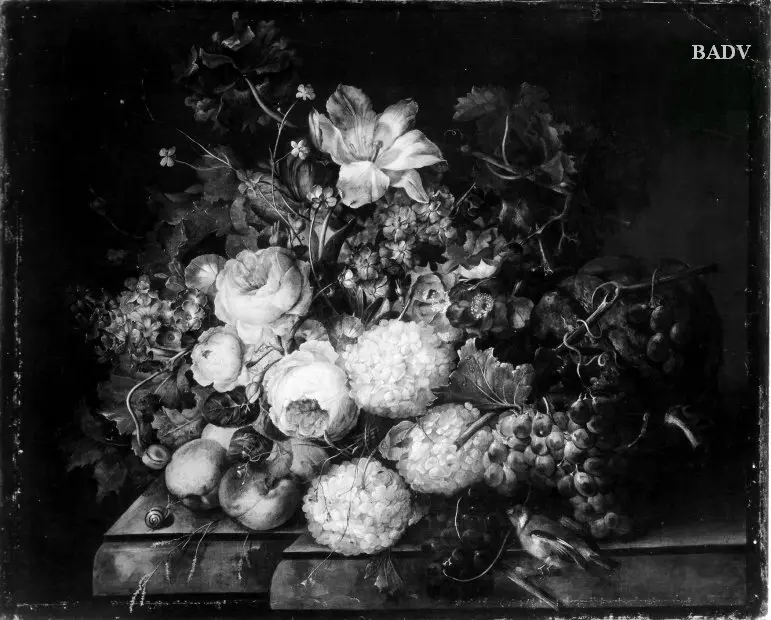
Flowers and fruit on a plinth
Abraham Mignon
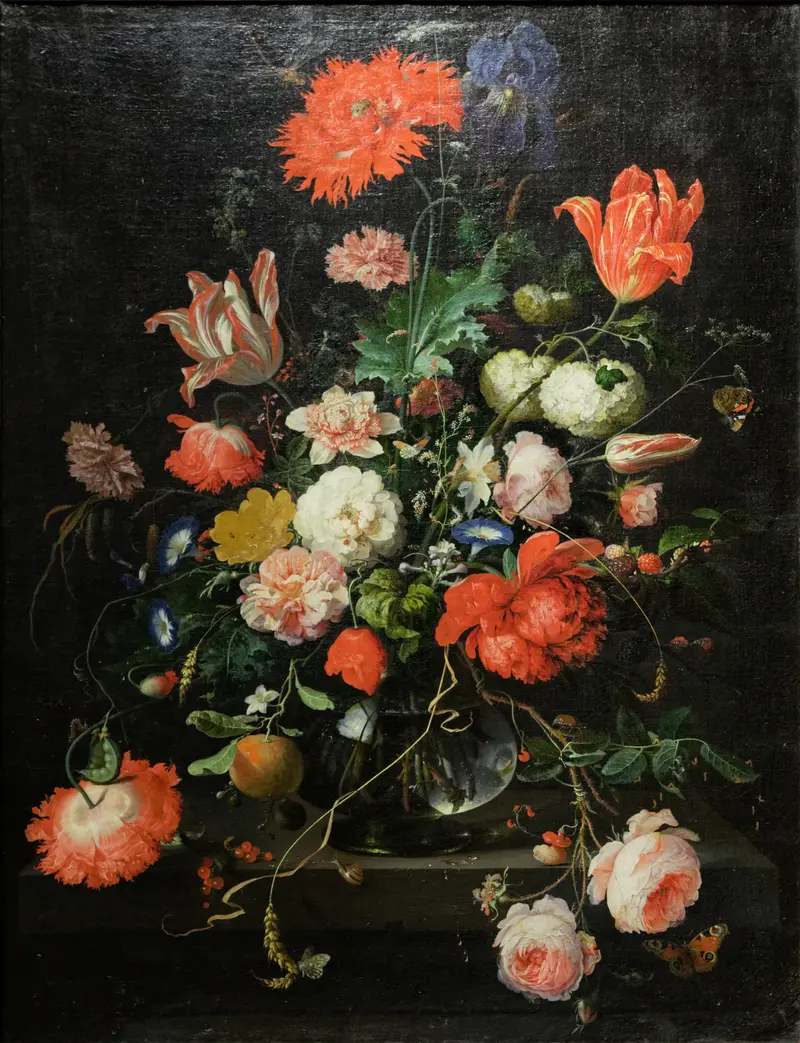
Flowers in a Crystal Vase Standing on a Stone Pedestal, with a Dragonfly
Abraham Mignon





