
Forest floor still life with fruit, fish and a bird's nest — History & Facts
A tangle of abundance draws the eye in this forest scene, where the wild and the cultivated collide in a careful arrangement that feels on the verge of unraveling. The painter has staged a drama of ripeness and fragility: peaches blush beneath a cascade of grapes, a melon lies split and vulnerable, while a nest of eggs sits exposed among the branches. The light falls in theatrical patches, guiding us from the shimmer on the fish—freshly caught and glistening—up to the delicate construction of the bird’s nest, and finally to the darting goldfinch, whose presence hints at both life and its fleetingness.
Each detail is rendered with a precision that invites close inspection: the glossy shells, the curling vine tendrils, the frog poised at the edge of the bounty, as if contemplating its next move. This is the world of the late seventeenth century, when Dutch and Flemish artists like Abraham Mignon turned still life into a meditation on nature’s cycles and human appetite. Such paintings were prized by collectors who delighted in their technical virtuosity and their layers of meaning—luxury, mortality, the pleasures and perils of plenty. In the second half of the seventeenth century, as trade and science flourished, these images became showcases for exotic fruits, local fauna, and the painter’s skill at capturing every texture.
Now in the collection of The Hermitage in St. Petersburg, this work stands as a testament to a time when the forest floor could be transformed into a stage for both beauty and reflection—inviting the viewer to linger and look again.
More Artworks by Abraham Mignon

Still Life with Flowers and a Watch
Abraham Mignon
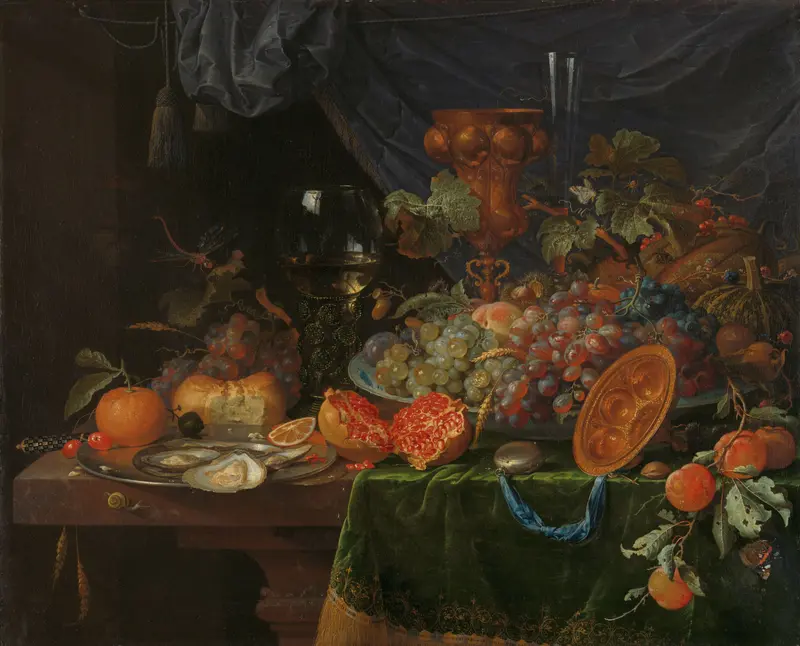
Still Life with Fruit and Oysters
Abraham Mignon
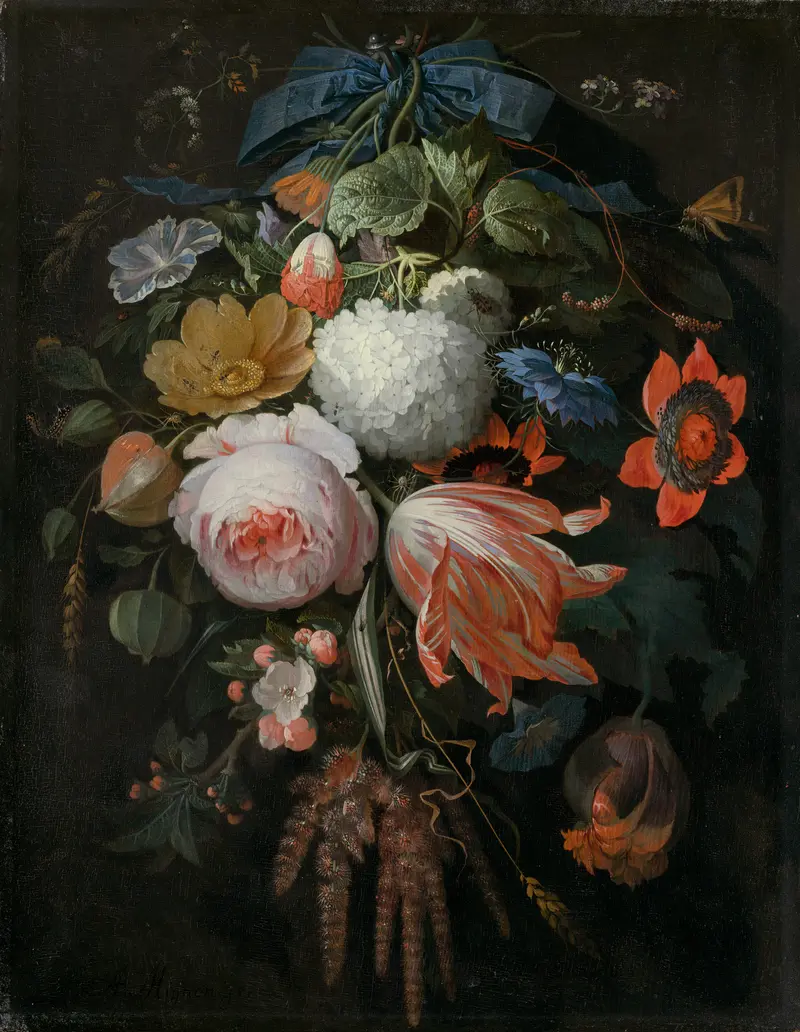
A Hanging Bouquet of Flowers
Abraham Mignon
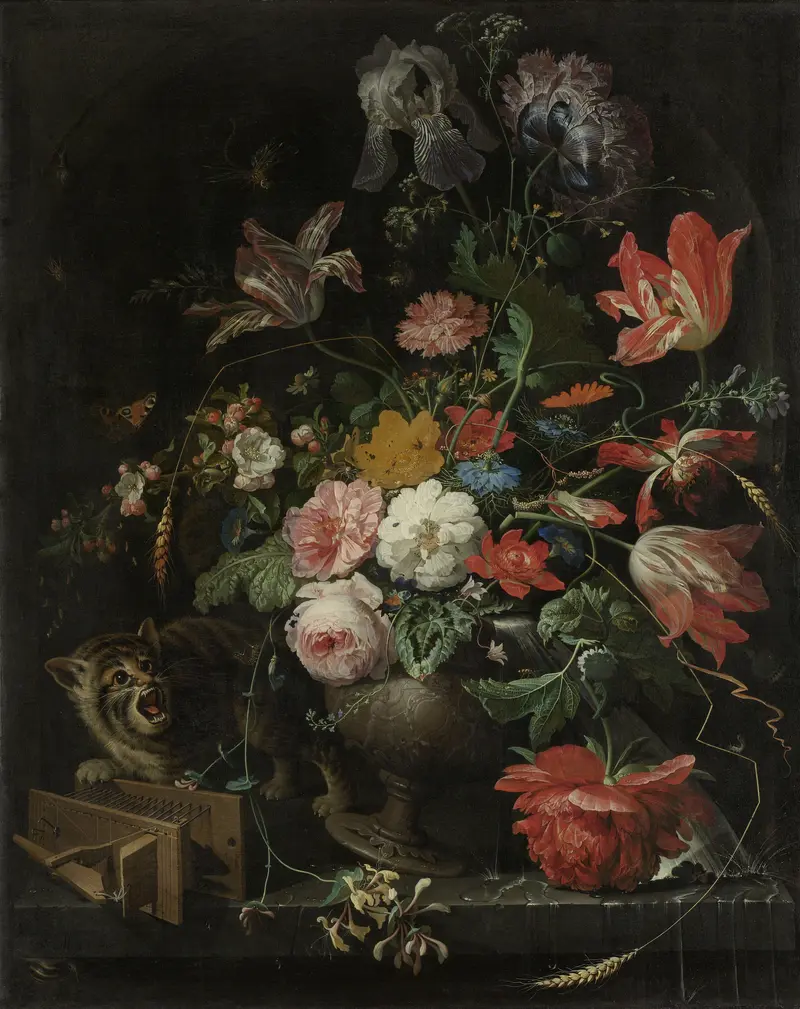
Bouquet with cat and mousetrap
Abraham Mignon
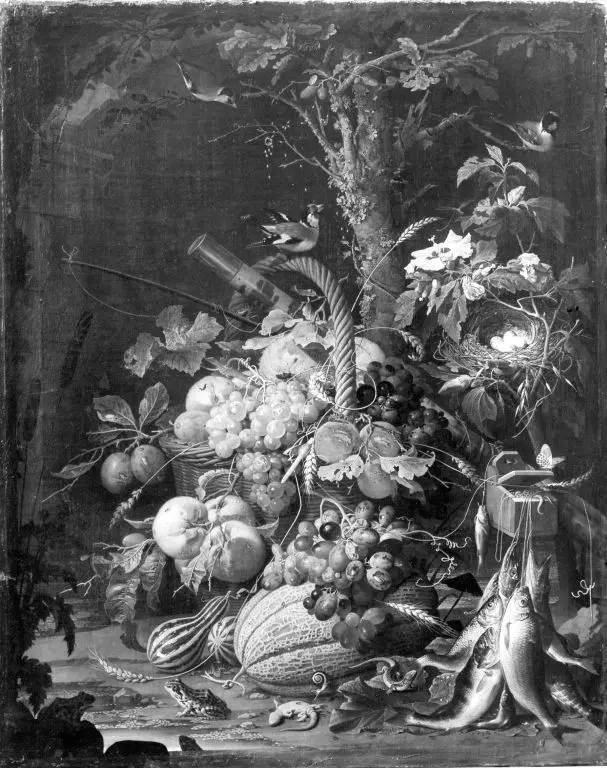
Still life with fruit, fish and a bird's nest
Abraham Mignon
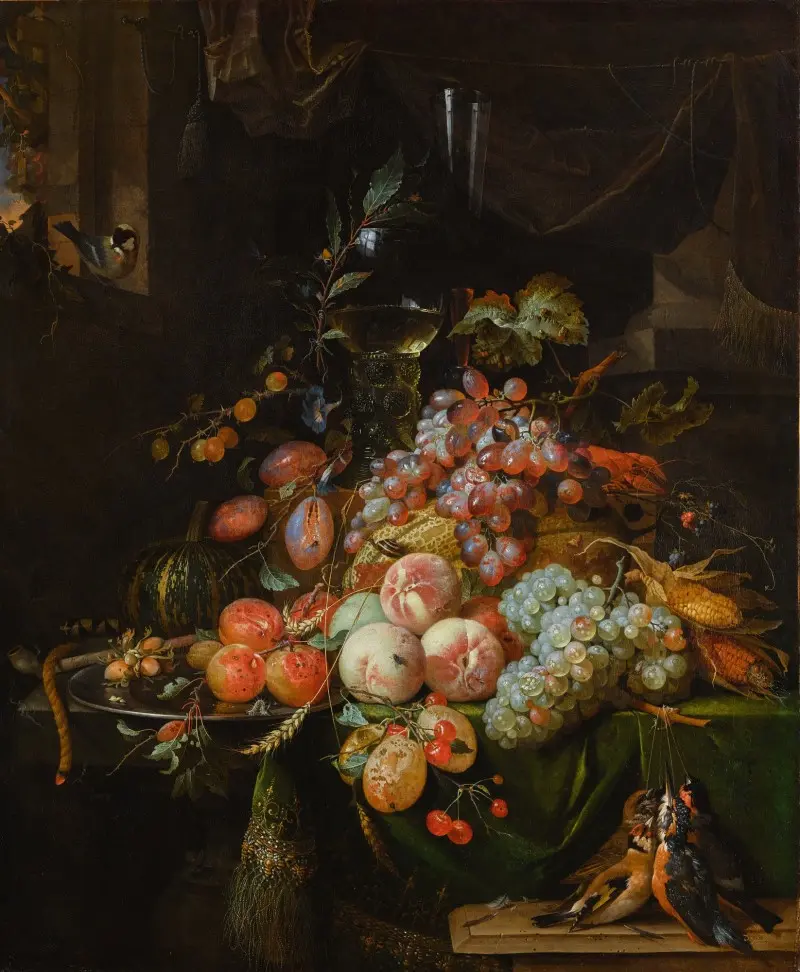
Still Life with Plums, Peaches, Apricots, Grapes and a Melon
Abraham Mignon
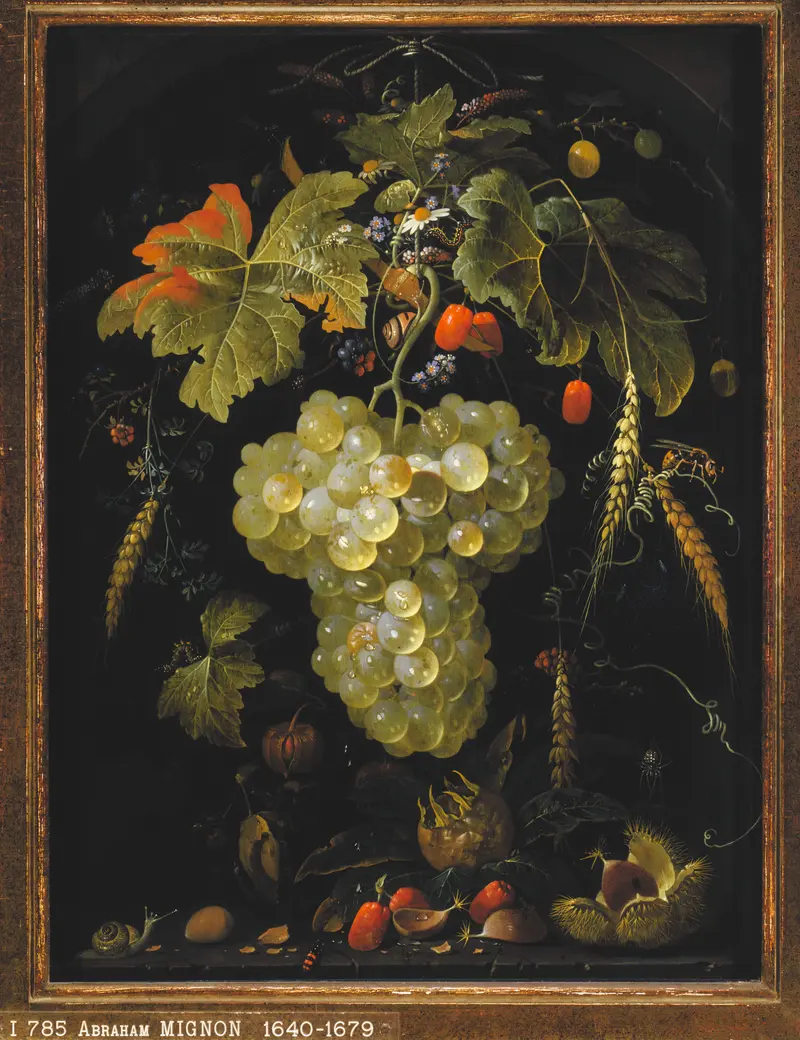
Festoon of fruit suspended from a rope, in a niche
Abraham Mignon
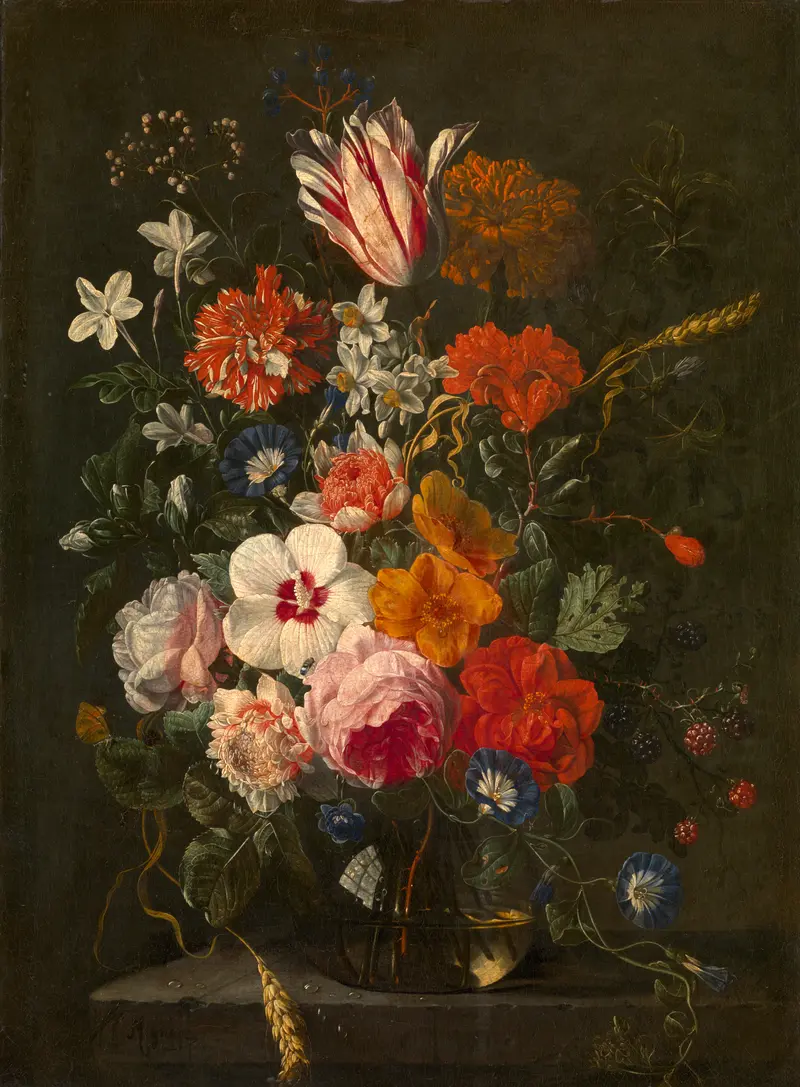
Flowers and a branch of berries in a glass vase on a stone ledge
Abraham Mignon
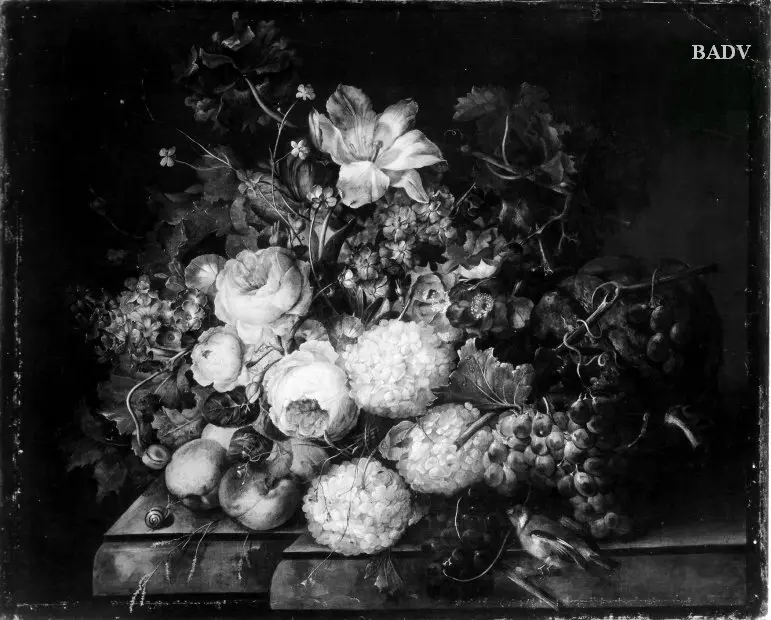
Flowers and fruit on a plinth
Abraham Mignon
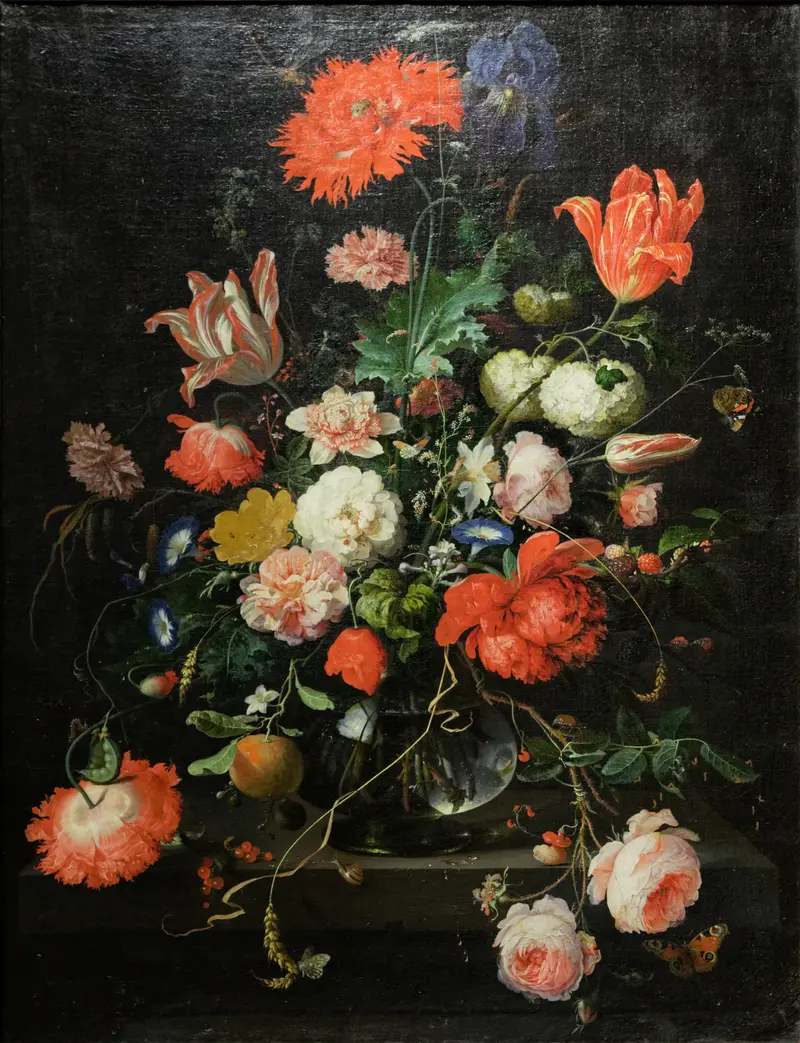
Flowers in a Crystal Vase Standing on a Stone Pedestal, with a Dragonfly
Abraham Mignon





