
Flowers and fruit on a plinth — History & Facts
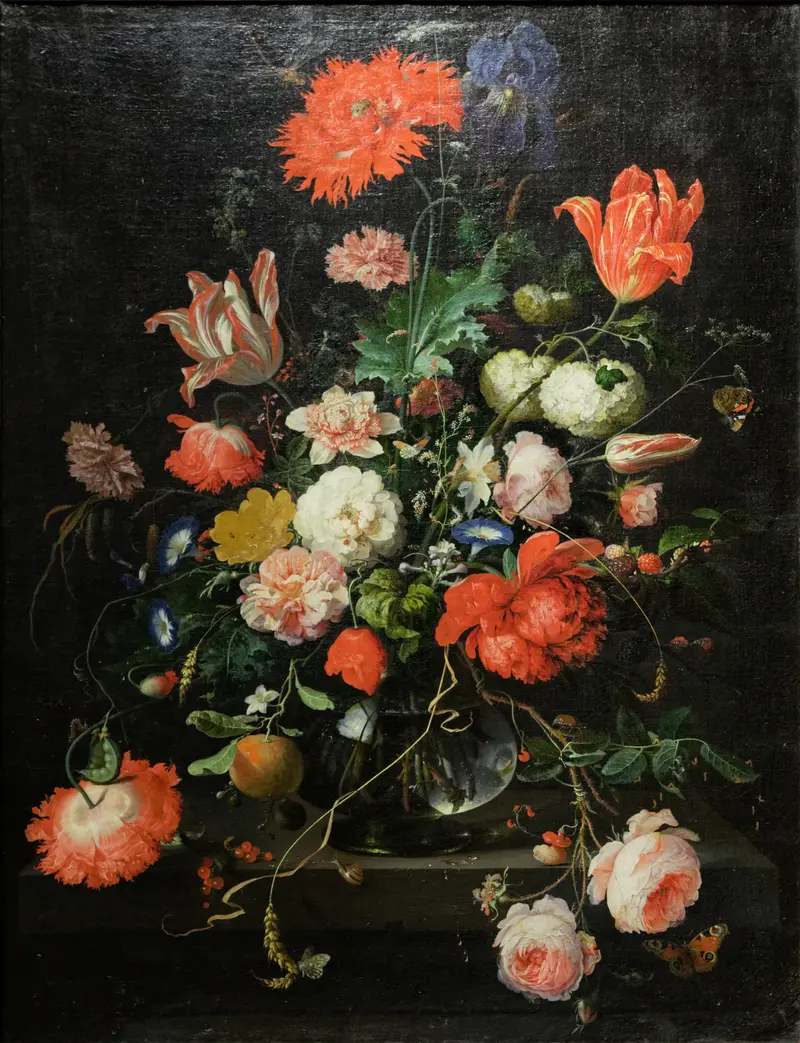
A riot of petals and ripening fruit bursts forth from the shadow, demanding the viewer’s attention with its almost theatrical arrangement. Every bloom and grape seems to lean toward the light, their textures rendered with a precision that invites the eye to linger on each surface. The dense composition draws you in, layer by layer: a lily’s ruffled edge, the waxy sheen of grapes, the softness of peonies, and, nestled at the base, a small bird—its delicate form nearly lost among the abundance.
The plinth anchors this overflowing bounty, its cool solidity a counterpoint to the lush, organic forms above. Light pours from the left, picking out the curve of fruit and the veins of leaves, while the background recedes into velvety darkness, heightening the sense of drama. Painted in 1665, this work belongs to the world of seventeenth-century Northern Europe, where still life painting reached new heights of complexity and symbolism. Artists like Abraham Mignon specialized in these intricate arrangements, which were prized by collectors for their celebration of nature’s variety and the painter’s technical skill.
Such paintings often adorned the homes of prosperous merchants, signaling both wealth and a cultivated appreciation for the fleeting beauty of the natural world. The presence of both flowers and fruit—some in full bloom, others just past their prime—reminds viewers of the cycles of life and decay, a theme that resonated deeply in an age fascinated by both science and mortality. Today, this painting is held by the Deutsches Historisches Museum, a quiet testament to a time when the ordinary became extraordinary under the artist’s hand.
More Artworks by Abraham Mignon

Still Life with Flowers and a Watch
Abraham Mignon
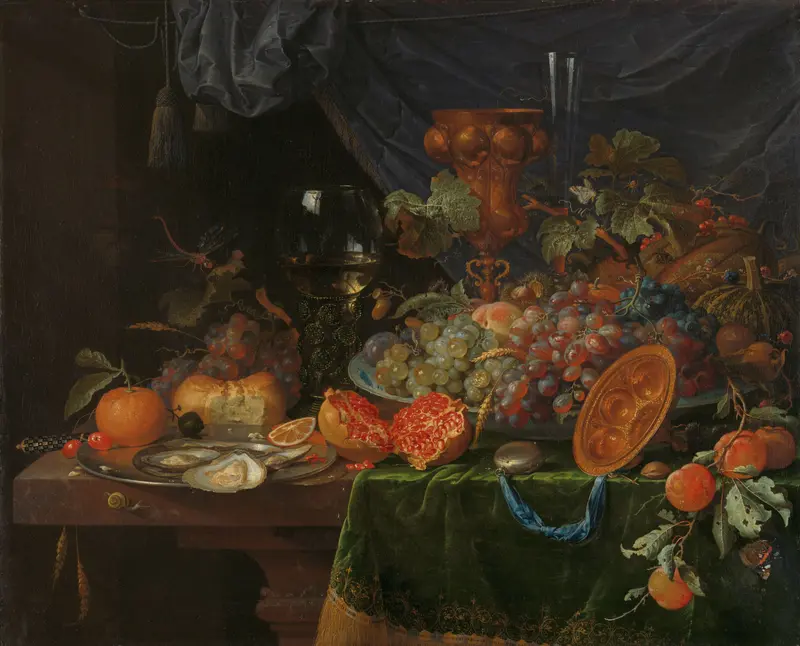
Still Life with Fruit and Oysters
Abraham Mignon
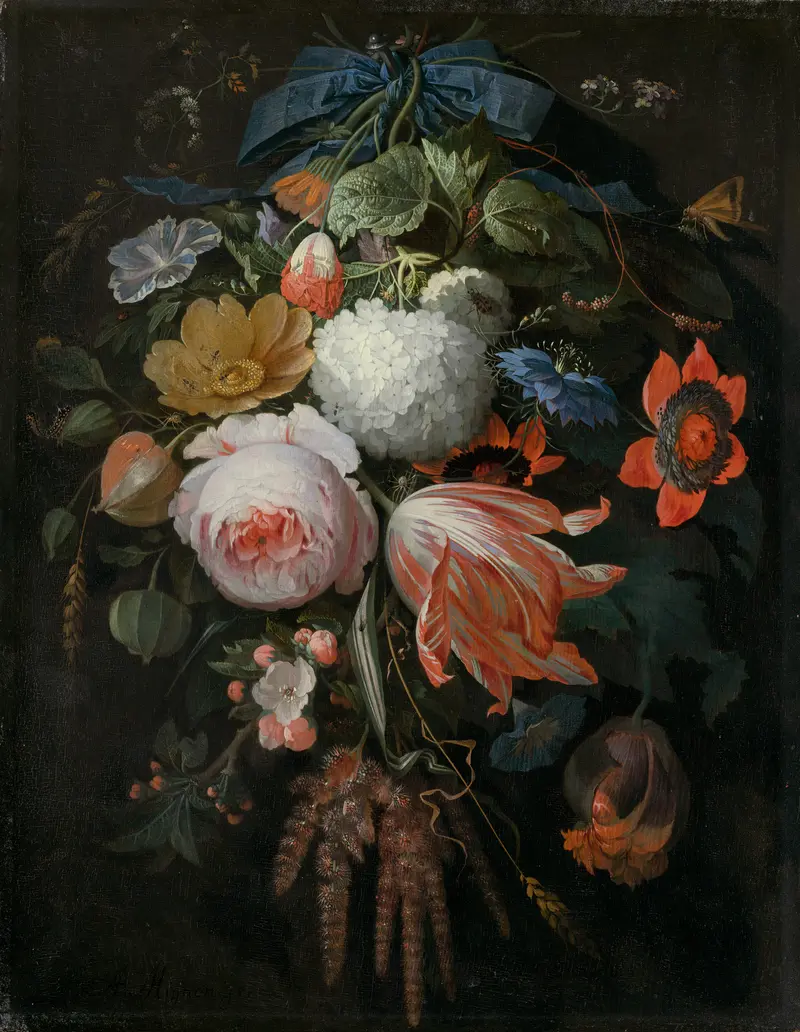
A Hanging Bouquet of Flowers
Abraham Mignon
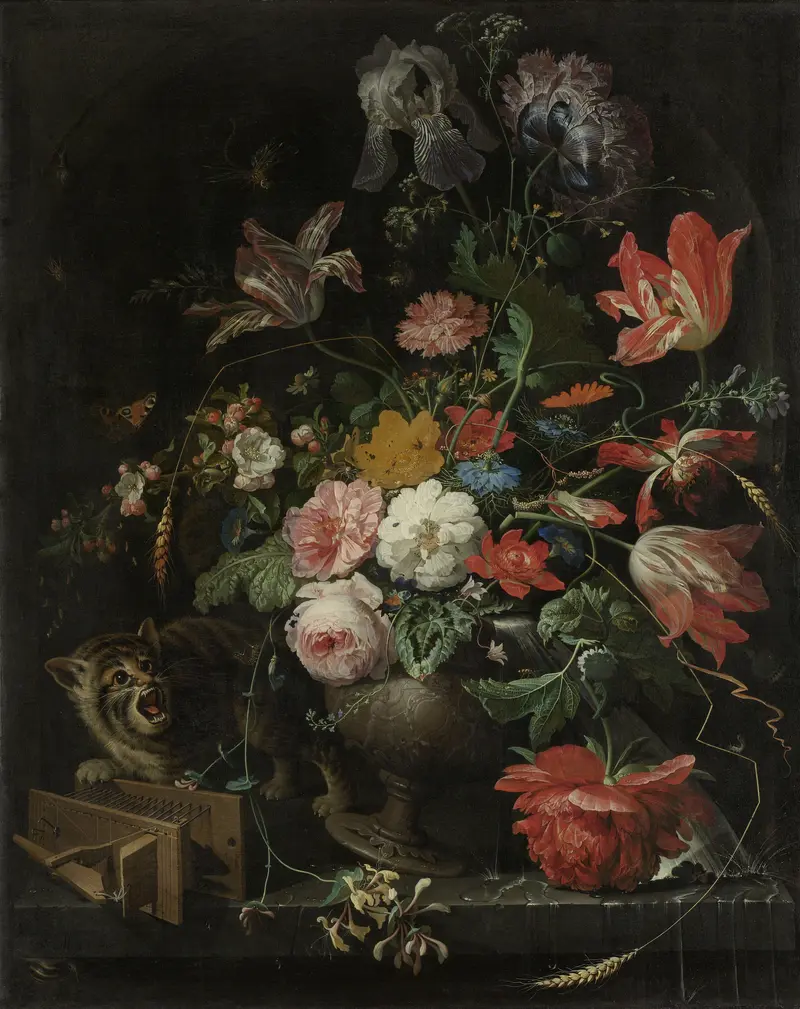
Bouquet with cat and mousetrap
Abraham Mignon
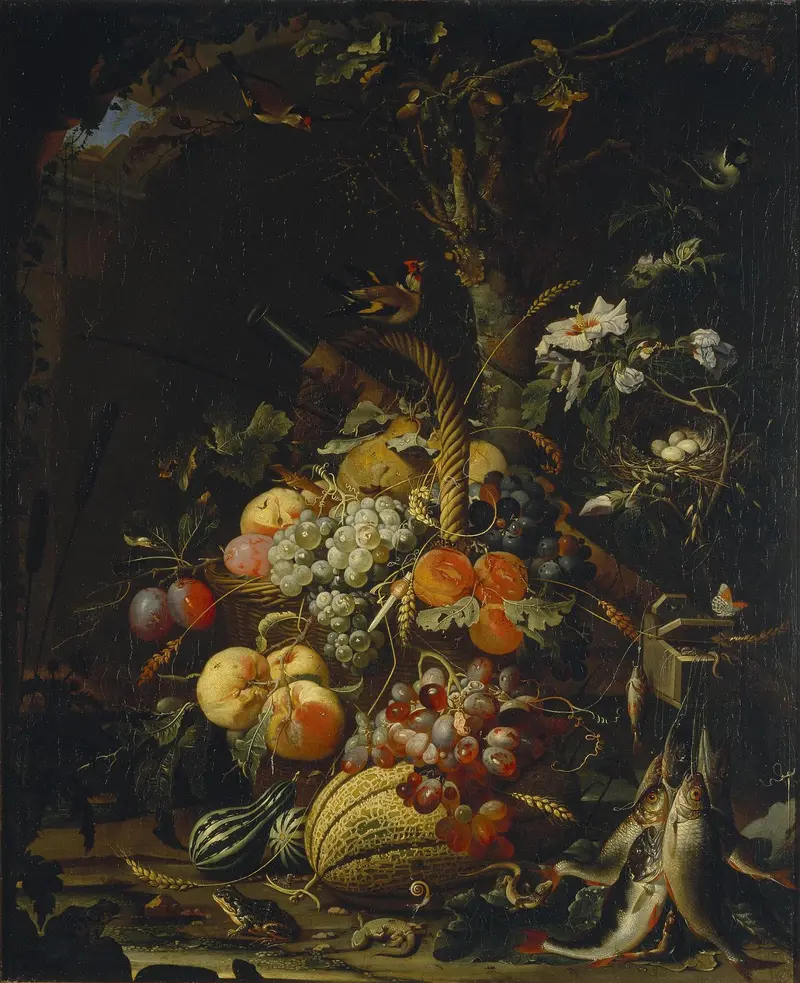
Forest floor still life with fruit, fish and a bird's nest
Abraham Mignon
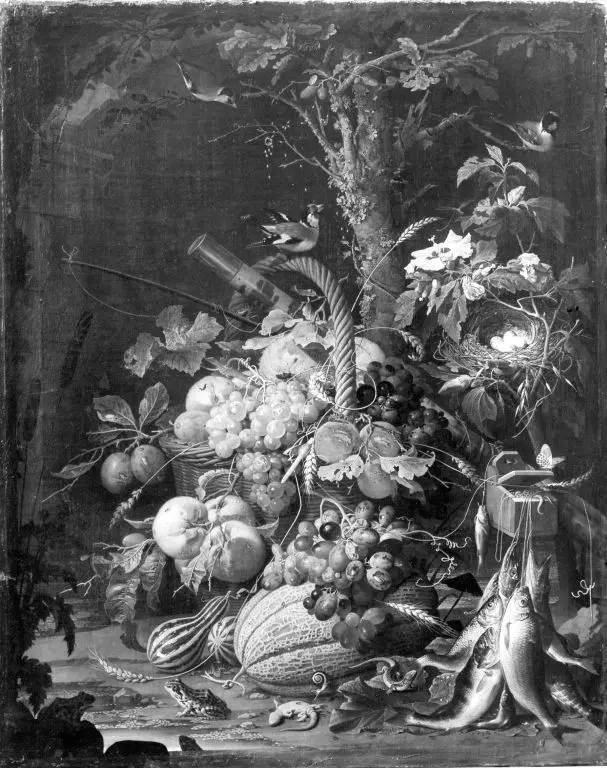
Still life with fruit, fish and a bird's nest
Abraham Mignon
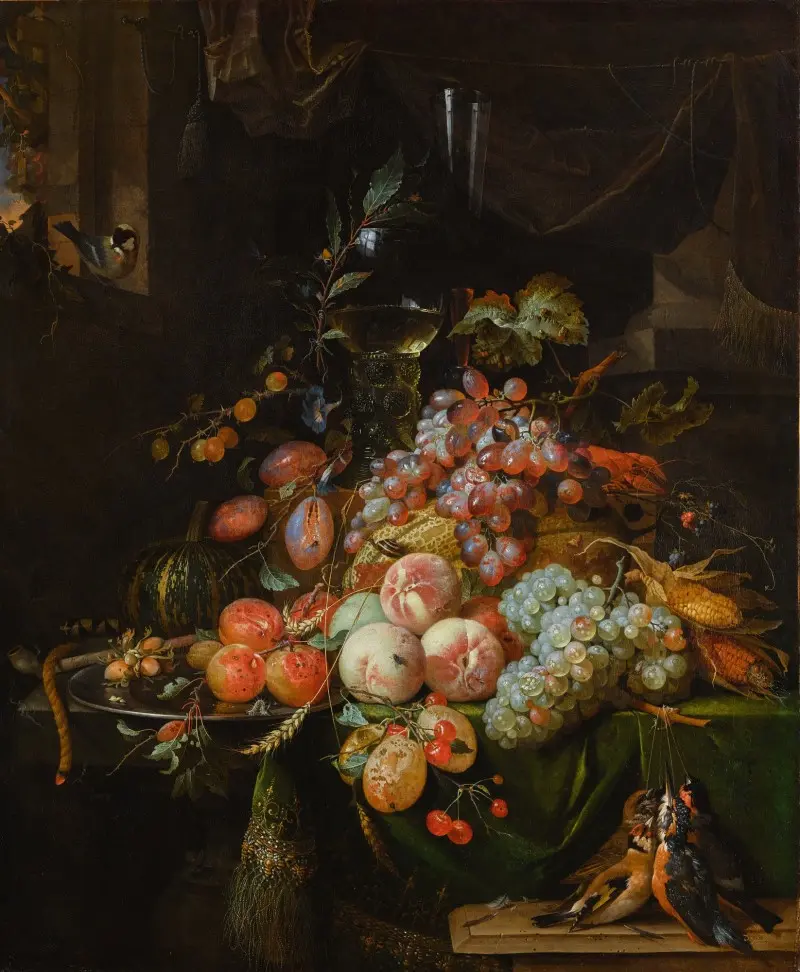
Still Life with Plums, Peaches, Apricots, Grapes and a Melon
Abraham Mignon
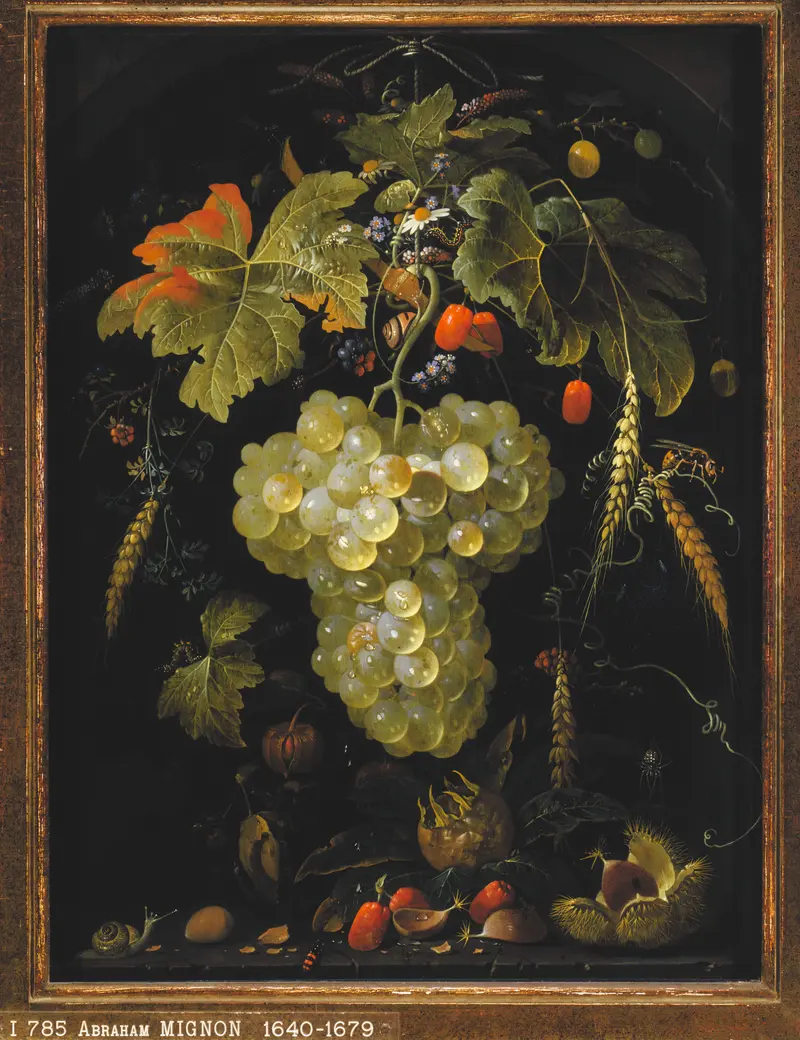
Festoon of fruit suspended from a rope, in a niche
Abraham Mignon
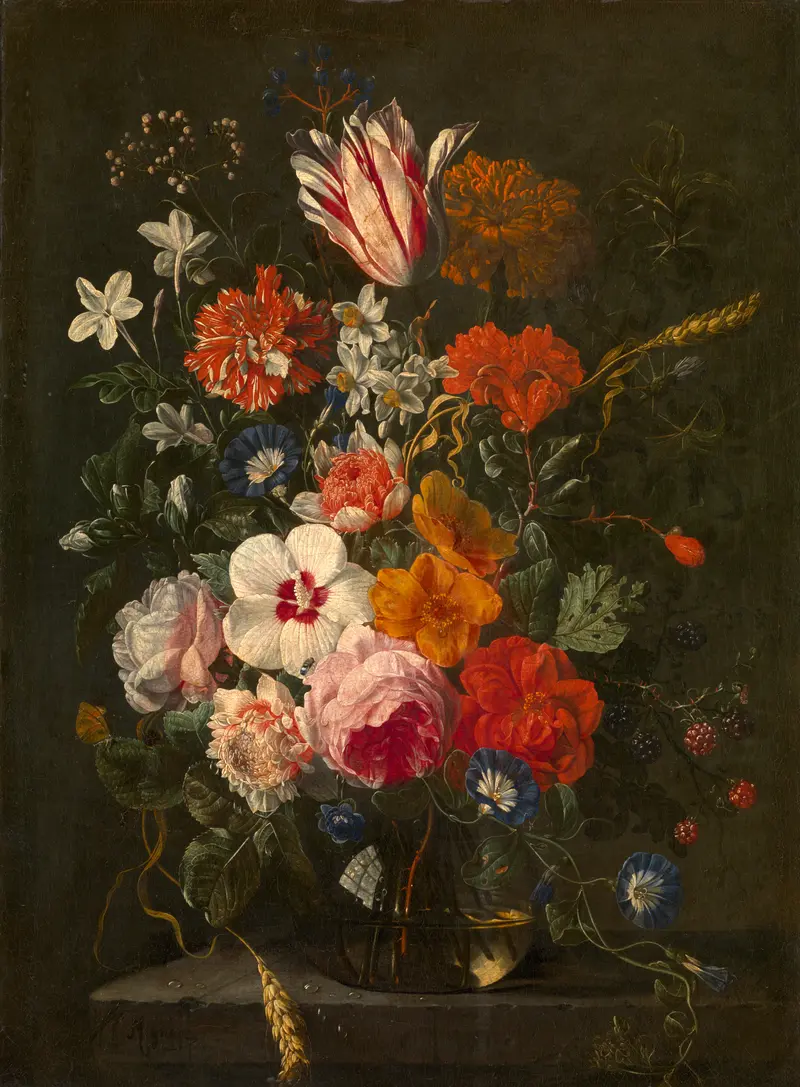
Flowers and a branch of berries in a glass vase on a stone ledge
Abraham Mignon
Flowers in a Crystal Vase Standing on a Stone Pedestal, with a Dragonfly
Abraham Mignon





