
Festoon of fruit suspended from a rope, in a niche — History & Facts
A heavy garland of fruit, impossibly lush and suspended by a single rope, commands the viewer’s gaze with its abundance and improbable balance. The eye is drawn first to the dense cluster of grapes, peaches, and plums, each rendered with a tactile clarity that invites closer inspection. Light pours in from the left, catching the bloom on a plum and the waxy skin of a pear, while shadows deepen the niche behind, creating a sense of depth and coolness.
The rope, frayed and taut, hints at the weight it bears—both literal and symbolic—while the stone niche frames the bounty as if it were a sacred offering. This is a composition of contrasts: ripeness and decay, fullness and emptiness, the everyday and the ceremonial. Painted between 1650 and 1699, this work belongs to the world of the Dutch Golden Age still life, where artists like Abraham Mignon transformed simple fruit into meditations on nature’s cycles and human skill. Such paintings were prized in prosperous cities like Antwerp, where merchants and burghers filled their homes with images of plenty—both as a celebration of worldly success and a reminder of its fragility.
The genre flourished as trade brought new fruits and flowers to northern Europe, and painters competed to capture their fleeting beauty with ever-greater precision. Today, as this piece rests in the DAMS Antwerpen collection, it invites us to linger over the details: the bruised apple, the curling vine, the glint of light on a cherry. Each element rewards a second look, and perhaps a third.
More Artworks by Abraham Mignon

Still Life with Flowers and a Watch
Abraham Mignon
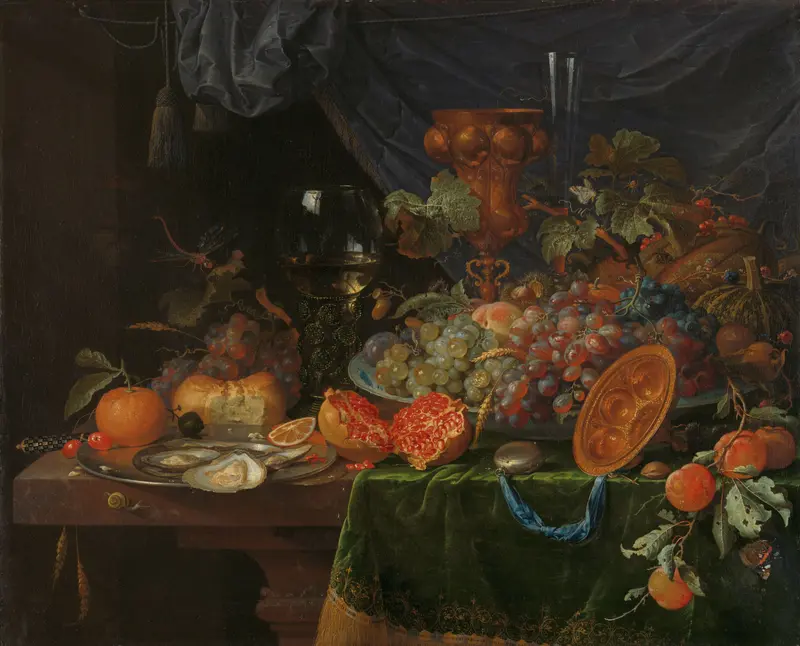
Still Life with Fruit and Oysters
Abraham Mignon
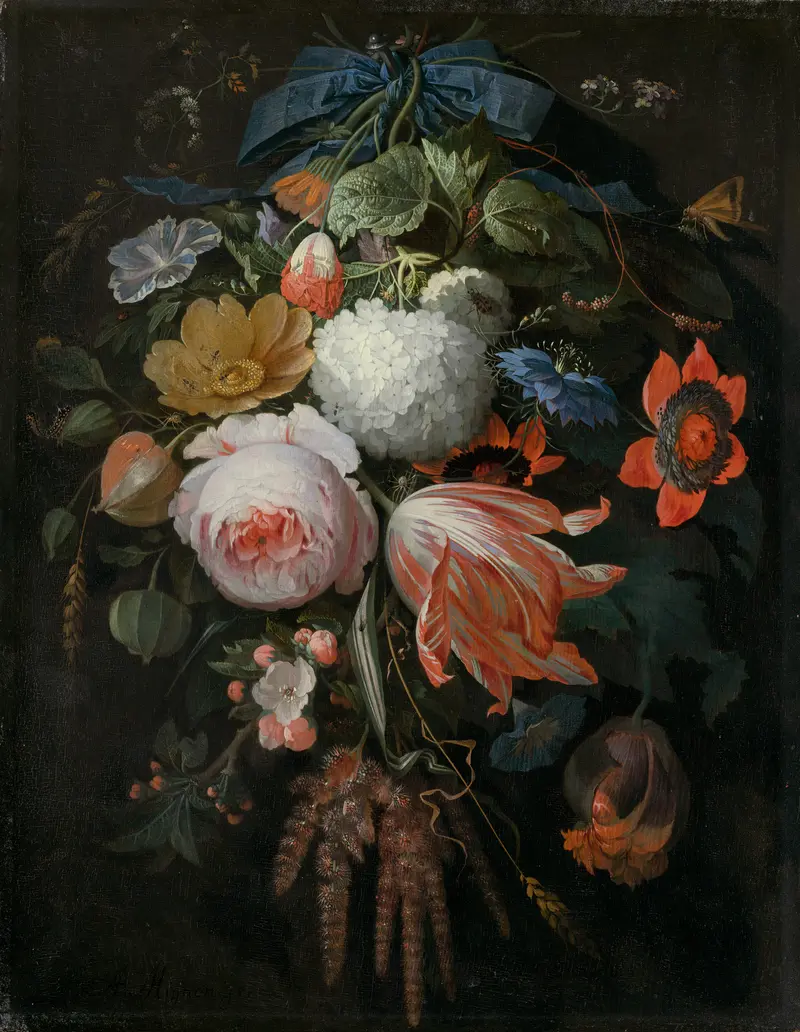
A Hanging Bouquet of Flowers
Abraham Mignon
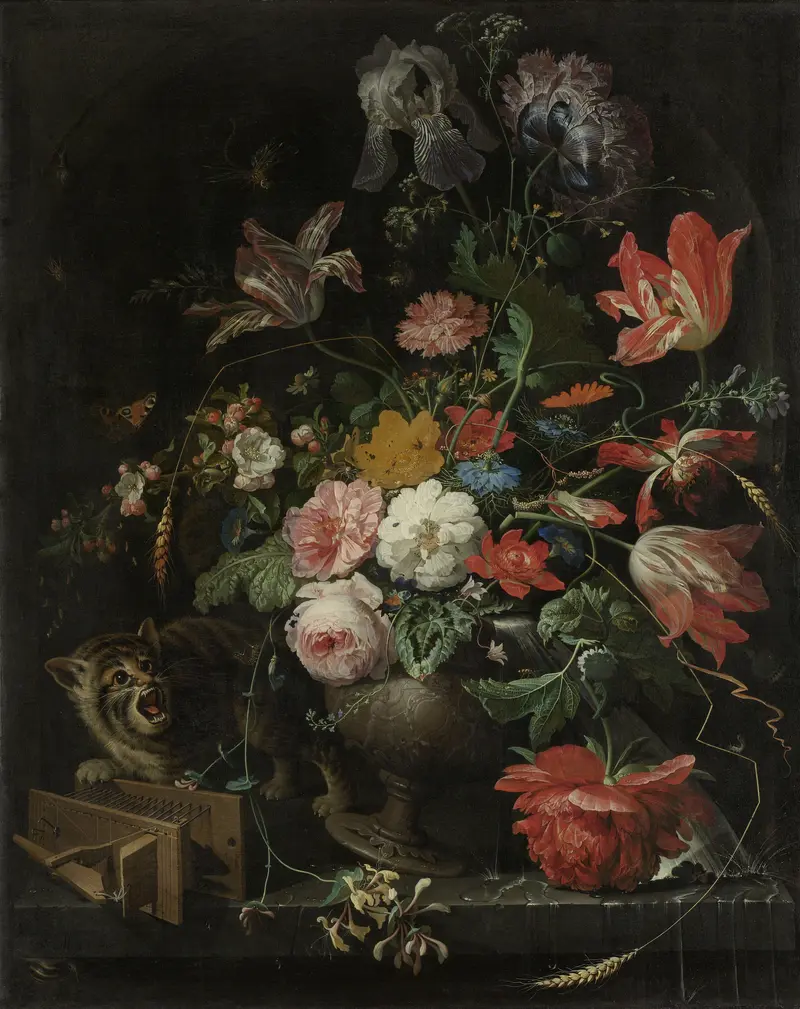
Bouquet with cat and mousetrap
Abraham Mignon
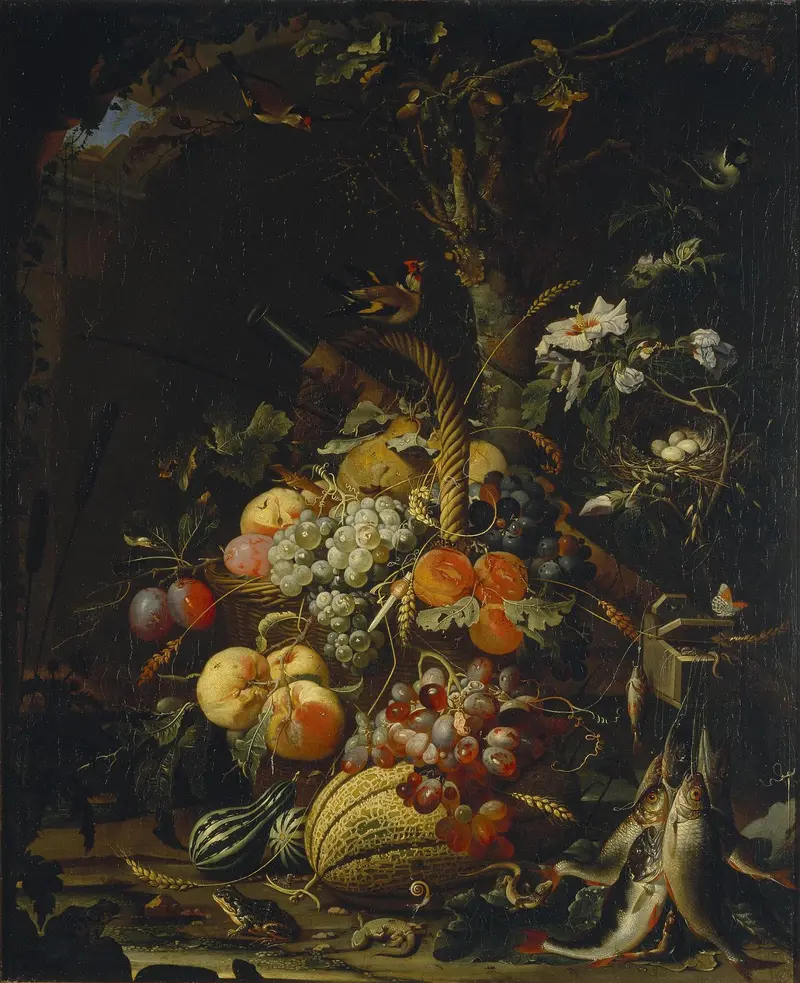
Forest floor still life with fruit, fish and a bird's nest
Abraham Mignon
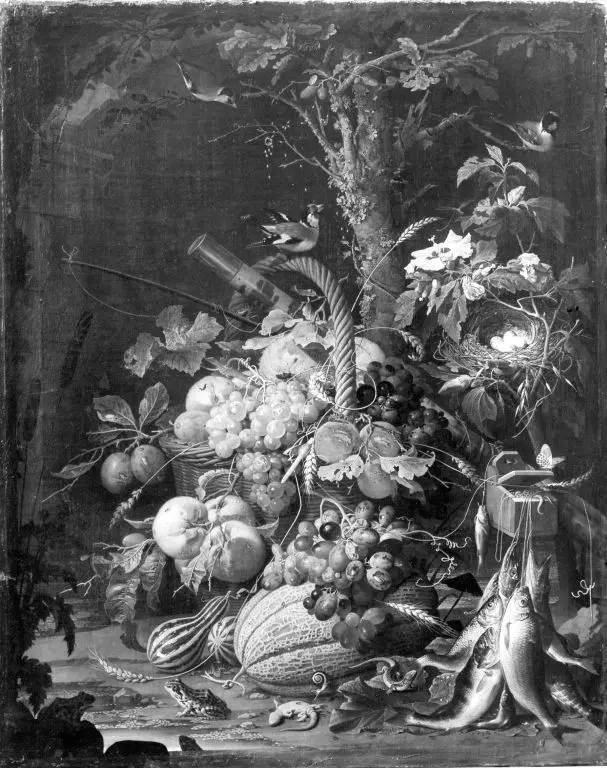
Still life with fruit, fish and a bird's nest
Abraham Mignon
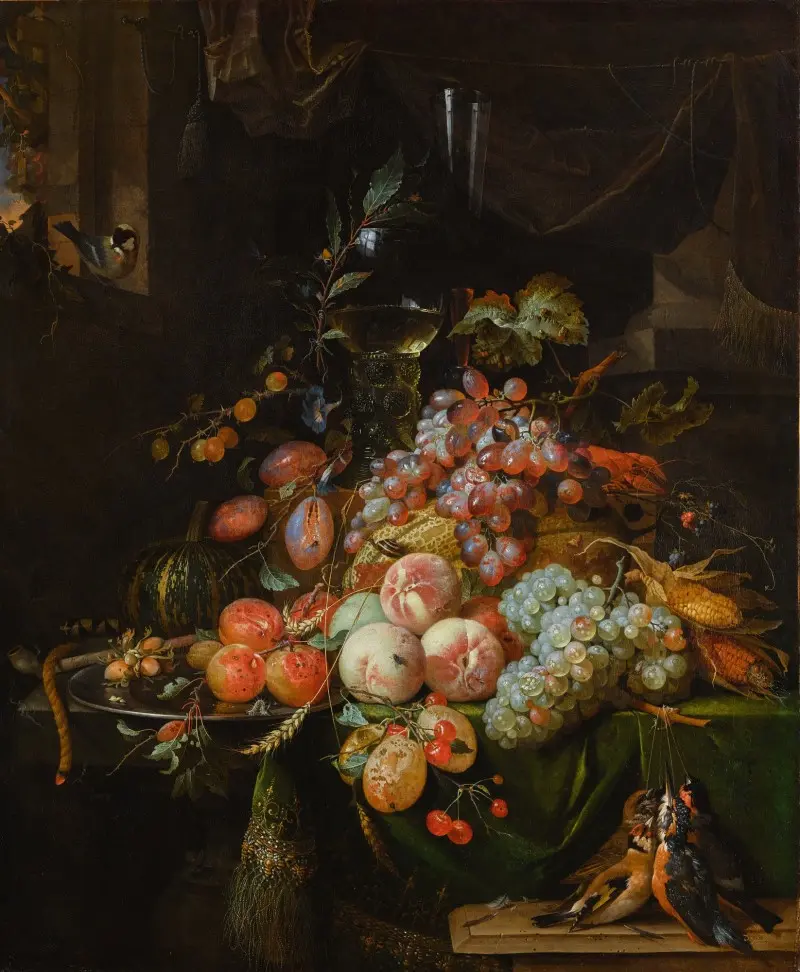
Still Life with Plums, Peaches, Apricots, Grapes and a Melon
Abraham Mignon
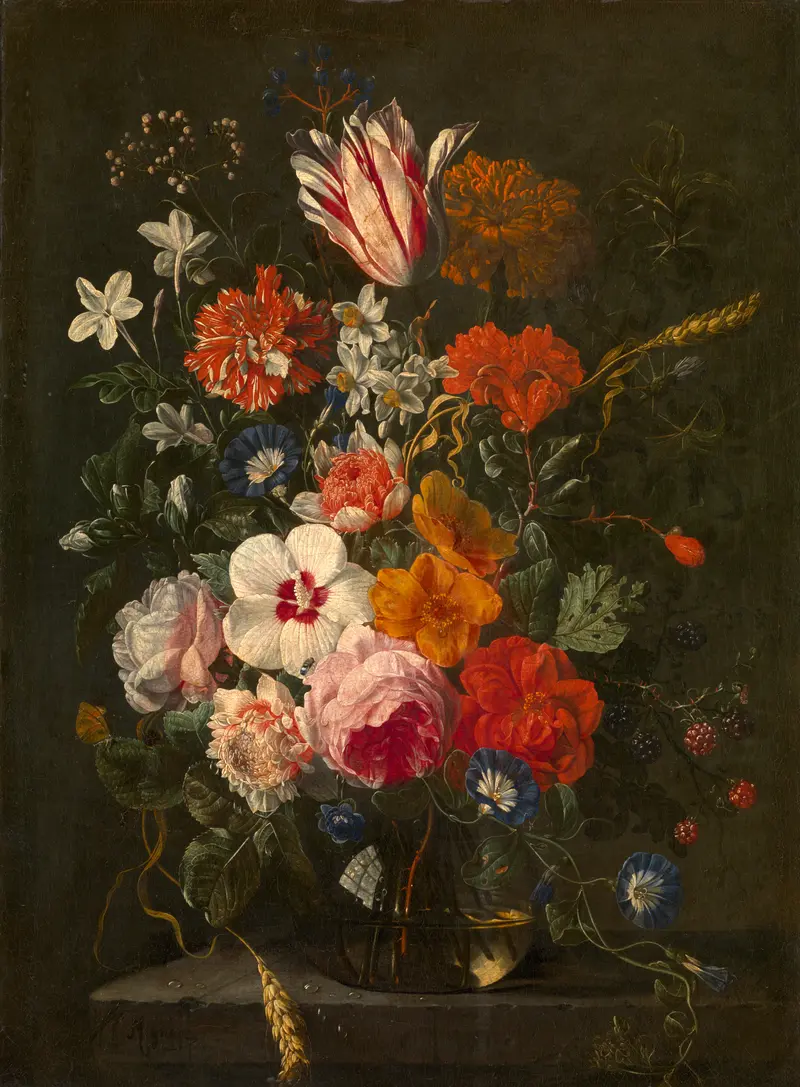
Flowers and a branch of berries in a glass vase on a stone ledge
Abraham Mignon
Flowers and fruit on a plinth
Abraham Mignon
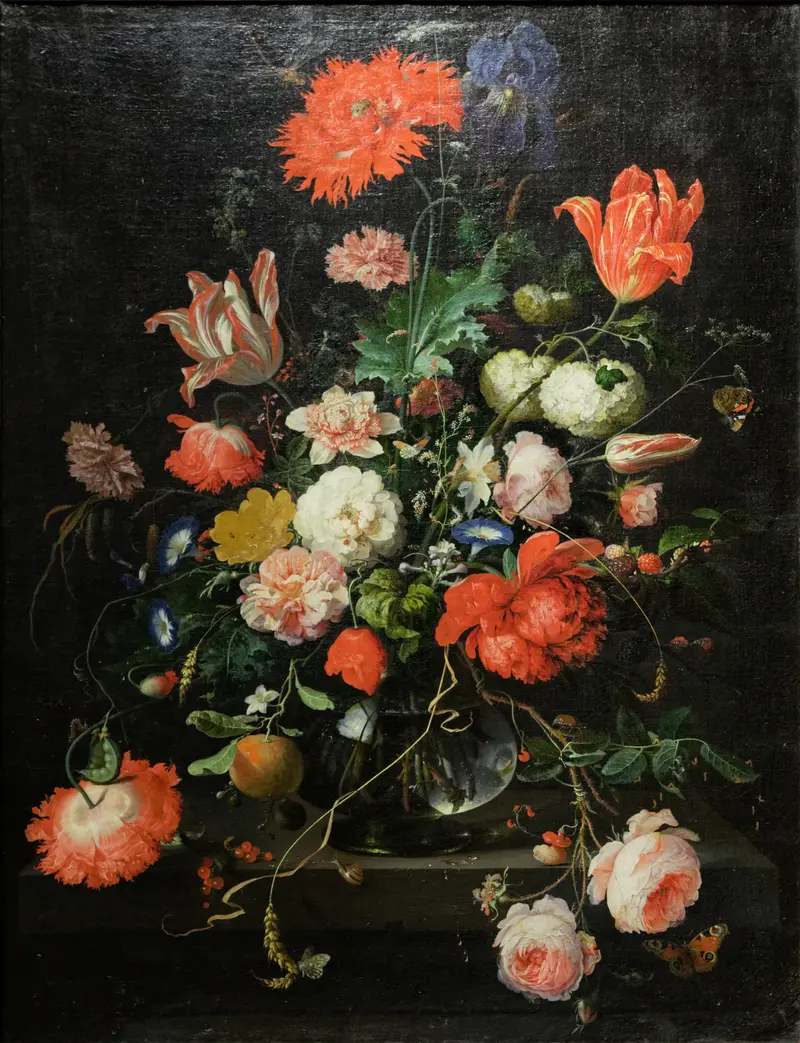
Flowers in a Crystal Vase Standing on a Stone Pedestal, with a Dragonfly
Abraham Mignon





