
Bridge in construction, Amuri — History & Facts
In Bridge in Construction, Amuri, the viewer encounters a moment suspended between potential and madness, where ambition collides with the chaos of creation. Look to the center of the canvas where the skeletal framework of the bridge emerges, its steel and timber beams straining against the weight of possibility. The artist employs a muted palette, layering earthy tones with bursts of ochre and umber, effectively mirroring the raw intensity of labor. The brushstrokes, dynamic yet deliberate, direct our gaze towards the men at work, their bodies twisted in effort, captured in a moment of furious creation. As you examine the details, notice how the light plays across the unfinished structure, illuminating the precariousness of both the endeavor and the workers' resolve.
This contrast between the sturdy materials and the chaos of the process speaks to the madness inherent in human ambition—building dreams from the very earth that holds them. The frayed edges of the scene reflect the tension between hope and despair, hinting at the fragility of progress. In 1864, Richmond crafted this piece in New Zealand, a time when the burgeoning art scene was intertwined with the tumult of colonial expansion. As the world grappled with the implications of progress, the artist found himself at the intersection of industry and nature, capturing not just a bridge under construction but the very essence of human aspiration amid the tumult of 19th-century life.
More Artworks by James Crowe Richmond
Browse all →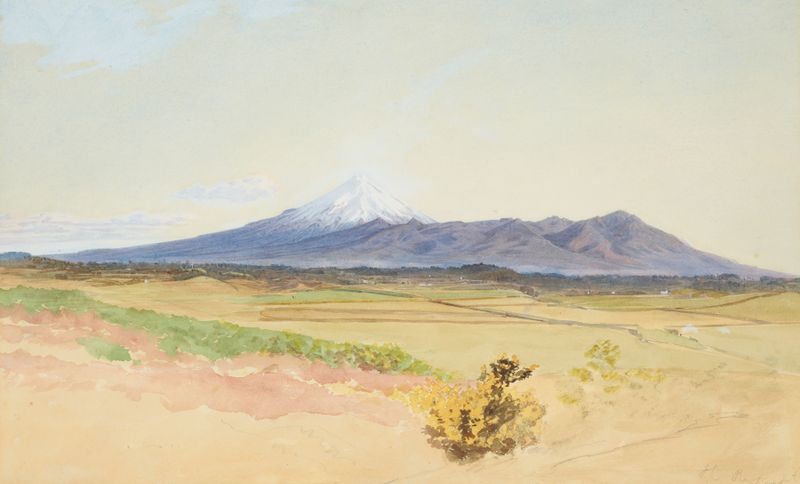
Mount Egmont and Pouakai, from New Plymouth
James Crowe Richmond
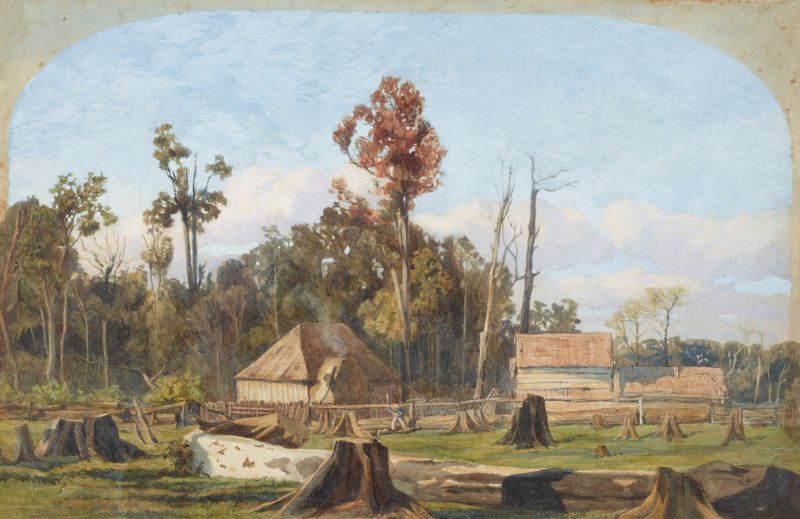
Settler’s home, Merton, near New Plymouth
James Crowe Richmond
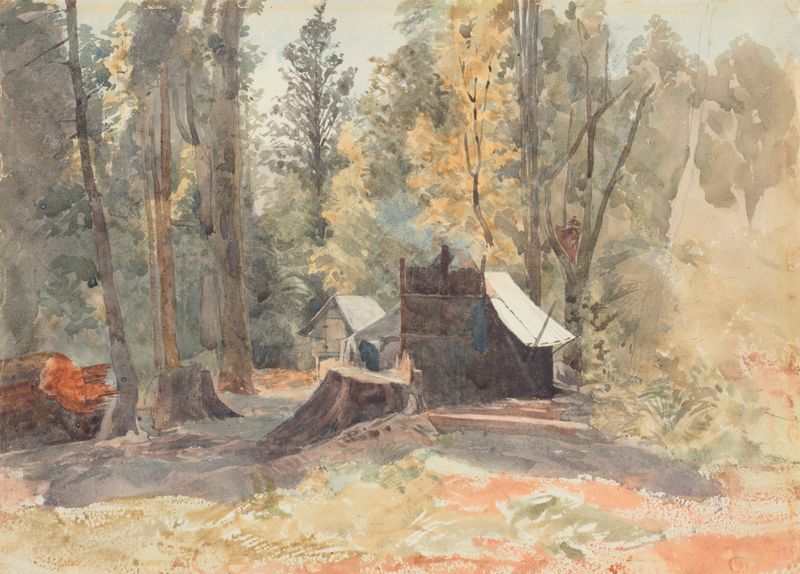
Hut of the ‘Italian party’, old diggings on Buller
James Crowe Richmond

Mosque at Tlemcen
James Crowe Richmond

Ngatapa, Te Kooti’s Pa
James Crowe Richmond

Dividing Range, Riwaka and Takaka
James Crowe Richmond
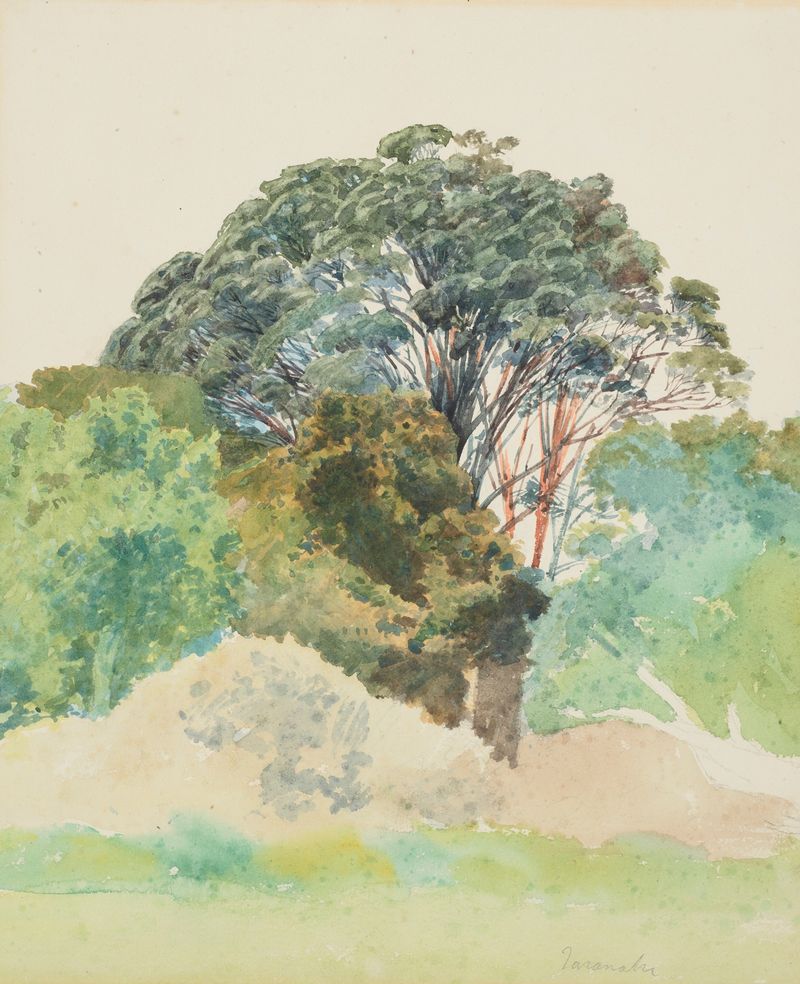
Rata, Taranaki
James Crowe Richmond

Grey River, on the beach
James Crowe Richmond
Dunedin from the Ocean Beach
James Crowe Richmond

On Collingwood Goldfields
James Crowe Richmond
More Architecture Art
Browse all →
The statue of Liberty
Frédéric Auguste Bartholdi

View of Houses in Delft, Known as ‘The Little Street’
Johannes Vermeer

View of Houses in Delft, Known as ‘The Little Street’
Johannes Vermeer

The Cathedral in Rouen. The portal, Grey Weather
Claude Monet

The yellow house
Vincent van Gogh

The Church in Auvers-sur-Oise, View from the Chevet
Vincent van Gogh