
bull on the meadow — History & Facts
The first thing that draws the eye in bull on the meadow is not the bull itself, but the vast, open sky that stretches above it—an expanse so wide it seems to dwarf the figures below. The bull stands at the edge of a winding path, its sturdy form anchored by the hand of a man in a broad-brimmed hat, while a small group—perhaps a family—rests quietly nearby. The tree beside them is nearly bare, its branches reaching out like a question against the clouds.
Every element is arranged to lead the viewer’s gaze from the foreground figures, up through the gentle slope of the meadow, and into the drama of the sky. The palette is restrained, with soft contrasts that evoke the hush of a late afternoon, and the careful play of light across the bull’s flank suggests a moment of calm observation, not action. Painted in 1655, this work belongs to a world where Dutch and Flemish artists were discovering new poetry in the ordinary rhythms of rural life. Scenes like this—animals, farmers, and the land itself—were prized by collectors who wanted reminders of stability and abundance, often displayed in city homes far from the fields.
Adriaen van de Velde was part of a generation that brought a gentle realism to these scenes, capturing not just the likeness of animals but the quiet relationships between people, creatures, and landscape. Now held by the Deutsches Historisches Museum, the painting survives as a record of that era’s fascination with the countryside, inviting us to pause and look more closely at the everyday world it so carefully records.
More Artworks by Adriaen van de Velde

Staande stier
Adriaen van de Velde
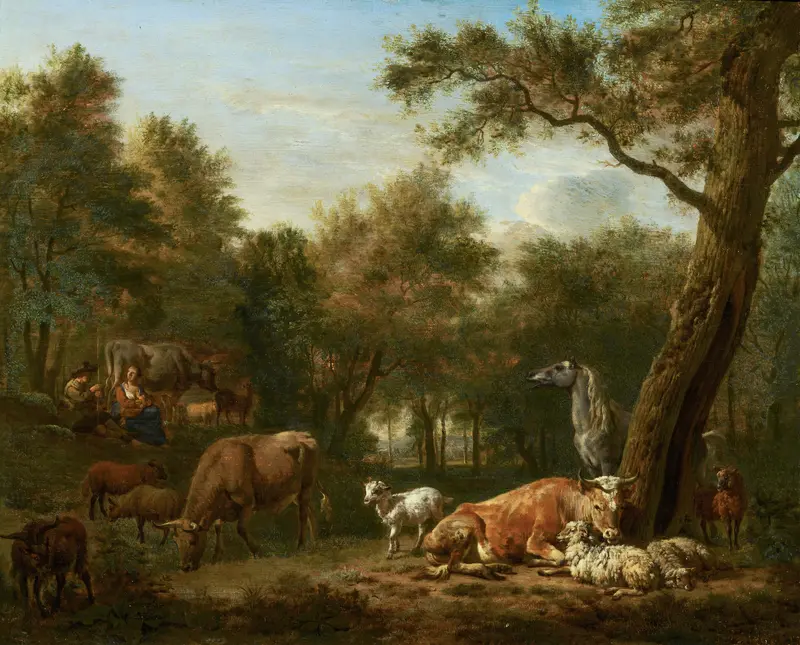
Wooded Landscape with Cattle
Adriaen van de Velde
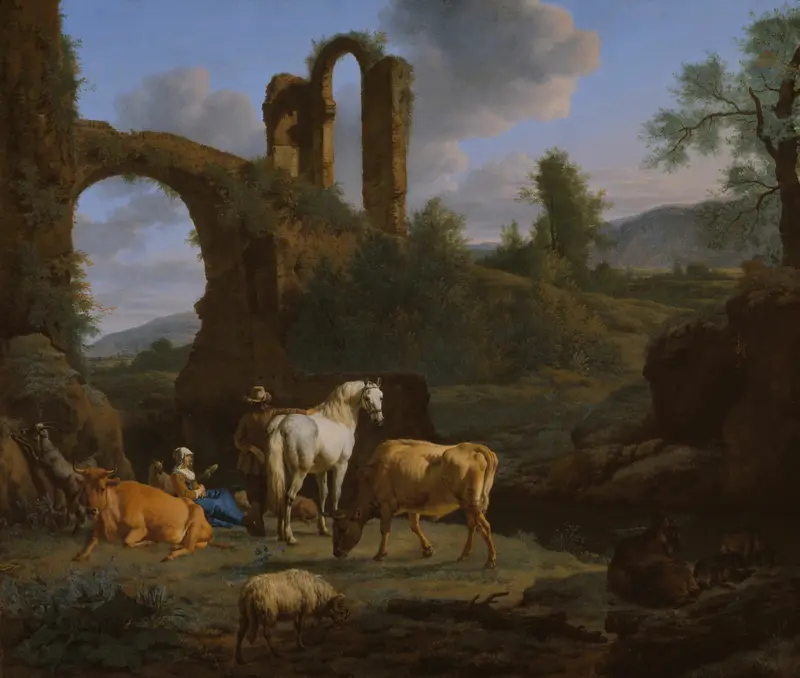
Pastoral Landscape with Ruins
Adriaen van de Velde
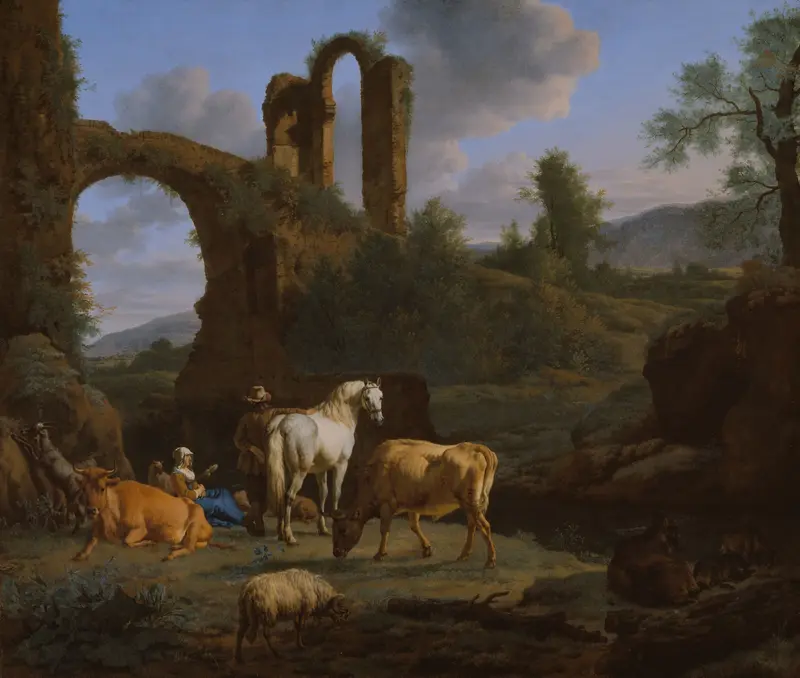
Pastoral Landscape with Ruins
Adriaen van de Velde
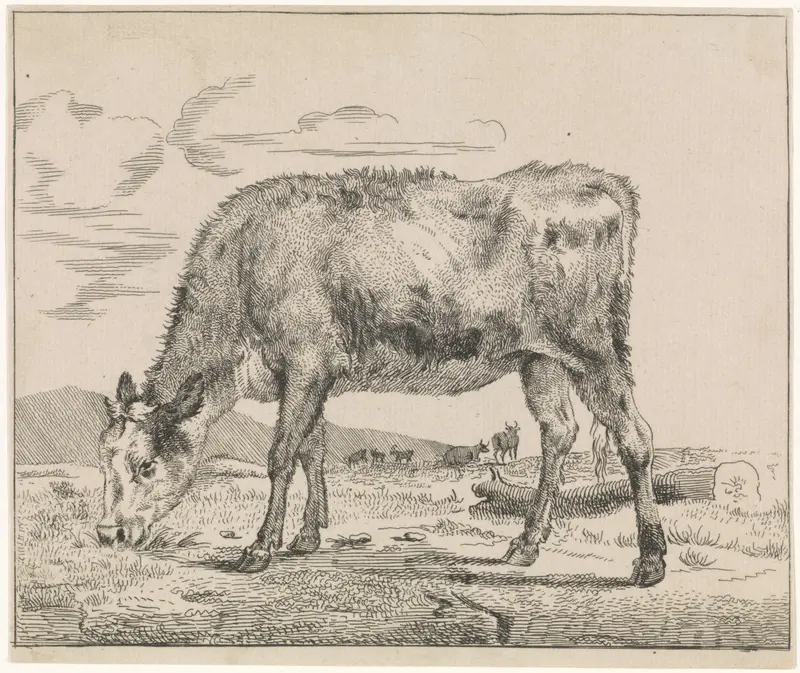
Grazend kalf
Adriaen van de Velde
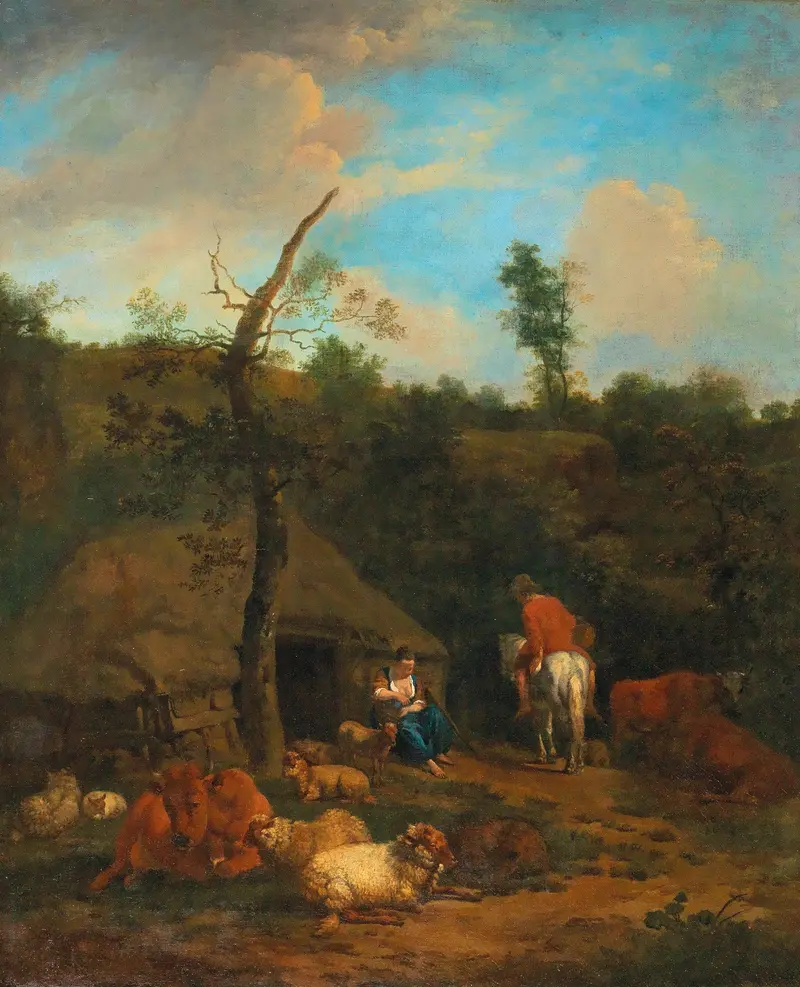
A herdsman and a shepherdess in front of a wooden farmhouse
Adriaen van de Velde
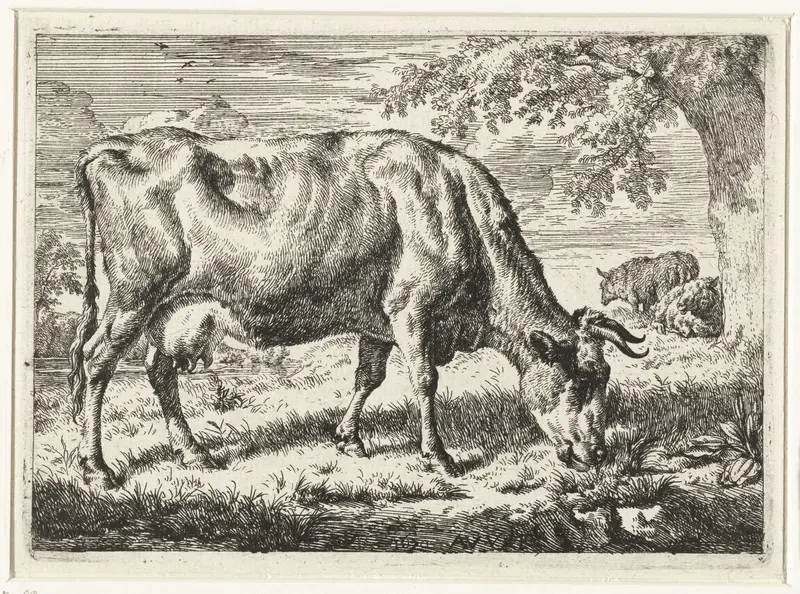
Grazende koe en twee schapen
Adriaen van de Velde
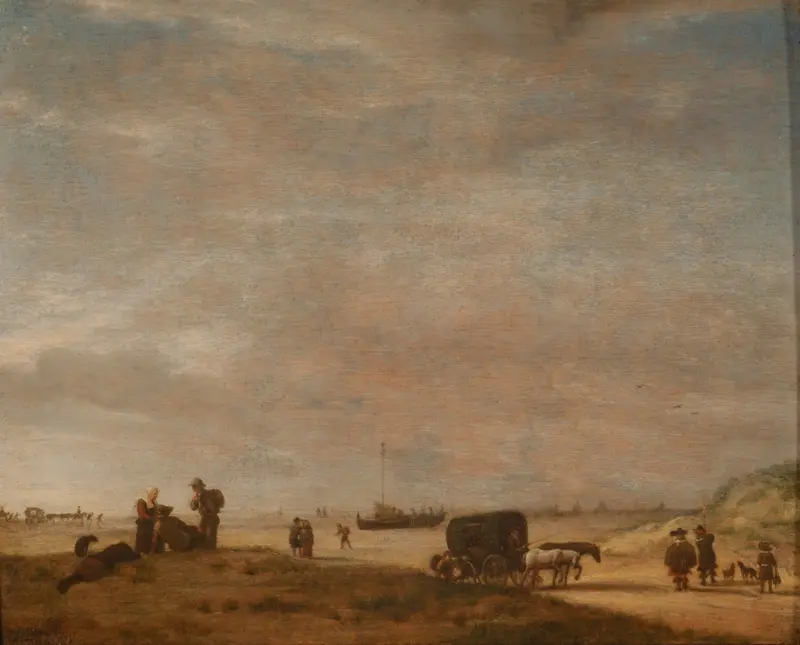
Scheveningen Beach
Adriaen van de Velde
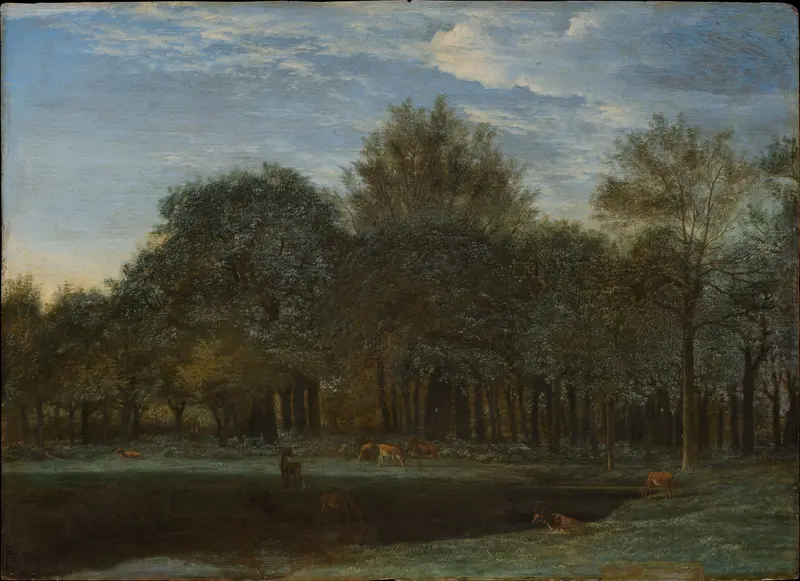
Forest Clearing with Grazing Deer
Adriaen van de Velde
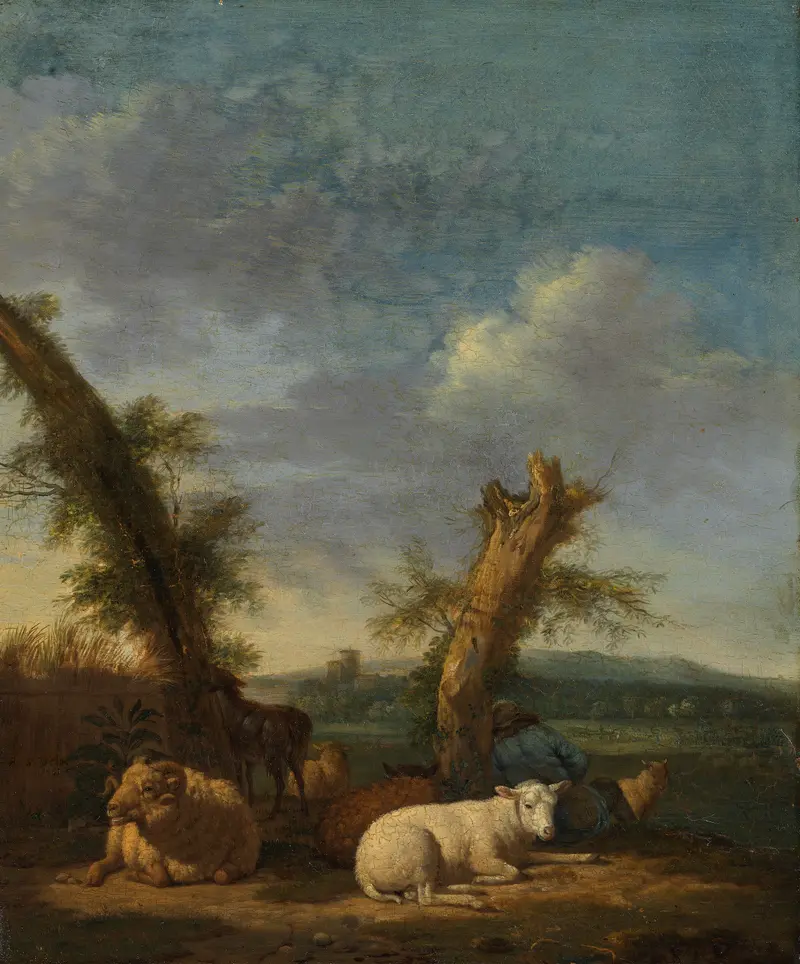
Landscape with Sheep and a Sleeping Shepherd
Adriaen van de Velde
More Landscape Art

The Starry Night
Vincent van Gogh

View of Delft
Johannes Vermeer

Water Lilies
Claude Monet

The Grand Canal, Venice, looking north-west from the Ca' Corner to the Ca' Contarini degli Scrigni, with the campanile of Santa Maria della Carità
Canaletto

Windsor Castle
Canaletto

The Grand Canal looking North-East from the Palazzo Dolfin-Manin to the Rialto Bridge
Canaletto