
Bust of an Old Peasant Woman Holding a Jug — History & Facts
What draws the viewer in first is the woman’s expression: a half-smile, weathered yet warm, as if she has just caught your eye across a quiet kitchen. Her hand, large and strong, cradles a green jug—its earthenware surface catching a soft, honest light. The plain brown background presses her forward, making her presence immediate and unadorned.
Every crease in her face, every fold of her white cap, is painted with the kind of attention usually reserved for the wealthy or the powerful, yet here it dignifies the ordinary. The palette is muted, but the effect is lively; the ochres and umbers of her clothing set off the pinks and reds of her skin, guiding the gaze from her hand to her face and back again. Adriaen van Ostade was a chronicler of everyday life in the Dutch Golden Age, a period when scenes of peasants and tavern-goers filled the homes of a new, prosperous middle class. Works like this, made after 1643 and now in the Nationalmuseum, were not grand commissions but intimate studies—painted for collectors who found honesty and humor in the faces of their neighbors.
In an era that was shifting from religious to secular art, these portraits of anonymous villagers became a way to celebrate the dignity of work and the small pleasures of daily life. History has kept few traces of the woman herself, but her glance, caught forever, invites us to wonder what stories she might have told over that jug.
More Artworks by Adriaen van Ostade

Dans in de herberg
Adriaen van Ostade
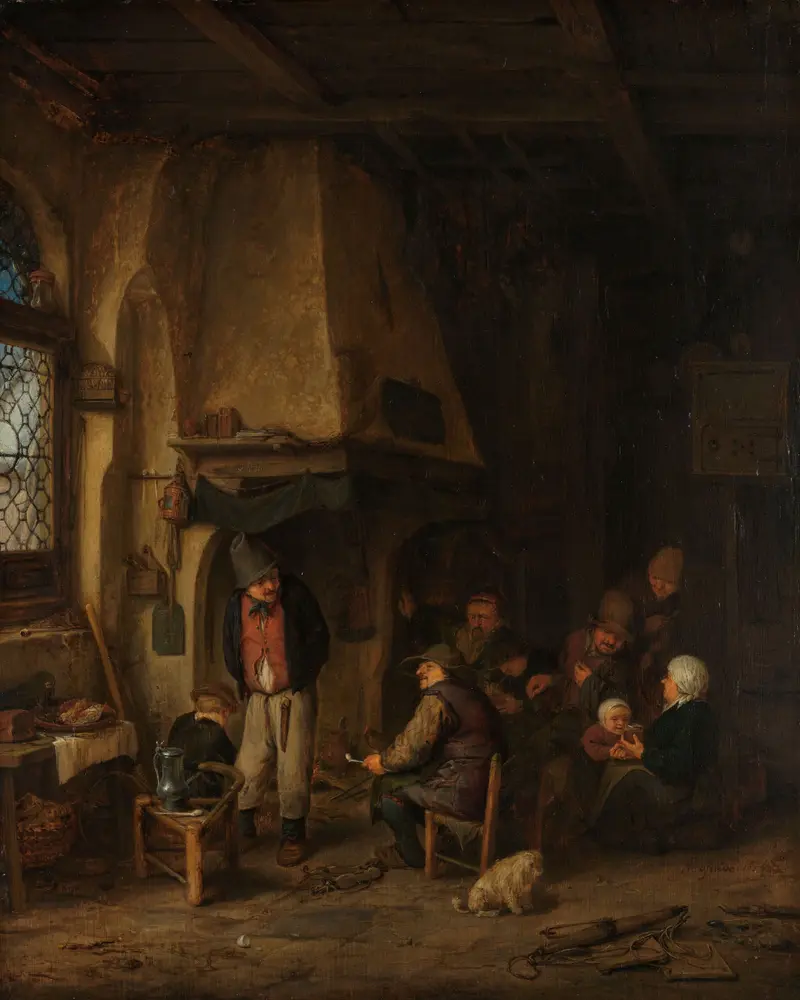
‘The Skaters’: Peasants in an Interior
Adriaen van Ostade
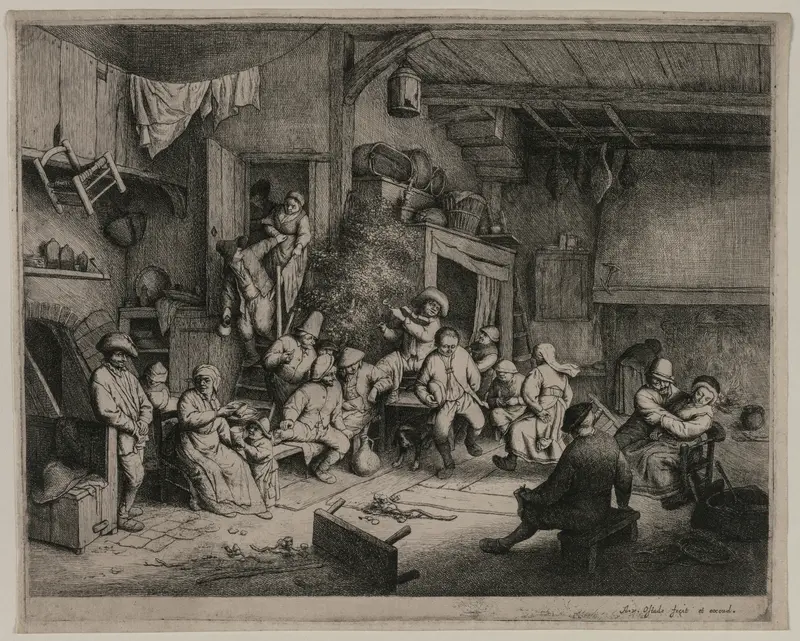
Dance at the Inn
Adriaen van Ostade
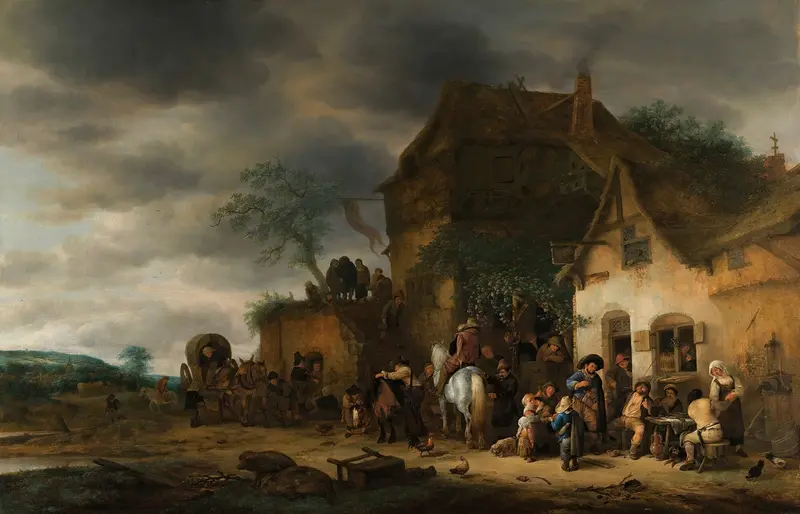
Travellers Halted At A Country Inn
Adriaen van Ostade
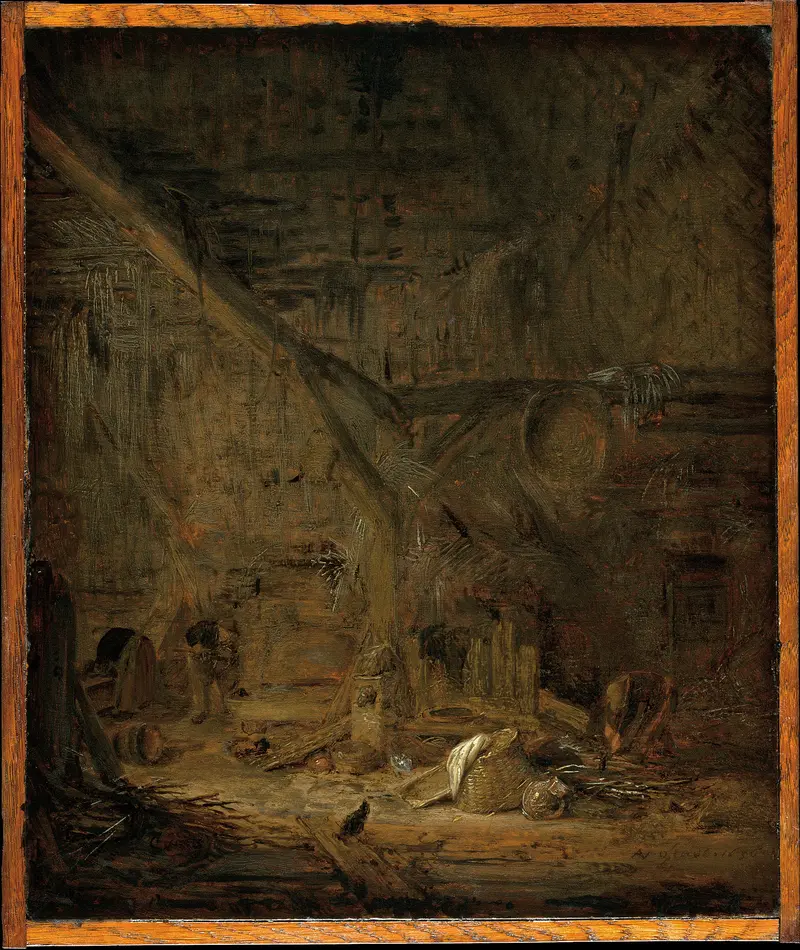
Interior of a Barn
Adriaen van Ostade
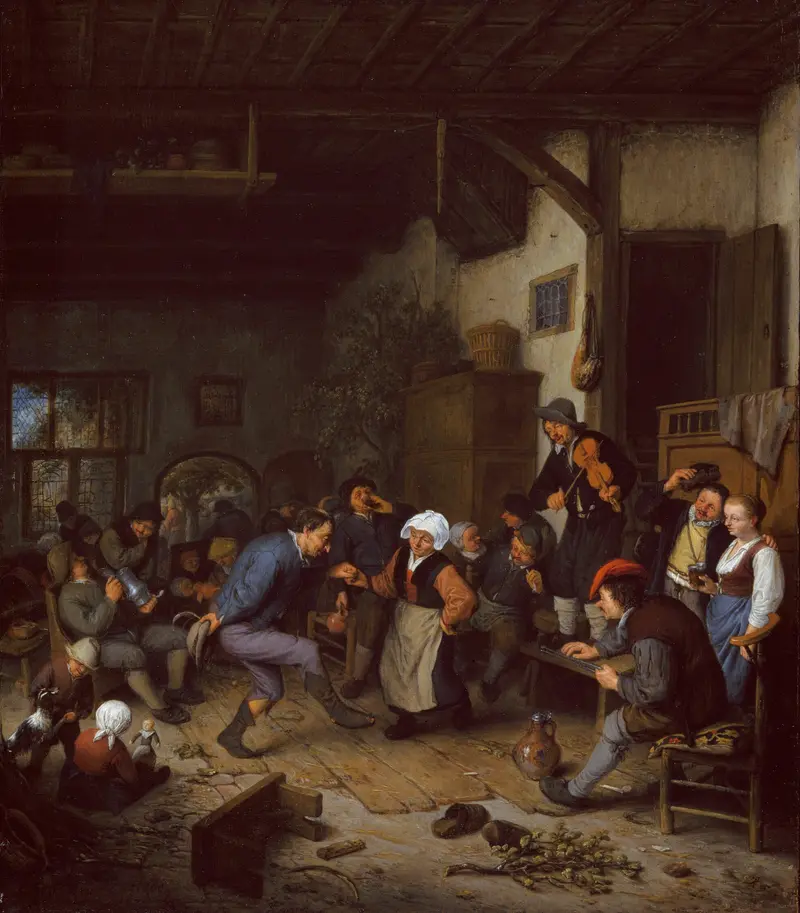
Merrymakers in an Inn
Adriaen van Ostade
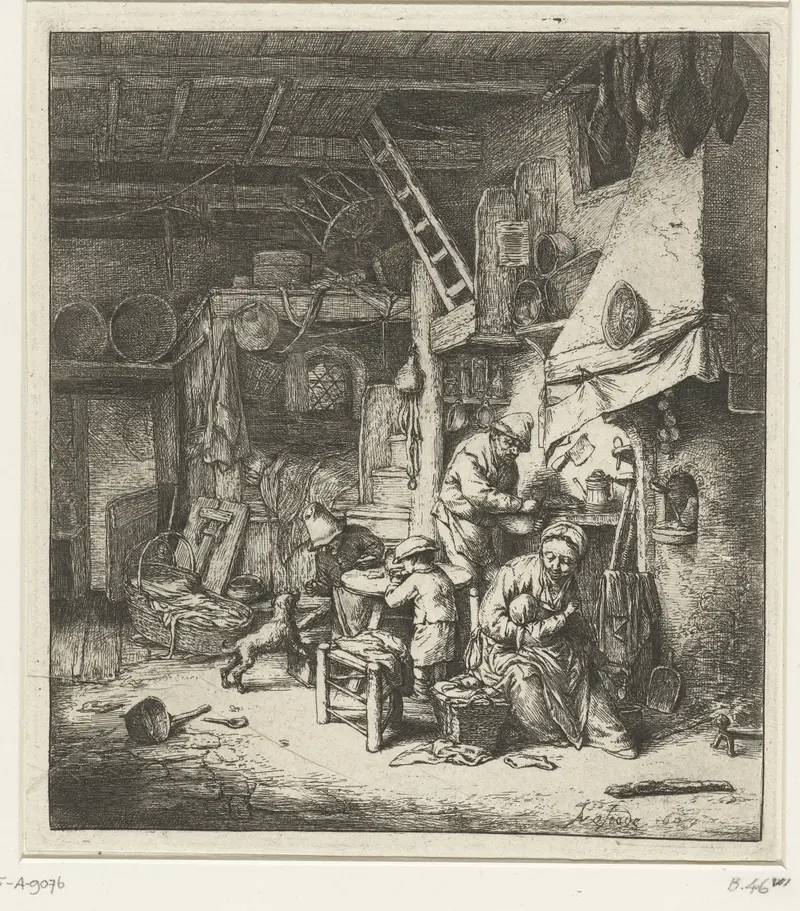
Boerengezin in interieur
Adriaen van Ostade
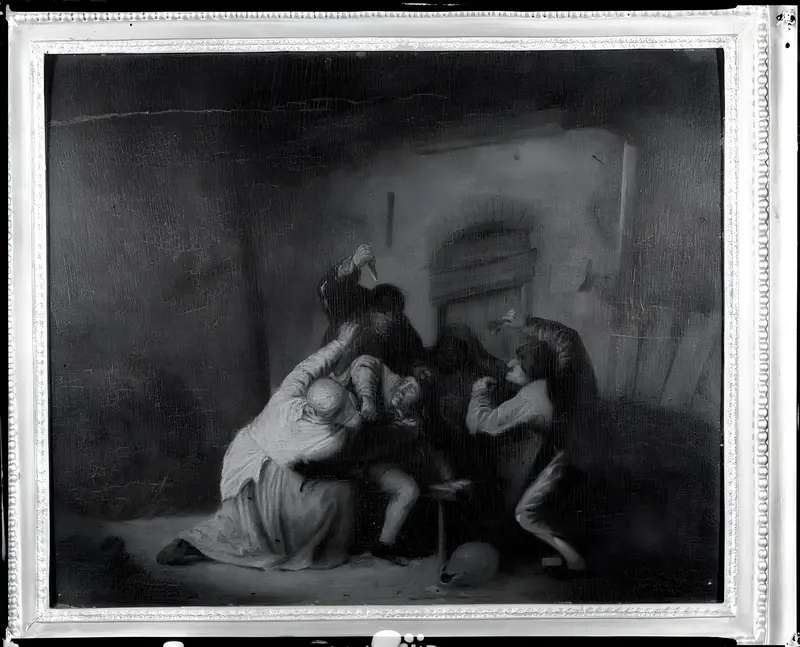
Peasants Brawling in a Tavern
Adriaen van Ostade
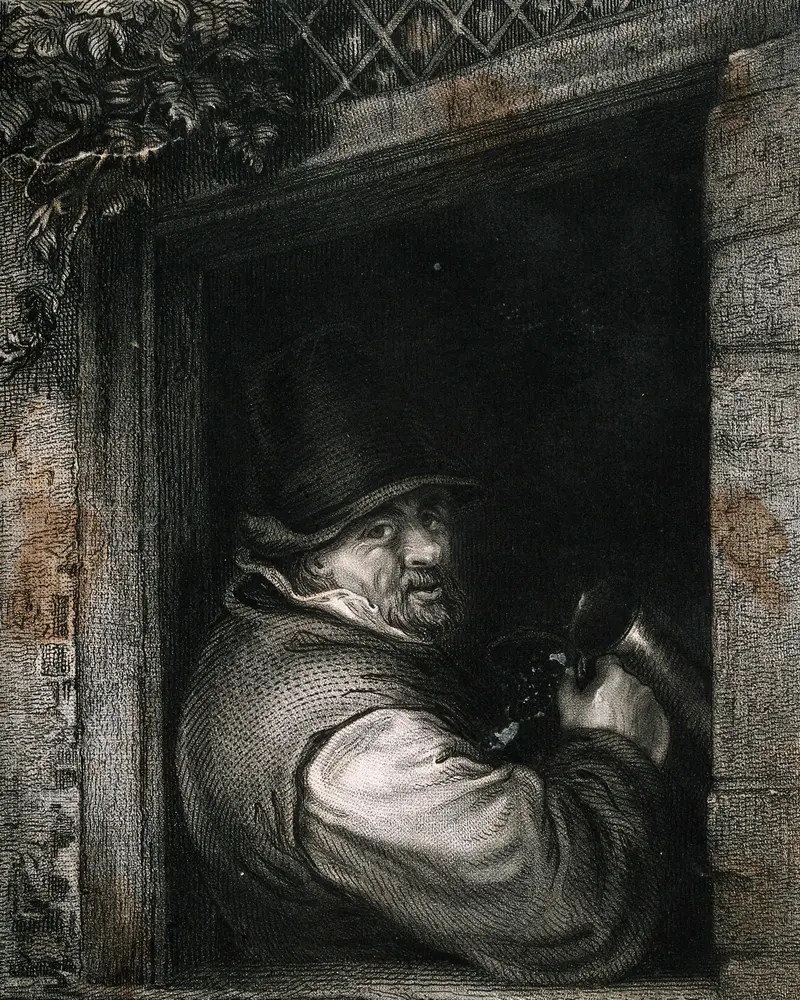
Man with a Tankard at a Window
Adriaen van Ostade
Dans in de herberg
Adriaen van Ostade
More Genre Scene Art

Banquet of the Officers of the St George Civic Guard
Frans Hals

Rembrandt and Saskia in the Scene of the Prodigal Son
Rembrandt van Rijn

Bal du moulin de la Galette
Pierre-Auguste Renoir

Quadrille at the Moulin Rouge
Henri de Toulouse-Lautrec

A Burial at Ornans
Gustave Courbet

When Will You Marry?
Paul Gauguin