
Cabin in the Marsh — History & Facts
In the stillness of a marsh, a humble cabin stands as a testament to resilience and solitude, inviting us to reflect on its quiet existence. Focus on the cabin at the center of the canvas, its earthy tones harmonizing with the surrounding marshland. The artist employs muted greens and browns, creating a sense of naturalism that envelops the viewer. Notice how the gentle brushstrokes suggest the texture of the weathered wood, inviting you to feel the history embedded in every surface.
The light filters softly through the atmospheric haze, casting a serene glow that envelops the scene in a dreamlike quality. Yet, beneath the tranquil surface lies an emotional undercurrent. The cabin, though inviting, feels isolated—an emblem of solitude in the vastness of nature. The stark contrast between the built environment and the untamed marsh emphasizes the tension between humanity and the wilderness.
Each blade of grass appears to whisper stories of the past, hinting at lives once lived and dreams that fluttered away like the shadows on the water. Alphonse Legros painted this work during a period of profound personal and artistic transition, likely between 1857 and 1911. At this time, he settled in England, away from the bustling art scene of Paris, facing both introspection and growth. The shift in his surroundings influenced his artistic style, moving him toward a more contemplative exploration of landscapes—an endeavor that ultimately reflected his own search for identity and meaning in an ever-changing world.
More Artworks by Alphonse Legros
Browse all →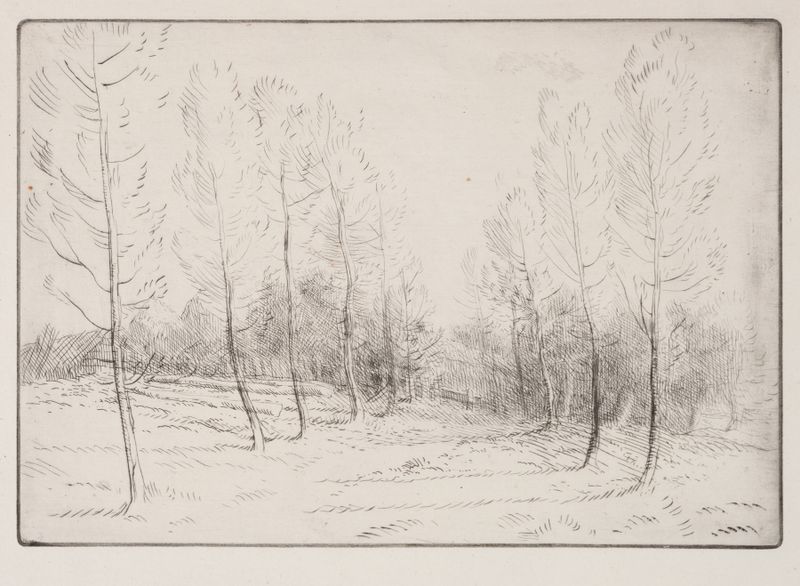
Avenue of Poplars
Alphonse Legros
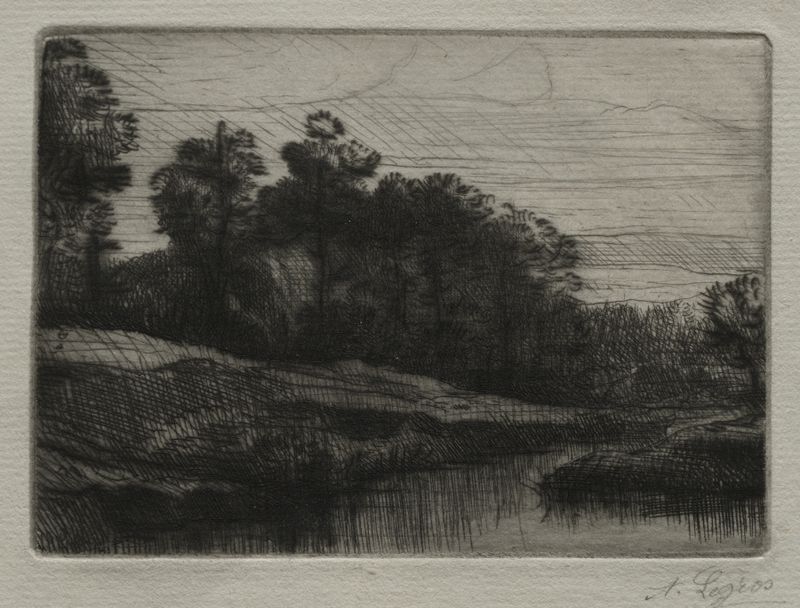
Evening
Alphonse Legros

The Fish in the Hoop Net
Alphonse Legros

The Little Beggar
Alphonse Legros
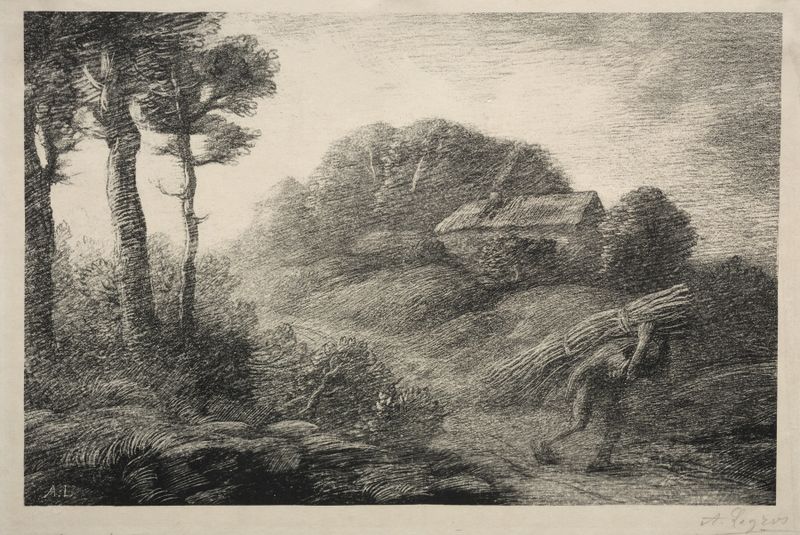
The Return of the Fagot Gatherer
Alphonse Legros

Storm
Alphonse Legros
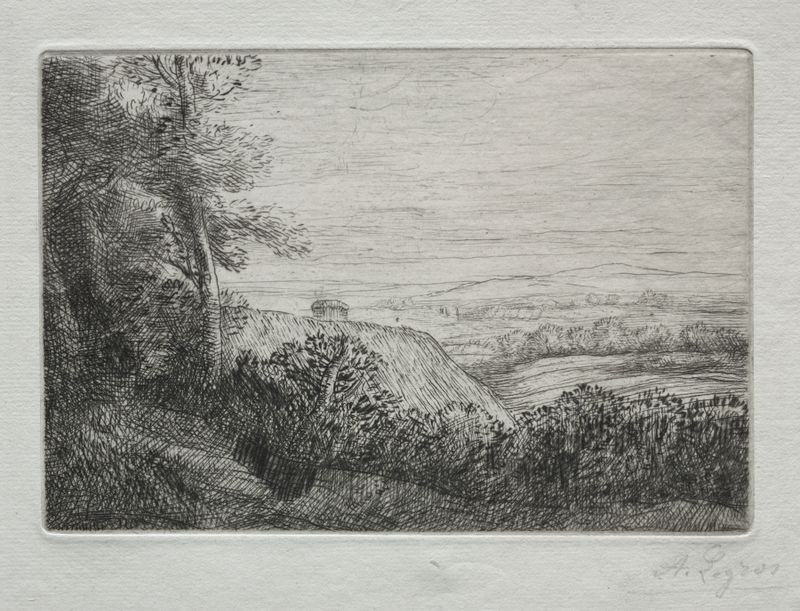
Les dernière Rayons de Soleil
Alphonse Legros
The Traveler Stretched out on the Grass
Alphonse Legros
Guard House
Alphonse Legros

Death of a Vagabond
Alphonse Legros





