
Calame Der Vierwaldstättersee — History & Facts
A cluster of wind-bent pines clings to the rocky foreground, their roots gripping the earth as if holding fast against the vastness beyond. The eye is drawn first to these trees, silhouetted against the shimmering blue of the lake below, then swept upward and outward by the pale, receding ridges of the mountains. Light pours in from the left, catching the rough bark and the sparse foliage, before dissolving into the cool haze that veils the distant peaks.
The painter has chosen a vantage point that lets the viewer feel both sheltered and exposed: the solid ground underfoot, the dizzying drop to water, the endless sky above. Every element is arranged to heighten a sense of encounter—between earth and air, nearness and distance, the rooted and the ephemeral. Painted in 1851, Calame Der Vierwaldstättersee belongs to a moment when landscape painting in Switzerland and Germany was undergoing a transformation. Artists like Alexandre Calame were celebrated for their ability to capture not just the appearance but the spirit of their native scenery, at a time when the young Swiss Confederation was seeking visual symbols of unity and endurance.
Such works were often commissioned by civic patrons or private collectors eager to possess a piece of the national landscape, rendered with both scientific precision and poetic feeling. This painting, shown in the 1998 Kunsthaus Zürich exhibition “Von Anker bis Zünd,” stands as a testament to that era’s fascination with nature’s grandeur and fragility—inviting us to linger, to trace the play of light, and to imagine the stories that might unfold beneath those steadfast trees.
More Artworks by Alexandre Calame

By the Lake of Thun
Alexandre Calame
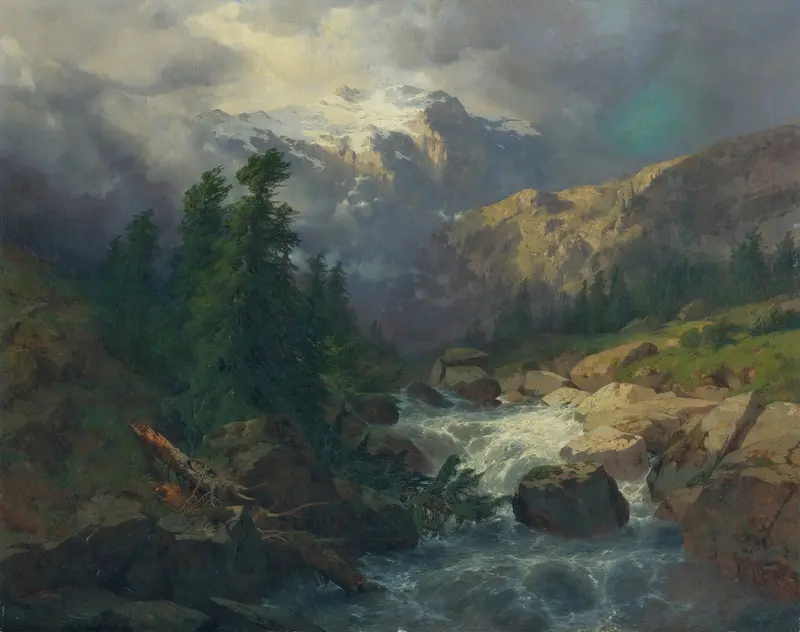
Souvenir Handeck, Stormy Weather
Alexandre Calame
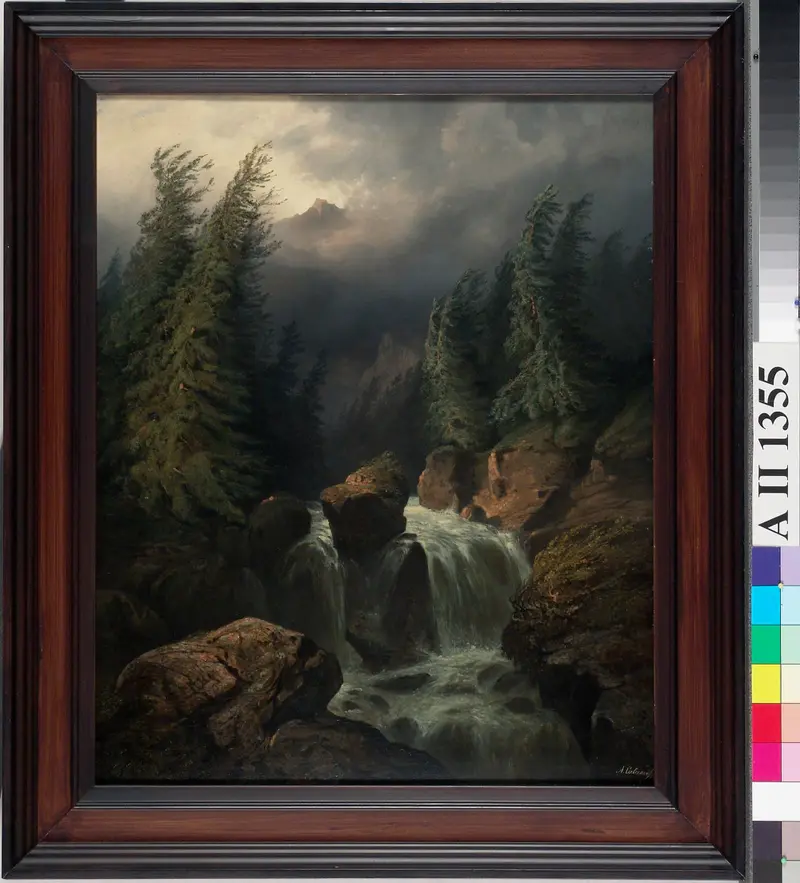
Alppikoski
Alexandre Calame
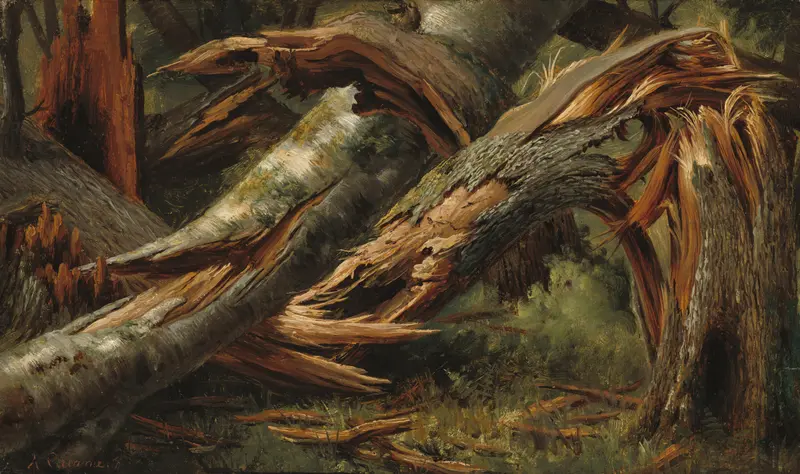
Fallen Tree
Alexandre Calame
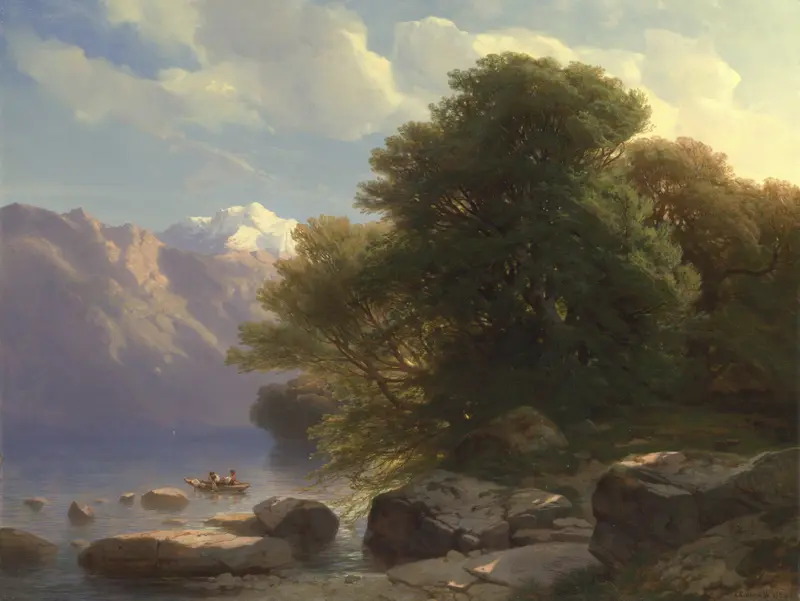
The Lake of Thun
Alexandre Calame
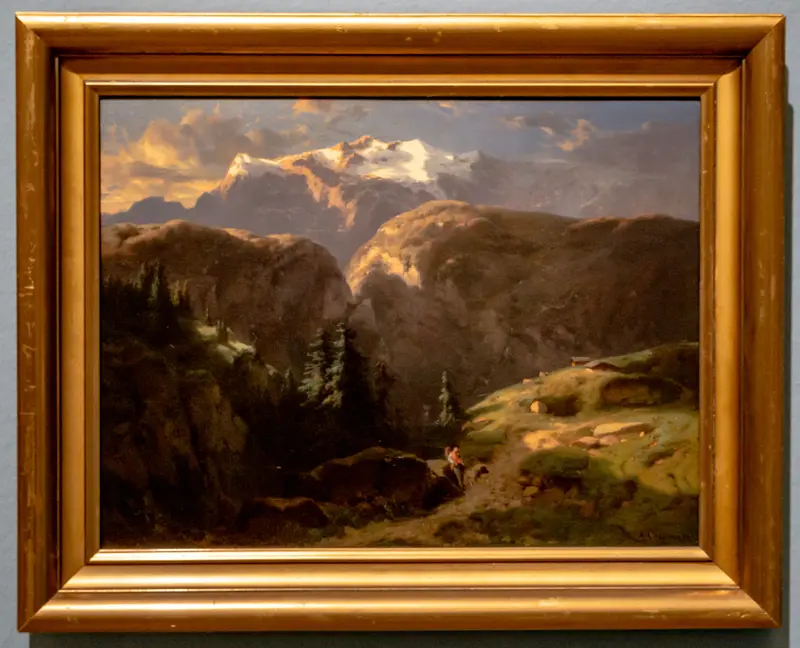
The Weatherhorn
Alexandre Calame
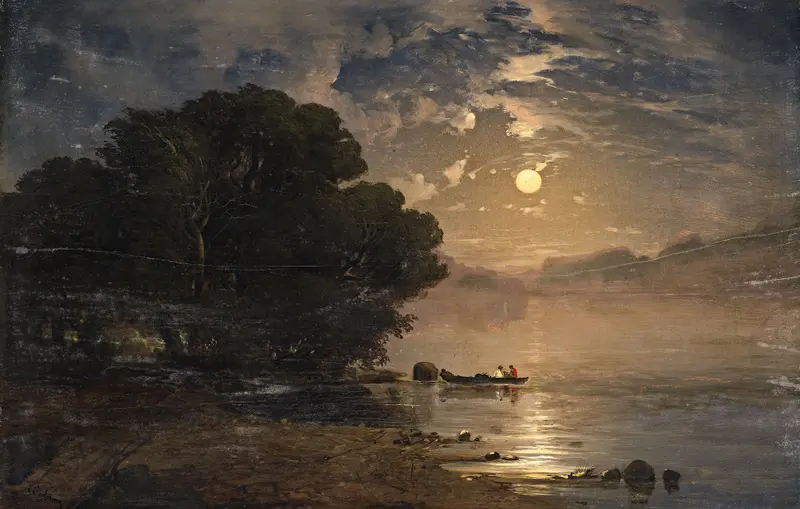
Evening Landscape with a Lake
Alexandre Calame
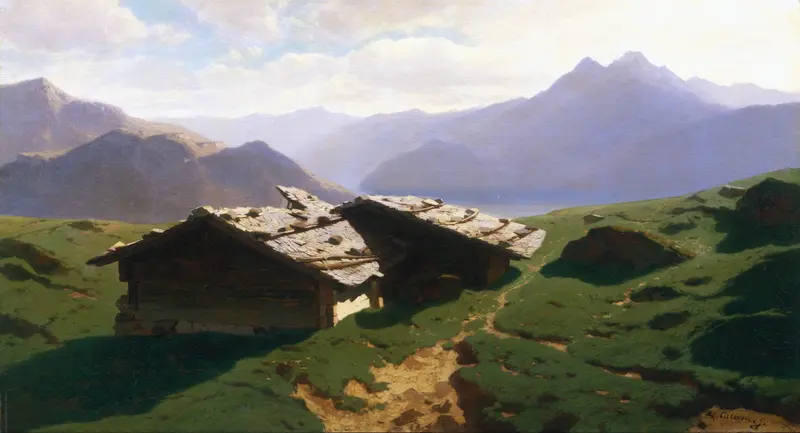
Chalets at Rigi
Alexandre Calame

View of the Wetterhorn and the Reichenbach from Meiringen
Alexandre Calame
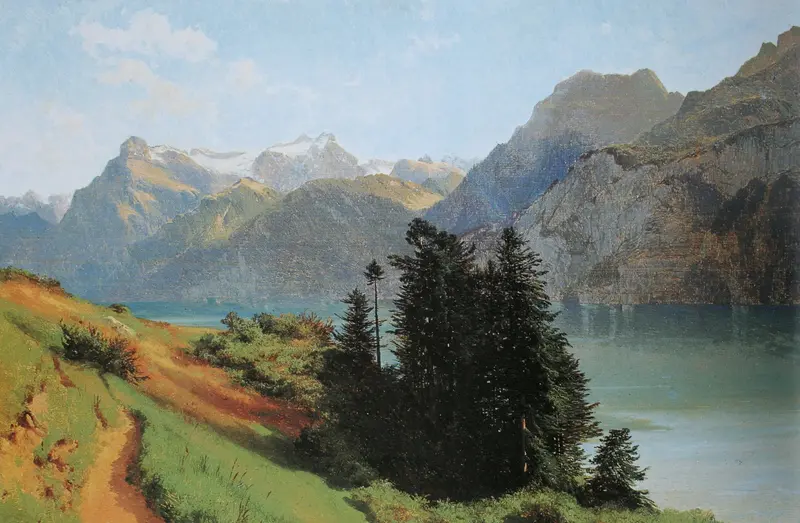
Calame Vierwaldstättersee mit Urirotstock
Alexandre Calame
More Landscape Art

The Starry Night
Vincent van Gogh

View of Delft
Johannes Vermeer

Water Lilies
Claude Monet

The Grand Canal, Venice, looking north-west from the Ca' Corner to the Ca' Contarini degli Scrigni, with the campanile of Santa Maria della Carità
Canaletto

Windsor Castle
Canaletto

The Grand Canal looking North-East from the Palazzo Dolfin-Manin to the Rialto Bridge
Canaletto