
The Lake of Thun — History & Facts
The first thing to catch the eye in The Lake of Thun is the sweep of golden light that pours across the trees, turning their leaves to a living mosaic against the shadowed forest behind. Alexandre Calame draws you in with a sense of stillness that is anything but empty—look closer, and the painting reveals a quiet drama: two figures in a small boat, dwarfed by the vast, glassy lake and the looming mountains beyond. The water’s surface is scattered with rocks, each one rendered with such care that you can almost feel their cool, solid weight.
Your gaze is led from the sunlit boulders in the foreground, up through the tangled branches, and finally to the snow-capped peak that commands the horizon, its white crest glowing against the soft blue sky. Painted in 1854, this work belongs to a moment when the landscape genre was flourishing across Europe, particularly in Switzerland, where artists like Calame found both inspiration and patrons among the rising middle class and the burgeoning tourist trade. Such paintings were prized not just for their beauty, but as tokens of national pride and as souvenirs for travelers drawn to the Alps by the new railways and guidebooks. While history has kept few traces of this specific canvas beyond its presence today in the National Gallery, London, its careful detail and luminous palette speak to the values of its age: a faith in nature’s grandeur, a fascination with remote places, and a longing for moments of quiet reflection.
Stand before it, and you might find yourself tracing the same path of light and shadow, wondering what stories belong to those distant figures on the lake.
Sources: Wikidata Q26707833 · Image source (Wikimedia Commons)
More Artworks by Alexandre Calame

By the Lake of Thun
Alexandre Calame
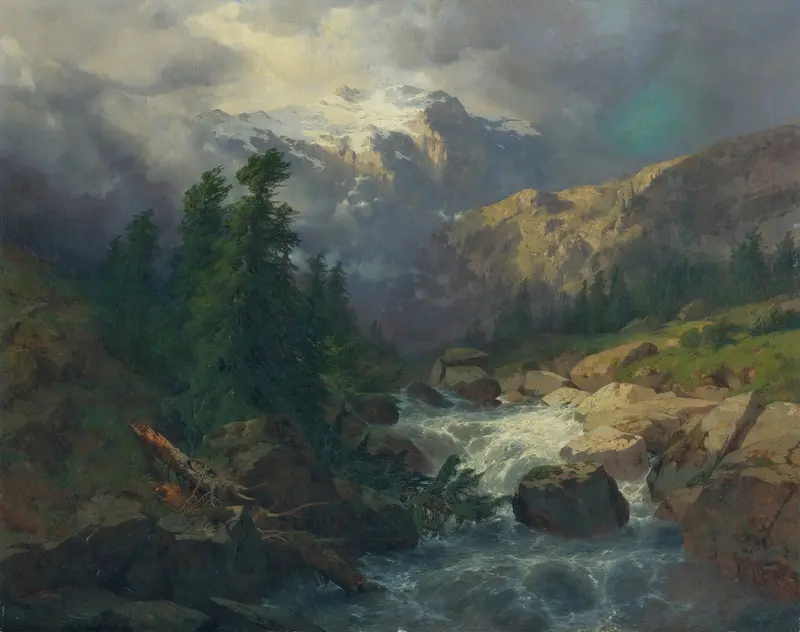
Souvenir Handeck, Stormy Weather
Alexandre Calame
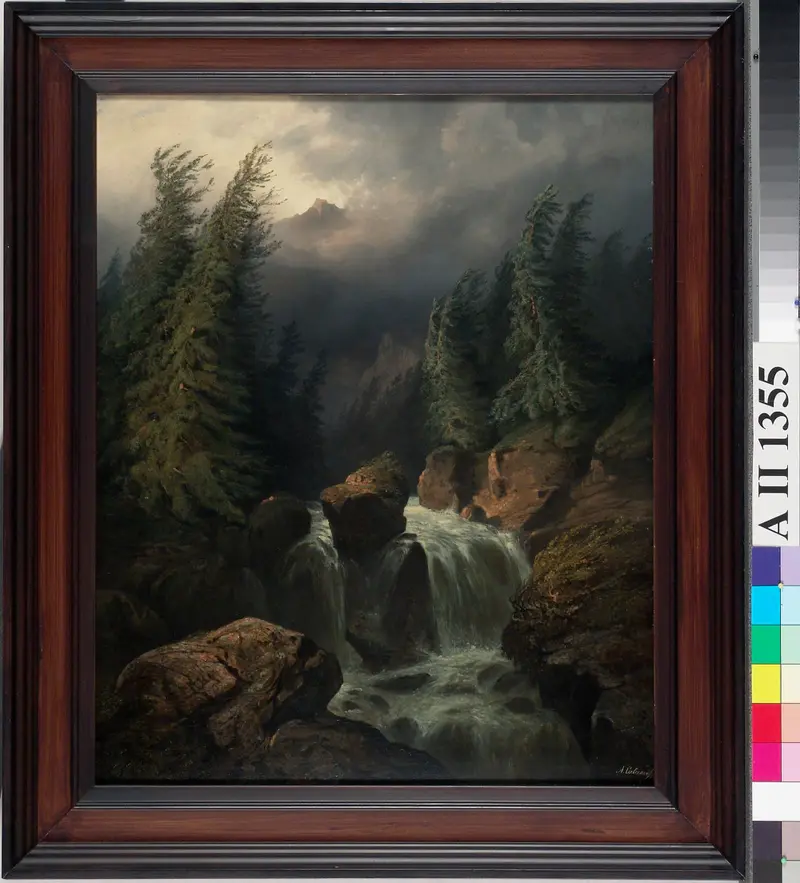
Alppikoski
Alexandre Calame
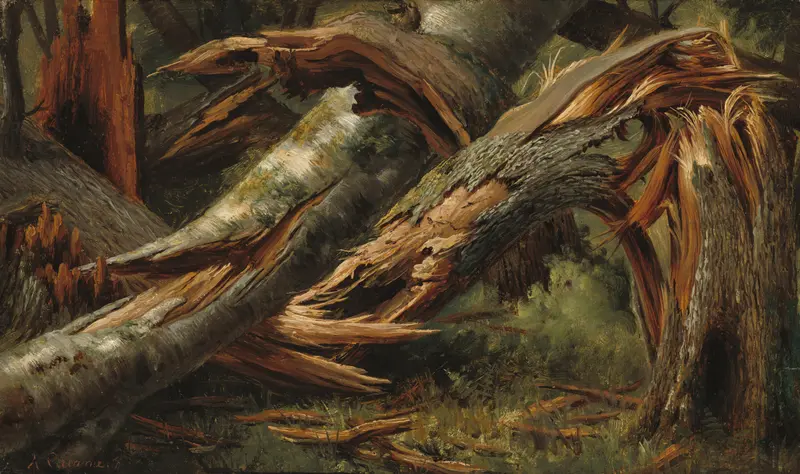
Fallen Tree
Alexandre Calame
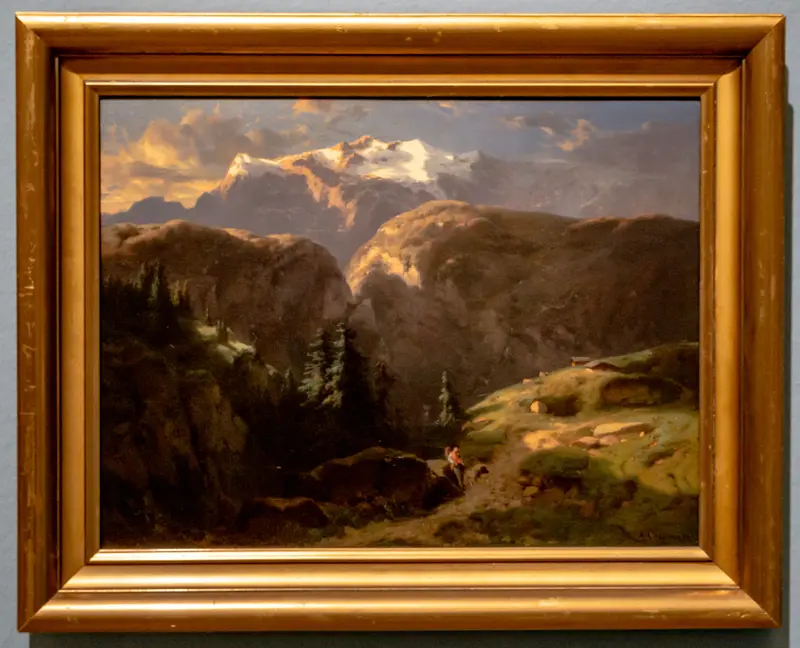
The Weatherhorn
Alexandre Calame
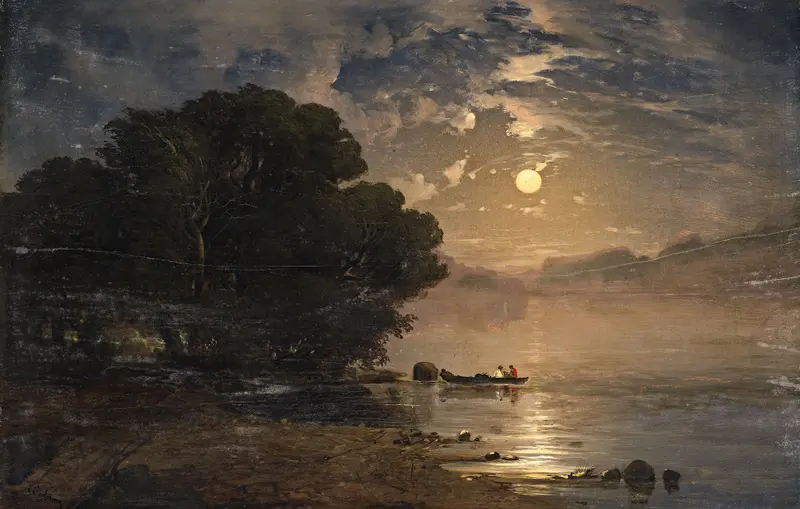
Evening Landscape with a Lake
Alexandre Calame
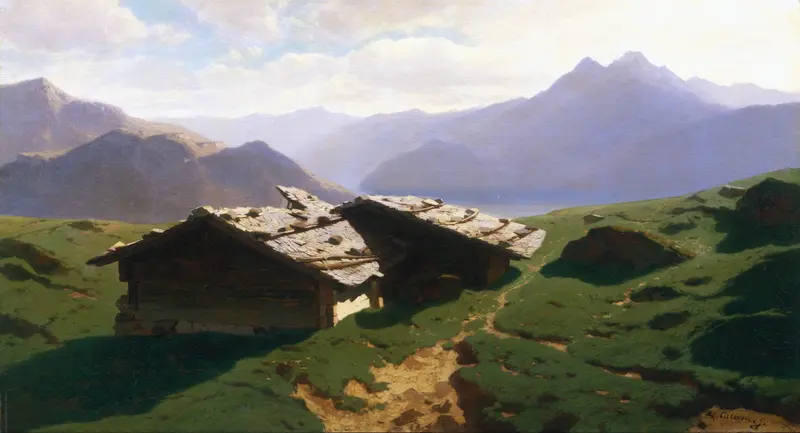
Chalets at Rigi
Alexandre Calame

View of the Wetterhorn and the Reichenbach from Meiringen
Alexandre Calame
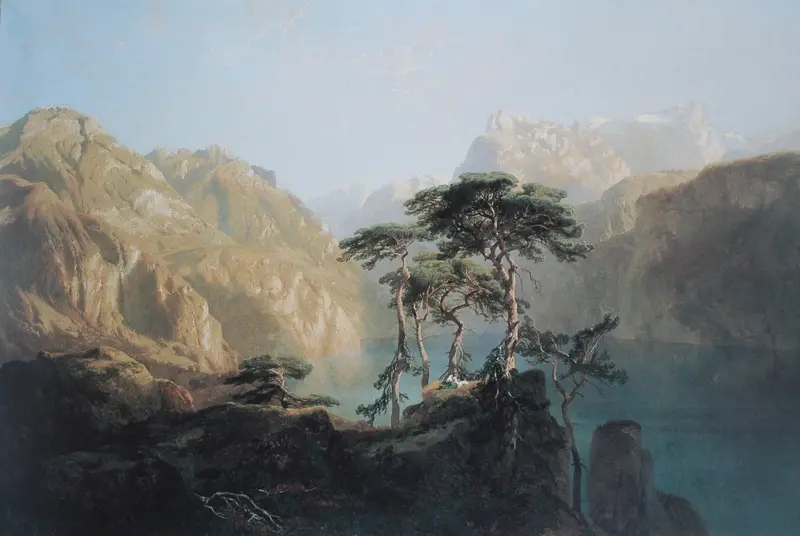
Calame Der Vierwaldstättersee
Alexandre Calame
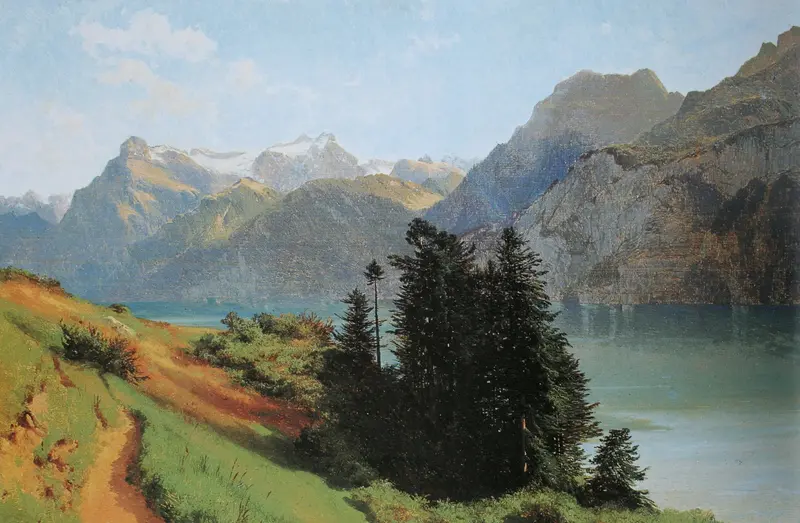
Calame Vierwaldstättersee mit Urirotstock
Alexandre Calame
More Landscape Art

The Starry Night
Vincent van Gogh

View of Delft
Johannes Vermeer

Water Lilies
Claude Monet

The Grand Canal, Venice, looking north-west from the Ca' Corner to the Ca' Contarini degli Scrigni, with the campanile of Santa Maria della Carità
Canaletto

Windsor Castle
Canaletto

The Grand Canal looking North-East from the Palazzo Dolfin-Manin to the Rialto Bridge
Canaletto