
Caldarium van de thermen van Diocletianus — History & Facts
What if silence could speak through light? In Caldarium van de thermen van Diocletianus, the passage of time is rendered tangible, where every ray illuminates the echoes of a once vibrant past. Look to the center of the canvas, where the architectural grandeur of the Roman baths steals your gaze. The intricate domes rise majestically, a testament to human ingenuity, while the soft golden light filters through the openings, casting a warm glow on the cold marble. Observe how the shadows dance across the walls, revealing the meticulous detailing that captures both the strength and fragility of this ancient space, inviting the viewer to wander through its history. Beneath the surface, a poignant contrast emerges between opulence and decay.
The light, so ethereal, juxtaposes the remaining ruins, suggesting a narrative of glory now faded. The quiet emptiness of the scene speaks volumes, hinting at the lives once intertwined within these walls, their laughter and whispers now replaced by time's relentless march. Each brushstroke whispers of resilience, holding a mirror to our own transience in the face of history. Bartholomeus Breenbergh painted this work between 1639 and 1640, during a time of great exploration in the arts, where the integration of classical themes into a modern context flourished.
Living in the Netherlands, he was surrounded by vibrant artistic innovation, yet his choice to reflect on the ruins of antiquity reveals a contemplative moment, a dialogue between past grandeur and present silence that continues to resonate with viewers today.
More Artworks by Bartholomeus Breenbergh
Browse all →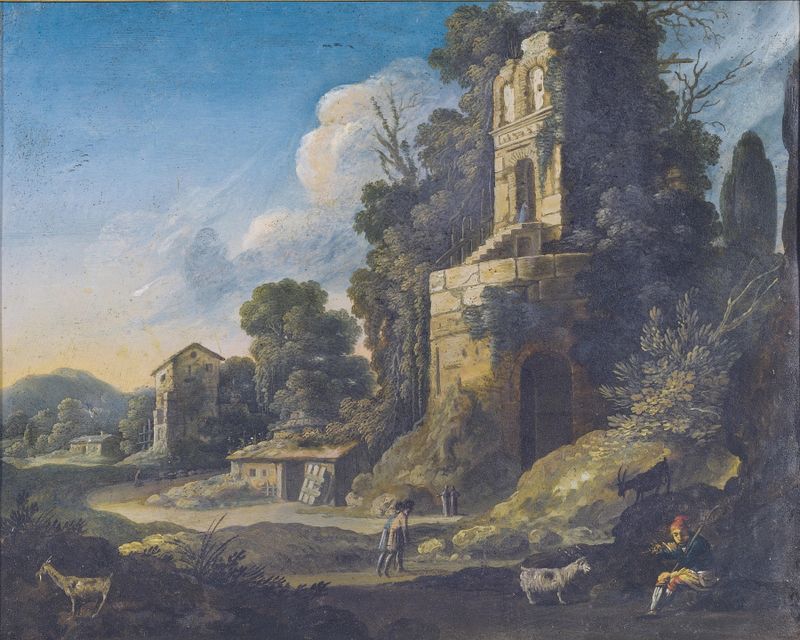
Italianate landscape with buildings and a herdsman playing pipes
Bartholomeus Breenbergh

Arcadian Landscape
Bartholomeus Breenbergh

Ruïnes van keizerlijk paleis te Rome
Bartholomeus Breenbergh

Ruïne van het Colosseum
Bartholomeus Breenbergh
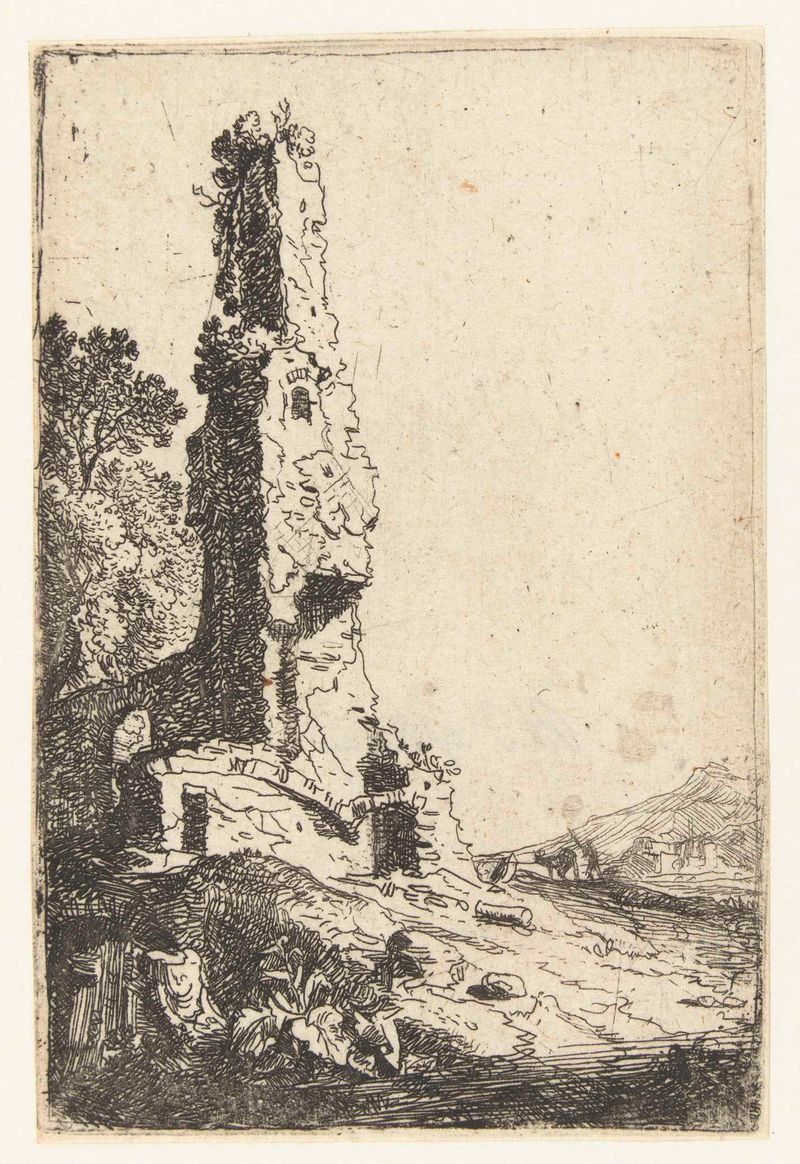
Ruïnes van de stadsmuren van Rome
Bartholomeus Breenbergh
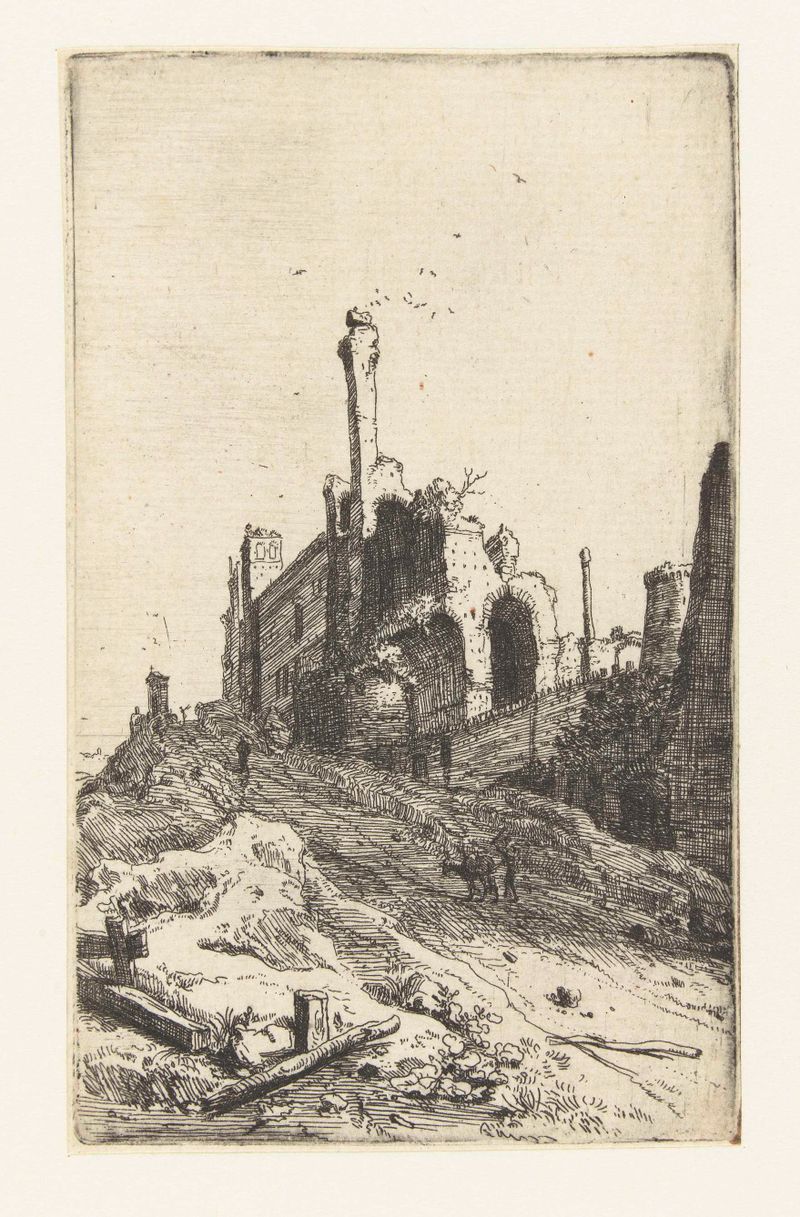
Ruïnes van een paleis te Tivoli
Bartholomeus Breenbergh

Figures Among Ruins By The Tiber
Bartholomeus Breenbergh

Italian Landscape with the Aurelian Wall
Bartholomeus Breenbergh
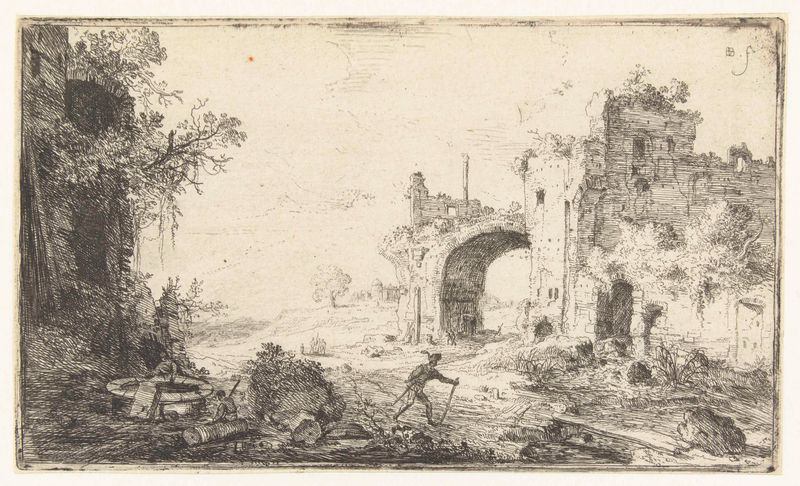
Ruïnes van de thermen van Caracalla
Bartholomeus Breenbergh
Interieur van een grot
Bartholomeus Breenbergh
More Architecture Art
Browse all →
The statue of Liberty
Frédéric Auguste Bartholdi

View of Houses in Delft, Known as ‘The Little Street’
Johannes Vermeer

View of Houses in Delft, Known as ‘The Little Street’
Johannes Vermeer

The Cathedral in Rouen. The portal, Grey Weather
Claude Monet

The yellow house
Vincent van Gogh

The Church in Auvers-sur-Oise, View from the Chevet
Vincent van Gogh