
Camaret. La Pointe du Toulinguet — History & Facts
Could beauty survive in a century of chaos? In Camaret. La Pointe du Toulinguet, a serene moment captured on canvas whispers of tranquility amidst the relentless tides of time. Look to the left at the gentle curve of the shoreline, where soft waves lap against the rocky outcrop. The muted palette of blues and greens draws you in, inviting you to gaze toward the horizon kissed by a warm, golden light.
Notice how the brushstrokes blend seamlessly, giving life to the clouds that float above, while the silvery reflections on the water appear almost ethereal. Boudin’s deft technique creates a harmonious interplay between land and sea, evoking a sense of calm and stillness that envelops the viewer. Delve deeper, and you'll uncover the emotional tension between nature and human existence. The quiet boats, mere silhouettes against the expansive sky, serve as a reminder of mankind's smallness in the face of nature’s grandeur.
The silence of the scene belies a world filled with unrest, hinting at the chaos of the era. Each wave that breaks on the shore resonates with the passing of time, capturing both fleeting beauty and the impermanence of life. Created in 1873, during a pivotal moment in the Impressionist movement, the artist painted this piece in Camaret-sur-Mer, a small coastal village in Brittany. At this time, Boudin was deeply influenced by the evolving art world, focusing on capturing light and atmosphere while exploring the intimate relationship between humanity and nature.
His pioneering work laid the groundwork for future artists, marking a shift toward the embrace of outdoor painting and the beauty that can still be found in silence.
More Artworks by Eugène Boudin
Browse all →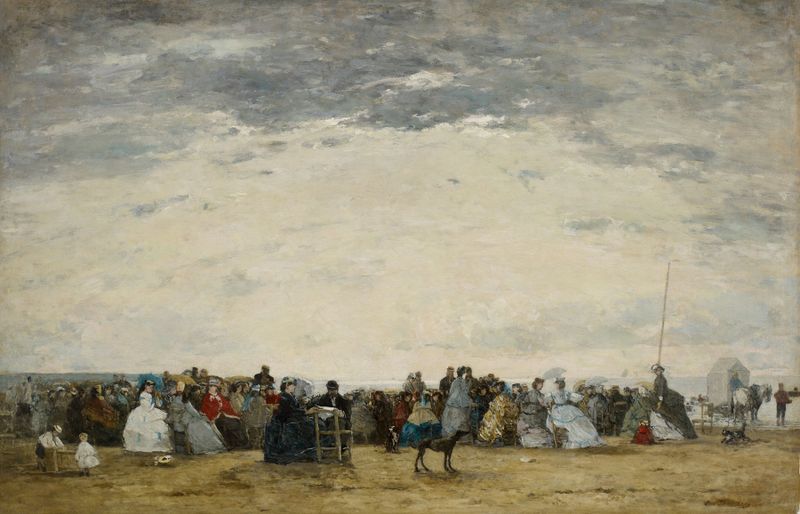
Vacationers on the Beach at Trouville
Eugène Boudin

Washerwoman near Trouville
Eugène Boudin
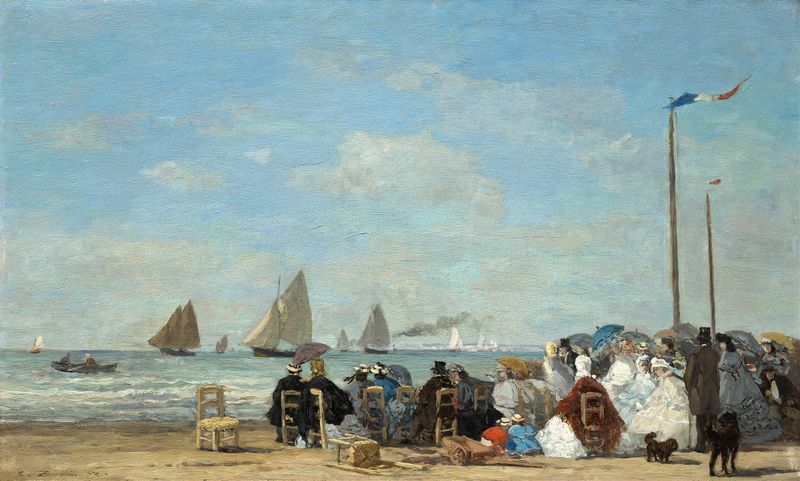
Beach Scene at Trouville
Eugène Boudin

Port aux environs d’Honfleur
Eugène Boudin

Le Faou, un coin du village
Eugène Boudin
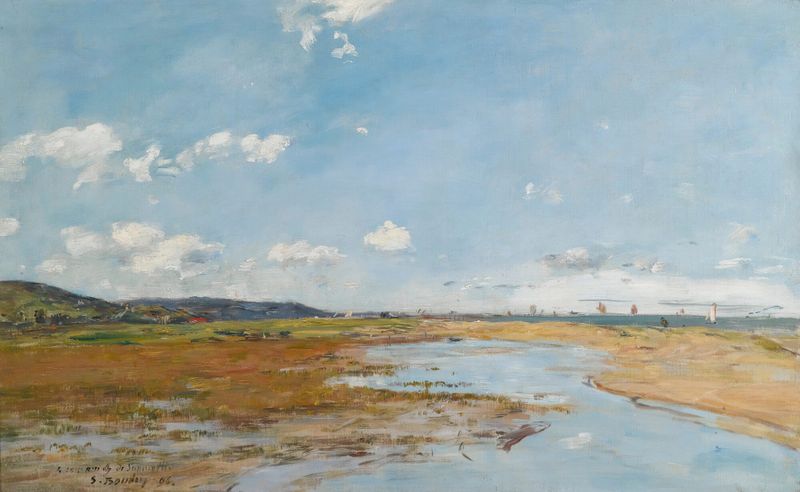
Deauville. Le Rivage
Eugène Boudin
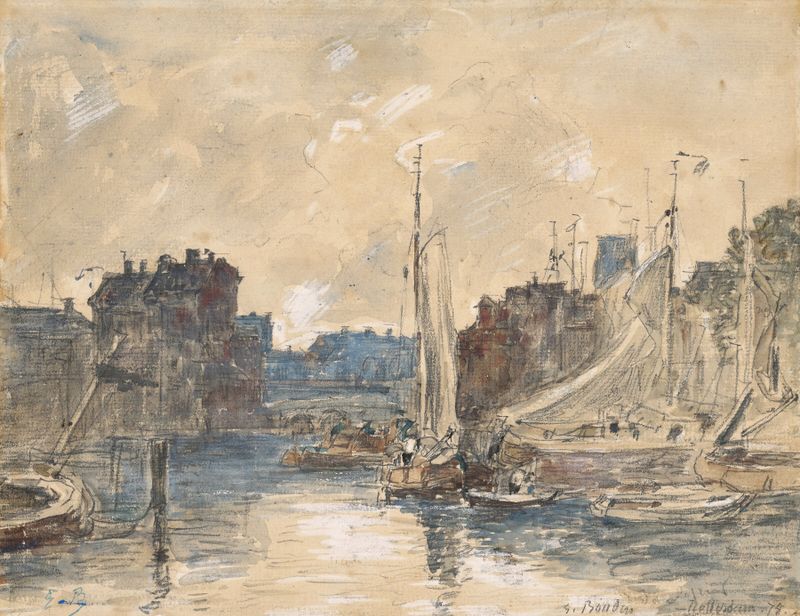
Port de Rotterdam
Eugène Boudin

View of Bordeaux, from the Quai des Chartrons
Eugène Boudin

Trouville, Scène De Plage
Eugène Boudin

Trouville, Le Port
Eugène Boudin





