
Camaret, Le Port — History & Facts
Can paint confess what words never could? In Camaret, Le Port, the canvas whispers tales of longing and remembrance, evoking a deep sense of nostalgia that lingers in the air like the scent of salt and sea. Look to the left, where gentle waves lap against the worn wooden docks, their reflections shimmering beneath the soft, muted light of a fading day. Notice how Boudin captures the delicate interplay between the clouds and the water, employing a palette of greys and blues that conveys both tranquility and an impending storm. The figures in the distance, small and almost indistinct, merge with their surroundings, suggesting a world where man and nature exist in harmony yet remain apart. Deeper insights surface as the viewer contemplates the contrast between the serene landscape and the hint of movement from the boats swaying in the harbor.
The port, a gathering place of memories and experiences, represents the passage of time and the echoes of lives intertwined with the sea. Each brushstroke evokes emotions that words may fail to articulate—hope, loss, and an unquenchable yearning for the simpler joys of life. In 1873, Eugène Boudin painted Camaret, Le Port while immersed in the coastal landscapes of France. During this period, he was establishing himself as a master of plein air painting, embracing the changing light and atmosphere of the seashore.
Amidst the broader Impressionist movement, Boudin’s work served as a bridge between traditional landscapes and the modern art form emerging at that time, reflecting both personal and collective experiences of beauty and transience.
More Artworks by Eugène Boudin
Browse all →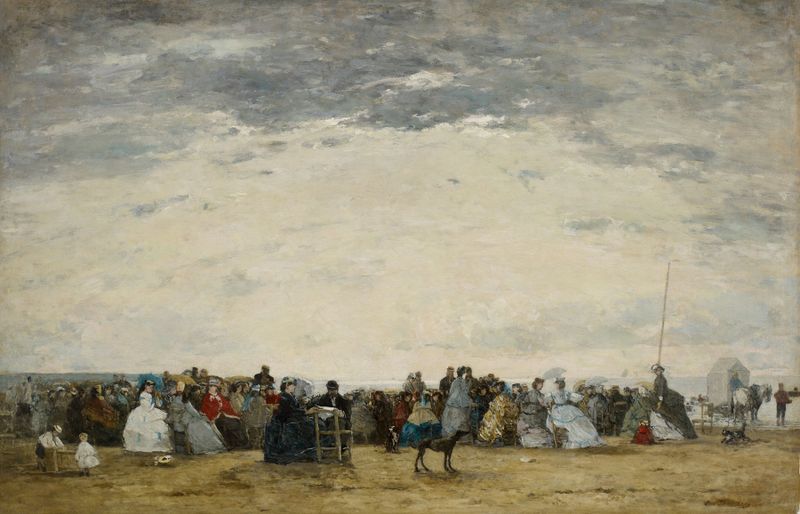
Vacationers on the Beach at Trouville
Eugène Boudin

Washerwoman near Trouville
Eugène Boudin
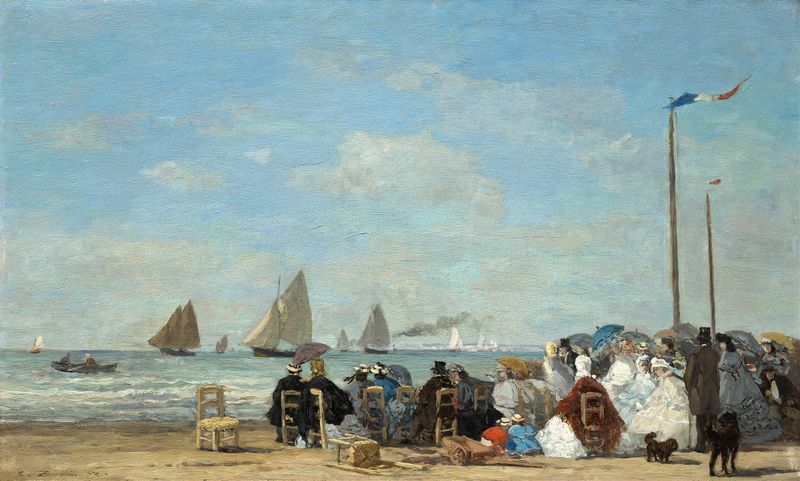
Beach Scene at Trouville
Eugène Boudin

Port aux environs d’Honfleur
Eugène Boudin

Le Faou, un coin du village
Eugène Boudin
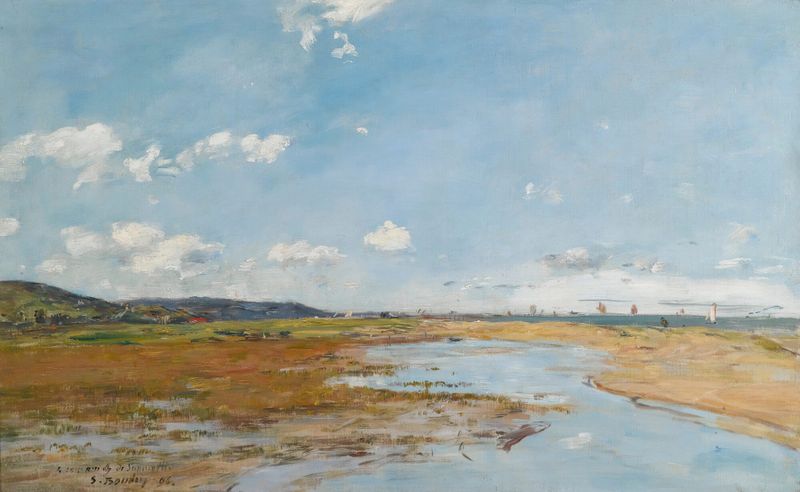
Deauville. Le Rivage
Eugène Boudin
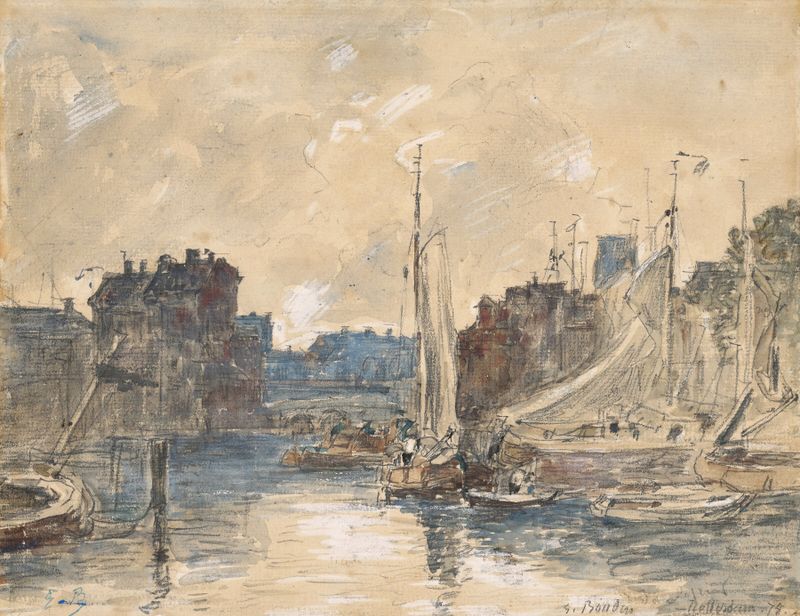
Port de Rotterdam
Eugène Boudin

View of Bordeaux, from the Quai des Chartrons
Eugène Boudin

Trouville, Scène De Plage
Eugène Boudin

Trouville, Le Port
Eugène Boudin





