
Campement arabe dans les montagnes de l’Atlas — History & Facts
In the stillness of captured moments, a void emerges, filled with the echoes of lives lived and lost. Focus first on the deep, earthy tones that envelop the canvas; the browns and ochres of the mountains rise majestically, contrasting with the softer hues of the tents below. Notice how the artist deftly paints the play of light—golden rays filtering through the rugged terrain, dancing over textured surfaces. Each brushstroke imbues the scene with a sense of life yet hints at the quiet solitude that envelops the camp, where shadows stretch long and the boundaries of presence blur. Amid this beauty lies a poignant contrast: the tents, symbols of transient existence, stand against the eternal mountains, offering a meditation on permanence versus impermanence.
The sparse figures, barely discernible, evoke a sense of isolation and connection to the vastness of nature, as if they are both part of the landscape and yet profoundly alone. The void created by the absence of bustling activity prompts contemplation—what stories do these empty spaces tell? Eugène Fromentin painted this evocative piece in 1872, during a period marked by his artistic exploration and travels through North Africa. At this time, he was immersing himself in the vibrant cultures outside Europe, seeking to capture the essence of a world that felt increasingly distant.
The artwork reflects his fascination with both the exotic and the familiar, as the art world was experiencing a shift towards Impressionism, allowing for deeper emotional explorations within landscapes and scenes of everyday life.
More Artworks by Eugène Fromentin
Browse all →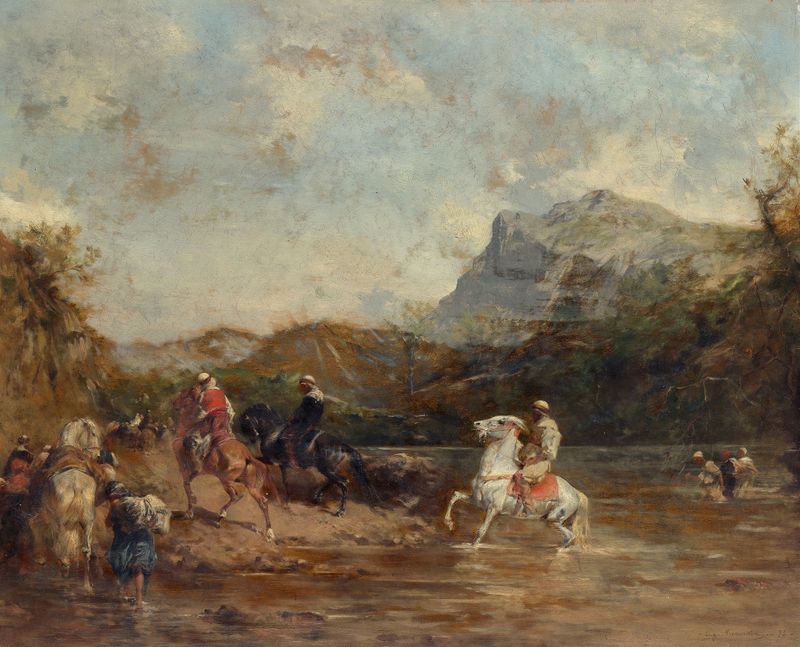
Arabs Crossing a Ford
Eugène Fromentin

Falcon Hunt (‘Algeria Remembered’)
Eugène Fromentin

Women of the Ouled Nayls
Eugène Fromentin
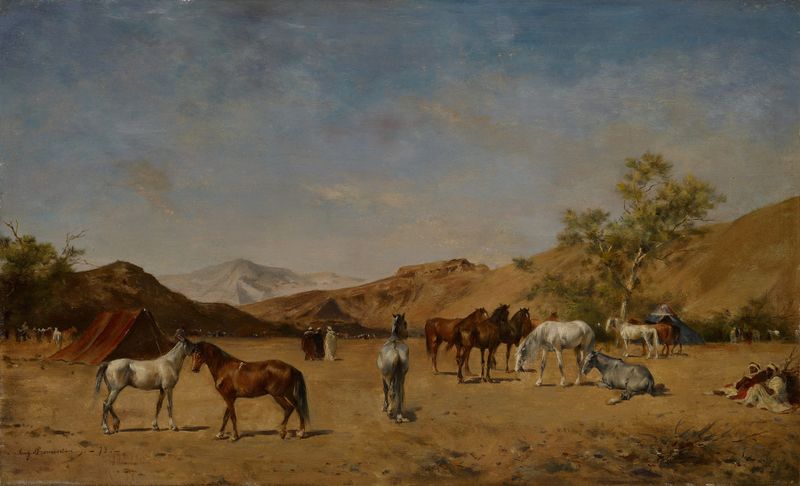
An Arabian Camp
Eugène Fromentin

On the Nile
Eugène Fromentin
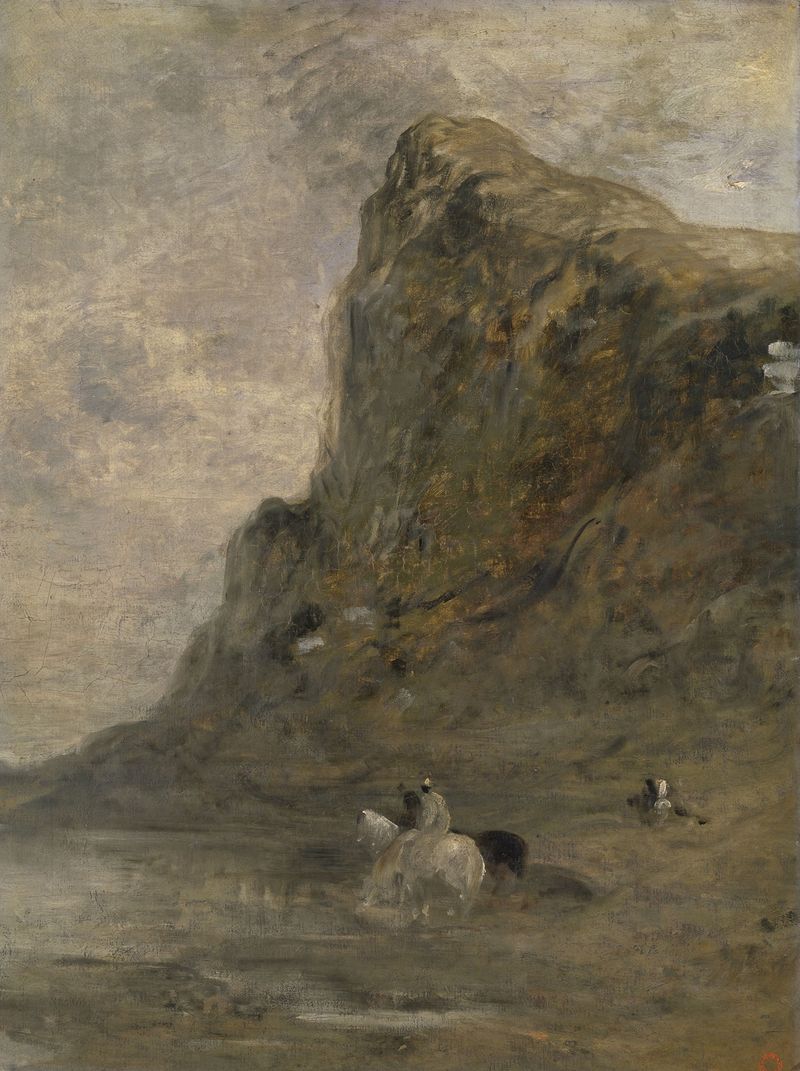
Horsemen at the Foot of the Chiffa Cliffs
Eugène Fromentin
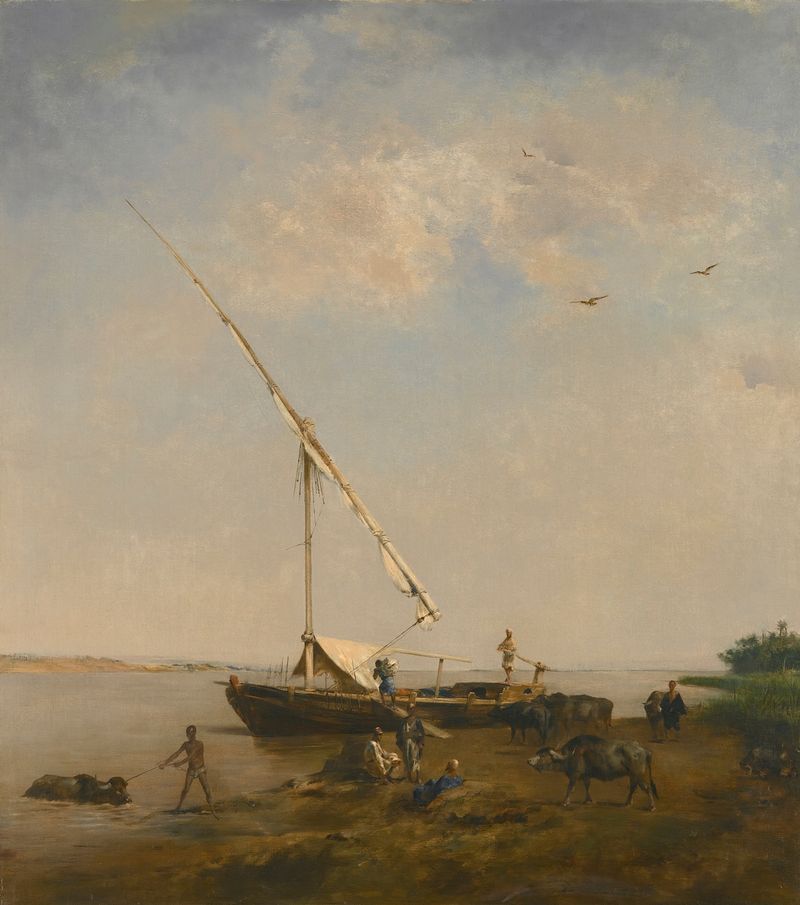
Felucca Au Bord Du Nil
Eugène Fromentin
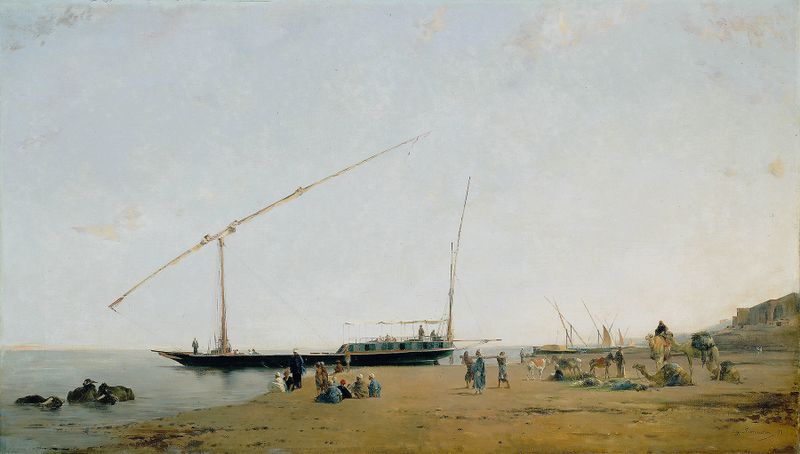
On the Nile, Near Philae
Eugène Fromentin

Arabs watering their horses
Eugène Fromentin

A view of Donzère
Eugène Fromentin





