
Felucca Au Bord Du Nil — History & Facts
Can paint confess what words never could? In Felucca Au Bord Du Nil, desire dances on the surface of the water, whispering secrets of longing and tranquility. Look to the left at the traditional felucca, its white sails catching the afternoon light, a gentle play of soft blues and warm golds enveloping the scene. The river’s surface reflects the clouds above, creating a dreamlike quality suggesting both serenity and wistfulness. Notice how Fromentin skillfully employs light to guide your gaze, each brushstroke evoking the rippling movement of water, as if inviting you to drift closer to the heart of this Egyptian landscape. Beneath the surface lies a tension between stillness and motion, the felucca at once anchored and adrift.
The contrast between the vibrant colors of nature and the muted tones of the boat hints at the duality of existence—rooted in place yet yearning for distant shores. Each detail, from the untouched beauty of the banks to the distant horizon, encapsulates not just a scene, but a longing for connection and the unknown. During the mid-19th century, Eugène Fromentin painted this work while immersed in the exotic allure of North Africa. A time of artistic exploration and cultural fascination, he was drawn to the luminous landscapes and the rich tapestry of life along the Nile.
This was a period marked by France’s growing interest in Orientalism, and Fromentin’s brush captures that intersection of beauty and desire, encapsulating a moment that transcends mere observation.
More Artworks by Eugène Fromentin
Browse all →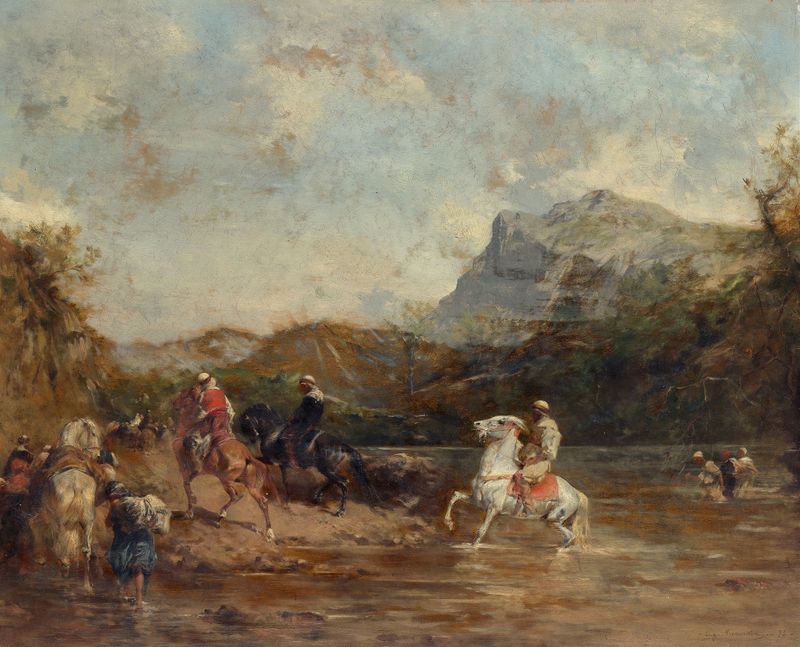
Arabs Crossing a Ford
Eugène Fromentin

Campement arabe dans les montagnes de l’Atlas
Eugène Fromentin

Falcon Hunt (‘Algeria Remembered’)
Eugène Fromentin

Women of the Ouled Nayls
Eugène Fromentin
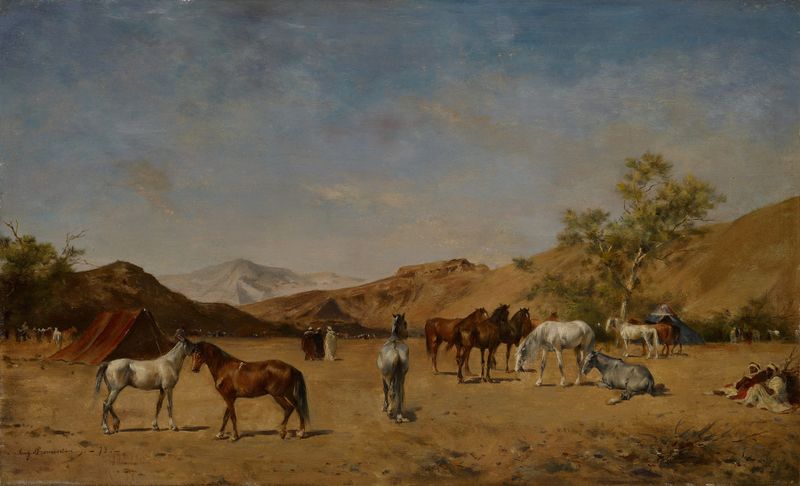
An Arabian Camp
Eugène Fromentin

On the Nile
Eugène Fromentin
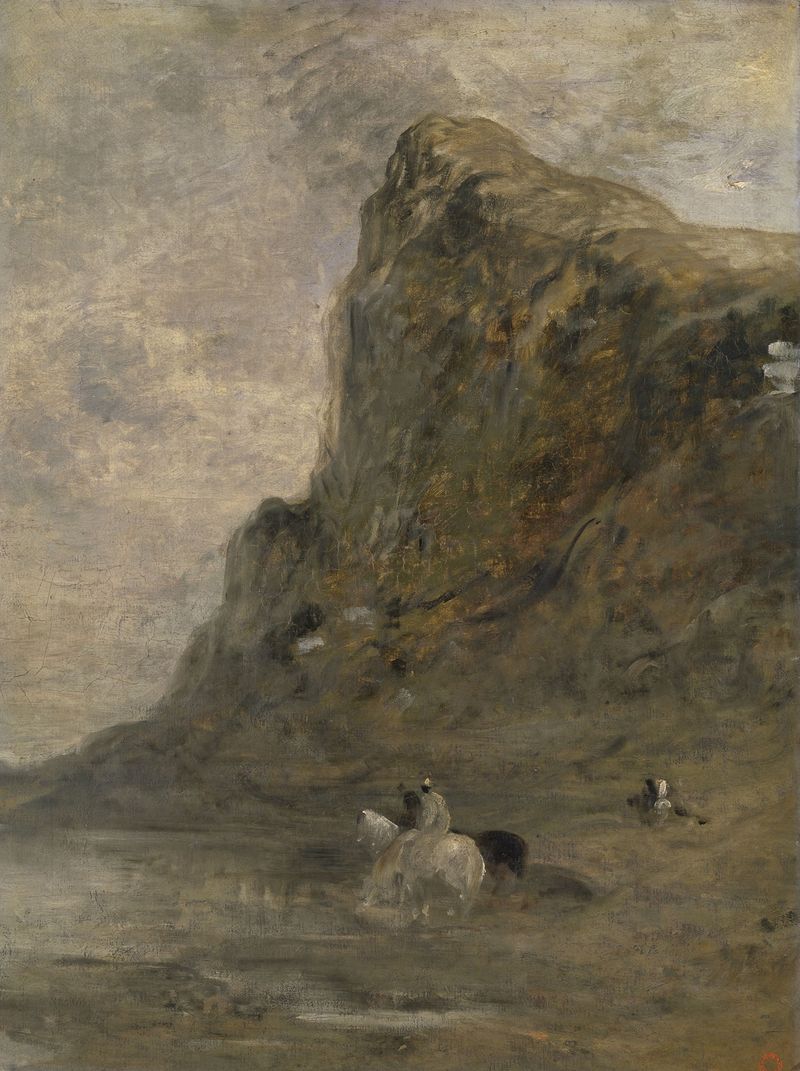
Horsemen at the Foot of the Chiffa Cliffs
Eugène Fromentin
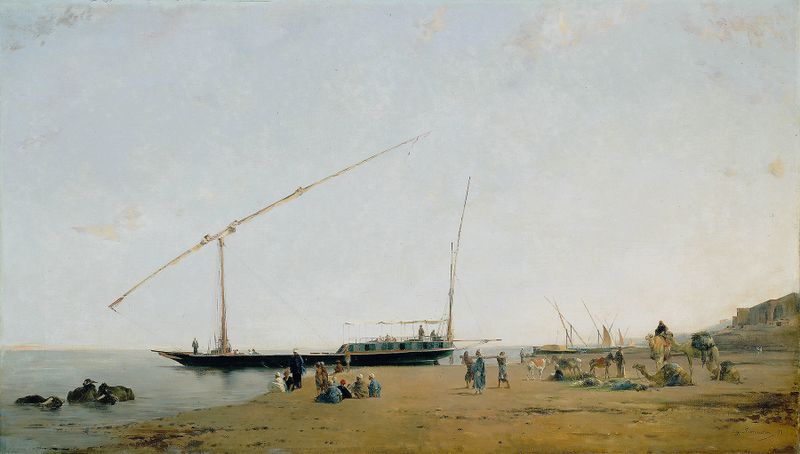
On the Nile, Near Philae
Eugène Fromentin

Arabs watering their horses
Eugène Fromentin

A view of Donzère
Eugène Fromentin





