
Arabs Crossing a Ford — History & Facts
In Arabs Crossing a Ford, shadow plays a pivotal role, transforming vivid landscapes into realms of contemplation and struggle. The gentle yet haunting nature of the scene invites viewers to explore beyond its surface, to confront the underlying narratives woven into its fabric. Look to the foreground where a group of travelers wades through the water, their silhouettes stark against the shimmering reflections. Notice how the soft sunlight dances upon the ripples, casting an array of golden hues that contrast starkly with the deep shadows clinging to the figures.
The deliberate brushwork imparts a sense of movement, as water splashes around their feet, while the distant horizon lingers in a haze of earthy tones. Fromentin’s color palette marries the warmth of the sun with the coolness of water, evoking a sense of harmony amid the impending turmoil. Each stroke reveals the duality of beauty and hardship. The shadows enveloping the travelers hint at the burdens they carry, both physically and emotionally.
The elegant drapery of their garments, fluid and graceful, contrasts with the treacherous terrain they navigate, symbolizing resilience in the face of adversity. The interplay of light and shadow not only illuminates their journey but also casts a veil of mystery over their destination, suggesting that beauty often masks deeper struggles. In 1873, when this work was created, Eugène Fromentin was immersed in a world inspired by his travels across North Africa. At this time, European art was shifting toward Impressionism, yet Fromentin remained rooted in a realistic depiction of the world around him.
He aimed to capture the essence of his subjects, blending the influences of Orientalism into his oeuvre, while simultaneously confronting the complexities of cultural representation and human experience.
More Artworks by Eugène Fromentin
Browse all →
Campement arabe dans les montagnes de l’Atlas
Eugène Fromentin

Falcon Hunt (‘Algeria Remembered’)
Eugène Fromentin

Women of the Ouled Nayls
Eugène Fromentin
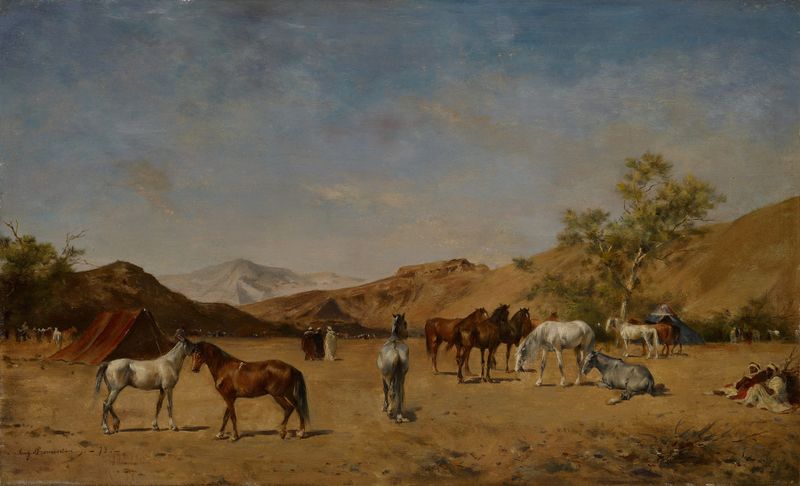
An Arabian Camp
Eugène Fromentin

On the Nile
Eugène Fromentin
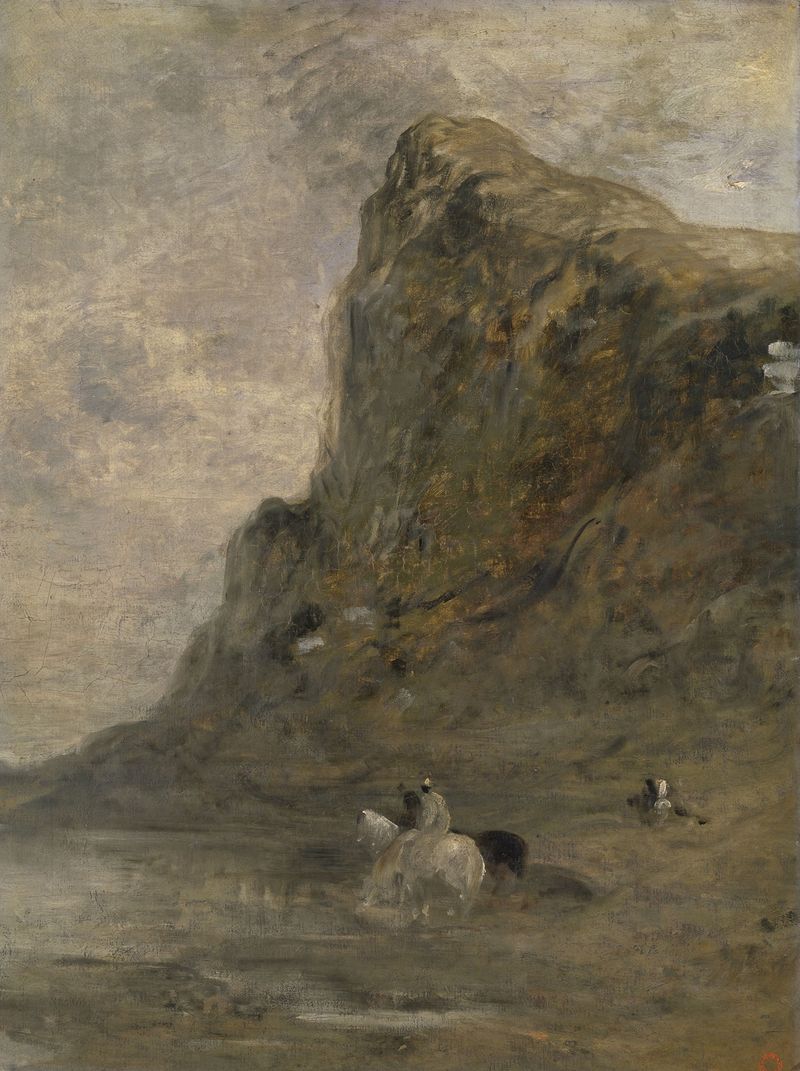
Horsemen at the Foot of the Chiffa Cliffs
Eugène Fromentin
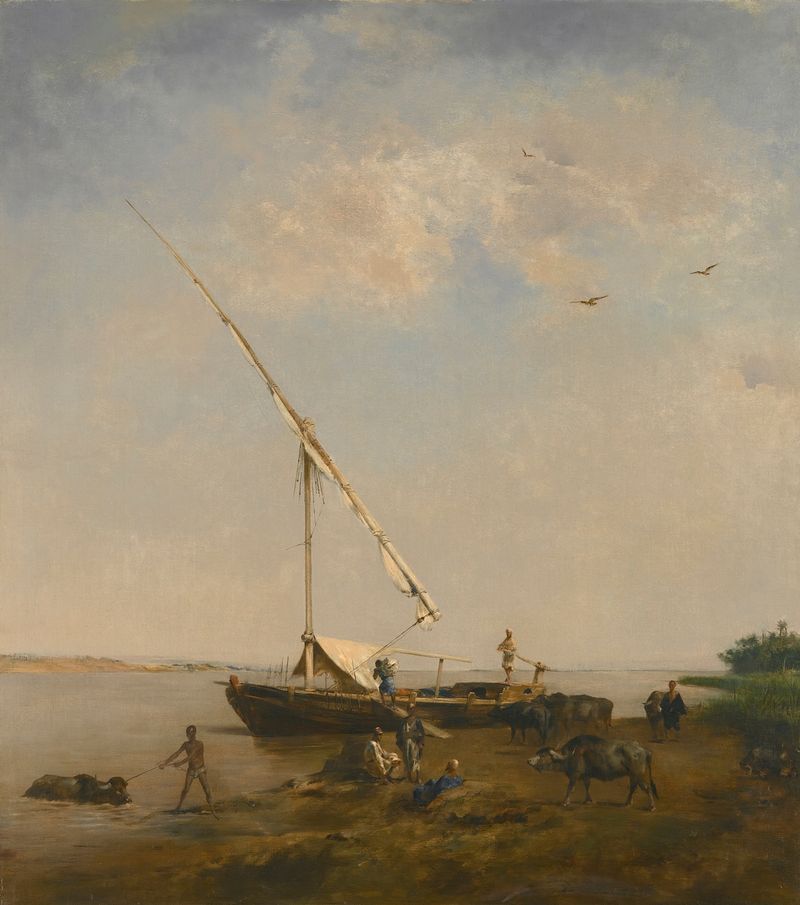
Felucca Au Bord Du Nil
Eugène Fromentin
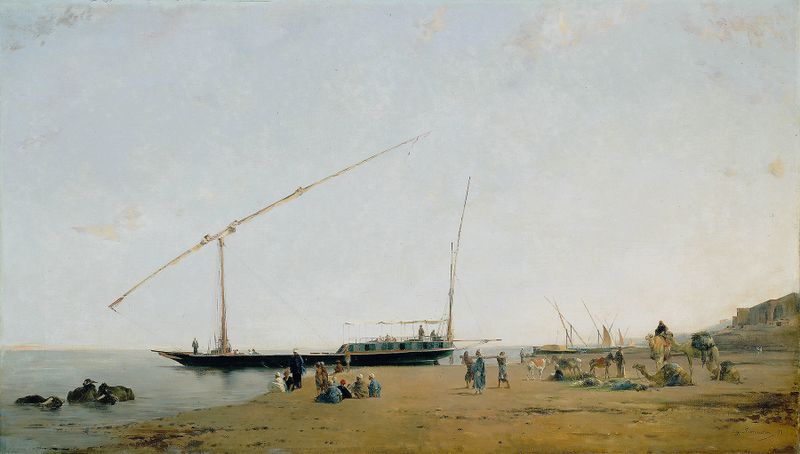
On the Nile, Near Philae
Eugène Fromentin

Arabs watering their horses
Eugène Fromentin

A view of Donzère
Eugène Fromentin





