
On the Nile — History & Facts
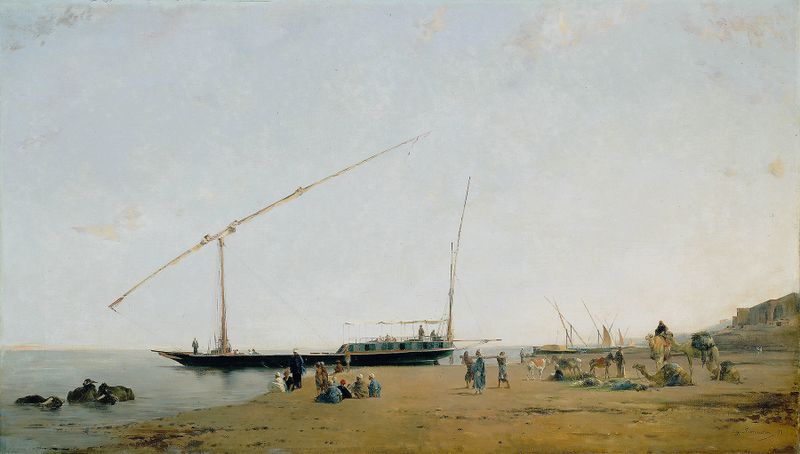
In the stillness of an ancient landscape, beauty often conceals a deeper unease. As the sun dips below the horizon, shadows cloak the vibrant banks of the Nile, whispering secrets of a world where tranquility can mask trepidation. Focus on the lower left corner where the water glistens under the fading light, creating a shimmering path that draws the eye into the scene. Notice how Fromentin’s brushwork captures the ripples, each stroke alive with subtle hues of blue and gold.
The palm trees stand tall against the backdrop, their silhouettes dark and imposing, while the sky transitions from warm oranges to deep purples, conveying the day’s end. This contrast of light and shadow serves as a metaphor for the coexistence of beauty and fear, inviting contemplation on what lies beneath the surface. Delve deeper into the emotional undertones; the lush vegetation contrasts sharply with the potential dangers of the Nile, a river both revered and feared. The serene façade of the landscape juxtaposes the lurking uncertainties of the unknown, suggesting that even in paradise, peril can be just out of sight.
Fromentin’s choice of color and composition highlights this tension, compelling the viewer to acknowledge the fragility of peace in nature. In 1871, Fromentin created this piece amidst a transformative period in his life, during which he was deeply influenced by his travels to North Africa. His experiences in the region informed his artistic approach, as the exoticism of the landscapes melded with the European artistic sensibilities of the time. The painting captures not only the physical beauty of the Nile but also the underlying complexities that define human interaction with nature.
More Artworks by Eugène Fromentin
Browse all →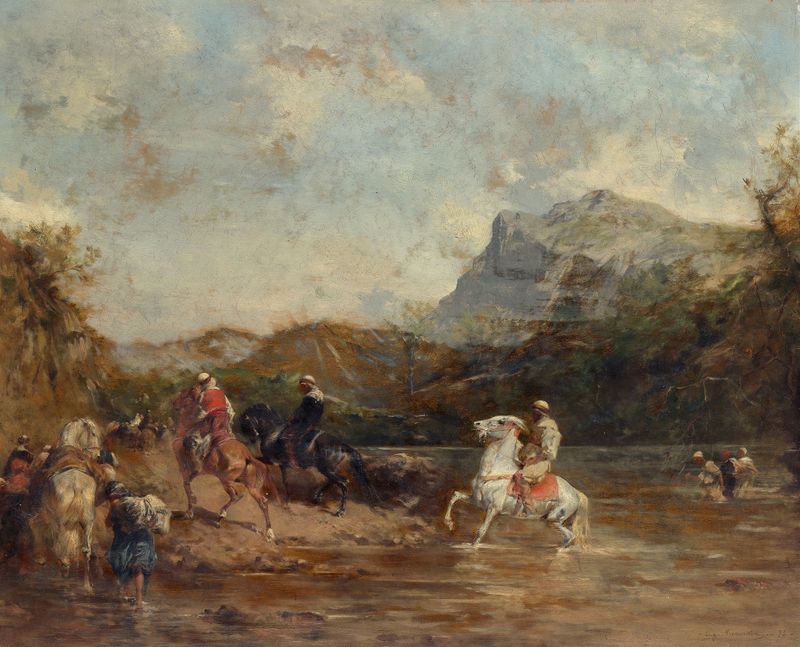
Arabs Crossing a Ford
Eugène Fromentin

Campement arabe dans les montagnes de l’Atlas
Eugène Fromentin

Falcon Hunt (‘Algeria Remembered’)
Eugène Fromentin

Women of the Ouled Nayls
Eugène Fromentin
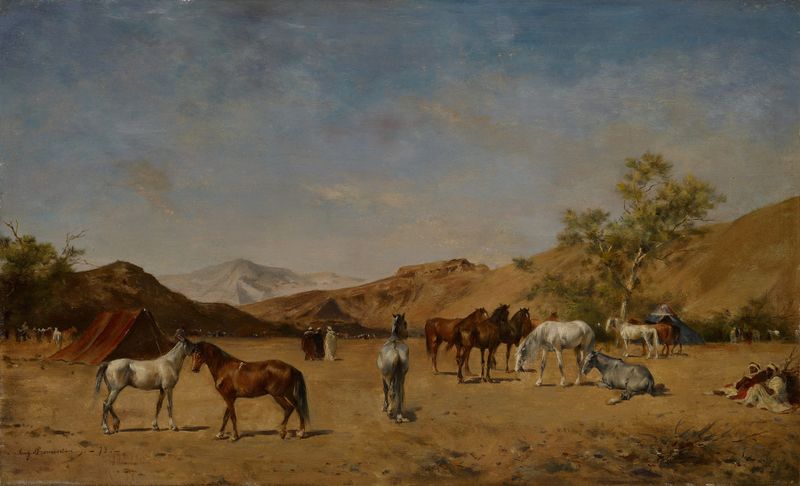
An Arabian Camp
Eugène Fromentin
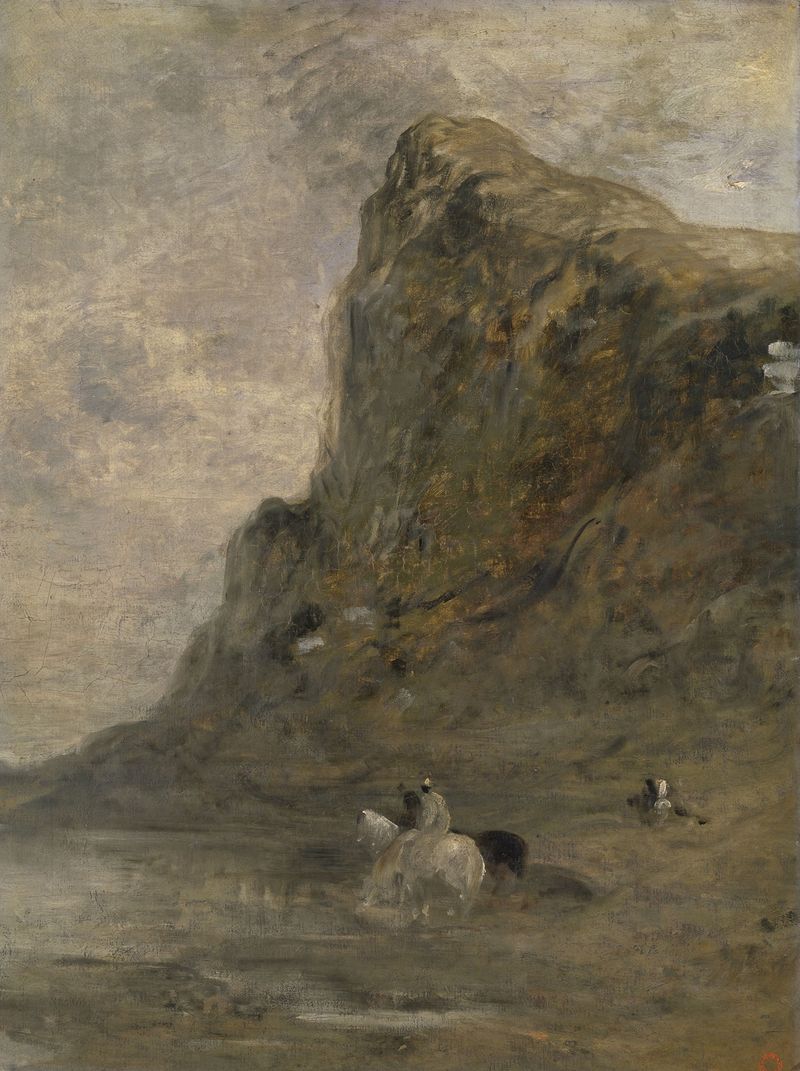
Horsemen at the Foot of the Chiffa Cliffs
Eugène Fromentin
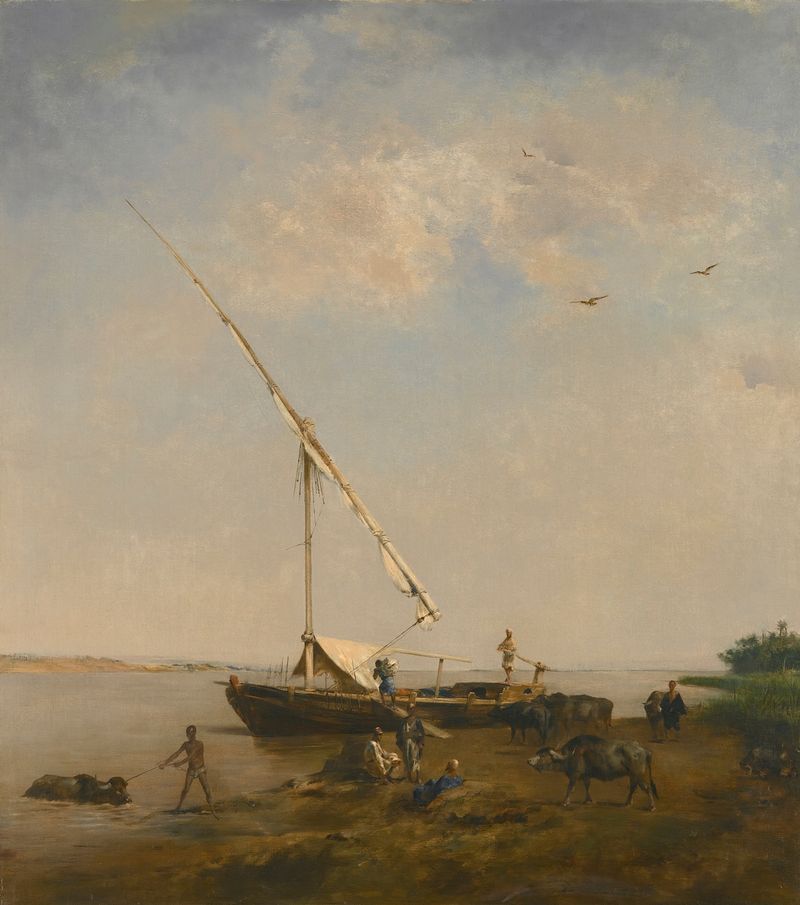
Felucca Au Bord Du Nil
Eugène Fromentin
On the Nile, Near Philae
Eugène Fromentin

Arabs watering their horses
Eugène Fromentin

A view of Donzère
Eugène Fromentin





