
Falcon Hunt (‘Algeria Remembered’) — History & Facts
In Falcon Hunt (‘Algeria Remembered’), the juxtaposition of elegance and chaos invites us to explore the depths of human desire and the madness that often accompanies it. Look directly at the bold, sweeping strokes of vivid sienna that form the falconer’s cloak. Notice how the light reflects off the intricate textures, casting an ethereal glow that marks the boundaries between man and nature. The falcon, poised and regal, seems to haunt the canvas, its piercing gaze capturing the intensity of the moment while embodying a silent narrative of dominance and the untamed wilderness.
The contrasting cool blues and warm earth tones encapsulate the vibrancy of the Algerian landscape, drawing the viewer into a world that feels both alive and threatening. Yet, beneath the surface of this striking scene lies a profound tension. The falcon, a symbol of freedom, is tethered by the man’s grip, reflecting the paradox of control versus liberation. The careful arrangement of figures hints at an uneasy balance; the hunter's fervor suggests an obsession that borders on madness, evoking questions about the costs of triumph and conquest.
In this composition, beauty and chaos intertwine, reminding us that the pursuit of power can lead us down perilous paths. Eugène Fromentin painted this work in 1874 during a period when he was deeply influenced by his travels in North Africa. As a prominent figure in the art world, he sought to bridge the gap between realism and romanticism, capturing the vibrant cultures and landscapes he encountered. The atmosphere of exploration and colonial fascination in Europe added layers of complexity to his work, as he navigated his own artistic identity amidst a rapidly changing world.
More Artworks by Eugène Fromentin
Browse all →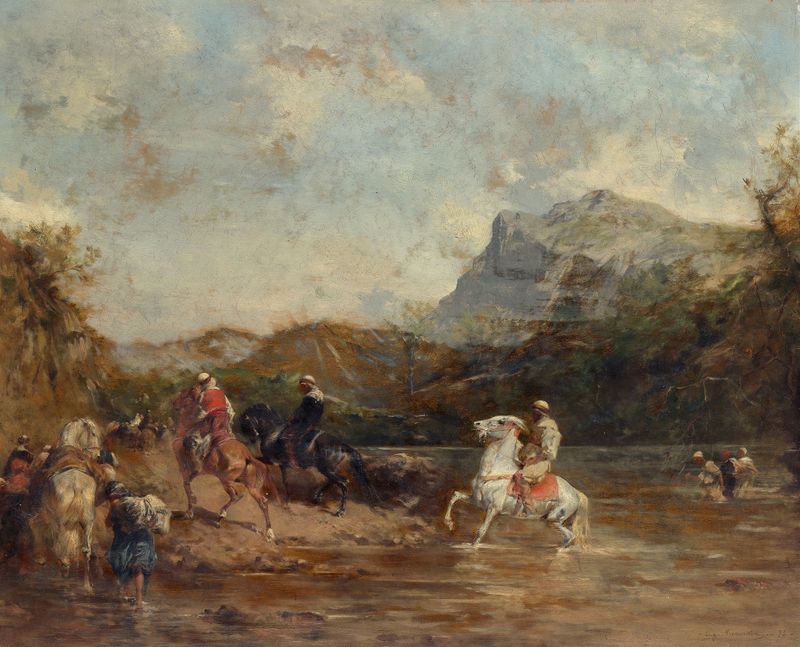
Arabs Crossing a Ford
Eugène Fromentin

Campement arabe dans les montagnes de l’Atlas
Eugène Fromentin

Women of the Ouled Nayls
Eugène Fromentin
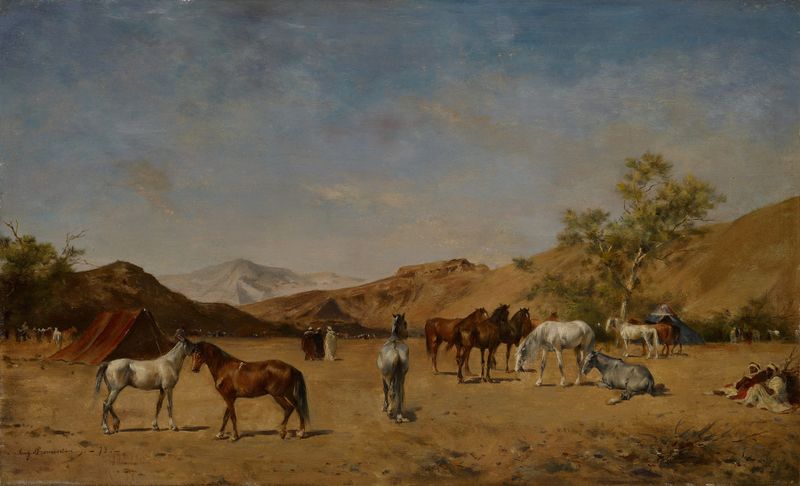
An Arabian Camp
Eugène Fromentin

On the Nile
Eugène Fromentin
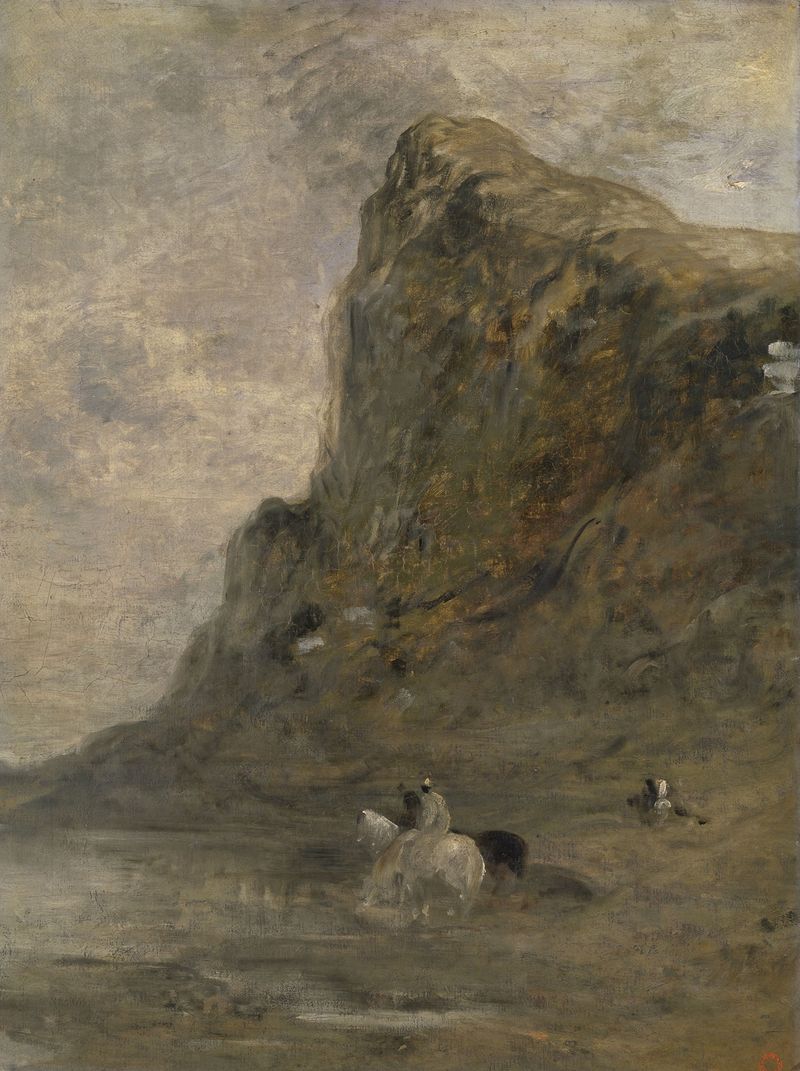
Horsemen at the Foot of the Chiffa Cliffs
Eugène Fromentin
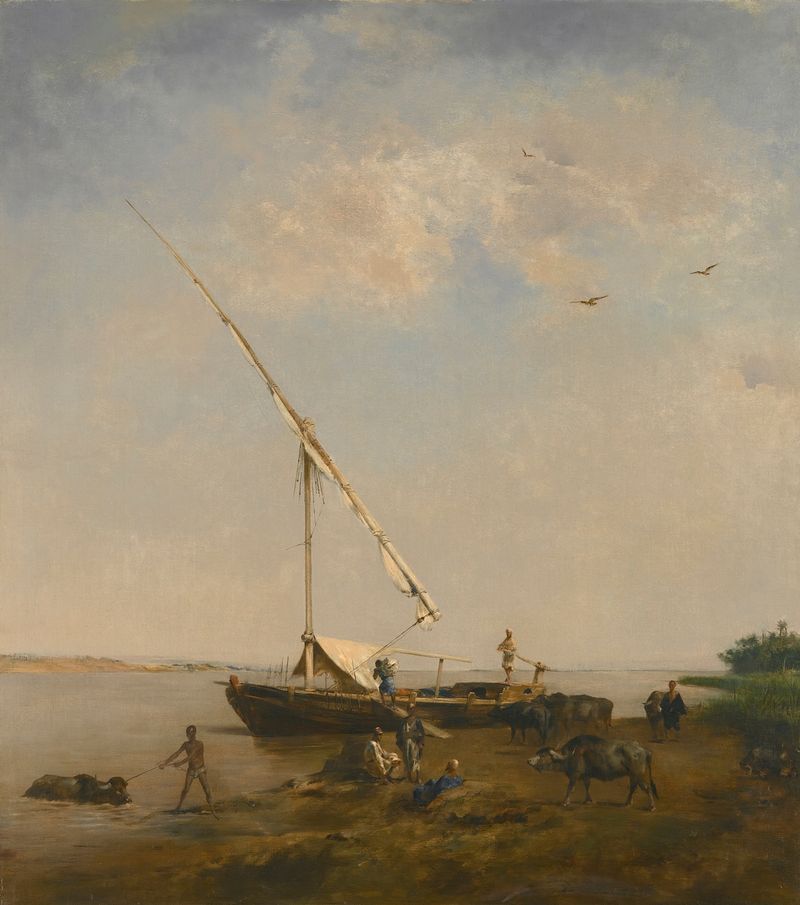
Felucca Au Bord Du Nil
Eugène Fromentin
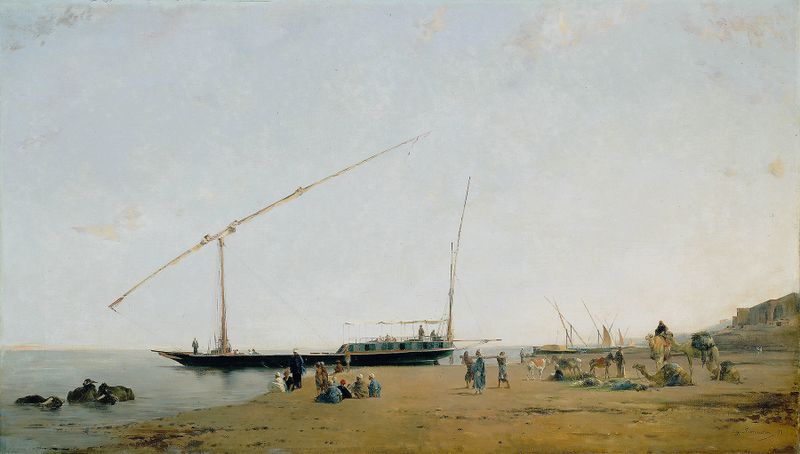
On the Nile, Near Philae
Eugène Fromentin

Arabs watering their horses
Eugène Fromentin

A view of Donzère
Eugène Fromentin





