
On the Nile, Near Philae — History & Facts
In On the Nile, Near Philae, Eugène Fromentin transports us to a realm where history intertwines with the whispers of faith, revealing the sacred bond between mankind and the divine. Focus first on the serene, flowing waters of the Nile, where the play of sunlight shimmers across the surface, casting golden reflections against the muted earth tones of the landscape. Notice how the distant temples rise solemnly, their ancient architecture standing guard over the scene, suggesting a lingering presence of spirituality. The sky, a palette of soft blues and whites, envelops the setting, granting it an ethereal quality that invites contemplation. As you delve deeper, consider the juxtaposition of nature and civilization.
The tranquil waters cradle the lush greenery along the banks, while the presence of the temples hints at the enduring faith of those who once revered the sacred land. Each figure depicted—small against the vastness of the backdrop—represents seekers in pursuit of enlightenment, embodying the duality of humanity’s quest for connection amidst the grandeur of the divine. Fromentin painted this work in 1871 during a time when he was deeply influenced by his travels throughout North Africa, where he sought to capture the essence of the landscapes and cultures he encountered. Living in a period marked by heightened interest in Orientalism, he endeavored to translate the exoticism of the region into his canvas, merging his observations with a personal sense of reverence and faith amidst the ruins of ancient civilizations.
More Artworks by Eugène Fromentin
Browse all →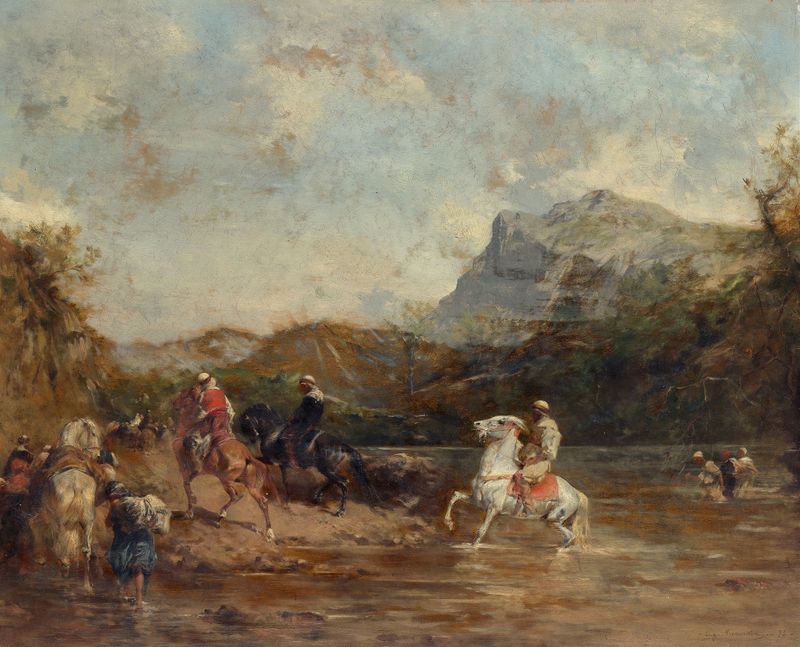
Arabs Crossing a Ford
Eugène Fromentin

Campement arabe dans les montagnes de l’Atlas
Eugène Fromentin

Falcon Hunt (‘Algeria Remembered’)
Eugène Fromentin

Women of the Ouled Nayls
Eugène Fromentin
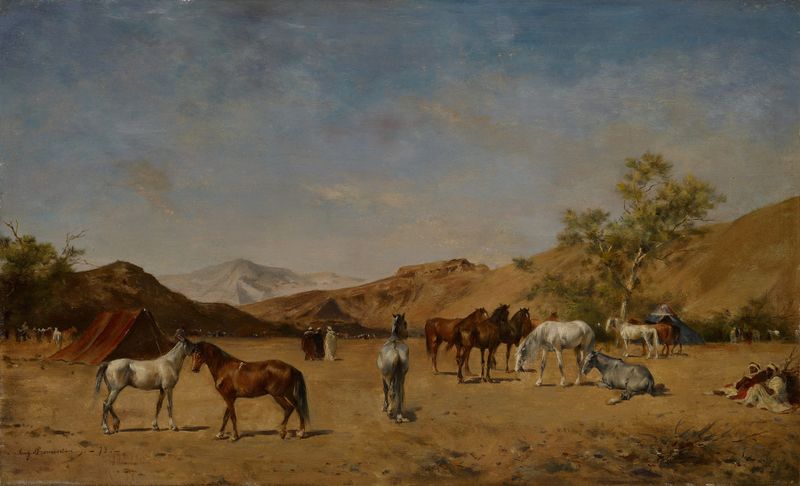
An Arabian Camp
Eugène Fromentin

On the Nile
Eugène Fromentin
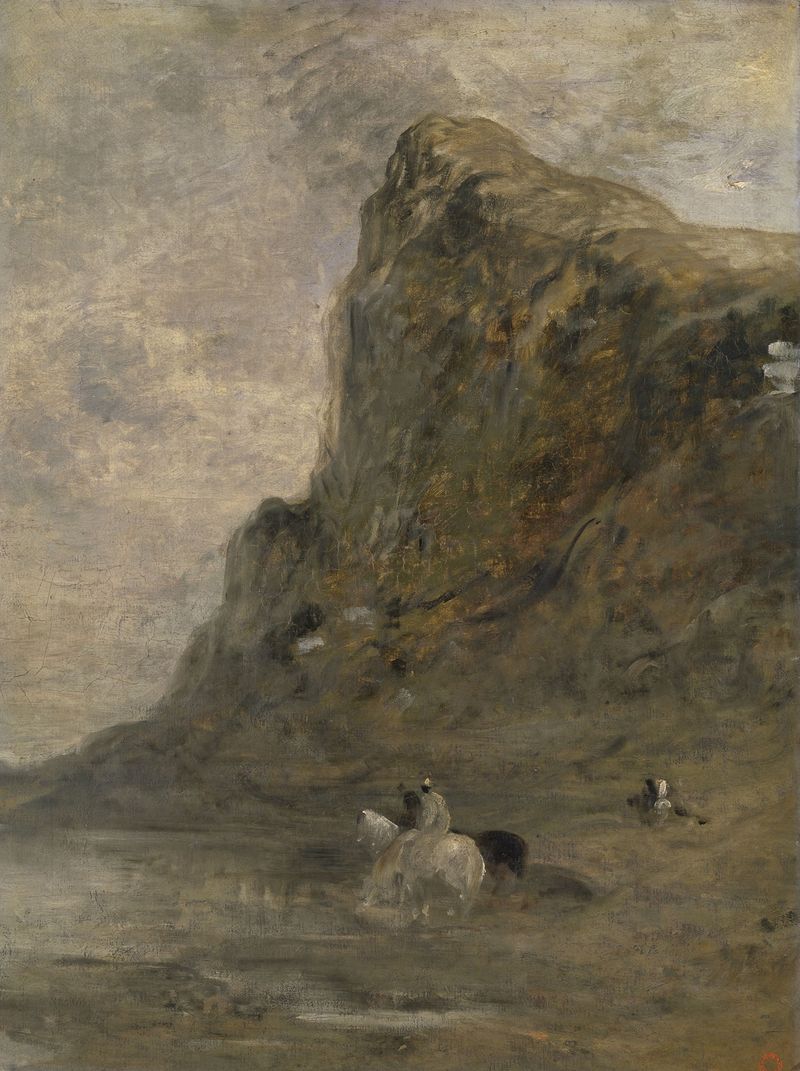
Horsemen at the Foot of the Chiffa Cliffs
Eugène Fromentin
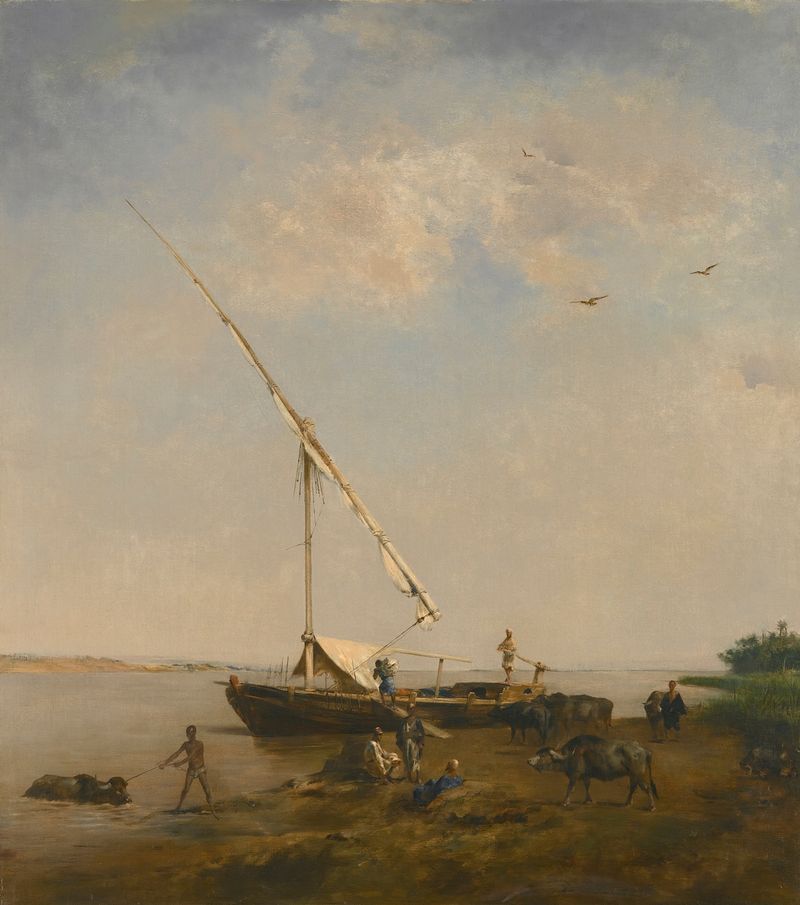
Felucca Au Bord Du Nil
Eugène Fromentin

Arabs watering their horses
Eugène Fromentin

A view of Donzère
Eugène Fromentin





